

Hiring a Private Caregiver: 2026 Family Guide to Home Care Agencies
September 5, 2026 · 17 min read
Are you feeling the weight of a thousand "what-ifs" every time you leave your loved one's side? Does the thought of vetting a stranger feel as overwhelming as the caregiving itself? You aren't alone in this uncertainty. Finding the right support is a deeply personal journey; knowing the specific questions to ask a home care agency is the first step toward reclaiming your peace of mind and your own well-being.
We understand that you want more than just a pair of hands. You want a trustworthy partner who honors your family member's independence while keeping them safe. It's natural to feel a mix of relief and guilt when you decide to outsource care, but professional support often preserves the very dignity you're afraid of losing. This 2026 guide will help you manage the complexities of home care, from avoiding tax liabilities to ensuring absolute safety. We will walk through a vetted framework for evaluating providers, comparing agency reliability against the risks of private hires, and identifying the subtle red flags that others might miss.
Key Takeaways
- Recognize the subtle signs of caregiver burnout and declining safety at home to identify the right moment for professional assistance.
- Protect your family from the legal and financial liabilities of hiring privately by understanding the responsibilities of a domestic employer.
- Use our expert framework of questions to ask a home care agency to verify their vetting standards and ensure a trustworthy partnership.
- Transition from crisis management to peace of mind with personalized care plans that adapt to your loved one's changing medical and social needs.
- Learn how to simplify the overwhelming logistics of home care and find a reliable match within just a few days.
Recognizing the Signs: When is it Time to Hire In-Home Support?
Have you noticed a stack of unopened mail on the counter or a pill organizer that hasn't been touched in three days? These small deviations often signal a shift in your loved one's ability to manage daily life safely. Understanding What is Home Care? is the first step in realizing that these gaps don't mean a loss of independence; they simply mean a new chapter of support is beginning. Whether you're caring for an aging parent or seeking home care for special needs children, the goal is to provide a safety net that catches these slips before they become crises.
Many families wait until a fall or a medical emergency occurs before they start researching options. However, the best time to formulate your list of questions to ask a home care agency is before the situation becomes urgent. This proactive approach allows you to introduce a caregiver with dignity, framing the assistance as a way to help your loved one stay in the home they love. It's about shifting from crisis management to an intentional partnership.
Physical and Cognitive Red Flags
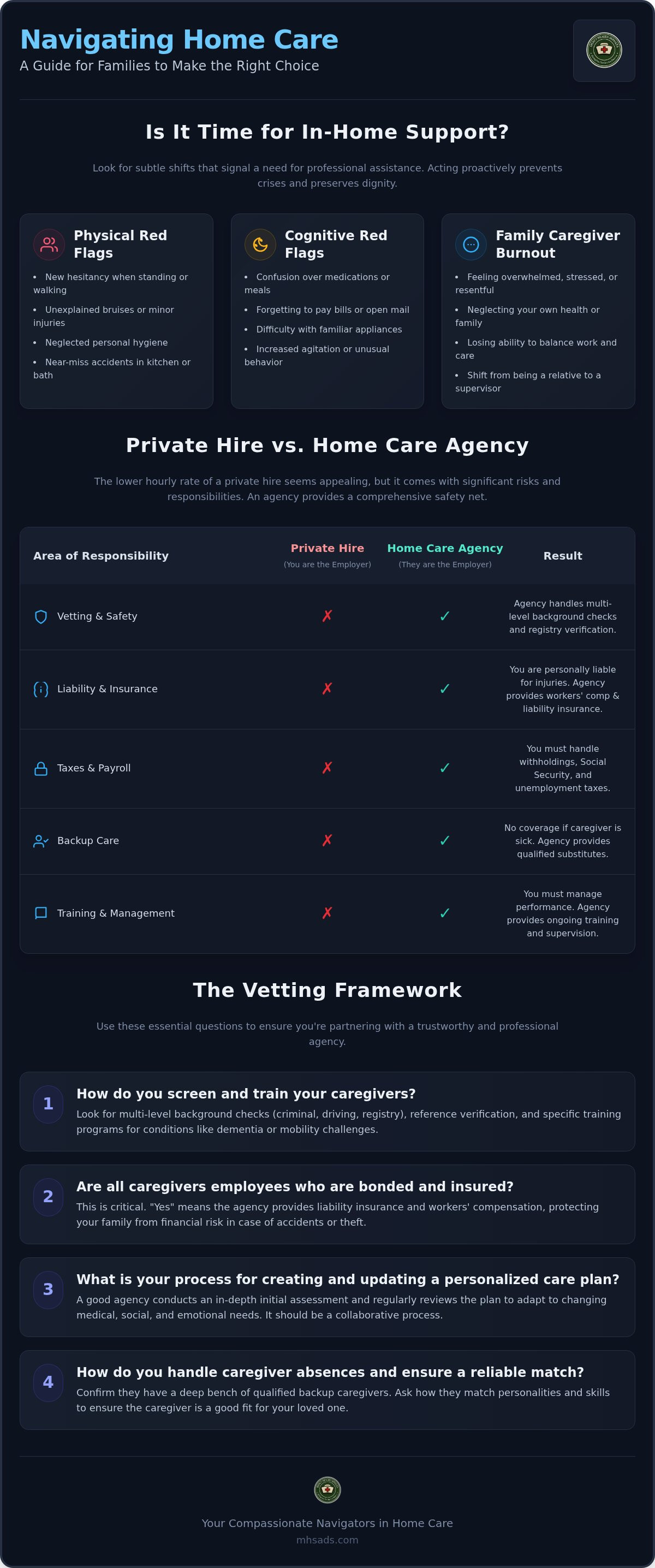
Watch for subtle physical changes that suggest a need for mobility assistance. Is there a new hesitancy when they stand up from a chair? Are near-miss accidents happening in the kitchen or bathroom? Cognitive shifts are equally telling. Confusion over fundamental nutritional needs or forgetting how to operate simple household appliances are clear indicators that extra eyes are needed. These challenges aren't just for seniors. Adults under 50 with disabilities often face similar hurdles that require specialized support to maintain their quality of life. When you begin your search, specific questions to ask a home care agency should focus on how they train staff to handle these specific physical and cognitive requirements.
The Emotional Impact on the Family
Caregiving is an act of love, but it's also a demanding role that can lead to chronic stress. If you're part of the sandwich generation, balancing your career and your own children while managing a parent's health, you're likely reaching a burnout threshold. Signs of resentment, exhaustion, or neglecting your own health aren't failures. They're signals that your family needs a professional partner. Bringing in help isn't outsourcing your duty; it's ensuring your loved one receives consistent care while you preserve your own well-being. It allows you to return to being a daughter, son, or parent rather than a full-time supervisor.
Introducing a stranger into the home can feel like a hurdle, but doing so with respect and transparency eases the transition. By focusing on personality matches and skill sets, the right agency ensures the caregiver feels like a natural extension of your family's support system.
Private Hire vs. Home Care Agency: Evaluating the Real Costs and Risks
When you begin looking for help, the lower hourly rate of an independent caregiver might seem like a practical choice. However, it's vital to recognize the legal shift that occurs the moment money changes hands. In the United States, hiring an independent caregiver often makes you a domestic employer. This isn't just a title; it carries significant legal and financial responsibilities that many families don't anticipate during a time of crisis.
While the upfront price might look attractive, the "Private Pay gap" is often filled with hidden expenses and stress. Choosing an agency means transitioning to home care services with a built-in safety net. It allows you to remain a family member first, rather than a human resources manager, tax preparer, and legal compliance officer. Before making a decision, consider the long-term implications of managing a private hire versus partnering with a professional organization.
The True Cost of Private Hiring
The administrative burden of private hiring is substantial. As a domestic employer, you are responsible for payroll taxes, Social Security contributions, and unemployment insurance. Neglecting these can lead to significant IRS penalties later. Liability risks are perhaps the most concerning factor. What happens if an independent caregiver is injured while assisting your loved one in the bathroom? Without workers' compensation, which agencies provide, you could be personally liable for their medical bills and lost wages. Furthermore, conducting your own multi-tiered background checks and verifying professional registries adds a layer of complexity that is easy to overlook when you are already feeling overwhelmed.
Agency Benefits: Professional Oversight and Reliability
Agencies act as a professional buffer, handling conflict resolution and performance monitoring so you don't have to. Reliability is another major differentiator. If a private caregiver gets sick or takes a vacation, the care stops. An agency provides instant backup care, ensuring your loved one is never left alone during emergencies. When preparing your list of questions to ask a home care agency, inquire about their specific backup protocols and how they handle caregiver absences. This continuity of care is essential for maintaining a sense of security and routine.
Referencing these Essential Questions to Ask before choosing a provider can help you see why vetted expertise matters. Professional caregiving services remove the guesswork by providing staff who are already screened, insured, and trained. This oversight allows you to focus on your relationship with your family member. If you're feeling overwhelmed by these logistics, you can explore how a structured care plan provides the stability your family needs.
The Vetting Framework: Essential Questions to Ask a Home Care Agency
How do you know if the person entering your home is truly safe? It's the question that keeps many family members awake at night. A resume only tells half the story. The other half is found in the rigorous vetting processes and the subtle interactions during an interview. Establishing a comprehensive list of questions to ask a home care agency is about more than checking boxes; it's about building a foundation of trust that protects your loved one's dignity and your own peace of mind.
Surface-level reference checks are often insufficient for home safety. A truly safe environment requires a multi-tiered approach. In 2026, a standard background check should include national criminal records, driving history, and professional registries. This ensures that the person providing one on one senior care has a history of reliability and respect. Beyond the data, you must also assess soft skills like empathy and patience. These traits are harder to quantify but are essential for a successful, long-term partnership.
Mastering the Caregiver Interview
The interview is your best opportunity to see a caregiver's personality in action. Use scenario-based questions to gauge their problem-solving skills. Ask, "How would you respond if my loved one refuses to eat or take their medication?" Their answer will reveal their level of patience and their ability to use gentle redirection rather than force. During a meet-and-greet, observe how they speak to the person receiving care. Do they make eye contact? Do they speak with respect? These small cues are vital when verifying specialized training for dementia, pediatric support, or mobility assistance for seniors.
Verification and Compliance
Professionalism is rooted in accountability. Always confirm that a caregiver's certifications, such as a CNA or HHA, are active and in good standing with state boards. When you conduct a reference deep dive, ask the questions most families forget: "Did they arrive on time every day?" or "How did they handle stressful situations?" These details provide a clearer picture of their daily performance. Families should look for red flags like unexplained gaps in employment or a pattern of leaving positions shortly after the initial training period. This level of scrutiny ensures that the person you welcome into your home is a stable, qualified professional.
Personalized Care Plans: More Than Just a To-Do List
How do you ensure that a caregiver understands the unique rhythm of your home? A care plan should be much more than a static checklist tucked away in a folder. It serves as a living guide that evolves as your loved one's medical or cognitive needs change. When you're identifying the right questions to ask a home care agency, make sure to inquire about their process for updating these documents. You need a partner who is proactive, observing subtle shifts in health and adjusting the support strategy before a challenge becomes a crisis.
A truly personalized plan balances physical assistance with emotional well-being. This involves integrating specific dietary needs through meal preparation for elderly at home and ensuring consistent medication reminders. It also requires establishing clear boundaries and communication protocols. By defining how the family and caregiver will exchange information, you create a transparent environment where everyone feels heard and respected. This clarity prevents the confusion that often leads to family stress.
Defining Daily Routines and ADLs
We believe that assistance with activities of daily living (ADLs) should empower independence rather than replace it. This involves mapping out routines that include hobbies and social engagement to actively combat isolation and depression. Safety is a priority, particularly during high-risk moments like bathing, transfers, or navigating the home in the evening. By weaving these safety protocols into a predictable daily flow, we provide the security your family needs without disrupting the comfort of home. It's about creating a steady, reassuring momentum for every day.
Specialized Care for Younger Adults and Children
The needs of a child or a young adult are vastly different from those of a senior. Our home care for adults under 50 focuses on maintaining professional and social dignity while providing the necessary physical support. For children with high-acuity special needs, the focus shifts toward developmental and educational milestones. When considering care for a child, the questions to ask a home care agency should specifically address their experience with pediatric developmental support. We ensure that companionship is age-appropriate and that every client is treated with the respect they deserve. If you're looking for a partner to simplify these logistics, contact us to begin building a personalized care plan that honors your family's unique journey.
Partnering with Mercy Health Services: Your Compassionate Navigators
How do you move from the uncertainty of research to the relief of a real solution? At Mercy Health Services, we act as your compassionate navigators, simplifying the overwhelming logistics that come with arranging daily support. We understand that you're looking for more than just a staff member; you're looking for a trustworthy partner who respects your family's history and values. By the time you reach the stage of identifying questions to ask a home care agency, you've already done the hard work of acknowledging a need. Our role is to provide the vetted reliability that allows you to breathe easier.
The "Mercy Standard" is built on a foundation of rigorous preparation. Every hire undergoes a multi-tiered background-checking process, ensuring that the person entering your home meets our high expectations for safety and professional conduct. We don't just look at resumes. We match caregivers based on a combination of specific skill sets and personality traits. This person-centered approach ensures that the support feels like a natural extension of your family rather than a transactional service. Because we handle the complex vetting and administrative details, your family can start the journey toward better care within days of your first call.
Why Families Choose Mercy Health Services
Families across the nation trust us because we provide comprehensive support for every stage of life. Whether you need pediatric assistance for a child with special needs or companionship for a senior, our professionally managed and insured team is ready to help. We don't believe in "set it and forget it" care. Instead, we engage in continuous monitoring, adjusting care plans as health goals evolve. This proactive attention ensures that the questions to ask a home care agency are answered through our daily actions and consistent communication. You'll never have to wonder if the care is still appropriate; we'll be right there with you, observing and adapting.
Taking the Next Step
Taking the first step shouldn't feel like a high-pressure commitment. We offer free consultations to help you explore your options without financial worry. During this initial conversation, our care coordinators listen to your specific concerns and begin building a personal care assistance strategy tailored to your loved one's unique routine. We walk you through the process, explaining how we manage everything from scheduling to background checks. When you're ready to transition from searching for answers to experiencing reliable support, we're here to guide you. Schedule your free consultation with Mercy Health Services today to see how we can help your family find peace of mind.
Reclaiming Peace of Mind for Your Family
Choosing the right support for your loved one is one of the most significant decisions you'll make. By recognizing the physical and emotional red flags early, you've already taken the first step toward a safer, more sustainable environment. You now have a framework of expert questions to ask a home care agency to ensure that every caregiver who enters your home is not only highly skilled but also a compassionate match for your family's unique personality.
You don't have to navigate these legal and logistical complexities alone. Whether you're seeking assistance for a child, an adult, or a senior, our team provides vetted and background-checked caregivers who prioritize dignity above all else. We can help you implement a personalized care plan starting within just a few days, allowing you to shift your focus back to being a family member instead of a full-time manager. You've been carrying a heavy load, and it's okay to ask for a helping hand.
Schedule a Free Consultation with our Compassionate Navigators today to take that first step toward a more supported life. We're here to guide you every step of the way.
Frequently Asked Questions
What is the difference between a private caregiver and a home care agency?
The main difference lies in legal responsibility and professional oversight. An agency acts as the employer, handling all taxes, insurance, and background checks, while hiring privately makes you the legal domestic employer. Agencies provide a buffer for conflict resolution and ensure backup care if a caregiver is absent. This managed approach reduces your administrative burden and provides a layer of safety that individual private hires often lack.
How much does it cost to hire a private caregiver versus using an agency?
Private caregivers often have a lower upfront hourly rate, but the total cost of employment can be higher once you factor in payroll taxes, workers' compensation, and background checks. Agencies charge a higher hourly fee because they cover these expenses, along with professional liability insurance and staff training. It's helpful to view the agency fee as an investment in reliability and legal protection for your entire family.
Are home care agencies required to conduct background checks on all staff?
Yes, reputable agencies conduct comprehensive, multi-tiered background checks on all staff members before they enter a home. These typically include criminal records, driving history, and professional registry verification. When identifying questions to ask a home care agency, always inquire about their specific screening protocols. This ensures the person providing personal care assistance has been thoroughly vetted for your loved one's safety, giving you the peace of mind you deserve.
What happens if a private caregiver gets injured while working in my home?
If an independent caregiver is injured, you may be personally liable for their medical expenses and lost wages unless you carry specific workers' compensation insurance. Most homeowners' policies don't automatically cover domestic employees. In contrast, home care agencies provide their own insurance and workers' compensation for all staff. This shift in liability is one of the primary reasons families choose a professionally managed agency over a private hire.
Can I hire a home care agency for just a few hours of respite a week?
Yes, many agencies offer flexible respite care options designed to give family caregivers a necessary break. This support can range from a few hours a week to more consistent daily visits. Whether you need help with meal preparation or companionship, these short-term sessions are an excellent way to prevent burnout while ensuring your loved one remains safe and engaged in the comfort of their own home.
How do I handle payroll taxes when hiring an independent caregiver?
Hiring an independent caregiver requires you to register as an employer with the IRS and your state. You are responsible for withholding Social Security and Medicare taxes, as well as paying unemployment insurance. This administrative task can be complex and time-consuming for families already facing stress. Agencies simplify this by handling all payroll and tax obligations, allowing you to focus entirely on the quality of support your family member receives.
What are the most important questions to ask during a caregiver interview?
Focus on scenario-based questions that reveal empathy and problem-solving skills. Ask how they handle difficult behaviors or what their protocol is for a medical emergency. One of the vital questions to ask a home care agency is how they match caregivers with clients based on personality. Observing how the caregiver interacts with your loved one during the initial meet-and-greet is often more telling than any list of certifications or past job titles.
Does insurance or Medicare cover the cost of private-duty home care?
Medicare typically only covers short-term, skilled nursing care after a hospitalization rather than ongoing private-duty assistance. Long-term care insurance policies often cover non-medical home care, but it depends on the specific terms of your individual plan. Most private-duty services are paid for out-of-pocket. It's best to consult with your insurance provider to understand your specific coverage limits for personal care or mobility assistance before starting services.
Frequently Asked Questions
The main difference lies in legal responsibility and professional oversight. An agency acts as the employer, handling all taxes, insurance, and background checks, while hiring privately makes you the legal domestic employer. Agencies provide a buffer for conflict resolution and ensure backup care if a caregiver is absent. This managed approach reduces your administrative burden and provides a layer of safety that individual private hires often lack.
Private caregivers often have a lower upfront hourly rate, but the total cost of employment can be higher once you factor in payroll taxes, workers' compensation, and background checks. Agencies charge a higher hourly fee because they cover these expenses, along with professional liability insurance and staff training. It's helpful to view the agency fee as an investment in reliability and legal protection for your entire family.
Yes, reputable agencies conduct comprehensive, multi-tiered background checks on all staff members before they enter a home. These typically include criminal records, driving history, and professional registry verification. When identifying questions to ask a home care agency, always inquire about their specific screening protocols. This ensures the person providing personal care assistance has been thoroughly vetted for your loved one's safety, giving you the peace of mind you deserve.
If an independent caregiver is injured, you may be personally liable for their medical expenses and lost wages unless you carry specific workers' compensation insurance. Most homeowners' policies don't automatically cover domestic employees. In contrast, home care agencies provide their own insurance and workers' compensation for all staff. This shift in liability is one of the primary reasons families choose a professionally managed agency over a private hire.
Yes, many agencies offer flexible respite care options designed to give family caregivers a necessary break. This support can range from a few hours a week to more consistent daily visits. Whether you need help with meal preparation or companionship, these short-term sessions are an excellent way to prevent burnout while ensuring your loved one remains safe and engaged in the comfort of their own home.
Hiring an independent caregiver requires you to register as an employer with the IRS and your state. You are responsible for withholding Social Security and Medicare taxes, as well as paying unemployment insurance. This administrative task can be complex and time-consuming for families already facing stress. Agencies simplify this by handling all payroll and tax obligations, allowing you to focus entirely on the quality of support your family member receives.
Focus on scenario-based questions that reveal empathy and problem-solving skills. Ask how they handle difficult behaviors or what their protocol is for a medical emergency. One of the vital questions to ask a home care agency is how they match caregivers with clients based on personality. Observing how the caregiver interacts with your loved one during the initial meet-and-greet is often more telling than any list of certifications or past job titles.
Medicare typically only covers short-term, skilled nursing care after a hospitalization rather than ongoing private-duty assistance. Long-term care insurance policies often cover non-medical home care, but it depends on the specific terms of your individual plan. Most private-duty services are paid for out-of-pocket. It's best to consult with your insurance provider to understand your specific coverage limits for personal care or mobility assistance before starting services.