Light Housekeeping for Seniors: 2026 Safety Guide
September 7, 2026 · 17 min read
What if the clutter in your mother's hallway is more than just a mess, but the single greatest threat to her independence? Have you felt that sudden, sharp worry about a trip or fall while looking at a once-tidy room? It's a heavy burden to carry, especially when you're balancing your own career and family. You want their home to be a sanctuary, not a hazard, yet the guilt of not being there to handle light housekeeping for seniors can be overwhelming. We understand that seeing a family home become disorganized is stressful. It's okay to feel like you can't do it all alone.
This guide will show you how professional in-home support acts as a vital bridge to safety and independence. You'll discover how these services preserve senior dignity, prevent life-altering falls, and finally give you back the quality time you deserve with your parents. We'll outline exactly what tasks are included, define the boundaries of professional care, and provide a clear path to creating a trip-free living environment that feels like home again.
Key Takeaways
- Understand that light housekeeping is a specialized, non-medical support service focused on maintaining a sanitary and organized environment in immediate living areas.
- Learn the specific scope of professional assistance, including essential tasks like laundry, dishes, and bathroom sanitation, to set clear expectations for your family.
- Discover how breaking the "Clutter-Anxiety Loop" can significantly improve a senior's mental clarity and physical mobility by removing hidden tripping hazards.
- Master the "Focus Shift" technique to introduce light housekeeping for seniors as a proactive health and safety measure that protects their independence.
- Explore how personalized care plans from vetted professionals ensure that every home remains a dignified, well-ordered sanctuary tailored to your loved one's specific needs.
What is Light Housekeeping for Seniors? Defining the Scope of Care
Have you noticed your loved one struggling with the daily rhythm of maintaining their home? It's a common concern for families as parents age. Understanding What is Light Housekeeping for Seniors? starts with recognizing that it isn't just about a clean floor. It's a non-medical support service designed to keep a senior's immediate living area safe, sanitary, and organized. Unlike a standard cleaning service, this assistance is person-centered. It focuses on the areas where your parent spends the most time. For many families, this is the essential first step in aging in place support, providing a foundation of safety that allows a senior to remain in their cherished home.
Why 'Light' Housekeeping is Different from Deep Cleaning
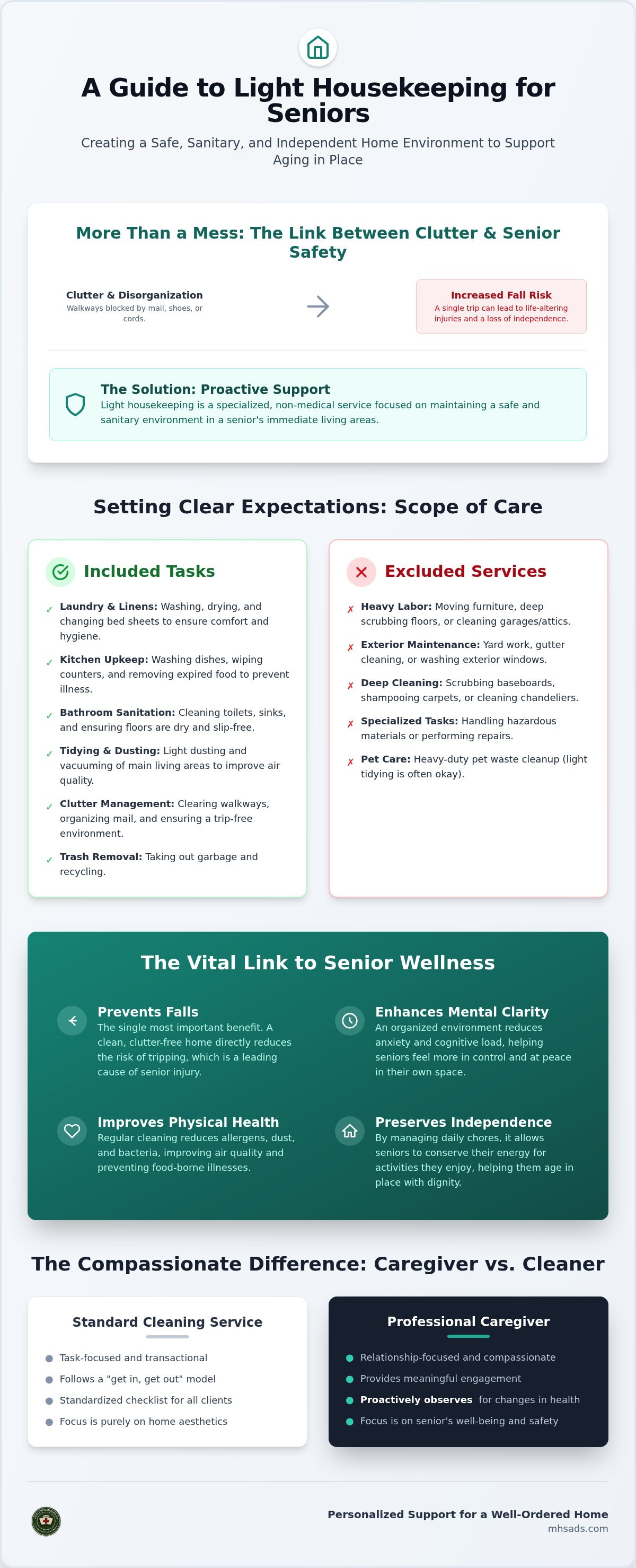
While a maid service might focus on aesthetic perfection, light housekeeping for seniors focuses on functional safety. Caregivers don't perform heavy labor like moving furniture, scrubbing baseboards, or cleaning windows. Instead, they handle the daily tasks that can become physically taxing or dangerous for an older adult. This is critical because research shows that 9 out of 10 U.S. homes are not currently equipped to accommodate the needs of aging adults. The focus stays on the immediate environment, which usually includes:
- Clearing clutter from hallways and walkways to prevent life-altering falls.
- Wiping down kitchen counters and removing expired food to maintain sanitation.
- Ensuring the bathroom is dry and free of slippery surfaces.
- Managing daily dishes and light laundry to keep the home running smoothly.
The goal isn't just a polished home. It's a home where every step is secure and every room feels manageable.
The Role of the Compassionate Caregiver
How does a caregiver differ from a cleaning professional? The difference lies in the relationship. A maid service often follows a "get in, get out" philosophy centered on tasks. In contrast, a caregiver uses light housekeeping for seniors as an opportunity for meaningful engagement. While they tidy the kitchen or fold laundry, they're also observing. They notice if a parent is moving more slowly, if their appetite has changed, or if they seem unusually confused. This proactive observation is a key part of being a trusted guide. It preserves a senior's dignity by providing help that feels like a partnership rather than a chore. A well-kept home reduces daily anxiety and allows your loved one to focus on their comfort and well-being.
Included Tasks vs. Excluded Services: Setting Clear Expectations
Does your parent feel overwhelmed by the small things that once felt effortless? It's natural to wonder where the line is between a helping hand and a full cleaning crew. Setting clear expectations is the best way to prevent frustration and ensure your loved one feels supported, not managed. When we talk about light housekeeping for seniors, we're describing a service that prioritizes the health and safety of the individual over the deep scrubbing of the structure itself.
Standard Housekeeping Tasks for Seniors
The daily rhythm of a home relies on consistent maintenance. Professional caregivers focus on tasks that directly impact a senior's physical well-being. Laundry and linens are a prime example. Fresh sheets aren't just a comfort; they improve sleep quality and protect sensitive skin from irritation or breakdown. Similarly, managing dishes and sanitizing kitchen surfaces is a vital health priority. Bacteria can thrive on unwashed plates or sticky counters, which significantly increases the risk of food-borne illnesses in those with aging immune systems.
Dusting and light vacuuming also play a role in preventive health by improving indoor air quality. This is especially important for seniors with respiratory conditions like COPD or asthma. Perhaps most importantly, caregivers engage in active clutter management. By ensuring that walkways are clear of mail, shoes, or stray cords, they provide a primary layer of fall prevention. If you're feeling the weight of these chores, you can explore personalized care options that restore balance to your family's routine.
What Professional Caregivers Do Not Do
Why do we draw a line at certain tasks? It's a matter of safety and specialized expertise. Professional caregivers are trained to provide person-centered support, but they aren't industrial cleaners or maintenance workers. For the safety of both the caregiver and the senior, heavy lifting or moving large appliances is excluded. These tasks carry a high risk of injury and are best left to professional movers or specialized cleaners.
Outdoor maintenance is another area outside the scope of care. Tasks like cleaning gutters, washing exterior windows, or climbing ladders involve significant liability and safety risks. Additionally, caregivers don't handle biohazard cleaning or deep carpet shampooing. These services require industrial-grade chemicals and equipment that go beyond the goal of maintaining a safe, daily living environment. By focusing on light housekeeping for seniors, caregivers remain available to provide the emotional and physical engagement that truly matters.
The Vital Link Between a Clean Home and Senior Wellness
Does your loved one's home feel like a place of rest or a source of constant stress? For many aging adults, the environment they live in directly mirrors their internal state of mind. When a home becomes disorganized, it often triggers what we call the "Clutter-Anxiety Loop." This is a cycle where physical mess creates mental fog, which then makes it even harder for a senior to find the energy to tidy up. By integrating light housekeeping for seniors into a daily routine, we break this cycle. We replace the weight of "to-do" lists with the lightness of a well-ordered sanctuary. A clean home isn't just a luxury; it's a fundamental requirement for mental clarity and emotional peace.
This sense of order extends directly to physical health. There is a proven correlation between an organized living space and successful mobility assistance for seniors. When walkways are clear and essentials are within reach, the fear of movement diminishes. This confidence is vital for maintaining independence. Similarly, a sanitized and organized kitchen is the prerequisite for proper nutrition. It's much easier to focus on meal preparation for elderly at home when the counters are clear and the fridge is organized. When the environment supports the goal, healthy habits follow naturally.
Fall Prevention Through Environmental Control
Why is a tidy floor so critical? Statistics show that most senior falls happen in the home, often due to preventable hazards like loose rugs, tangled electrical cords, or simple floor clutter. Clearing these paths isn't just about tidiness; it's about reducing the risk of hip fractures and long hospitalizations. Light housekeeping for seniors focuses on these high-traffic zones to ensure every step is secure. We believe that a clear floor is the first line of defense in senior fall prevention. By controlling the environment, we protect the person.
Cognitive Benefits of an Organized Living Space
How does order help those facing memory challenges? For seniors with early-stage dementia, a predictable and tidy home acts as an external memory aid. Visual cues, such as seeing medication in its designated, clear spot, help reduce the "overwhelm" that leads to withdrawal and depression. When a home is predictable, it feels safe. This consistency reduces daily frustration and allows your loved one to engage more fully with their family and hobbies. A well-kept home preserves more than just the furniture; it preserves the senior's sense of self-worth and dignity.
Starting the Conversation: How to Introduce Housekeeping Support Respectfully
Have you found yourself rehearsing the same conversation in your head, only to stay silent when you see the dust settling? It's a delicate bridge to cross. Introducing light housekeeping for seniors requires a gentle touch that prioritizes their agency. As a compassionate navigator, your goal is to guide them toward a solution that feels like a choice rather than a mandate. This is about preserving their independence, not taking it away.
Instead of pointing out what they haven't done, try "The Focus Shift." Make the conversation about health and longevity. For example, you might say, "I want to make sure your home stays the safe sanctuary it's always been." This reframes the help as a tool for independence. If you're unsure where to start, transitioning to home care services gradually is often the most respectful path for everyone involved.
Phasing in Support to Maintain Dignity
Start with a single, high-impact task. You might suggest, "Let's just have someone help with the heavy laundry so you don't have to carry those baskets." This approach feels less intrusive than a total overhaul. Frame the caregiver as a "personal assistant" or "home helper." This language acknowledges their status and dignity. Most importantly, remind them of the benefit to you. Tell them, "Having this help allows us to spend our visits just enjoying each other's company instead of me doing chores."
Handling Common Objections
When resistance arises, it usually stems from a place of fear. Here is how to navigate the most common concerns respectfully:
- The 'I can do it myself' objection: Validate their lifelong strength first. Say, "I know you can, but I'm worried about the physical strain on your back and the risk of a slip."
- The 'Stranger in the house' objection: Focus on the vetted reliability of professional caregivers. Explain the rigorous background checks and standards that ensure only the most dependable people enter their private space.
- The 'It's too expensive' objection: Gently help them compare the modest cost of light housekeeping for seniors to the overwhelming financial and physical cost of an injury-related hospital stay.
A trial period is often the best way to lower defenses. Suggest trying the service for just two weeks. This gives them a sense of control and a chance to see the immediate benefits of a well-supported home. Ready to take that first step? You can schedule a free consultation to find the right navigator for your family's needs.
Mercy Health Services: Personalized Support for a Well-Ordered Home
How do you find a partner you can trust with the intimate details of your parent's daily life? At Mercy Health Services, we believe that every home tells a story, and every senior deserves to have theirs respected. Our core philosophy is "Care that respects the individual," which means we look beyond the dust on the shelf to see the person living there. Through our one on one senior care model, your loved one is paired with a consistent caregiver who learns the nuances of their home and their habits. This stability ensures that light housekeeping for seniors feels less like a service and more like a collaborative partnership.
Vetted Reliability and Personalized Care Plans
How do we guarantee the safety of your loved one's sanctuary? We take our role as a Compassionate Navigator seriously. Every caregiver on our team undergoes a comprehensive vetting process, including thorough background checks, to ensure they meet our high standards of reliability. We don't just send the first available person; we focus on matching a caregiver's personality and skills with your parent's unique needs. This creates a sense of comfort from the very first visit.
Once a match is made, we work with you to develop a personalized care plan. This plan is flexible and evolves as your needs change. For many families, light housekeeping for seniors is a gentle entry point that later integrates into a more comprehensive personal care assistance plan. We also recognize that when a home environment becomes disorganized or hazardous, time is of the essence. Our organization is built for responsiveness. Service can often begin within a few days of your initial inquiry, providing help exactly when your family needs it most.
The Peace of Mind Guarantee for Families
What does it feel like to finally let go of the guilt and stress of caregiving chores? It feels like freedom. When you know a capable professional is handling the laundry and clearing the walkways, you can return to being a daughter or a son. Our caregivers provide regular updates that keep you connected to the home's daily rhythm, even when you're miles away. You'll no longer have to worry about what you'll find when you open the front door.
This consistent communication transforms the caregiver from a visitor into a trusted family partner. We're here to navigate the complexities of aging with you, providing a stable anchor during times of transition. By choosing a partner who values dignity as much as cleanliness, you're investing in your parent's long-term wellness and your own peace of mind. Contact Mercy Health Services for a free consultation today and let us help you create a well-ordered home where your family can thrive.
Empowering Your Loved One's Independence at Home
What if the path to a safer, more joyful life for your parent begins with simply clearing the way? We've explored how light housekeeping for seniors is far more than a chore; it's a foundational strategy for fall prevention and mental clarity. By focusing on the immediate environment, professional support removes the physical hazards and mental clutter that often lead to senior withdrawal. You don't have to carry the weight of these daily tasks alone, and your parent doesn't have to sacrifice their dignity to receive help.
Are you ready to transition from a stressed caregiver back to a devoted family member? Mercy Health Services is here to guide you with vetted, background-checked caregivers and customized care plans tailored specifically for your family's needs. Because we understand the urgency of home safety, our service can often begin within a few days. You can Schedule a Free Consultation with Mercy Health Services today to reclaim your peace of mind. Let's work together to ensure your loved one's home remains the secure, dignified sanctuary they deserve.
Frequently Asked Questions
Is light housekeeping the same as a maid service?
No, light housekeeping for seniors is distinct from a traditional maid service. While a maid focuses on deep cleaning and aesthetics, a caregiver focuses on the person. We prioritize safety, sanitation, and organization in the immediate living area. This includes tasks like clearing trip hazards and sanitizing kitchen surfaces. It's about keeping your loved one safe and independent, not just making a room look polished for guests.
Can a caregiver help with my parent's pet during housekeeping?
Yes, many caregivers can assist with basic pet needs as part of their supportive role. This might include replenishing a water bowl or lightly tidying a pet's feeding area while they manage other household tasks. Because our care is personalized, we can discuss these specific needs during your consultation. Ensuring your parent's companion is well-cared for often reduces their daily anxiety and helps maintain a happy, healthy home environment.
Do caregivers bring their own cleaning supplies and vacuums?
Generally, caregivers use the cleaning supplies and equipment already available in your parent's home. This practice ensures that we're using products your loved one is comfortable with and avoids bringing allergens or bacteria from other environments. It also keeps the routine familiar for the senior. We recommend having a functional vacuum and basic sanitizing supplies on hand so your caregiver can effectively maintain a safe and well-ordered living space.
What happens if my parent refuses to let the caregiver clean?
We understand that accepting help can feel like a loss of control. If a parent resists, our caregivers use a patient and respectful approach. We won't force the issue. Instead, we build trust through companionship first. We often suggest a trial period or focus only on one small, high-impact task. By shifting the focus to safety rather than ability, we help seniors see the support as a way to stay independent.
How many hours a week of light housekeeping do most seniors need?
There isn't a single answer, as every home is different. However, many families find that two to four hours of light housekeeping for seniors, scheduled a few times a week, is sufficient. This allows enough time for laundry, kitchen sanitation, and clutter management. During our free consultation, we'll help you determine the right frequency based on your parent's mobility, the size of their home, and their specific daily needs.
Are Mercy Health Services caregivers insured and background-checked?
Absolutely. At Mercy Health Services, your family's safety is our highest priority. Every caregiver on our team is fully insured and has passed a rigorous vetting process, including a thorough background check. We understand the weight of inviting a professional into a private home. This commitment to vetted reliability ensures that you can feel confident and relaxed, knowing your loved one is in the hands of a dependable and trustworthy guide.
Can housekeeping be combined with medication reminders?
Yes, housekeeping is frequently combined with other essential supports. In fact, light housekeeping for seniors often serves as a bridge to services like medication reminders and meal preparation. While a caregiver tidies the kitchen, they can ensure your parent takes their prescriptions on schedule. This holistic approach ensures that all aspects of your loved one's well-being are supported during a single visit, providing a seamless and consistent care experience.
What should I do if my parent needs deep cleaning or heavy repairs?
If your parent's home requires heavy lifting, outdoor maintenance, or deep sanitation, you'll need to hire a specialized professional service. Tasks like cleaning gutters, moving furniture, or biohazard cleaning fall outside our scope of care. Our caregivers focus on daily maintenance to ensure a safe environment. We recommend contacting a local handyman or industrial cleaning crew for these heavy-duty needs so our caregivers can stay focused on your parent's personal well-being.
Frequently Asked Questions
No, light housekeeping for seniors is distinct from a traditional maid service. While a maid focuses on deep cleaning and aesthetics, a caregiver focuses on the person. We prioritize safety, sanitation, and organization in the immediate living area. This includes tasks like clearing trip hazards and sanitizing kitchen surfaces. It's about keeping your loved one safe and independent, not just making a room look polished for guests.
Yes, many caregivers can assist with basic pet needs as part of their supportive role. This might include replenishing a water bowl or lightly tidying a pet's feeding area while they manage other household tasks. Because our care is personalized, we can discuss these specific needs during your consultation. Ensuring your parent's companion is well-cared for often reduces their daily anxiety and helps maintain a happy, healthy home environment.
Generally, caregivers use the cleaning supplies and equipment already available in your parent's home. This practice ensures that we're using products your loved one is comfortable with and avoids bringing allergens or bacteria from other environments. It also keeps the routine familiar for the senior. We recommend having a functional vacuum and basic sanitizing supplies on hand so your caregiver can effectively maintain a safe and well-ordered living space.
We understand that accepting help can feel like a loss of control. If a parent resists, our caregivers use a patient and respectful approach. We won't force the issue. Instead, we build trust through companionship first. We often suggest a trial period or focus only on one small, high-impact task. By shifting the focus to safety rather than ability, we help seniors see the support as a way to stay independent.
There isn't a single answer, as every home is different. However, many families find that two to four hours of light housekeeping for seniors, scheduled a few times a week, is sufficient. This allows enough time for laundry, kitchen sanitation, and clutter management. During our free consultation, we'll help you determine the right frequency based on your parent's mobility, the size of their home, and their specific daily needs.
Absolutely. At Mercy Health Services, your family's safety is our highest priority. Every caregiver on our team is fully insured and has passed a rigorous vetting process, including a thorough background check. We understand the weight of inviting a professional into a private home. This commitment to vetted reliability ensures that you can feel confident and relaxed, knowing your loved one is in the hands of a dependable and trustworthy guide.
Yes, housekeeping is frequently combined with other essential supports. In fact, light housekeeping for seniors often serves as a bridge to services like medication reminders and meal preparation. While a caregiver tidies the kitchen, they can ensure your parent takes their prescriptions on schedule. This holistic approach ensures that all aspects of your loved one's well-being are supported during a single visit, providing a seamless and consistent care experience.
If your parent's home requires heavy lifting, outdoor maintenance, or deep sanitation, you'll need to hire a specialized professional service. Tasks like cleaning gutters, moving furniture, or biohazard cleaning fall outside our scope of care. Our caregivers focus on daily maintenance to ensure a safe environment. We recommend contacting a local handyman or industrial cleaning crew for these heavy-duty needs so our caregivers can stay focused on your parent's personal well-being.