Home Care for Adults Under 50: 2026 Support Guide
August 27, 2026 · 18 min read
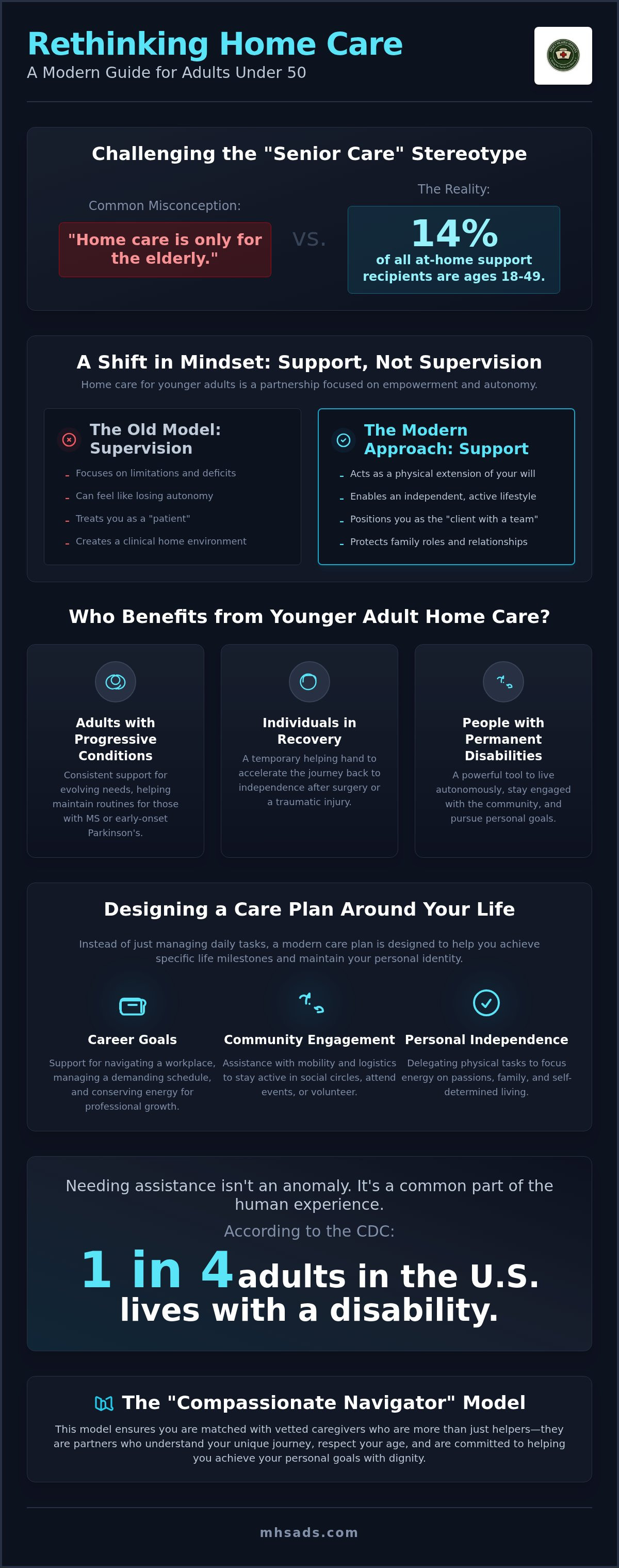
Did you know that nearly 14% of all people receiving support at home are between the ages of 18 and 49? It's a reality that often goes unspoken because society frequently assumes these services are exclusively for the elderly. If you're looking for home care for adults under 50, you likely want more than just supervision. You're looking for a strategic partnership that respects your age, your career, and your personal goals.
It's completely natural to feel like you're losing your autonomy or to worry about the stigma of asking for help. You might be navigating a complex work-life balance while managing a disability, or perhaps you're watching a loved one face the heavy weight of caregiver burnout. We understand that your needs are unique, and we agree that receiving assistance should never mean giving up your dignity or your voice.
This 2026 support guide will show you how specialized in-home care empowers you to manage chronic illness or recovery on your own terms. We'll preview the different paths to finding reliable, vetted assistance, from mobility support to help with daily tasks, so you can choose the journey that best fits your lifestyle and helps you reclaim your independence.
Key Takeaways
- Reframe home care as a lifestyle-enabling service that bridges the gap between needing assistance and maintaining your personal identity.
- Understand how professional support acts as a physical extension of your will, reducing the strain on family members while protecting your autonomy.
- Learn to design a personalized care plan focused on achieving specific life milestones, like career goals or community engagement, rather than just managing deficits.
- Discover why specialized home care for adults under 50 is essential for managing recovery or chronic conditions with dignity and age-appropriate respect.
- Identify the benefits of the "Compassionate Navigator" model, which ensures you are matched with vetted caregivers who understand your unique journey.
Home Care for Adults Under 50: Closing the 'Senior' Gap
Have you ever felt that the support systems available today are only designed for your grandparents? For many, the term "home care" evokes images of retirement communities and end-of-life assistance. However, home care for adults under 50 is fundamentally different. It's a lifestyle-enabling service designed to help you stay in the driver's seat of your own life. Whether you're juggling a career, raising children, or maintaining a social circle, this support acts as a bridge rather than a barrier.
To understand the foundation of these services, one might ask, What is Home Care? Essentially, it's a way to receive non-medical assistance that allows you to remain in your own environment while managing daily tasks that have become challenging. By closing the "senior gap," we recognize that younger adults have unique life stages that require a different approach to support. You aren't looking for someone to take over your life; you're looking for a partner to help you live it.
The stigma surrounding home care often prevents younger adults from seeking the help they deserve. You might feel that accepting help is a sign of giving up, but the opposite is true. According to the CDC, up to 1 in 4 adults in the United States lives with a disability. This means that needing assistance isn't an anomaly; it's a common part of the human experience. Private-duty home care for adults under 50 allows you to delegate the physical labor of daily living so you can spend your energy on your career, your family, and your passions.
It's vital to distinguish between medical home health and private-duty personal care. While medical care involves skilled nursing and clinical procedures, personal care focuses on the human element. It includes help with mobility, meal preparation, and light housekeeping. This isn't about supervision; it's about providing the physical support necessary to maintain a self-determined lifestyle.
Who Benefits from Younger Adult Home Care?
There isn't a single "type" of person who utilizes these services. We see a wide range of individuals who find that a little extra support makes a world of difference. This includes:
- Adults managing progressive conditions: Those living with Multiple Sclerosis or early-onset Parkinson’s often find that consistent support helps them maintain their routine as their needs evolve.
- Individuals in recovery: If you're healing from major surgery or a traumatic injury, a temporary helping hand can accelerate your journey back to independence.
- People with permanent disabilities: Younger adults with physical or developmental disabilities use home care as a tool to live autonomously and stay active in their communities.
The Emotional Transition to Accepting Support
Acknowledging that you need help at a young age can be incredibly frustrating. It's a reality that can feel like an intrusion on your identity. However, shifting your mindset from being a "patient" to being a "client with a support team" is empowering. You are the manager of your care. Professional support can actually improve family relationships by removing the weight of caregiving from spouses or parents. When a professional handles the daily tasks, your loved ones can return to their primary roles as partners, parents, and friends. This transition fosters a sense of dignity and ensures that your home remains a place of comfort rather than a clinical space.
Specialized Support for Chronic Illness and Recovery
Why settle for a generic approach when your life is anything but generic? Specialized home care for adults under 50 recognizes that your goals involve more than just safety; they involve vitality. Our personal care assistance is designed to adapt to younger bodies that may be recovering from athletic injuries or managing early-onset conditions. This support isn't about restriction. It's about creating the capacity for you to focus on what matters most, whether that's your career, your family, or your personal growth.
Mobility assistance for an active adult looks different than it does for a senior. It might mean help getting to the gym, navigating a workplace, or staying engaged in community events. While many assume these programs are exclusively for the elderly, the framework for Home & Community Based Services (HCBS) supports a diverse range of ages and needs. By providing a physical extension of your own will, a caregiver helps you maintain a presence in the world outside your front door.
Managing a complex treatment plan requires precision. Medication reminders ensure you stay on track with therapeutic schedules without the mental burden of constant self-monitoring. Similarly, meal preparation is tailored to your specific needs. We focus on supporting therapeutic diets that manage inflammation, boost energy, or aid in tissue repair. If you're ready to see how these services can fit your specific needs, explore our personalized care options today.
Managing Progressive Conditions at Home
Living with conditions like Multiple Sclerosis or Fibromyalgia often means dealing with fluctuating energy levels. Some days you're ready to take on the world; other days, your body requires rest. A flexible care plan adapts to these shifts, providing more intensive support during "flares" and stepping back when you feel stronger. For those with early-onset neurological conditions, a consistent routine provides a sense of stability and control. Dedicated one-on-one support provides a watchful eye during movement, significantly reducing the risk of accidental falls during periods of physical weakness or transition.
Post-Operative and Injury Recovery
Recovery from major orthopedic surgery or a traumatic injury can be a humbling experience. Short-term, intensive support helps you bridge the gap between hospital discharge and full independence. We assist with Activities of Daily Living (ADLs) such as bathing and dressing, which might be temporarily impossible to do alone. This assistance ensures your recovery isn't stalled by overexertion. By handling the heavy lifting of household tasks, we allow your body the space it needs to heal properly and quickly.
Maintaining Autonomy: Support vs. Supervision
How do you maintain your sense of self when your daily routine requires a helping hand? For many, the greatest fear of seeking home care for adults under 50 is the feeling of being "watched" or "managed." It's a common concern, but the reality of professional support is quite the opposite. When done correctly, a caregiver doesn't supervise your life; they act as a physical extension of your own will. They provide the strength or dexterity needed to execute your decisions, ensuring that you remain the architect of your day.
One of the most significant benefits of this partnership is the restoration of family dynamics. When a spouse or parent becomes a primary caregiver, the relationship often shifts into a cycle of "unpaid" family labor. This can lead to resentment and burnout, clouding the emotional connection you share. By introducing a professional, you reclaim that personal space. Your loved ones can return to being your partner or your friend, while the professional handles the physical tasks. This separation is vital for maintaining a healthy, balanced home life.
We understand that privacy is a top priority, especially when you're under 50 and active. Bringing a new person into your home requires a high level of trust. That's why we emphasize matching caregivers based on personality, shared interests, and professional compatibility. It isn't just about finding someone with the right skills; it's about finding a person who understands your rhythm and respects your boundaries. This ensures that the support feels natural rather than intrusive.
Preserving the Dignity of Personal Care
Assistance with hygiene and dressing is often the most sensitive part of receiving support. Many find that professional boundaries actually make these tasks less awkward than receiving help from a family member. A vetted, background-checked professional approaches these needs with clinical respect and person-centered warmth. For those who have utilized home care for special needs children, this transition into adult support focuses on evolving those needs into age-appropriate, dignified routines that reflect your maturity and independence.
Companionship for a Younger Generation
Social engagement is a fundamental pillar of mental health, yet it is often the first thing to suffer when managing a disability or recovery. Professional companionship is not "babysitting." It is a collaborative effort to facilitate your hobbies, outings, and social interactions. Whether it's assistance attending a concert, visiting a gallery, or simply grabbing coffee with a friend, a caregiver ensures you aren't isolated. This active engagement helps you stay connected to your community and preserves your identity as a vibrant, social adult.
How to Create a Personalized Care Plan for Adults Under 50
Are you wondering how to transition from simply getting by to truly thriving in your own home? Creating a successful plan for home care for adults under 50 starts with a shift in perspective. Instead of focusing solely on medical deficits or what you can't do, we look at your life through the lens of possibility. A personalized care plan is a roadmap designed to support your specific lifestyle, ensuring that every hour of assistance brings you closer to your personal objectives.
The first step involves a comprehensive assessment of your daily rhythm. What are the moments where you feel most frustrated? Where could a physical extension of your will make the biggest impact? We also evaluate your home environment for safety and accessibility, identifying small changes that can enhance your independence. Once we understand the where and how, we determine the necessary frequency of support. For some, a few hours of help with morning routines is sufficient. Others may require more consistent, 24/7 care to manage complex conditions or intensive recovery phases.
If you're ready to build a plan that respects your ambition and your autonomy, schedule a free consultation with our care team to begin the process today.
Setting Functional Goals for Care
What does a good day look like for you? We believe care should be measured by quality of life metrics rather than just safety checks. Your goals might include returning to a part-time work schedule, attending a family wedding, or maintaining a daily exercise routine. By collaborating closely with you, we ensure the care plan remains flexible. As you gain strength during recovery or as your needs shift with a progressive condition, your support team adapts to meet you exactly where you are.
Navigating the Costs of Private-Duty Care
Understanding the financial side of support is essential for long-term peace of mind. In 2026, the national median hourly rate for non-medical, private pay home care is between $34 and $35. While this represents a modest 3% increase from the previous year, many find it significantly more cost-effective than residential facility alternatives, which often lack the personalization younger adults require. When arranging home care for adults under 50, you might explore private funding options or long-term care insurance to cover these services. Because private-duty care is tailored, you only pay for the specific hours and level of assistance you need, allowing for better control over your budget while receiving high-quality, one-on-one support.
Finding the Right Partner: The Mercy Health Services Approach
How do you choose a partner who values your independence as much as you do? When you're seeking home care for adults under 50, the decision carries significant weight. You aren't just looking for someone to help with chores; you're looking for a person who respects your lifestyle and understands your unique journey. At Mercy Health Services, we don't view care as a transaction. We see it as a collaborative partnership built on a foundation of trust, dignity, and professional reassurance.
Our "Compassionate Navigator" model is designed to simplify what can often feel like an overwhelming process. Instead of just assigning a caregiver, we focus on personalized matching. We consider your personality, your goals, and your specific needs to ensure the support feels natural and supportive. This approach allows us to serve as a stable anchor for you and your family, providing the reliability you need to focus on living your life to the fullest. Whether you're managing a chronic condition or recovering from an injury, our focus remains on your person-centered care.
We believe that every adult, regardless of age, deserves to be treated with the utmost respect. Our services are designed to be proactive and observant, ensuring that we're always one step ahead of your needs. By choosing a partner that specializes in private-duty support, you're choosing a path that prioritizes your voice and your vision for the future.
The Vetting Process: Why It Matters
What gives you the peace of mind to welcome someone new into your home? It starts with our unwavering commitment to safety and excellence. Every caregiver in our network undergoes a rigorous screening process, including detailed background checks and vetting for reliability. We don't just look for skills; we look for empathy. Our training emphasizes professional reassurance and meaningful engagement, ensuring that your caregiver is not just capable, but also a compassionate presence in your daily life. This high standard of preparation ensures that you receive consistent, dependable assistance every single day.
Taking the First Step Toward Support
Are you ready to see how a personalized plan can change your daily rhythm? Starting the process is simpler than you might think. We offer free consultations to discuss your specific challenges and goals without any initial pressure. During this assessment, we listen to your concerns and help you map out a path that works for your budget and your lifestyle. Because we understand that needs can arise suddenly, we've optimized our onboarding to be swift and efficient. In many cases, we have the ability to start care within a few days of your initial inquiry. This responsiveness ensures that you don't have to wait to get the support you deserve. Contact Mercy Health Services today to build your personalized care plan and take back control of your independence.
Empowering Your Path to Independence
Choosing to seek support is a strategic decision to reclaim your time and energy. You've learned that home care for adults under 50 is far more than just supervision; it's a collaborative partnership designed to protect your dignity while managing recovery or chronic illness. By prioritizing customized plans and professional boundaries, you can reduce the strain on your loved ones and return to the roles that define who you are.
As national private-duty care experts, we're here to serve as your stable anchor. Our team provides vetted and background-checked caregivers who understand that your goals are unique. Whether you need assistance with mobility or help managing a complex schedule, we offer customized plans for adults, children, and seniors alike. It's time to shift your focus from simply managing a condition to actively pursuing your passions.
Are you ready to take the next step? Schedule your free home care consultation with Mercy Health Services today. We're honored to guide you toward a more supported, vibrant future where your independence always comes first.
Frequently Asked Questions
Is home care only for seniors or can younger adults use it too?
Home care is absolutely available for younger adults. While many people associate these services with the elderly, about 14% of all home care recipients are actually between the ages of 18 and 49. Whether you're managing a temporary injury or a lifelong disability, these services are designed to help you maintain your independence. We focus on providing age-appropriate support that respects your active lifestyle and career goals.
How much does home care for adults under 50 typically cost?
The cost depends entirely on your specific needs and the frequency of support you require. We offer a flexible hourly fee structure for private-pay services, which allows you to pay only for the assistance you actually use. This personalized approach is often more budget-friendly than residential alternatives. During your free consultation, we'll help you map out a plan that fits your financial situation while ensuring you receive high-quality, one-on-one care.
What is the difference between home health care and personal home care?
Home health care involves skilled medical services, such as nursing or physical therapy, usually ordered by a doctor for short-term recovery. In contrast, personal home care focuses on non-medical assistance with daily living. This includes personal care assistance, mobility support, and meal preparation. Our private-duty home care for adults under 50 is designed to help you manage the physical tasks of life so you can focus on your personal well-being.
Can a caregiver help me with tasks so I can continue working?
Yes, a caregiver can be a vital partner in helping you maintain your professional life. By handling time-consuming tasks like light housekeeping, meal preparation, or transportation, a professional allows you to dedicate your energy to your career. Think of your caregiver as a physical extension of your will. They handle the logistical challenges of your day so you can remain productive and engaged in your chosen workplace.
How do you ensure the caregiver is a good fit for my personality?
We believe that a successful partnership starts with a great match. Our "Compassionate Navigator" model takes your personality, hobbies, and communication style into account when selecting a caregiver. We don't just look at skills; we look for a connection. This careful matching process ensures that the person entering your home feels like a trusted guide rather than an intruder, creating a comfortable and supportive environment for your daily routine.
What happens if my needs change or I only need temporary help?
Our care plans are built to be as flexible as your life requires. If you only need intensive support during a post-operative recovery, we can provide short-term assistance. If your needs evolve due to a progressive condition, we can easily adjust the frequency and type of support you receive. You aren't locked into a rigid schedule. We work with you to ensure your care plan always reflects your current reality.
Are your caregivers trained to handle specific conditions like MS or ALS?
Our caregivers receive specialized training to support individuals living with various progressive and neurological conditions. We focus on understanding the unique challenges of conditions like Multiple Sclerosis or ALS, such as fluctuating energy levels and mobility needs. This training emphasizes empathy and professional reassurance, ensuring that your support team is prepared to provide consistent, respectful assistance that adapts to the specific nuances of your health journey.
How quickly can we begin receiving home care services?
We understand that sometimes support is needed urgently. In most cases, we have the ability to start care within a few days of your initial inquiry. The process begins with a free consultation where we discuss your specific needs and goals. Following a brief care assessment, we'll match you with a vetted professional so you can begin receiving the assistance you need to reclaim your independence without unnecessary delays.
Frequently Asked Questions
There isn't a single "type" of person who utilizes these services. We see a wide range of individuals who find that a little extra support makes a world of difference. This includes:
Home care is absolutely available for younger adults. While many people associate these services with the elderly, about 14% of all home care recipients are actually between the ages of 18 and 49. Whether you're managing a temporary injury or a lifelong disability, these services are designed to help you maintain your independence. We focus on providing age-appropriate support that respects your active lifestyle and career goals.
The cost depends entirely on your specific needs and the frequency of support you require. We offer a flexible hourly fee structure for private-pay services, which allows you to pay only for the assistance you actually use. This personalized approach is often more budget-friendly than residential alternatives. During your free consultation, we'll help you map out a plan that fits your financial situation while ensuring you receive high-quality, one-on-one care.
Home health care involves skilled medical services, such as nursing or physical therapy, usually ordered by a doctor for short-term recovery. In contrast, personal home care focuses on non-medical assistance with daily living. This includes personal care assistance, mobility support, and meal preparation. Our private-duty home care for adults under 50 is designed to help you manage the physical tasks of life so you can focus on your personal well-being.
Yes, a caregiver can be a vital partner in helping you maintain your professional life. By handling time-consuming tasks like light housekeeping, meal preparation, or transportation, a professional allows you to dedicate your energy to your career. Think of your caregiver as a physical extension of your will. They handle the logistical challenges of your day so you can remain productive and engaged in your chosen workplace.
We believe that a successful partnership starts with a great match. Our "Compassionate Navigator" model takes your personality, hobbies, and communication style into account when selecting a caregiver. We don't just look at skills; we look for a connection. This careful matching process ensures that the person entering your home feels like a trusted guide rather than an intruder, creating a comfortable and supportive environment for your daily routine.
Our care plans are built to be as flexible as your life requires. If you only need intensive support during a post-operative recovery, we can provide short-term assistance. If your needs evolve due to a progressive condition, we can easily adjust the frequency and type of support you receive. You aren't locked into a rigid schedule. We work with you to ensure your care plan always reflects your current reality.
Our caregivers receive specialized training to support individuals living with various progressive and neurological conditions. We focus on understanding the unique challenges of conditions like Multiple Sclerosis or ALS, such as fluctuating energy levels and mobility needs. This training emphasizes empathy and professional reassurance, ensuring that your support team is prepared to provide consistent, respectful assistance that adapts to the specific nuances of your health journey.
We understand that sometimes support is needed urgently. In most cases, we have the ability to start care within a few days of your initial inquiry. The process begins with a free consultation where we discuss your specific needs and goals. Following a brief care assessment, we'll match you with a vetted professional so you can begin receiving the assistance you need to reclaim your independence without unnecessary delays.