
Transitioning to Home Care Services: A Compassionate Step-by-Step Guide
September 1, 2026 · 17 min read
What if the decision to invite a professional into your home wasn't a sign of surrendering independence, but rather the strategic partnership that protects it? Have you found yourself feeling more like a manager or a nurse than a daughter, son, or spouse lately? It's natural to feel a sense of hesitation or even guilt when considering transitioning to home care services for someone you love. You might worry about their resistance to a new face in the house or feel anxious about finding a caregiver who truly understands your family's unique rhythm.
We understand that this shift is deeply personal and often emotionally complex. This guide is designed to help you navigate the practical and emotional steps of bringing professional support into your home while keeping dignity at the forefront. You'll learn how to identify reliable, vetted assistance that feels like a natural extension of your family. We will explore how to prepare for a successful first day, manage the logistics of care schedules, and ultimately restore the healthy balance your relationships deserve.
Key Takeaways
- Learn to identify the subtle "tipping point" signs, such as hygiene shifts or caregiver fatigue, that indicate it's time to move toward professional support.
- Discover how transitioning to home care services can actually enhance independence and dignity by framing assistance as a collaborative partnership rather than supervision.
- Understand how to build a personalized care plan that balances physical assistance with meaningful companionship tailored to your family's unique rhythm.
- Master the critical first 72 hours of the transition by establishing clear communication logs and boundaries that turn a new caregiver into a trusted guide.
Understanding the Transition: Is it the Right Time for Home Care?
Have you noticed that the daily routine with your loved one feels increasingly heavy? It's a common realization that often comes with a complex mix of relief and a heavy heart. Understanding what is home care helps frame this shift not as a surrender of freedom, but as a collaborative support model. Transitioning to home care services is about adding a dedicated partner to your family's team. It allows you to return to your role as a daughter, son, or spouse while ensuring your loved one has the consistent assistance they need to remain in familiar surroundings.
Feeling both guilt and relief during this time is a completely normal part of the process. You're acknowledging that the current situation is no longer sustainable for either of you. Whether you need temporary respite care to catch your breath or long-term private-duty support for an adult under 50 or a senior, the goal is the same: preserving dignity while enhancing safety.
Signs that Professional Support is Necessary
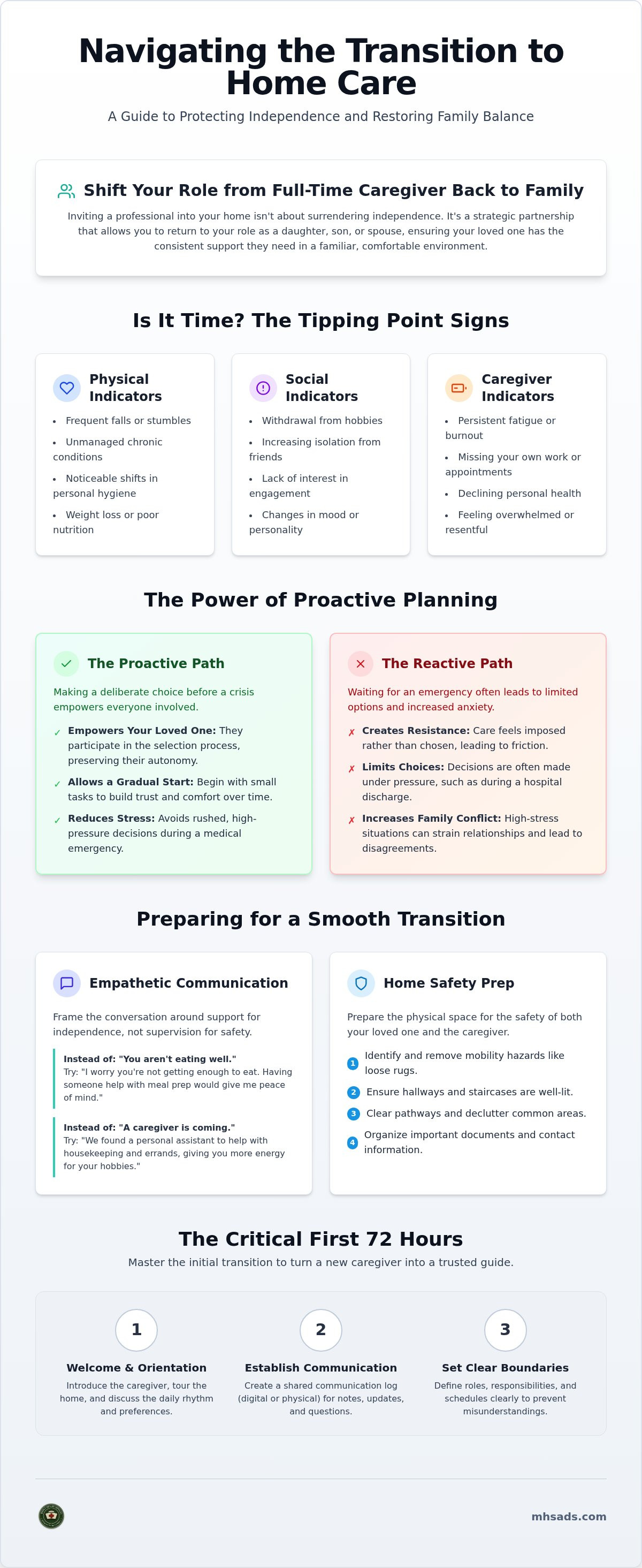
Are there specific moments that make you hold your breath? Perhaps it's a stumble in the hallway or a kitchen cabinet that hasn't been touched in days. Identifying the tipping point helps you move from worry to action. Look for these indicators:
- Physical indicators: Frequent falls, unmanaged chronic conditions, or visible shifts in personal hygiene and grooming.
- Social indicators: Withdrawal from favorite hobbies, isolation, or a lack of interest in meaningful engagement with others.
- Caregiver indicators: Persistent burnout, missed work shifts, or the declining physical health of the primary family member providing care.
The Benefits of Proactive Planning
Why wait for a crisis to make a life-changing choice? Transitioning to home care services works best when it's a deliberate choice rather than a reaction to an emergency. Starting the conversation early changes the dynamic of the transition entirely. When you aren't rushing a decision during a hospital discharge, you have the space to include your loved one in the selection process. This empowers them to lead the way, ensuring they feel like a partner in their own care rather than a passive recipient of it.
Early planning also allows you to build a relationship with an agency before 24/7 support becomes an urgent necessity. You might start with simple meal preparation or light housekeeping to let everyone get comfortable. This gradual approach builds a foundation of vetted reliability, making it much easier to scale up assistance as needs evolve over time.
Preparing the Heart and Home for a New Caregiver
How do you begin a conversation about help without making a loved one feel as if they are losing their autonomy? This is often the most delicate stage of transitioning to home care services. The goal is to shift the narrative from "supervision for safety" to "support for independence." When a person feels like they're being watched, they naturally become defensive. However, when they feel like they're being assisted in reaching their own goals, the door to professional support opens much more easily.
Empathetic Communication Strategies
Have you tried using "I" statements to express your concerns? Instead of saying "You aren't eating well," try saying, "I feel worried when I see the fridge is empty, and I'd love to know you have help with meal prep." This removes the accusatory tone and focuses on your feelings as a supportive family member. It's also helpful to frame the caregiver as a "personal assistant" or a "companion" rather than a clinical provider. Starting with small, non-invasive tasks like light housekeeping or laundry can act as a gentle entry point, allowing trust to grow at a natural pace.
For those exploring home care for adults under 50, the focus on autonomy is even more critical. Younger adults often need assistance to maintain their careers, parenting roles, or social lives. In these cases, the caregiver acts as a strategic partner who handles the physical hurdles so the individual can focus on living their life. If you're unsure how to start this dialogue, a free initial consultation can provide a neutral third-party perspective to help facilitate the discussion.
Environmental and Safety Prep
Is your home environment ready to welcome a professional? Preparing the physical space is about safety for both the client and the caregiver. Start with a basic walkthrough to identify mobility hazards like loose rugs or poor lighting in hallways. You might refer to the Senior Mobility Guide 2026 for specific safety modifications that can be made without turning the home into a clinical setting.
Setting up a dedicated "care station" is another practical step. This area should include:
- Necessary supplies like gloves or mobility aids.
- A list of emergency contacts and physician information.
- A simple communication log for the caregiver to note daily activities.
By organizing these details ahead of time, you reduce the stress of the first day and allow the caregiver to focus entirely on building a meaningful connection with your loved one. This proactive approach ensures that the transition feels organized and respectful from the very first moment.
Creating Your Personalized Home Care Plan
How do you ensure that professional support feels like a custom fit rather than a rigid set of rules? A personalized care plan is the blueprint that turns a service into a partnership. When your family begins transitioning to home care services, this document serves as a bridge between your needs and the caregiver's daily actions. It's not just about a list of chores; it's about capturing the preferences, rhythms, and personality of the person receiving care. Whether the support is for a child, a young adult, or a senior, the plan must be as unique as the individual it serves.
Defining Daily Goals and Routines
Does your loved one value their morning independence but need help as the day winds down? Mapping out a typical day helps the caregiver anticipate needs before they become stressors. This includes everything from morning hygiene and mobility assistance to elderly meal prep that focuses on nutrition and personal taste. You should ensure that Activities of Daily Living (ADLs) are clearly documented, but don't stop there. A truly personalized plan incorporates social goals and mental stimulation. Whether it's playing a favorite card game, going for a walk, or simply having a conversation over tea, these moments are what transform "care" into "meaningful engagement."
The Caregiver Matching Process
How do you find someone you can trust with your family's most private moments? The role of a professional agency is to act as a "Compassionate Navigator" during this selection. Every caregiver should be background-checked and vetted to ensure safety and reliability. However, technical skill is only half the battle. The agency looks for a personality match that aligns with your family's temperament and lifestyle. This attention to detail is what makes the difference between a stranger in the house and a trusted guide.
As needs evolve, a plan might grow from a few hours of light housekeeping to dedicated one-on-one senior care. During your free initial consultation, don't be afraid to ask how the agency handles consistency. A stable anchor for your family means having a consistent presence you can count on, ensuring that the caregiver feels like a natural extension of your home. By focusing on both the practical and the personal, you create a foundation for a successful, long-term partnership.
The First 72 Hours: Navigating the Initial Transition
Have you felt a knot in your stomach as the first day of care approaches? It's natural to feel protective of your home and your loved one's comfort. The first 72 hours are the most critical window when transitioning to home care services. This is the period where expectations meet reality and the foundation of trust is laid. You aren't just hiring a service; you're welcoming a new presence into your most private spaces. During this time, the goal is to move from a state of high alert to a place of professional reassurance.
Establishing boundaries early ensures that everyone feels respected. A communication log is a simple yet powerful tool for this. It allows family members and professionals to stay on the same page without needing constant phone calls. By documenting daily activities, meal intake, and mood shifts, you create a transparent record of care that provides immense peace of mind. If you're ready to take this step, you can schedule a free consultation to discuss how care can begin within just a few days.
The First Day Checklist
How do you make a stranger feel like an invited guest? A successful first day starts with a warm but structured introduction. Providing a brief home tour is essential. Show the caregiver where cleaning supplies are kept, how the kitchen appliances work, and where the emergency contact list is posted. This reduces their "newness" and allows them to step into their role with confidence.
- Review the Care Plan: Sit down together to walk through the documented routines, from medication reminders to specific mobility assistance needs.
- Define Boundaries: Clearly state which areas of the house are private and how you prefer to be updated throughout the shift.
- Allow for Quiet Time: Resist the urge to hover. Giving the client and caregiver space to interact without an audience helps them build an authentic rapport.
Monitoring Progress and Adjusting
Is it normal for your loved one to be a bit grumpy or resistant during the first week? Absolutely. Resistance is often a reaction to change rather than a reflection of the caregiver's quality. Observe the interactions carefully. Look for subtle signs of comfort, such as a relaxed posture or a shared laugh. These small moments of meaningful engagement are the building blocks of a long-term partnership.
By the end of the first week, conduct a review with the agency coordinator. This is the time to provide honest feedback about what is working and what needs adjustment. A "bump in the road" is often just a need for clearer communication. However, a professional agency understands that if a personality fit isn't right, they can facilitate a change to ensure your loved one feels safe and supported. This proactive approach ensures the transition remains a positive step forward for the whole family.
Long-Term Success: Maintaining Dignity and Partnership
Have you noticed how much lighter the atmosphere in your home feels when you aren't solely responsible for every physical need? Transitioning to home care services is ultimately about reclaiming the quality of your time together. By bringing in professional support, you allow your loved one to remain in the familiar surroundings they love, which is the most powerful way to preserve their dignity. This partnership isn't static; it's designed to grow as your needs do. Whether you start with simple companionship or eventually require respite care for dementia, having a stable anchor in place ensures that your family is never caught off guard by changing health needs.
The Impact on Family Dynamics
Are you ready to stop being a "task manager" and start being a son, daughter, or spouse again? One of the most profound benefits of professional support is the restoration of the family bond. When a vetted caregiver handles the complexities of personal care assistance, the friction caused by daily chores begins to dissolve. This shift ensures long-term sustainability for family caregivers, preventing the burnout that so often leads to strained relationships. You can focus on sharing a meal, looking through old photos, or simply enjoying a conversation, knowing that the physical and safety needs are expertly managed by a trusted guide.
Ready to Take the First Step?
How do you move from reading about these steps to experiencing the relief they provide? At Mercy Health Services, we act as your "Compassionate Navigator" through every stage of this journey. We specialize in providing personalized care for all ages, from children to seniors, ensuring that every plan is as unique as the individual receiving it. When you work with us, you can expect a transparent and supportive process that prioritizes respect and consistency above all else.
To begin, we offer a free, no-obligation consultation to listen to your concerns and map out a path that feels right for your family. Our background-checked and vetted caregivers are ready to step in, and care can often begin within just a few days of our initial meeting. You don't have to navigate the complexities of transitioning to home care services alone. Our team is here to provide the reliability and warmth your family deserves, allowing you to move forward with confidence and peace of mind.
Reclaiming Quality Time and Peace of Mind
Are you ready to move from a state of constant worry to a place of supported stability? Transitioning to home care services is a journey of partnership that prioritizes dignity and restores the healthy balance of your family relationships. By preparing the home environment and establishing clear communication during those critical first 72 hours, you create a foundation for long-term success and meaningful engagement. This process isn't about giving up control, it's about gaining the professional support needed to focus on what matters most: your connection with your loved one.
Mercy Health Services is here to be your trusted guide in this process. We provide personalized care plans for all ages, delivered by background-checked and vetted professionals who treat your family with the respect they deserve. Our focus is always on providing the right level of support while keeping your loved one in the comfort of their own home. Schedule a Free Consultation with Mercy Health Services today to learn how we can simplify this transition for you. You don't have to carry this weight alone; a more balanced and peaceful home life is closer than you think.
Frequently Asked Questions
How do I know if my loved one is ready for home care services?
Look for subtle shifts in daily habits, such as neglected personal hygiene, frequent falls, or a fridge that remains empty. These are often the "tipping point" signs that safety or health is becoming a concern. Transitioning to home care services is a proactive step that becomes necessary when the primary family caregiver feels persistent burnout or when a loved one begins withdrawing from favorite social activities. A professional assessment helps determine the right level of support.
What is the difference between private-duty care and skilled nursing?
Private-duty care focuses on non-medical support such as personal care, meal preparation, and companionship. It's designed to help individuals manage daily life safely while remaining in their own homes. In contrast, skilled nursing involves clinical medical care provided by licensed nurses, such as wound management or injections. Mercy Health Services specializes in private-duty support for all ages, providing the essential assistance that keeps families together without the need for a clinical facility.
Can home care services start immediately in an emergency?
While we aim to be as responsive as possible, care can often begin within just a few days of an initial consultation. We prioritize a thorough matching process to ensure the caregiver is a good fit for your family's unique needs and temperament. If you find yourself in an urgent situation, the best first step is to schedule a free consultation. This allows us to begin the vetting and planning process immediately to restore stability to your home.
How are caregivers vetted and background-checked for safety?
Every caregiver undergoes a rigorous vetting process that includes comprehensive criminal background checks and professional reference verifications. We look for individuals who demonstrate not only technical skill but also a deep sense of empathy and reliability. This high standard of preparation ensures that when you invite someone into your home, they're a trusted professional. Our focus remains on providing vetted reliability that protects the dignity and safety of your loved one.
What happens if my loved one doesn’t get along with their caregiver?
We understand that personal chemistry is vital for a successful partnership. If a personality fit doesn't feel right, we encourage you to provide honest feedback to our agency coordinator. We can facilitate a change and match you with a different professional from our vetted team. Our goal is to ensure that the transition feels supportive and comfortable, providing you with a consistent presence that feels like a natural extension of your family.
Is home care only for seniors, or do you help younger adults too?
Our services are designed for individuals of all ages, including children and adults under 50. Whether it's in-home support for a child with specific needs or private-duty care for a younger adult managing a chronic condition, we tailor our plans to support autonomy. Transitioning to home care services isn't just an age-related decision; it's a strategic choice for anyone who needs assistance to live a full and independent life at home.
How do we pay for private-duty home care services?
Private-duty home care is typically paid for through private funds, long-term care insurance, or certain veterans' benefits. Because these services are non-medical, they are generally not covered by standard Medicare. We recommend reviewing your insurance policy or speaking with a financial advisor to understand your options. We provide clear information on our hourly fees during your free consultation to help you plan for a sustainable care schedule that fits your family budget.
Can we start with just a few hours of care per week?
Yes, you can absolutely begin with a schedule that fits your current needs. Many families start with a few hours of companionship or light housekeeping to help their loved one get comfortable with a new presence in the home. As needs evolve, you have the flexibility to increase support to include personal care or extended-hour assistance. This gradual approach allows for a smoother transition while maintaining the client's sense of control and independence.
Frequently Asked Questions
How do you move from reading about these steps to experiencing the relief they provide? At Mercy Health Services, we act as your "Compassionate Navigator" through every stage of this journey. We specialize in providing personalized care for all ages, from children to seniors, ensuring that every plan is as unique as the individual receiving it. When you work with us, you can expect a transparent and supportive process that prioritizes respect and consistency above all else. To begin, we offer a free, no-obligation consultation to listen to your concerns and map out a path that feels right for your family. Our background-checked and vetted caregivers are ready to step in, and care can often begin within just a few days of our initial meeting. You don't have to navigate the complexities of transitioning to home care services alone. Our team is here to provide the reliability and warmth your family deserves, allowing you to move forward with confidence and peace of mind. Are you ready to move from a state of constant worry to a place of supported stability? Transitioning to home care services is a journey of partnership that prioritizes dignity and restores the healthy balance of your family relationships. By preparing the home environment and establishing clear communication during those critical first 72 hours, you create a foundation for long-term success and meaningful engagement. This process isn't about giving up control, it's about gaining the professional support needed to focus on what matters most: your connection with your loved one. Mercy Health Services is here to be your trusted guide in this process. We provide personalized care plans for all ages, delivered by background-checked and vetted professionals who treat your family with the respect they deserve. Our focus is always on providing the right level of support while keeping your loved one in the comfort of their own home. Schedule a Free Consultation with Mercy Health Services today to learn how we can simplify this transition for you. You don't have to carry this weight alone; a more balanced and peaceful home life is closer than you think.
Look for subtle shifts in daily habits, such as neglected personal hygiene, frequent falls, or a fridge that remains empty. These are often the "tipping point" signs that safety or health is becoming a concern. Transitioning to home care services is a proactive step that becomes necessary when the primary family caregiver feels persistent burnout or when a loved one begins withdrawing from favorite social activities. A professional assessment helps determine the right level of support.
Private-duty care focuses on non-medical support such as personal care, meal preparation, and companionship. It's designed to help individuals manage daily life safely while remaining in their own homes. In contrast, skilled nursing involves clinical medical care provided by licensed nurses, such as wound management or injections. Mercy Health Services specializes in private-duty support for all ages, providing the essential assistance that keeps families together without the need for a clinical facility.
While we aim to be as responsive as possible, care can often begin within just a few days of an initial consultation. We prioritize a thorough matching process to ensure the caregiver is a good fit for your family's unique needs and temperament. If you find yourself in an urgent situation, the best first step is to schedule a free consultation. This allows us to begin the vetting and planning process immediately to restore stability to your home.
Every caregiver undergoes a rigorous vetting process that includes comprehensive criminal background checks and professional reference verifications. We look for individuals who demonstrate not only technical skill but also a deep sense of empathy and reliability. This high standard of preparation ensures that when you invite someone into your home, they're a trusted professional. Our focus remains on providing vetted reliability that protects the dignity and safety of your loved one.
We understand that personal chemistry is vital for a successful partnership. If a personality fit doesn't feel right, we encourage you to provide honest feedback to our agency coordinator. We can facilitate a change and match you with a different professional from our vetted team. Our goal is to ensure that the transition feels supportive and comfortable, providing you with a consistent presence that feels like a natural extension of your family.
Our services are designed for individuals of all ages, including children and adults under 50. Whether it's in-home support for a child with specific needs or private-duty care for a younger adult managing a chronic condition, we tailor our plans to support autonomy. Transitioning to home care services isn't just an age-related decision; it's a strategic choice for anyone who needs assistance to live a full and independent life at home.
Private-duty home care is typically paid for through private funds, long-term care insurance, or certain veterans' benefits. Because these services are non-medical, they are generally not covered by standard Medicare. We recommend reviewing your insurance policy or speaking with a financial advisor to understand your options. We provide clear information on our hourly fees during your free consultation to help you plan for a sustainable care schedule that fits your family budget.
Yes, you can absolutely begin with a schedule that fits your current needs. Many families start with a few hours of companionship or light housekeeping to help their loved one get comfortable with a new presence in the home. As needs evolve, you have the flexibility to increase support to include personal care or extended-hour assistance. This gradual approach allows for a smoother transition while maintaining the client's sense of control and independence.