
Benefits of One-on-One Senior Care: 2026 Guide
August 31, 2026 · 17 min read
What if the safest place for your aging parent isn't a facility with a rotating staff, but their own living room with a single, dedicated partner? Many families now realize that one on one senior care offers a level of safety and connection that larger institutions simply cannot match. You likely feel the weight of every missed medication or the fear of a midnight fall while you're at work. It's a heavy burden to carry alone, and the guilt of seeking outside help often makes the decision even harder.
We understand the complexity of these emotions and are here to act as your guide. This 2026 guide explores how dedicated support preserves dignity and provides the personalized attention your loved one deserves at home. You'll discover how this model shifts the focus from managing a condition to honoring the individual. We also provide a clear roadmap for starting the care process, giving you the peace of mind you need while helping your loved one maintain their cherished independence.
Key Takeaways
- Learn why the dedicated relationship in one on one senior care provides a level of dignity and consistency that task-oriented facility staff cannot match.
- Understand how simple daily supports, like consistent meal preparation and medication reminders, significantly reduce the risk of avoidable hospital visits.
- Discover a framework for comparing home-based support with assisted living, focusing on where your loved one will truly feel most independent and safe.
- Follow a step-by-step process to assess your family's unique physical and emotional needs to build a care plan that achieves specific, meaningful goals.
- Find out how professional respite care can alleviate caregiver burnout, allowing you to return to being a supportive family member rather than a full-time manager.
What is One-on-One Senior Care? Defining the Personal Touch
Are you finding that your loved one’s daily needs are becoming more complex than a single family member can handle? This is a crossroad many families reach. It’s often a moment filled with uncertainty. One on one senior care isn't just a service; it's a dedicated relationship where one professional focuses exclusively on one individual. Unlike task-oriented models that prioritize completing a list of chores, person-centered support prioritizes the human being behind the daily requirements. It means the caregiver knows exactly how your father likes his morning coffee or the specific way your mother prefers to be helped into her favorite chair.
The transition from "doing it all yourself" to welcoming a professional into the home can feel emotionally heavy. You might feel a sense of guilt or worry that you're stepping back from your responsibilities. In reality, you're stepping into a vital role of advocacy. By building a foundation of dignity and respect, this model ensures that your loved one remains the protagonist of their own life. It’s about honoring their personal history while securing their physical future through a collaborative partnership.
The Distinction Between Private Duty and Facility Care
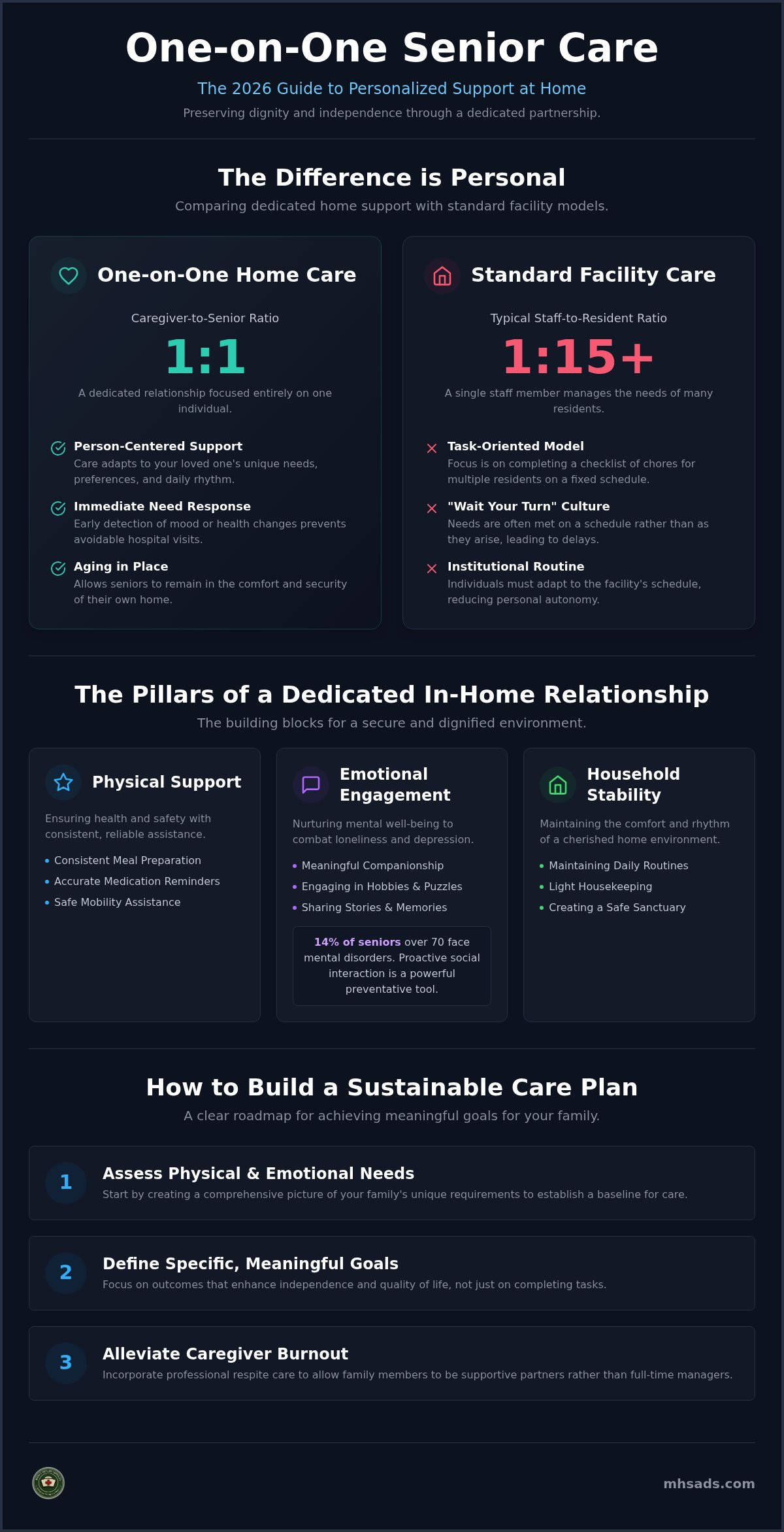
Why does the ratio of caregivers to seniors matter so much for your family's peace of mind? In many institutional settings, a single staff member may be responsible for 15 or more residents at once. This environment often leads to a "wait your turn" culture where needs are met on a schedule rather than as they arise. In contrast, Elderly care provided in the home maintains a strict 1:1 ratio. This level of consistency allows the caregiver to notice the smallest changes in mood, appetite, or mobility immediately. These early detections are crucial; they often prevent minor health fluctuations from becoming avoidable hospital stays. For most seniors in 2026, the primary goal is "aging in place." They want to stay in the comfort of a familiar environment where they feel most secure and empowered.
Why 2026 Families are Choosing Personalized Support
The shift toward home-first models is accelerating as families prioritize autonomy over institutional routines. One-on-one care is the gold standard for personalized aging because it adapts to the person, not the other way around. This tailored approach ensures that personal care assistance is delivered with a gentle touch that respects the individual’s unique daily rhythm. By choosing this path, you aren't just hiring help; you're choosing a partner who values your loved one's independence as much as you do. This proactive approach simplifies the overwhelming process of arranging daily support, turning a stressful transition into a manageable journey.
The Core Pillars of a Dedicated In-Home Care Relationship
How do we move beyond simply "checking in" to truly supporting a life well-lived at home? A dedicated care relationship stands on three specific pillars: Physical Support, Emotional Engagement, and Household Stability. These aren't just items on a checklist. They are the building blocks of a secure, dignified environment. Physical support ensures daily needs are met, but it's the household stability that keeps the home functioning as a sanctuary. This includes maintaining the rhythm of a household that has seen decades of memories, ensuring that the environment remains both comforting and organized.
Safety is often the primary concern for families, and for good reason. Simple medication reminders ensure that complex prescriptions are taken exactly as directed, preventing the confusion that often leads to emergency room visits. Similarly, consistent meal preparation provides the vital nutrition needed to maintain bone density and muscle strength. The caregiver acts as a "Compassionate Navigator," spotting small changes in health or mood that family members might miss during brief visits. They don't just assist your loved one; they provide professional reassurance to the entire family, acting as a stable anchor during times of transition.
Companionship: More Than Just a Friendly Visit
Many people mistake companionship for simple supervision, but true one on one senior care involves meaningful engagement that keeps the mind active. According to the World Health Organization, 14% of seniors aged 70 or older face mental disorders like depression or anxiety. Proactive social interaction is a powerful tool against these risks. This might look like sharing stories from the past, working on a puzzle, or taking a short walk in the garden. Even elderly meal prep becomes a social event, turning a daily chore into an opportunity for conversation and connection that nourishes the spirit as much as the body.
Safety and Mobility Assistance
Falls remain a leading cause of injury for seniors, often occurring during routine movements. Having a dedicated professional present provides an immediate safety net during transitions, such as getting out of bed or navigating the bathroom. This is where "vetted reliability" becomes essential for your peace of mind. You need to know that the person in your home is trained to anticipate risks before they become accidents. This specialized support aligns with our senior mobility guide, which focuses on maintaining movement while minimizing danger. If you're feeling overwhelmed by these safety concerns, reaching out for a free consultation can help clarify the best path forward for your family's unique situation.
One-on-One Care vs. Assisted Living: A 2026 Comparison
Are you weighing the choice between a residential facility and keeping your loved one at home? It's a decision that carries significant emotional and financial weight. While assisted living offers a community setting, one on one senior care provides a level of personalization that institutional environments simply can't replicate. The most striking difference is the response time. In a facility, your loved one is one of many, often waiting for a busy staff member to assist with basic needs. At home, there is zero wait time for help with daily activities. This immediate attention isn't just about convenience; it's about preserving safety and dignity in every moment.
Many families mistakenly believe that facilities are inherently safer because they have more staff on the grounds. However, safety is often more about the quality of supervision than the number of people in the building. A dedicated caregiver in the home has eyes on your loved one at all times, preventing falls before they happen. This model also offers unmatched scheduling flexibility. Whether you need support for a few hours of the day or comprehensive 24/7 assistance, the plan adjusts to your family’s life rather than forcing you to fit into a facility’s rigid routine.
Evaluating the Real Cost of Care
When comparing costs, it's helpful to look beyond the monthly sticker price. Assisted living often involves "all-in" fees that may increase as your loved one requires more help. Private duty care, however, is highly scalable. You only pay for the hours of support actually needed. Many families find success using respite care to bridge gaps during the week, allowing them to manage costs while ensuring professional standards. Choosing the private pay path gives you ultimate control over who enters your home, ensuring a consistent bond between the caregiver and your family.
The Impact on Independence and Mental Health
Have you heard of "transfer trauma"? This is the stress and confusion seniors often experience when moved from a familiar environment to a clinical one. Staying at home preserves a sense of "normalcy" that is vital for mental well-being. In a 1:1 setting, the care adapts to the client’s preferences, favorite meals, and lifelong habits. In a facility, the resident must adapt to the institution’s schedule. By maintaining their own space, your loved one holds onto their autonomy, which is often the most precious thing they have as they age.
How to Build a Sustainable One-on-One Care Plan
How do you begin transforming a stressful home situation into a stable, supportive environment? Building a sustainable plan for one on one senior care requires a methodical yet empathetic approach. It isn't just about filling hours; it's about creating a structure that evolves with your loved one. This process starts with a comprehensive needs assessment that looks beyond physical limitations to include emotional and cognitive well-being. By observing daily routines, you can identify exactly where a helping hand will make the most significant impact on their quality of life.
First, define clear, actionable goals for the care relationship. Instead of general requests, focus on specific outcomes such as "improve daily mobility" or "ensure consistent, nutritious meal intake." These benchmarks help the caregiver understand their role as a partner in your loved one's health. Once goals are set, vet the agency's selection process carefully. You should feel confident in how they choose the professionals who enter your home, ensuring their standards align with your family's values.
Establishing a consistent communication rhythm is the final piece of a strong foundation. Whether it's a weekly phone call or a shared daily log, staying informed reduces anxiety for everyone involved. This transparency ensures that small shifts in health are caught early, allowing for proactive adjustments rather than reactive crises. When everyone is on the same page, the care plan becomes a living document that provides ongoing professional reassurance.
Identifying the Right Level of Support
Deciding between a few hours of help and 24/7 supervision depends on the specific safety risks and social needs of your loved one. Many families start with several hours of support to manage high-energy times, such as mornings or meal times, and then scale up as needs change. You might notice signs that the plan needs adjustment, such as unexplained weight loss, increased confusion, or a sudden change in hygiene. For more detailed advice on what to look for, our guide on choosing home care agencies offers practical vetting tips for every stage of the journey.
The Importance of Caregiver Matching
A successful care relationship relies on more than just clinical skills; it depends on a genuine human connection. Personality and hobby matching are vital because a caregiver who shares a love for gardening or classical music becomes a friend rather than just a visitor. Mercy Health Services matches each client with a vetted, background-checked caregiver to ensure both safety and compatibility. This consistency creates a "stable anchor" in the home. Having the same face arrive every day builds a deep sense of trust, which is essential for maintaining the dignity of the person receiving assistance. If you're ready to see how a personalized plan can help your family, you can schedule a free consultation today to explore your options.
The Mercy Health Services Approach: Professional Reassurance
How do you find a partner who values your family's comfort as much as you do? At Mercy Health Services, we act as a Compassionate Navigator for families facing the complexities of aging. We understand that the need for support doesn't always follow a predictable schedule. That's why we emphasize speed and responsiveness. We can often begin providing one on one senior care within just a few days of your initial request. This rapid start ensures that you don't have to navigate a crisis alone, providing an immediate stable anchor for your household.
Our commitment to dignity extends across all life stages. While we specialize in supporting seniors, our scope of care is broad enough to include home care for adults under 50 and specialized support for children. We believe that person-centered assistance should be available to anyone who needs a helping hand to maintain their independence. By focusing on the individual rather than a diagnosis, we ensure that every client feels respected and empowered in their own home.
A Vetted Process for Your Peace of Mind
Are you worried about the safety of bringing someone new into your home? This is a natural concern, and we address it through a rigorous selection process. Every caregiver we employ undergoes extensive background checks and vetting to ensure they meet our high standards of reliability and empathy. We don't just look for skills; we look for a heart for service. Our free consultation is designed to help you navigate what can often feel like an overwhelming process. It’s an opportunity for us to listen to your story and for you to see the capable hands that will be supporting your family.
Getting Started: Your Pathway to Support
We've simplified the onboarding process to reduce the anxiety that often accompanies a change in care. Your journey begins with a consultative meeting where we discuss your specific goals and preferences. This isn't a high-pressure sales pitch; it's a conversation focused on finding the right "stable anchor" for your loved one's daily life. As a Trusted Guide, we take the time to understand the nuances of your situation, ensuring the transition is seamless and unhurried. If you're ready to move from a place of worry to a place of professional reassurance, one on one senior care can provide the relief you need from caregiver burnout. Schedule your free consultation today to discover the difference that dedicated, personalized support can make.
Embracing a New Chapter of Support and Dignity
Are you ready to trade the daily stress of caregiving for the peace of mind that comes with professional support? Choosing one on one senior care is a transformative step that honors your loved one’s wish to age in place while restoring your role as a family member rather than a full-time manager. We’ve explored how a dedicated caregiver provides more than just assistance; they offer a stable anchor that preserves safety, dignity, and independence. By focusing on person-centered support, you ensure that every daily need is met with respect and consistency.
You don't have to navigate these complex choices alone. Our team provides vetted and background-checked caregivers and highly personalized care plans created for every client to ensure a perfect match. We offer free consultations to help you navigate your options and find the specific path that fits your family's life. This proactive approach simplifies the transition and secures a safer future for those you love most.
Schedule a Free Consultation for Personalized One-on-One Care. You’ve taken the first step by seeking information; now, let’s walk the rest of this journey together with confidence and care.
Frequently Asked Questions
What is the main difference between one-on-one care and a nursing home?
The main difference lies in the ratio and the environment. While nursing homes often have one staff member for 15 or more residents, one on one senior care ensures a dedicated professional focuses exclusively on your loved one. This allows for immediate response to needs and a deeply personalized schedule. Your loved one stays in their familiar home environment rather than adapting to an institutional routine, which often results in better emotional well-being.
Can one-on-one senior care be provided 24 hours a day?
Yes, we provide around-the-clock support for families who need continuous supervision. This is especially helpful for clients with high-acuity needs or those living with dementia who may experience confusion during overnight hours. Whether your family requires a few hours of help during the day or 24/7 care, we scale our services to match your unique situation. This ensures a stable anchor is always present to provide safety and professional reassurance at any hour.
How do you ensure the caregivers are trustworthy and safe?
We maintain a rigorous vetting process to ensure every caregiver is both safe and dependable. This includes extensive background checks and personal interviews to verify their expertise and character. We look for individuals who demonstrate empathy and a proactive approach to caregiving. By matching your loved one with a vetted professional, we provide the peace of mind you need to know that your family member is in capable and caring hands.
Is one-on-one care only for seniors with medical needs?
No, this type of support is not limited to those with medical needs. In fact, many families choose one on one senior care for companionship, meal preparation, and light housekeeping. Our services focus on assisting with daily activities that help seniors maintain their independence and quality of life. Whether your loved one needs mobility assistance or simply a friendly face to share stories with, our personalized care plans are designed to honor their specific lifestyle.
What happens if our assigned caregiver is sick or unavailable?
If your primary caregiver is unavailable, we prioritize consistency to minimize disruption to your loved one’s routine. We maintain a pool of vetted professionals and will work to provide a qualified replacement who is familiar with the care plan. Our goal is to act as a reliable partner for your family, ensuring that the transition is seamless. We communicate clearly with you throughout the process so you always know who is entering your home.
How quickly can one-on-one home care services begin?
We understand that the need for support often arises suddenly during a crisis. In many cases, we can begin providing one on one senior care within just a few days of your initial request. The process starts with a free consultation where we discuss your family's needs and goals. This rapid response helps alleviate the immediate pressure of caregiver burnout and provides a clear roadmap for starting the care journey without unnecessary delays.
Do you provide one-on-one care for adults under 50 with disabilities?
Yes, we offer private-duty home care for adults under 50 who are living with disabilities or other challenges. Our approach is person-centered, meaning we adapt our support to fit the individual’s unique age and lifestyle goals. We focus on enhancing independence through mobility assistance, personal care, and social engagement. This specialized support ensures that younger adults receive the respectful, age-appropriate assistance they deserve to live full lives in their own homes.
What tasks are typically included in a one-on-one care plan?
A typical care plan includes a wide range of non-medical tasks tailored to the individual. This often involves personal care assistance, mobility support, and medication reminders. Caregivers also provide companionship, prepare nutritious meals, and perform light housekeeping to ensure a safe, organized environment. By covering these essential daily tasks, we help prevent avoidable hospitalizations and allow your loved one to focus on enjoying their time at home with dignity and comfort.
Frequently Asked Questions
The main difference lies in the ratio and the environment. While nursing homes often have one staff member for 15 or more residents, one on one senior care ensures a dedicated professional focuses exclusively on your loved one. This allows for immediate response to needs and a deeply personalized schedule. Your loved one stays in their familiar home environment rather than adapting to an institutional routine, which often results in better emotional well-being.
Yes, we provide around-the-clock support for families who need continuous supervision. This is especially helpful for clients with high-acuity needs or those living with dementia who may experience confusion during overnight hours. Whether your family requires a few hours of help during the day or 24/7 care, we scale our services to match your unique situation. This ensures a stable anchor is always present to provide safety and professional reassurance at any hour.
We maintain a rigorous vetting process to ensure every caregiver is both safe and dependable. This includes extensive background checks and personal interviews to verify their expertise and character. We look for individuals who demonstrate empathy and a proactive approach to caregiving. By matching your loved one with a vetted professional, we provide the peace of mind you need to know that your family member is in capable and caring hands.
No, this type of support is not limited to those with medical needs. In fact, many families choose one on one senior care for companionship, meal preparation, and light housekeeping. Our services focus on assisting with daily activities that help seniors maintain their independence and quality of life. Whether your loved one needs mobility assistance or simply a friendly face to share stories with, our personalized care plans are designed to honor their specific lifestyle.
If your primary caregiver is unavailable, we prioritize consistency to minimize disruption to your loved one’s routine. We maintain a pool of vetted professionals and will work to provide a qualified replacement who is familiar with the care plan. Our goal is to act as a reliable partner for your family, ensuring that the transition is seamless. We communicate clearly with you throughout the process so you always know who is entering your home.
We understand that the need for support often arises suddenly during a crisis. In many cases, we can begin providing one on one senior care within just a few days of your initial request. The process starts with a free consultation where we discuss your family's needs and goals. This rapid response helps alleviate the immediate pressure of caregiver burnout and provides a clear roadmap for starting the care journey without unnecessary delays.
Yes, we offer private-duty home care for adults under 50 who are living with disabilities or other challenges. Our approach is person-centered, meaning we adapt our support to fit the individual’s unique age and lifestyle goals. We focus on enhancing independence through mobility assistance, personal care, and social engagement. This specialized support ensures that younger adults receive the respectful, age-appropriate assistance they deserve to live full lives in their own homes.
A typical care plan includes a wide range of non-medical tasks tailored to the individual. This often involves personal care assistance, mobility support, and medication reminders. Caregivers also provide companionship, prepare nutritious meals, and perform light housekeeping to ensure a safe, organized environment. By covering these essential daily tasks, we help prevent avoidable hospitalizations and allow your loved one to focus on enjoying their time at home with dignity and comfort.