
The Ultimate Guide to Personal Care Assistance at Home in 2026
August 6, 2026 · 17 min read
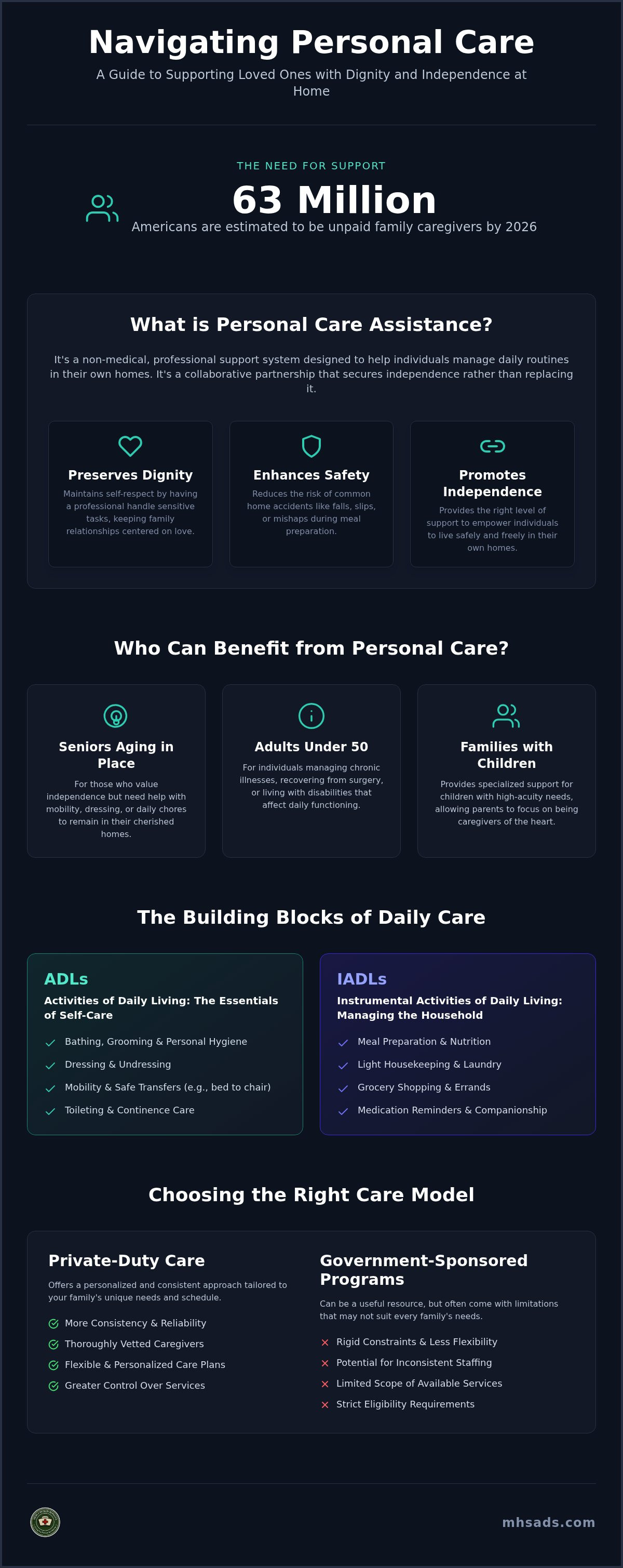
Did you know that as of 2026, an estimated 63 million Americans are providing unpaid care for their family members? Do you find yourself lying awake at night worrying about a loved one's safety or feeling the heavy weight of 24/7 caregiving duties? It's completely natural to feel exhausted and confused about the best way to move forward. Professional personal care assistance is designed to bridge this gap, offering a collaborative partnership that secures independence rather than replacing it.
You'll discover how this specialized support provides the reliable foundation your family needs to flourish in the comfort of home. We'll walk you through the various non-medical services available, our rigorous caregiver vetting process, and a simple roadmap to begin care without causing family tension. By understanding your options, you can replace anxiety with the confidence that comes from having a trusted guide by your side.
Key Takeaways
- Distinguish between clinical medical care and professional personal care assistance to choose the right level of support for your household's daily needs.
- Learn the difference between ADLs and IADLs to help you build a personalized care plan that preserves your loved one's independence and daily habits.
- Explore why the private-duty care model often provides more consistency and vetted reliability than the rigid constraints of government-sponsored programs.
- Follow a structured pathway to initiate care conversations that reduce family friction and ensure every member feels supported during the transition.
- Identify how specialized support for children and adults under 50 can help families manage complex needs without sacrificing their own well-being.
What is Personal Care Assistance? Understanding the Foundation of Home Support
Have you ever felt that the line between "doing it all" and "needing a hand" has become blurred? It's a common crossroads for many families. Personal care assistance is fundamentally a non-medical, professional support system designed to help individuals manage their daily routines within their own four walls. Unlike the clinical, rigid environment of a hospital or nursing facility, this approach acts as a "Compassionate Navigator." It focuses on the person, not just the diagnosis. It's about providing the right level of help to keep life moving forward without the sterile feel of institutional care. Many people mistakenly believe that choosing help means giving up control, but the reality is the exact opposite. It's about gaining the freedom to live safely.
The Core Purpose: Dignity and Safety at Home
Why does professional help make such a difference? At its heart, this service addresses two vital needs: safety and self-respect. When a trained professional is present, the risk of common home accidents, like slips or mishaps during meal preparation, decreases significantly. But it goes deeper than just physical safety. By delegating sensitive tasks to a professional, the relationship between family members remains centered on love rather than the mechanics of care. The caregiver isn't there to "manage" or "supervise" the individual. Instead, they serve as a supportive partner, ensuring that dignity remains intact while providing the necessary help to stay independent. This partnership is a key element of What is Home Care in its most person-centered form. It allows the home to remain a sanctuary, not a clinical site.
Who Can Benefit from Personal Care Support?
Who exactly is this for? A common misconception is that home support is strictly for the elderly. While it's a wonderful solution for seniors who want to age in place, it's far from the only application. Personal care assistance is a versatile tool for various life stages. It provides a stable anchor for families in transition, regardless of the age of the person receiving care. Consider these paths:
- Seniors who value their independence but need help with mobility, dressing, or daily chores to remain in their cherished homes.
- Adults under 50 who are managing chronic illnesses, recovering from surgery, or living with disabilities that affect daily functioning.
- Families who need specialized support for children with high-acuity needs, allowing parents to regain their roles as caregivers of the heart rather than just medical coordinators.
By recognizing that needs aren't limited by age, we can see how these services provide a roadmap for a more balanced life. It's about finding a reliable partner who understands the nuances of your specific situation. Whether it's for a child, a spouse, or a parent, the focus stays on respect and dependability. This collaborative approach ensures that everyone involved can thrive in an environment of consistency and peace of mind.
ADLs and IADLs: The Specific Tasks of a Personal Care Assistant
How do we translate the concept of support into a daily rhythm that feels natural? When we discuss personal care assistance, we organize the work into two vital categories: ADLs and IADLs. These aren't just clinical terms; they represent the building blocks of a person's day and form the backbone of a personalized care plan. Every task is tailored to the individual's comfort level, ensuring they never feel like a passive recipient of care. Personal care assistance bridges the gap between a person’s desire for independence and their physical or cognitive requirements. By focusing on these specific needs, we help maintain a sense of normalcy and control.
Activities of Daily Living (ADLs): The Essentials of Self-Care
What are the fundamental tasks that keep a person feeling like themselves? ADLs focus on the most personal aspects of a routine, including assistance with bathing, grooming, and personal hygiene. For a senior with mobility challenges or a child with high-acuity needs, these moments require a gentle touch and a high degree of trust. Our caregivers provide support for mobility, including safe transfers and ambulation, to reduce the risk of falls. Every act of help with dressing or toileting is performed with the utmost respect for privacy, ensuring that dignity remains the top priority throughout the day.
Instrumental Activities of Daily Living (IADLs): Managing the Household
Have you wondered how a clean home and a warm meal contribute to a loved one's overall well-being? IADLs are the tasks that allow an individual to live safely and comfortably in their own environment. This includes nutritious meal preparation and assistance with feeding, which are essential for maintaining strength. A safe environment also depends on light housekeeping to clear hazards and keep living spaces tidy. For adults under 50 managing chronic conditions, we provide essential medication reminders to ensure health consistency. If you're ready to see how these services can help your family, you can explore our personalized care options to find the right fit.
Beyond the Physical: Companionship and Socialization
Is support only about the physical list of chores? We believe that emotional well-being is just as important as physical safety. Meaningful engagement and conversation are core components of our care, helping to reduce the isolation that often accompanies aging or chronic illness. A caregiver acts as a trusted companion, accompanying clients to medical appointments or social outings. This presence provides a sense of connection and purpose, turning a routine day into a series of meaningful interactions. Whether it's sharing a story or visiting a local park, these moments are vital for a thriving life at home.
Private Duty vs. Government Programs: Choosing the Right Care Model
Is the complexity of state-sponsored care leaving you feeling stuck? When families begin looking for personal care assistance, they often encounter a stark choice between government-funded programs and private-duty models. While Medicaid waivers and state plans provide essential support for many, they often come with rigid eligibility requirements and significant bureaucratic hurdles. Private-duty care, by contrast, operates as a flexible partnership. It's designed to adapt to your family's unique rhythm rather than forcing you to fit into a pre-defined box. One of the most significant advantages is the speed of implementation. In 2026, while government programs might take months to approve and staff a case, a private agency can typically initiate care within a matter of days.
The Flexibility of Private-Duty Home Care
How much control do you want over your daily schedule? Private-duty care allows you to choose the exact hours that work for your household. Whether you need a few hours of respite each week or 24/7 support, the choice remains yours. You aren't limited by the strict hour caps often found in state-funded plans. If your loved one's needs change suddenly, you can adjust the care plan immediately without waiting for a caseworker's approval. This model also prioritizes the human element. We focus on matching caregivers based not just on skills, but on personality and shared interests, ensuring the relationship feels like a genuine connection.
Understanding the Vetting Process
Can you truly rest easy knowing a stranger is in your home? This is where the "vetted reliability" of an agency makes all the difference. When you hire an independent contractor, the burden of background checks, payroll taxes, and insurance falls on your shoulders. Professional agencies handle this entire process with rigorous screening and professional standards. Every caregiver undergoes a comprehensive background check before they ever step through your door. Perhaps most importantly, agencies provide a safety net. If your primary caregiver is unavailable due to illness or an emergency, the agency handles the logistics of providing backup care. You don't have to scramble for a solution during a crisis; the support remains consistent and dependable.
The Path to Peace of Mind: Transitioning to In-Home Assistance
Have you found yourself hesitating to start the conversation about home support because it feels like a loss of control? It's a common fear, but the transition to professional personal care assistance is actually a way to reclaim your family's quality of life. We don't view this process as a clinical audit or a rigid assessment. Instead, we act as a "Compassionate Navigator" to help you move from the uncertainty of solo caregiving to the stability of a supported home. This journey is about finding a balance that works for everyone involved, ensuring that home remains a place of comfort rather than a source of stress.
What if your loved one is resistant to the idea? This is often the biggest hurdle families face. A helpful strategy is to frame the assistance as a gift to the entire family. Rather than focusing on what they can no longer do, explain how a caregiver allows you to return to your role as a child, spouse, or friend. When the focus shifts from "supervision" to "support," the resistance often melts away into a shared sense of relief. It's not about replacing your care; it's about adding a dependable layer of safety that benefits the whole household.
The Initial Consultation: Identifying Individual Needs
During a free care assessment, we don't just look at a checklist of tasks. We focus on the whole person. You can expect a warm conversation that explores their history, preferences, and what a "good day" looks like for them. To prepare for this visit, it's helpful to think about:
- Specific times of day when your loved one seems most tired or overwhelmed.
- Personal interests or hobbies that a caregiver could engage with to provide companionship.
- Any specific safety concerns, such as recent falls or difficulties with medication consistency.
Designing a Personalized Care Plan
Once we understand the unique needs of your household, we collaborate with you to build a roadmap. This plan sets clear goals for safety, nutrition, and socialization while respecting existing routines and preferences. We don't want to disrupt your life; we want to enhance it. Because we operate with a focus on vetted reliability, we can often initiate care within days, ensuring you don't have to wait through weeks of bureaucratic delays common in government programs.
The First Visit: Building a Relationship of Trust
The first day is about building a bridge between the client and the caregiver. We suggest staying for the first hour to help facilitate the introduction, then gradually stepping back to let the relationship form naturally. Open communication during the first few weeks is essential as we monitor progress and make any necessary adjustments to the plan. If you're ready to take the first step toward a more balanced life, schedule your free care consultation today and let us guide you through the process.
Mercy Health Services: Compassionate Care for Your Family
How do you find a partner you can trust with your family's most sensitive needs? At Mercy Health Services, we act as a stable anchor for families in transition, providing more than just a service. We offer a collaborative partnership rooted in dignity and respect. We understand that seeking personal care assistance is a deeply personal decision that carries significant emotional weight. Our role is to serve as your "Compassionate Navigator," ensuring that your loved one receives the support they need while you regain the peace of mind you deserve. We maintain professional standards that prioritize the human element of care, treating every client like a member of our own family.
Expert Support for Every Stage of Life
Are you looking for support that grows with your family's changing requirements? Our services are designed to be flexible and inclusive, reaching far beyond traditional senior care. We provide specialized in-home support for children with high-acuity needs, allowing parents to focus on being parents rather than medical coordinators. For adults under 50 managing chronic conditions or disabilities, our private-duty home care offers the consistency needed to maintain an independent lifestyle. We also provide 24/7 and overnight options for families who require continuous monitoring, ensuring that a professional, alert presence is always available to assist with mobility or safety concerns.
Why Families Choose the Compassionate Navigator
What sets a truly reliable agency apart from the rest? For many families, the answer lies in our rigorous caregiver vetting and background check process. We believe that safety is the foundation of trust, so every member of our team undergoes a thorough screening before they enter your home. This commitment to "vetted reliability" is why we're a preferred choice for families who value security. Additionally, we understand that needs can arise suddenly. While other programs may have long waiting lists, we focus on a quick start-up process that can initiate care within just a few days. Our goal is to build long-term, meaningful relationships where caregivers and clients connect on a personal level, fostering an environment of meaningful engagement.
Ready to Begin? Schedule Your Consultation
Do you feel ready to explore a more manageable path for your household? We invite you to reach out for a no-pressure, empathetic conversation about your family's unique situation. Our personalized care planning process is straightforward and designed to reduce your anxiety. We'll listen to your concerns, answer your questions, and help you design a roadmap that respects your existing routines. You don't have to carry the weight of caregiving alone. Take the first step toward a more balanced life today. Schedule your free consultation with Mercy Health Services today.
Securing a Brighter, More Supported Future at Home
Are you ready to trade the weight of constant caregiving for the peace of mind that comes with a professional partner? We've explored how identifying the right mix of ADLs and IADLs creates a foundation for safety and self-respect. By choosing the flexibility of private-duty care, you ensure that your family's unique routines remain the priority. Professional personal care assistance isn't about giving up independence; it's about providing the reliable support necessary to preserve it for years to come.
You don't have to navigate these complex transitions alone. Our team is here to act as your trusted guide, offering personalized care plans for all ages and the security of vetted, background-checked caregivers. Taking the first step is simple and starts with a conversation focused entirely on your loved one's well-being. Schedule your free care consultation with Mercy Health Services today to see how our free initial care assessments can help your family flourish. You've carried the load long enough. It's time to let a compassionate partner help you find the balance your household deserves.
Frequently Asked Questions
What is the difference between personal care and home health care?
Personal care focuses on non-medical support for daily living tasks like bathing, meal preparation, and mobility. Home health care involves clinical services provided by licensed nurses or therapists. Are you looking for help with recovery from a medical procedure or assistance with staying safe during daily routines? Our personal care assistance focuses on the human element of support, ensuring dignity and independence without the need for medical intervention.
How do I know if my loved one needs personal care assistance?
You might notice your loved one struggling with fundamental tasks like dressing, maintaining a clean home, or keeping up with medication schedules. Have you seen a decline in their personal hygiene or an increase in unsteadiness while walking? These are often the first signs that a helping hand is needed. Early intervention with personal care assistance can prevent accidents and reduce the emotional burnout that family caregivers often experience.
Are personal care assistants background-checked and vetted?
Yes, every caregiver undergoes a rigorous background check and professional screening process before they're matched with a family. We understand that inviting someone into your home requires a high level of trust and security. Our commitment to vetted reliability ensures that each person-centered caregiver meets our strict standards for dependability and respect, giving you the peace of mind you deserve.
Can personal care assistance be provided for just a few hours a week?
Absolutely, our services are designed to be flexible and can range from just a few hours of respite care to 24/7 support. Do you need a short break to run errands, or are you looking for consistent daily help? We work with you to create a schedule that fits your family's rhythm, allowing you to scale the level of support up or down as your needs change.
What happens if our primary caregiver is sick or on vacation?
We provide a reliable backup system to ensure that your loved one is never without the support they need. When a primary caregiver is unavailable, we handle all the logistics of sending a qualified substitute who is already familiar with the care plan. You won't have to scramble for last-minute solutions; our agency acts as a stable anchor for your family's consistency during unexpected changes.
Does personal care assistance include help for children with disabilities?
Yes, we provide specialized in-home support for children with high-acuity needs and disabilities. We recognize that families with children often require a different level of attention and specialized care plans. Our caregivers are trained to provide a supportive partnership for the whole family, helping parents manage the complexities of daily care while focusing on their primary role as a parent.
Is personal care assistance covered by private insurance or Medicaid?
Coverage depends on your specific policy and the type of care model you choose. While some long-term care insurance policies cover private-duty services, traditional health insurance often doesn't. Medicaid-funded programs have specific eligibility requirements that vary by state. We recommend checking your individual policy or speaking with a consultant to navigate the specific paths available for your family's situation in 2026.
How quickly can we start receiving personal care services?
We can typically initiate care within a matter of days after the initial consultation. Are you facing a sudden change in health or a family emergency that requires immediate support? Because we focus on a streamlined, person-centered process, we avoid the lengthy bureaucratic delays often found in government-sponsored programs, ensuring your family finds the relief and stability you need as quickly as possible.
Frequently Asked Questions
Who exactly is this for? A common misconception is that home support is strictly for the elderly. While it's a wonderful solution for seniors who want to age in place, it's far from the only application. Personal care assistance is a versatile tool for various life stages. It provides a stable anchor for families in transition, regardless of the age of the person receiving care. Consider these paths: By recognizing that needs aren't limited by age, we can see how these services provide a roadmap for a more balanced life. It's about finding a reliable partner who understands the nuances of your specific situation. Whether it's for a child, a spouse, or a parent, the focus stays on respect and dependability. This collaborative approach ensures that everyone involved can thrive in an environment of consistency and peace of mind. How do we translate the concept of support into a daily rhythm that feels natural? When we discuss personal care assistance, we organize the work into two vital categories: ADLs and IADLs. These aren't just clinical terms; they represent the building blocks of a person's day and form the backbone of a personalized care plan. Every task is tailored to the individual's comfort level, ensuring they never feel like a passive recipient of care. Personal care assistance bridges the gap between a person’s desire for independence and their physical or cognitive requirements. By focusing on these specific needs, we help maintain a sense of normalcy and control.
Personal care focuses on non-medical support for daily living tasks like bathing, meal preparation, and mobility. Home health care involves clinical services provided by licensed nurses or therapists. Are you looking for help with recovery from a medical procedure or assistance with staying safe during daily routines? Our personal care assistance focuses on the human element of support, ensuring dignity and independence without the need for medical intervention.
You might notice your loved one struggling with fundamental tasks like dressing, maintaining a clean home, or keeping up with medication schedules. Have you seen a decline in their personal hygiene or an increase in unsteadiness while walking? These are often the first signs that a helping hand is needed. Early intervention with personal care assistance can prevent accidents and reduce the emotional burnout that family caregivers often experience.
Yes, every caregiver undergoes a rigorous background check and professional screening process before they're matched with a family. We understand that inviting someone into your home requires a high level of trust and security. Our commitment to vetted reliability ensures that each person-centered caregiver meets our strict standards for dependability and respect, giving you the peace of mind you deserve.
Absolutely, our services are designed to be flexible and can range from just a few hours of respite care to 24/7 support. Do you need a short break to run errands, or are you looking for consistent daily help? We work with you to create a schedule that fits your family's rhythm, allowing you to scale the level of support up or down as your needs change.
We provide a reliable backup system to ensure that your loved one is never without the support they need. When a primary caregiver is unavailable, we handle all the logistics of sending a qualified substitute who is already familiar with the care plan. You won't have to scramble for last-minute solutions; our agency acts as a stable anchor for your family's consistency during unexpected changes.
Yes, we provide specialized in-home support for children with high-acuity needs and disabilities. We recognize that families with children often require a different level of attention and specialized care plans. Our caregivers are trained to provide a supportive partnership for the whole family, helping parents manage the complexities of daily care while focusing on their primary role as a parent.
Coverage depends on your specific policy and the type of care model you choose. While some long-term care insurance policies cover private-duty services, traditional health insurance often doesn't. Medicaid-funded programs have specific eligibility requirements that vary by state. We recommend checking your individual policy or speaking with a consultant to navigate the specific paths available for your family's situation in 2026.
We can typically initiate care within a matter of days after the initial consultation. Are you facing a sudden change in health or a family emergency that requires immediate support? Because we focus on a streamlined, person-centered process, we avoid the lengthy bureaucratic delays often found in government-sponsored programs, ensuring your family finds the relief and stability you need as quickly as possible.