Senior Mobility Guide 2026: Safety and Independence
August 16, 2026 · 17 min read
Have you ever found yourself holding your breath while watching your loved one navigate the hallway, wondering if today is the day their balance falters? It's a heavy emotional burden to carry, especially when you can't be there every hour of the day to offer a steadying hand. You want them to stay in the home they love, yet the fear of a life-changing fall feels like a constant shadow. This is why many families are turning to professional mobility assistance for seniors to bridge the gap between independence and safety. We understand that this transition is difficult, particularly when a parent resists using equipment they feel labels them as "handicapped."
You aren't alone in this journey, and it's possible to restore a sense of security without sacrificing dignity. This guide explores how professional support can transform that anxiety into confidence by pairing the latest 2026 technology with compassionate, human care. You'll discover how vetted caregivers and the right tools work together to reduce physical strain on your family. We will preview the most effective ways to help your loved one age in place safely, covering everything from new smart-sensor walkers to personalized care paths that respect their independence.
Key Takeaways
- Learn how a holistic approach to movement in 2026 supports your loved one's mental health and physical dignity.
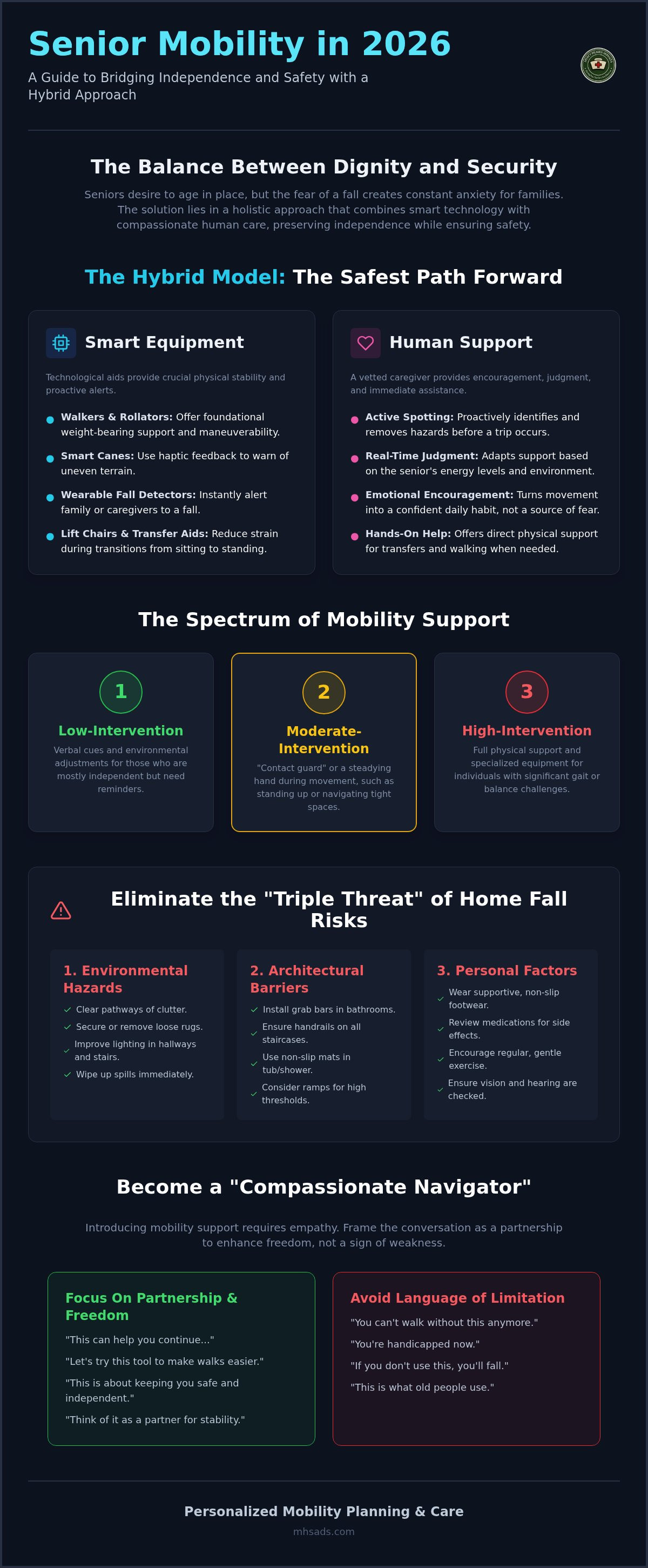
- Discover why a hybrid model of smart equipment and human support creates the safest environment for aging in place.
- Identify the "Triple Threat" of home hazards and use our detailed checklist to eliminate common fall risks in every room.
- Master the art of the "Compassionate Navigator" to introduce mobility assistance for seniors as a helpful partnership rather than a loss of independence.
- Explore how personalized care plans and vetted caregivers provide a reliable foundation for your family's peace of mind.
What is Mobility Assistance for Seniors?
Does your heart skip a beat when you watch your parent try to stand up from their favorite chair on their own? It's natural to feel a sense of worry when you notice their confidence in their own balance start to waver. Mobility assistance for seniors is not just a single product or a clinical plan. Instead, it's a holistic range of support that combines physical aid, specialized tools, and thoughtful environmental changes to help your loved one move with ease and dignity.
In 2026, we recognize that movement is the heartbeat of mental well-being. When seniors struggle to walk or transfer safely, they often stop attending family gatherings or visiting neighbors, which can lead to deep feelings of isolation. Maintaining mobility is the cornerstone of "aging in place," allowing seniors to stay in the familiar comfort of their own homes while reducing the risk of injury. Professional caregivers play a vital role here by offering two levels of care. They provide "stand-by assistance," where they stay within arm's reach to prevent a stumble, or "hands-on help" for those who need direct physical support to move safely from one place to another.
The Spectrum of Mobility Support
Every individual has unique needs, and understanding the different Types of Mobility Assistance helps you choose the right path for your family. Support generally falls into three categories:
- Low-intervention: This includes simple verbal reminders to use a cane or ensuring that hallways are always clear of clutter.
- Moderate-intervention: A caregiver provides a steadying hand or "contact guard" when your loved one moves from a bed to a chair.
- High-intervention: This involves full physical support and the use of specialized equipment for individuals with significant gait or balance challenges.
Why Proactive Assistance Matters Now
Why wait for a crisis to occur before seeking help? Many families experience the "Cascade of Care," where one small trip leads to a hospital visit and a rapid decline in health. Mobility assistance is a proactive strategy that empowers seniors to maintain their independence through a combination of environmental safety and physical support. The focus in 2026 has shifted away from reactive hospitalization toward preventive home care. By arranging for consistent support early, you help your loved one avoid the physical and emotional trauma of a fall, ensuring they remain the master of their own environment for as long as possible.
Types of Mobility Assistance: Equipment vs. Human Support
Have you ever noticed a shiny new walker tucked away in a corner, unused and gathering dust? This "closet of shame" is a common sight in many homes. It happens when a senior feels that using equipment is a public admission of frailty rather than a tool for freedom. While mechanical aids provide essential physical stability, they cannot offer the emotional encouragement or the real-time judgment that a human partner provides. For many families, the most effective form of mobility assistance for seniors is a hybrid approach. This strategy combines the reliable structure of a device with the warmth and observation of personal care assistance. It ensures that movement remains a safe, daily habit rather than a source of anxiety.
Common Mobility Aids and Their Roles
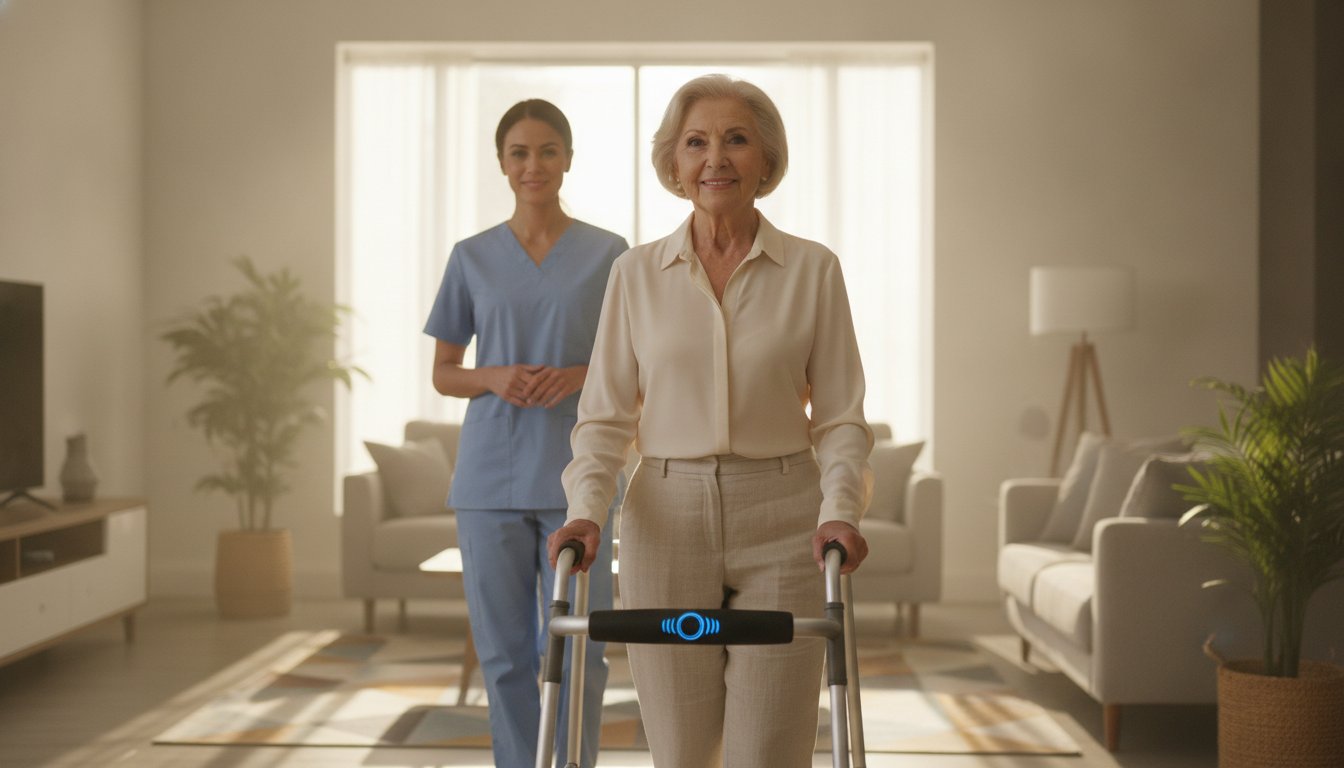
Walkers and rollators serve as a primary defense against instability, yet choosing between them requires careful thought. A standard walker offers maximum weight-bearing support, while a rollator provides better maneuverability for those who still have a steady gait but tire easily. Keep in mind that Medicare typically considers the useful lifetime of a walker to be five years, so choosing the right model from the start is a significant decision for long-term comfort. Transfer aids like gait belts and lift chairs simplify the process of moving from a seated to a standing position, which is where many falls occur. In 2026, we are seeing the integration of smart technology into these traditional tools. Modern smart canes now feature haptic feedback to warn users of uneven terrain, and wearable fall detectors can alert family members instantly. These innovations are powerful, but they are most effective when paired with a caregiver who can interpret the alerts and offer immediate support.
The Caregiver as a Mobility Partner
A professional caregiver acts as a proactive navigator rather than a passive observer. They provide "active spotting," which means they identify potential hazards like a loose floorboard or a pet's toy before a trip happens. This level of attention is a vital component of modern Fall Prevention strategies. Beyond the physical safety, there is an immense psychological benefit to having a confident partner by your side during a walk. This companionship is especially crucial in respite care for dementia, where a senior may feel disoriented or forget the proper way to use their equipment. A trusted guide turns a potentially frightening activity into a moment of connection and success. If you are wondering which combination of support is right for your family, exploring personalized mobility assistance for seniors can provide the clarity you need to move forward.
Fall Prevention: Creating a Safe Home Environment
Does walking through your loved one's home now feel like navigating an obstacle course? It's a common realization for many families as they notice the subtle changes in a parent's balance. While we often think of the home as a sanctuary, it can harbor hidden risks that compromise independence. Creating a safe environment isn't about stripping away the character of a house; it's about identifying the "Triple Threat" of safety hazards: poor lighting, loose rugs, and a lack of support points. Professional mobility assistance for seniors includes a constant, watchful eye on these environmental shifts, ensuring that the home remains a place of comfort rather than a source of danger.
Our caregivers act as proactive navigators by performing ongoing environmental assessments. They look for the small things that are easy to miss, like a frayed carpet edge or a chair that's too low to exit safely. They also provide essential medication reminders. This is a critical part of fall prevention because many prescriptions in 2026 can cause side effects like dizziness or sudden drops in blood pressure when standing. By ensuring medications are taken exactly as directed, we help maintain the physical stability needed for safe movement throughout the day.
High-Risk Areas: The Bedroom and Bathroom
Did you know that according to peer-reviewed research, the bedroom is actually the most common location for falls that lead to emergency department visits, accounting for 25% of incidents? The bathroom follows closely at 22.7%. These rooms require specific attention because they involve "transferring," which is the act of moving from a sitting or lying position to a standing one. To make these areas safer, consider these essential tools:
- Grab bars and raised toilet seats: These provide stable support points in the bathroom where surfaces are often slick.
- Non-slip mats: Essential both inside and outside the shower to provide traction.
- Bedside safety: Ensure the bed is at a height where your loved one's feet touch the floor firmly when sitting on the edge.
Lighting and Path Clearance
As vision changes with age, the way a senior perceives depth and shadows can shift, making even a familiar hallway feel treacherous. In 2026, we have access to smart lighting solutions that can significantly reduce this risk. Motion-activated path lights that lead from the bed to the bathroom offer immediate clarity during middle-of-the-night trips without the need to fumble for a switch. It's also vital to clear "clutter zones." We work with families to organize high-traffic areas, removing low-profile obstacles like power cords or decorative baskets while keeping the senior's familiar environment intact. This balance of technology and organization is a hallmark of modern mobility assistance for seniors, providing a clear path toward continued independence.
How to Introduce Mobility Support Without Losing Dignity
How do you tell someone who has spent decades being the rock of the family that they now need a steadying hand? It's one of the most delicate conversations you'll ever have. Many seniors see mobility assistance for seniors as a sign of surrender, a white flag marking the end of their independence. However, we've found that the most successful transitions happen when we shift the narrative from what is being lost to what is being gained. By framing support as a personalized luxury, much like a private concierge, you can help your loved one see that this isn't about a loss of freedom. It's about securing the foundation they need to live life on their own terms.
When you encounter the common "I can do it myself" objection, meet it with deep empathy rather than frustration. Acknowledge the strength it has taken to reach this point in their life. By involving your loved one in every step of the decision-making process, you ensure they remain the author of their own story. This collaborative approach transforms the caregiver from a "supervisor" into a "mobility partner," making the transition feel like a choice they are making for their own comfort.
The Consultative Approach
When you sit down to talk, try using "I" statements to share your perspective. Instead of saying, "You are being unsafe on those stairs," try saying, "I feel worried when I think about you navigating the house alone." This removes the feeling of being judged and replaces it with your own care and concern. It also helps to start small. Many families find that introducing a caregiver for light housekeeping first is a gentle way to build trust. Once a relationship is established, transitioning to more direct mobility assistance for seniors feels like a natural step in a trusted partnership. The ultimate goal remains clear: helping them stay in the house they love for as long as possible.
Professional Assessment as a Neutral Third Party
Sometimes, no matter how much love is behind your words, a parent might still feel defensive. This is where a neutral third party can make all the difference. In 2026, seniors often listen to a professional caregiver's observations with more openness than they do their own children. This happens because the dynamic is professional rather than familial, which helps preserve the parent-child relationship. A free consultation allows an expert to assess the home and the individual's needs without the emotional baggage of family history. It's important to remember that choosing to accept help is a profound act of strength and self-awareness, not a sign of weakness. If you're ready to start this conversation, you can schedule a free consultation today to explore a path that honors your loved one's dignity.
Personalized Mobility Planning with Mercy Health Services
Are you wondering how to bridge the gap between your loved one's current needs and their desire for independence? At Mercy Health Services, we believe that effective mobility assistance for seniors isn't a one-size-fits-all solution. Instead, it's a carefully crafted partnership designed to respect the unique rhythm of your family member's life. We start by listening to your concerns and observing the subtle nuances of your loved one's daily routine. This allows us to build a custom care plan that prioritizes safety while celebrating their ability to age in place with dignity.
Trust is the foundation of everything we do, especially when it involves the safety of a parent. This is why we prioritize vetted reliability in every aspect of our service. Every one of our caregivers undergoes a rigorous background check and vetting process, ensuring that the person entering your home is not only skilled but also dependable and compassionate. Our goal is to provide a stable anchor for your family during this transition, turning a moment of uncertainty into a season of supported growth.
Beyond Walking: A Holistic Care Plan
Mobility isn't just about the physical act of walking; it's about the quality of life that movement enables. Our holistic approach ensures that mobility assistance for seniors is seamlessly integrated with other essential supports, such as meal preparation and personal care assistance. When a senior is well-nourished and feels refreshed, they often find the energy and confidence to stay more active. Companionship plays a vital role here as well. A caregiver who shares a meaningful conversation during a walk can turn a routine exercise into a highlight of the day. As needs change throughout 2026, we remain proactive, adjusting the care plan to ensure the level of support is always precisely what is required.
Getting Started with Confidence
What does the journey toward peace of mind look like? It begins with a free initial consultation where we sit down with you to discuss your family's specific needs and goals. We don't just look at physical requirements; we look at personality. Our matching process is designed to find a caregiver whose temperament and interests align with your loved one's, fostering a genuine connection. Because we know that safety concerns often require a quick response, care can frequently begin within just a few days. This provides the immediate relief your family deserves. When you're ready to take that first step toward a safer home environment, we're here to guide you. Schedule a free consultation for personalized mobility support and discover how a dedicated partner can make all the difference.
Empowering Your Loved One's Next Chapter
How would it feel to finally replace your constant worry with a sense of calm? We've explored how the right combination of 2026 technology and environmental awareness can turn a high-risk home into a safe sanctuary. While tools like smart canes and motion lighting are essential, the human element remains the most powerful factor in preserving dignity. By choosing professional mobility assistance for seniors, you are providing more than just physical support; you are giving your loved one the confidence to continue living life on their own terms in the home they cherish.
You don't have to navigate these complex choices without a guide. Mercy Health Services offers expert support across the nation, providing personalized care plans tailored to every family's unique needs. With our vetted and background-checked caregivers, you can rest assured that your loved one is receiving dependable, compassionate care. It's time to move from a place of fear to a future of security. Request Your Free In-Home Mobility Consultation today to discover how we can help your family find peace of mind. Your journey toward a safer, more independent home life starts with a single, supported step.
Frequently Asked Questions
What is the difference between mobility assistance and physical therapy?
Mobility assistance for seniors provides daily support for movement, whereas physical therapy is a clinical treatment designed to rehabilitate specific injuries or conditions. While a physical therapist works on improving strength through targeted exercises, our caregivers provide the steadying hand needed for everyday tasks like getting to the kitchen or navigating the garden safely. It's a collaborative partnership that ensures your loved one stays active and engaged in their home environment every day.
How do I know if my parent needs a walker or a professional caregiver?
Are you noticing that your parent avoids certain rooms or "furniture walks" to stay steady? A walker provides essential mechanical stability, but a professional caregiver offers the "active spotting" and real-time judgment that a device cannot. If your loved one is hesitant to move even with a walker, or if cognitive changes make using equipment difficult, a caregiver provides the confidence and physical support needed to prevent a fall before it happens.
Does home insurance or Medicare cover mobility assistance services?
Medicare Part B generally covers 80% of approved durable medical equipment like walkers after the annual deductible is met, but it typically doesn't cover private-duty home care. While some long-term care insurance policies may provide coverage, standard home insurance rarely does. We recommend reviewing your specific policy or speaking with a professional during a free consultation to explore the best paths for arranging the consistent support your loved one needs to stay safe.
Can a caregiver help with exercises prescribed by a doctor?
Our caregivers can provide the gentle encouragement and reminders your loved one needs to follow a home exercise program prescribed by their doctor. While we don't provide clinical physical therapy, we act as a supportive partner in maintaining daily movement. Whether it's a short walk around the block or simple stretching, having a dependable guide by their side makes these health-focused activities feel safer and much more enjoyable for your family member.
What should I do if my loved one refuses to use their mobility aid?
It's natural for seniors to resist tools they feel label them as "handicapped." Try shifting the conversation to focus on the freedom the aid provides rather than the limitation. You might frame the equipment as a way to keep attending family events. Sometimes, introducing professional mobility assistance for seniors through a caregiver first helps lower these barriers, as a neutral third party can often encourage the use of aids more effectively than family members.
How quickly can we start receiving mobility support at home?
We understand that safety concerns often require a prompt response, so care can frequently begin within just a few days of your initial inquiry. The process starts with a free consultation to create a personalized care plan that fits your family's unique needs. This unhurried yet efficient approach ensures that we match your loved one with a vetted caregiver who has the right personality and skills to provide immediate relief.
Are your caregivers trained specifically in fall prevention techniques?
Every caregiver we provide is a proactive navigator trained to be observant of environmental hazards and physical changes. This vetted reliability means they are constantly assessing the "Triple Threat" of poor lighting, loose rugs, and lack of support points in the home. By providing consistent, attentive support, they help reduce the physical strain on family members while maintaining a high standard of safety and dignity for the individual in their care.
What happens if my loved one falls while the caregiver is there?
While our primary goal is prevention, our caregivers are prepared to act as a calm, capable presence if a fall occurs. They follow clear emergency protocols, which include assessing the situation, contacting emergency services if necessary, and notifying the family immediately. Having a professional on-site ensures that your loved one isn't left alone during a stressful moment and that the proper steps are taken to coordinate any needed medical attention or follow-up care.
Frequently Asked Questions
Mobility assistance for seniors provides daily support for movement, whereas physical therapy is a clinical treatment designed to rehabilitate specific injuries or conditions. While a physical therapist works on improving strength through targeted exercises, our caregivers provide the steadying hand needed for everyday tasks like getting to the kitchen or navigating the garden safely. It's a collaborative partnership that ensures your loved one stays active and engaged in their home environment every day.
Are you noticing that your parent avoids certain rooms or "furniture walks" to stay steady? A walker provides essential mechanical stability, but a professional caregiver offers the "active spotting" and real-time judgment that a device cannot. If your loved one is hesitant to move even with a walker, or if cognitive changes make using equipment difficult, a caregiver provides the confidence and physical support needed to prevent a fall before it happens.
Medicare Part B generally covers 80% of approved durable medical equipment like walkers after the annual deductible is met, but it typically doesn't cover private-duty home care. While some long-term care insurance policies may provide coverage, standard home insurance rarely does. We recommend reviewing your specific policy or speaking with a professional during a free consultation to explore the best paths for arranging the consistent support your loved one needs to stay safe.
Our caregivers can provide the gentle encouragement and reminders your loved one needs to follow a home exercise program prescribed by their doctor. While we don't provide clinical physical therapy, we act as a supportive partner in maintaining daily movement. Whether it's a short walk around the block or simple stretching, having a dependable guide by their side makes these health-focused activities feel safer and much more enjoyable for your family member.
It's natural for seniors to resist tools they feel label them as "handicapped." Try shifting the conversation to focus on the freedom the aid provides rather than the limitation. You might frame the equipment as a way to keep attending family events. Sometimes, introducing professional mobility assistance for seniors through a caregiver first helps lower these barriers, as a neutral third party can often encourage the use of aids more effectively than family members.
We understand that safety concerns often require a prompt response, so care can frequently begin within just a few days of your initial inquiry. The process starts with a free consultation to create a personalized care plan that fits your family's unique needs. This unhurried yet efficient approach ensures that we match your loved one with a vetted caregiver who has the right personality and skills to provide immediate relief.
Every caregiver we provide is a proactive navigator trained to be observant of environmental hazards and physical changes. This vetted reliability means they are constantly assessing the "Triple Threat" of poor lighting, loose rugs, and lack of support points in the home. By providing consistent, attentive support, they help reduce the physical strain on family members while maintaining a high standard of safety and dignity for the individual in their care.
While our primary goal is prevention, our caregivers are prepared to act as a calm, capable presence if a fall occurs. They follow clear emergency protocols, which include assessing the situation, contacting emergency services if necessary, and notifying the family immediately. Having a professional on-site ensures that your loved one isn't left alone during a stressful moment and that the proper steps are taken to coordinate any needed medical attention or follow-up care.