Elderly Meal Prep: A Guide to Independence (2026)
August 23, 2026 · 16 min read
How many times have you checked the stove or peeked into your parent's refrigerator this week, only to feel a familiar pang of worry about what they're actually eating? You aren't alone in this. Many families struggle with the quiet anxiety that comes when a loved one begins to lose interest in cooking or finds the kitchen becoming a place of risk. Professional meal preparation for elderly at home is often the missing piece that ensures nutrition doesn't slip through the cracks while you're managing your own busy life.
We believe that healthy eating should never come at the cost of safety or self-respect. This guide shows you how to transform the daily routine of dining into a source of health and dignity. You'll discover practical ways to create a hazard-free kitchen, develop personalized menus that cater to changing 2026 nutritional needs, and find professional support that respects your family's unique bond. By the end of this article, you'll have a clear path toward providing the consistent, compassionate care your parent deserves while finally reclaiming your own peace of mind.
Key Takeaways
- Learn why viewing meal preparation for elderly at home as a proactive health intervention can prevent malnutrition and support long-term independence.
- Understand how to address sensory changes and the need for autonomy, ensuring your loved one feels supported rather than supervised.
- Identify the "Big Four" essential nutrients for 2026, including Protein and Vitamin D, to support changing metabolic rates and hydration needs.
- Master "The Power of Three" strategy to simplify weekly cooking while maintaining a safe, hazard-free kitchen environment for your parent.
- See how professional companionship and assistance can turn mealtime into a social highlight while ensuring vital health reminders are never missed.
The Vital Connection Between Nutrition and Healthy Aging
Have you noticed your loved one reaching for tea and toast more often than a balanced meal? It's a common shift, but professional meal preparation for elderly at home is much more than a convenience; it's a vital health intervention. As we age, our bodies undergo significant physiological shifts. Metabolic rates slow down, and the digestive system often becomes less efficient at absorbing essential vitamins and minerals. This means that even if a senior is eating the same volume of food they always have, they might not be getting the nourishment their body requires to maintain vitality.
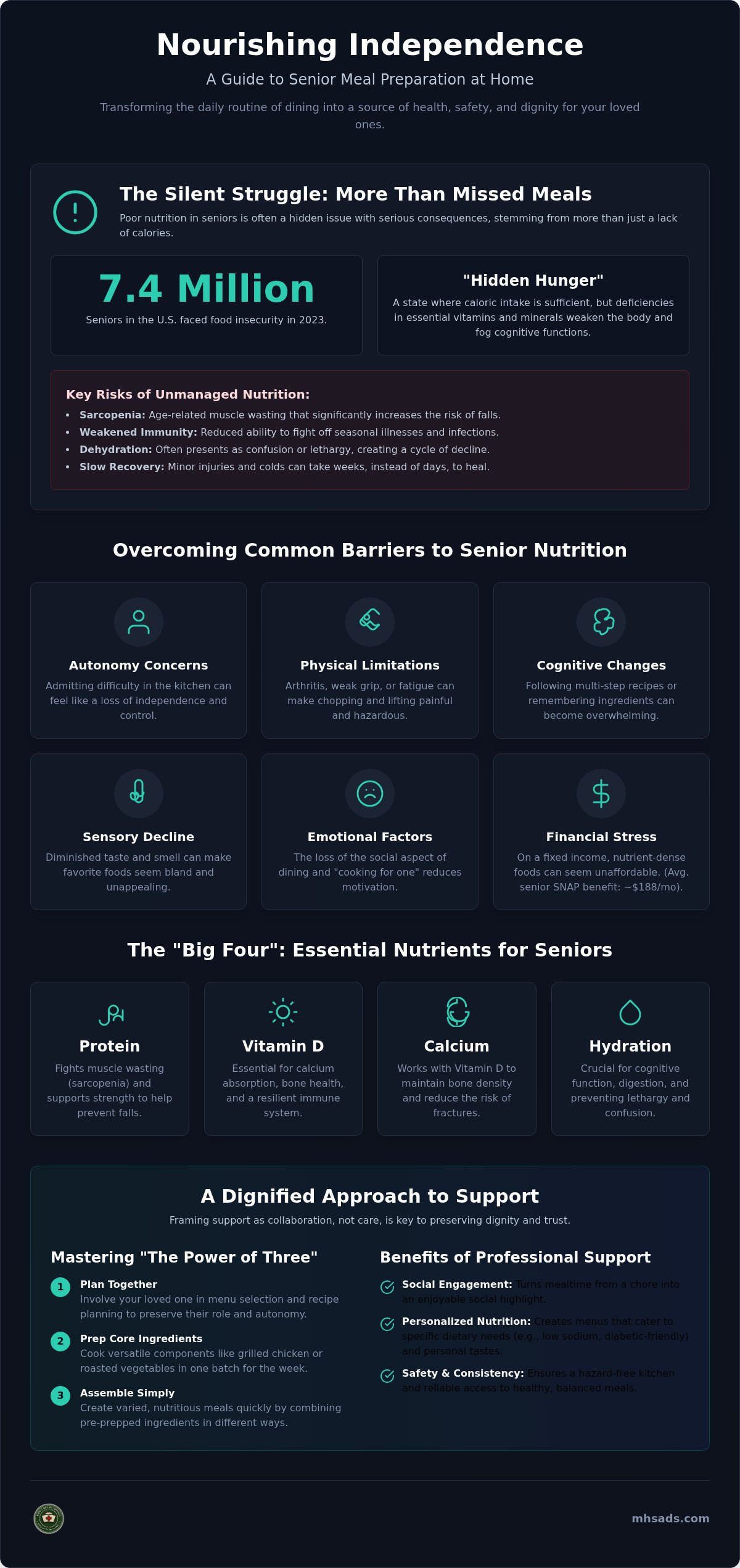
This gap often leads to "Hidden Hunger," a state where caloric intake is sufficient, but micro-nutrient deficiencies are present. In 2023, approximately 7.4 million seniors in the U.S. faced food insecurity, a challenge that often stems from a lack of access to nutrient-dense foods rather than just a lack of calories. Without adequate fuel, the immune system weakens and cognitive functions can begin to fog. Consistent nutrition acts as a shield, supporting brain health and providing the resilience needed to fight off seasonal illnesses. It's about more than just filling a plate; it's about fueling the body's natural defenses.
Why Traditional Cooking Becomes Challenging
Why does the kitchen start to feel like a burden? For many, physical limitations like arthritis or a weakening grip make chopping vegetables or lifting heavy pots painful. Cognitive changes can also make following a multi-step recipe feel overwhelming. Beyond the physical, there's an emotional weight to "cooking for one." When the social element of dining is lost, the motivation to prepare a full meal often vanishes, leading to skipped dinners or repetitive, low-nutrient snacks that don't provide lasting energy.
The Risks of Unmanaged Nutrition at Home
The consequences of poor nutrition often show up in unexpected ways. Undernutrition in older adults is a primary driver of sarcopenia, or age-related muscle wasting, which significantly increases the risk of dangerous falls. When the body lacks protein and hydration, recovery times for even minor scratches or colds can stretch from days into weeks. Dehydration is particularly sneaky; it often presents as confusion or lethargy, creating a cycle that further impacts a senior's ability to care for themselves. Addressing these needs through structured meal preparation for elderly at home provides a foundation for safety and long-term independence.
Overcoming Common Barriers to Senior Meal Preparation
Why do our parents often push back when we offer to help in the kitchen? For many, it isn't about the food at all. It's about the fear of losing their autonomy. Admitting that meal preparation for elderly at home has become difficult feels like admitting a loss of control over their own lives. We must also consider physical changes. As we age, our senses of taste and smell can diminish, making once-loved dishes seem bland or unappealing. Certain medications can also leave a metallic taste or significantly reduce appetite, making the entire act of eating feel like a chore rather than a pleasure.
Financial worries often add another layer of stress. Many seniors on fixed incomes worry that "healthy" means "expensive." With the average SNAP benefit for a one-person senior household sitting at $188 per month as of October 2025, every dollar counts. They might skip fresh produce or specialty ingredients required for heart-healthy or diabetic diets to save money. Finding Time-Saving Meal Prep Ideas that utilize affordable, nutrient-dense staples can bridge this gap. This approach ensures that meal preparation for elderly at home remains accessible without straining a limited budget.
Navigating Resistance with Dignity
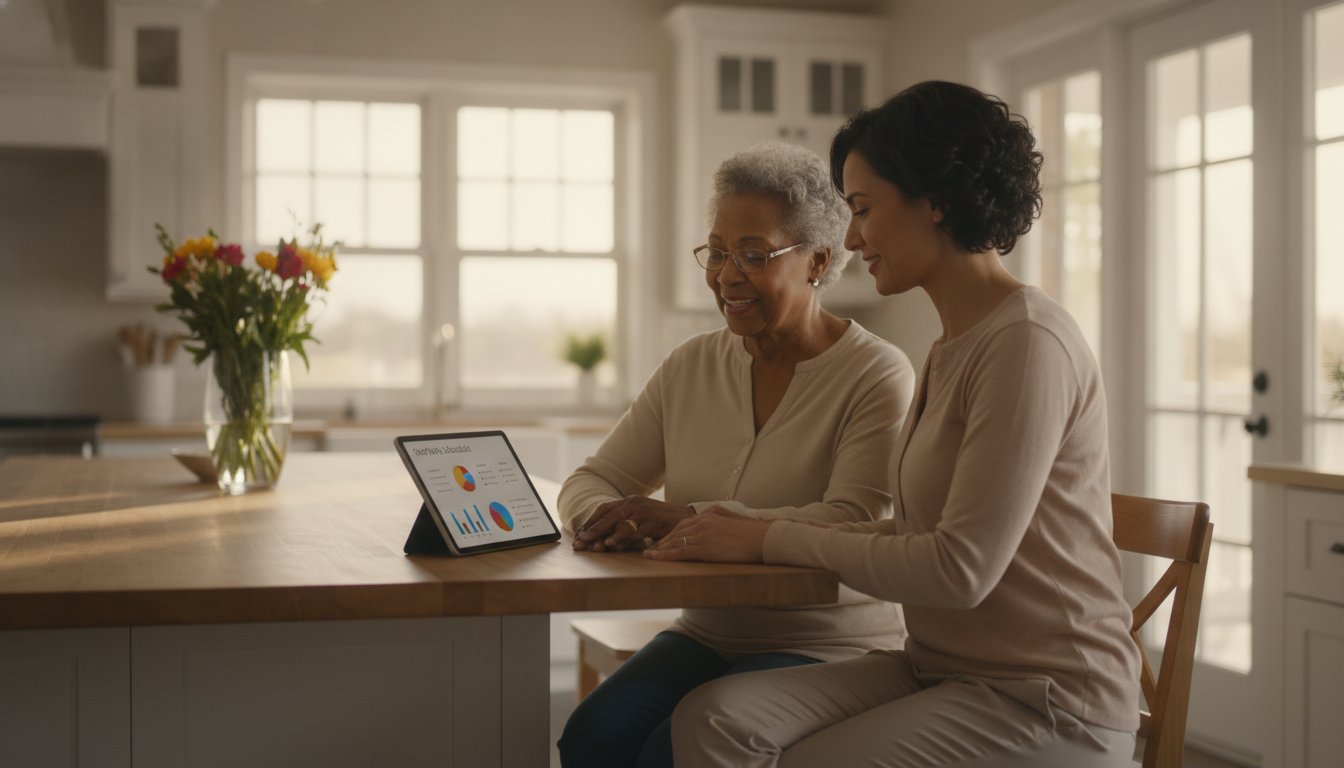
How can we introduce support without causing friction? The key is framing the conversation around "collaboration" rather than "care." Instead of saying, "I'm going to cook for you," try, "Let's plan some new recipes together this week." Involving your loved one in the menu selection preserves their role as the head of the household. You might start slowly by just checking in during meal times, then transition to prepping a few core ingredients together. This gradual approach builds trust and ensures the senior feels like a partner in the process.
Managing Specialized Dietary Needs
Dietary restrictions don't have to mean dull meals. For heart health, we use herbs and citrus to replace salt, providing vibrant flavor without the sodium. For those managing diabetes, consistency is everything. We focus on steady carbohydrate counting to prevent blood sugar spikes. If your loved one struggles with swallowing, known as dysphagia, texture-modified meals can be prepared to be both safe and visually appealing. If you find these complexities overwhelming, exploring professional meal preparation and companionship can provide the expert guidance your family needs to manage these specific health requirements safely.
Essential Nutrients for Seniors: A 2026 Perspective
Do you ever wonder if a standard multivitamin is enough to bridge the nutritional gap? While supplements have their place, the most effective way to support longevity is through nutrient-dense whole foods. Nutrient density is the ratio of nutrients to calories. As appetites naturally decrease, every bite must work harder to provide the "Big Four" essentials: Protein, Fiber, Vitamin B12, and Vitamin D. In 2026, we understand more than ever that meal preparation for elderly at home must prioritize these building blocks to maintain bone density and cognitive sharpness.
Hydration is another critical, yet often overlooked, component of senior wellness. Did you know that the physiological sensation of thirst actually diminishes as we age? This means your loved one might be dehydrated even if they don't feel thirsty. Similarly, including healthy fats like Omega-3s found in walnuts or salmon is vital for reducing systemic inflammation and supporting brain health. By incorporating time-saving meal prep ideas, you can ensure these nutrients are consistently present without spending hours in the kitchen.
Protein: The Foundation of Mobility
It's a common misconception that seniors need less protein because they're less active. In reality, older adults often require more protein per kilogram of body weight than younger people to combat muscle loss. To maximize muscle synthesis, it's best to spread protein intake across all three meals rather than saving it for dinner. Focus on easy-to-chew sources like Greek yogurt, soft scrambled eggs, or slow-cooked legumes. These options are gentle on the digestive system while providing the amino acids necessary to keep your loved one moving confidently.
Fiber and Digestive Health
Fiber does much more than just keep the digestive system regular. There's a profound link between gut health and overall mood, often referred to as the gut-brain axis. Effective meal preparation for elderly at home involves balancing soluble fiber, like oats, with insoluble fiber found in vegetable skins. You can easily add "hidden fiber" to comfort foods by stirring ground flaxseeds into oatmeal or pureeing white beans into a favorite soup. These small adjustments support a healthy microbiome, which in turn strengthens immune resilience and emotional well-being.
Practical Strategies for Safe Meal Prep at Home
Is the kitchen still a place of joy for your loved one, or has it become a source of stress? Safety is the silent partner of independence. When meal preparation for elderly at home is organized thoughtfully, it reduces the physical and mental tax on a senior. We recommend a simple five-step planning process: check the pantry inventory, select a weekly theme, identify overlapping ingredients, prep on a high-energy day, and use clear labeling. Visual cues in the kitchen act as gentle anchors, guiding seniors through the cooking process with confidence and clarity.
Efficiency also comes from "The Power of Three." By prepping three versatile core ingredients, such as roasted chicken, sautéed greens, and cooked quinoa, a senior can assemble multiple different dishes with minimal effort. This strategy prevents the exhaustion that often leads to skipped meals. Because the CDC estimates that foodborne illnesses affect 48 million people in the U.S. annually, proper storage is non-negotiable. Use large-print labels with "Use By" dates to ensure every meal is as safe as it is delicious.
Kitchen Safety and Fall Prevention
How can we make the kitchen environment more forgiving? Start by creating a "power zone" where the most frequently used pots, pans, and ingredients are stored at waist height. This simple change prevents the need for dangerous reaching or bending, which is especially important for those with arthritis. Consider installing induction cooktops or appliances with auto-shutoff features to eliminate the risk of accidental burns or fires. Proper lighting and keeping floors clear of rugs or clutter ensure the kitchen remains a trip-free zone.
The Art of Batch Cooking and Freezing
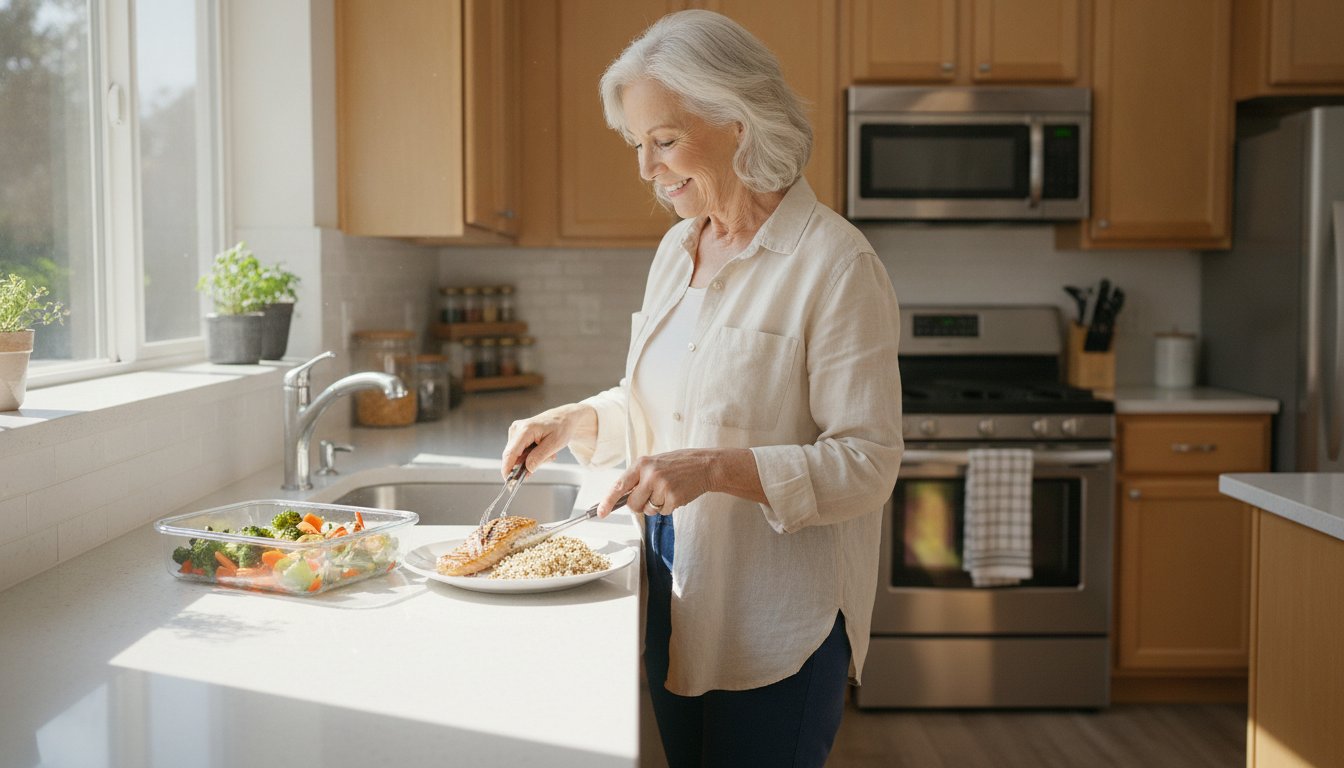
Batch cooking is a gift to a senior's future self. Soups, stews, and casseroles are ideal for freezing because they retain their texture and nutrient value well. Using small, portion-controlled containers makes it easy for a senior to heat exactly what they need without struggling with large frozen blocks of food. Safety doesn't end when the cooking is done; thawing is just as critical. Always thaw meals in the refrigerator rather than on the counter to prevent bacterial growth. If managing these safety protocols feels overwhelming, our team can provide professional meal preparation support tailored to your family's needs.
How Professional In-Home Support Enhances the Dining Experience
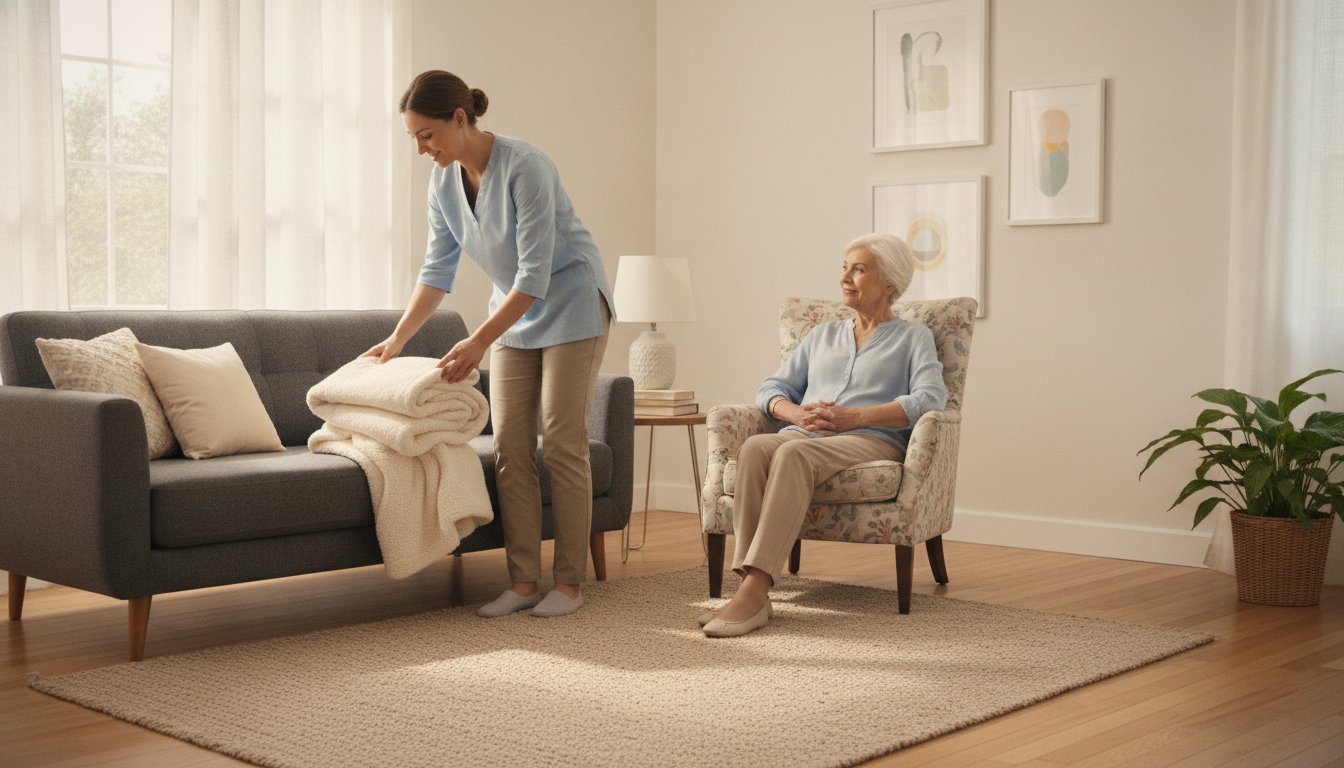
Could a helping hand in the kitchen be the key to your loved one's renewed energy? We understand that the transition to accepting help is delicate. When you choose professional meal preparation for elderly at home, you're inviting a "Dining Companion" into the home who understands that food is only one part of the equation. This support naturally integrates with vital medication reminders, ensuring that health protocols are followed exactly when they're most effective. Our caregivers also provide light housekeeping, which keeps the kitchen a sanitary and welcoming environment without your parent having to lift a finger.
Peace of mind is the greatest gift we can offer your family during these transitions. Knowing that every professional entering the home is a vetted, background-checked expert allows you to step back from the role of "manager" and return to being a daughter or son. We take the heavy burden of daily meal logistics off your shoulders, replacing it with a consistent and dependable presence you can trust. This reliability ensures that your parent isn't just getting a meal, but is being supported by someone who truly cares about their well-being and safety.
The Mercy Health Services Approach: Personalized Care Plans
How do we ensure the right fit? We don't believe in a one-size-fits-all model. We carefully match our caregivers to the specific dietary, cultural, and personality preferences of each client. This shifts the experience from "task-based" cooking to "relationship-based" mealtime. We encourage seniors to participate in shared activities, like snapping peas or choosing herbs, which fosters a sense of purpose. This socialization is often just as nourishing as the food itself, turning a solitary chore into a highlight of the day and a chance for meaningful engagement.
Holistic Support Beyond the Plate
Our role extends far beyond the kitchen counter. Caregivers are trained to be proactive observers, monitoring for subtle changes in appetite that might serve as an early warning system for health issues. We also assist with mobility and safety as your loved one moves to the dining table, preventing the falls discussed earlier in this guide. For family members who have been carrying the weight of daily meal duties alone, our respite care offers a much-needed breath of fresh air. You can rest easy knowing your loved one is nourished, safe, and truly seen.
Empowering a Future of Health and Dignity
Are you ready to replace the daily worry of the kitchen with the peace of mind that comes from professional support? We've explored how meal preparation for elderly at home serves as a vital cornerstone for both physical resilience and emotional well-being. By prioritizing nutrient-dense ingredients and creating a safe, hazard-free environment, you empower your parent to maintain their independence without the risks of malnutrition or accidents. You don't have to carry the weight of these responsibilities alone. Our team provides vetted, background-checked caregivers who deliver personalized care plans tailored to your loved one's specific dietary preferences and health goals. We focus on empathetic, one-on-one companionship that transforms a routine chore into a meaningful social experience. Request a Free Consultation for Personalized In-Home Support to discover how we can help your family thrive. Taking this proactive step ensures your loved one remains nourished, respected, and secure in the home they love for years to come.
Frequently Asked Questions
How do I know if my elderly parent is not eating enough at home?
Look for loose-fitting clothes, a fridge full of expired food, or a sudden lack of energy. You might also notice they're skipping meals because cooking has become too difficult. Weight loss is a significant indicator, but so is a change in mood or cognitive clarity. If you see these signs, professional meal preparation for elderly at home can provide the consistent nutrition they need to regain their strength and vitality.
What are the best easy-to-chew meals for seniors with dental issues?
Focus on nutrient-dense options like slow-cooked stews, flaked salmon, soft-scrambled eggs, and Greek yogurt. Pureed soups or smoothies enriched with protein powder are also excellent choices. You can finely mince vegetables or use mashed sweet potatoes to ensure they're getting fiber without the struggle of chewing. These meals provide the necessary nutrients while remaining gentle on sensitive gums or dental work, making dining a comfortable experience again for your loved one.
Can an in-home caregiver help with specialized diets like low-sodium or diabetic plans?
Yes, our caregivers are trained to follow personalized care plans that strictly adhere to specific dietary requirements. Whether your loved one needs low-sodium seasoning to manage heart health or consistent carbohydrate counting for diabetes, we can help. We prioritize flavor by using fresh herbs and citrus instead of salt. This ensures that even specialty diets remain enjoyable and satisfying, supporting their health goals while respecting their personal taste and dignity.
Is it better to use a meal delivery service or an in-home caregiver for meal prep?
While delivery services provide convenience, an in-home caregiver offers the vital element of companionship and socialization. A caregiver can adapt to daily appetite changes and ensure the food is actually eaten. They also provide safety by monitoring the kitchen and assisting with mobility. This holistic approach to meal preparation for elderly at home goes beyond just a drop-off service, turning mealtime into a social highlight that supports both mental and emotional well-being.
How can I make the kitchen safer for a senior with early-stage dementia?
Start by simplifying the environment and removing clutter from countertops. Install auto-shutoff devices on stoves and ensure the kitchen is brightly lit to prevent confusion. You can use transparent containers with large-print labels to help them identify ingredients easily. Using visual cues, like a step-by-step chart for simple tasks, can also be helpful. These adjustments reduce the cognitive load and help prevent accidents, keeping the kitchen a safe space for them.
What should I do if my parent refuses to eat the healthy food I provide?
Try shifting the focus from "health" to "flavor" and involve them in the menu selection process. Sometimes, resistance is actually a plea for autonomy. Offer two healthy choices rather than a single plate to give them a sense of control. You might also explore whether sensory changes, like a reduced sense of taste, are making the food unappealing. Adding vibrant spices or changing the meal's texture can often make a significant difference.
How often should a caregiver visit to help with meal preparation?
The frequency depends entirely on your family's unique needs and the senior's level of independence. Some families find that a few visits a week for batch cooking is sufficient, while others prefer daily support to ensure every meal is fresh and social. We work with you to create a personalized care plan that fits your schedule. Whether it's morning assistance or evening companionship, we provide consistent support that fits your lifestyle perfectly.
Does meal preparation assistance include grocery shopping and cleanup?
Yes, our comprehensive support includes the entire lifecycle of a meal. This begins with grocery shopping for fresh, preferred ingredients and extends to the final cleanup. Our caregivers also provide light housekeeping to maintain a sanitary kitchen environment. By handling the shopping and the dishes, we allow you and your loved one to focus on the enjoyment of the meal itself, removing the physical burden and stress often associated with cooking.
Frequently Asked Questions
Look for loose-fitting clothes, a fridge full of expired food, or a sudden lack of energy. You might also notice they're skipping meals because cooking has become too difficult. Weight loss is a significant indicator, but so is a change in mood or cognitive clarity. If you see these signs, professional meal preparation for elderly at home can provide the consistent nutrition they need to regain their strength and vitality.
Focus on nutrient-dense options like slow-cooked stews, flaked salmon, soft-scrambled eggs, and Greek yogurt. Pureed soups or smoothies enriched with protein powder are also excellent choices. You can finely mince vegetables or use mashed sweet potatoes to ensure they're getting fiber without the struggle of chewing. These meals provide the necessary nutrients while remaining gentle on sensitive gums or dental work, making dining a comfortable experience again for your loved one.
Yes, our caregivers are trained to follow personalized care plans that strictly adhere to specific dietary requirements. Whether your loved one needs low-sodium seasoning to manage heart health or consistent carbohydrate counting for diabetes, we can help. We prioritize flavor by using fresh herbs and citrus instead of salt. This ensures that even specialty diets remain enjoyable and satisfying, supporting their health goals while respecting their personal taste and dignity.
While delivery services provide convenience, an in-home caregiver offers the vital element of companionship and socialization. A caregiver can adapt to daily appetite changes and ensure the food is actually eaten. They also provide safety by monitoring the kitchen and assisting with mobility. This holistic approach to meal preparation for elderly at home goes beyond just a drop-off service, turning mealtime into a social highlight that supports both mental and emotional well-being.
Start by simplifying the environment and removing clutter from countertops. Install auto-shutoff devices on stoves and ensure the kitchen is brightly lit to prevent confusion. You can use transparent containers with large-print labels to help them identify ingredients easily. Using visual cues, like a step-by-step chart for simple tasks, can also be helpful. These adjustments reduce the cognitive load and help prevent accidents, keeping the kitchen a safe space for them.
Try shifting the focus from "health" to "flavor" and involve them in the menu selection process. Sometimes, resistance is actually a plea for autonomy. Offer two healthy choices rather than a single plate to give them a sense of control. You might also explore whether sensory changes, like a reduced sense of taste, are making the food unappealing. Adding vibrant spices or changing the meal's texture can often make a significant difference.
The frequency depends entirely on your family's unique needs and the senior's level of independence. Some families find that a few visits a week for batch cooking is sufficient, while others prefer daily support to ensure every meal is fresh and social. We work with you to create a personalized care plan that fits your schedule. Whether it's morning assistance or evening companionship, we provide consistent support that fits your lifestyle perfectly.
Yes, our comprehensive support includes the entire lifecycle of a meal. This begins with grocery shopping for fresh, preferred ingredients and extends to the final cleanup. Our caregivers also provide light housekeeping to maintain a sanitary kitchen environment. By handling the shopping and the dishes, we allow you and your loved one to focus on the enjoyment of the meal itself, removing the physical burden and stress often associated with cooking.