Non-Medical Palliative Care at Home: 2026 Family Guide
September 3, 2026 · 16 min read
Are you feeling overwhelmed by the weight of providing constant support while trying to balance your own life? It's a heavy burden to carry. This is especially true when you're unsure where medical treatment ends and daily living assistance begins. What if you could find a way to ensure your loved one remains comfortable and respected without sacrificing your own well-being? Choosing non-medical palliative care at home allows you to step back from the exhaustion of being a 24/7 caregiver. It's time to return to being a daughter, son, or spouse. This approach creates a stable environment where professional reliability meets personal dignity.
We understand that the guilt of not being able to do it all yourself can be paralyzing. You want the best for your family. However, the complexities of serious illness often require more hands than one person can provide. This guide promises to clarify exactly how professional non-medical support preserves the person behind the diagnosis. We'll explore the 2026 landscape of home-based assistance and explain the differences between clinical and companion-led care. Most importantly, we'll show you how to build a sustainable path forward that restores peace to your household.
Key Takeaways
- Understand how non-medical palliative care at home bridges the gap between clinical treatments and a peaceful living environment by prioritizing daily comfort and person-centered support.
- Learn to distinguish between medical interventions and daily living assistance (ADLs) to ensure your family benefits from a seamless, dual-team approach.
- Discover how professional support with personal care and mobility preserves your loved one’s dignity while significantly reducing the risk of home-based accidents.
- Identify the essential criteria for selecting a reliable provider, from rigorous caregiver vetting to the creation of personalized care plans that adapt as needs change.
- Explore how a "Compassionate Navigator" can simplify the logistics of caregiving, allowing you to focus on meaningful engagement with your family rather than just managing tasks.
Understanding the Role of Non-Medical Palliative Care at Home
Have you ever noticed that even with the best doctors, the hardest parts of a serious illness often happen between appointments? While medical teams focus on treating the disease, non-medical palliative care at home focuses on the person living within that illness. It's a specialized form of assistance that prioritizes your loved one's comfort and dignity above all else. This support includes help with daily routines like personal hygiene, meal preparation, and light housekeeping, ensuring that the home remains a sanctuary rather than a clinical space.
This approach bridges the gap between complex clinical treatments and a peaceful home environment. For a comprehensive overview of palliative care, it's helpful to understand that it isn't limited to the final days of life. Instead, it's a layer of support that's appropriate at any stage of a serious illness. Having a consistent, compassionate presence in the house provides an emotional anchor for both the patient and the family, reducing the fear and isolation that often accompany long-term health challenges.
Who is Non-Medical Palliative Care For?
Are you wondering if your family situation fits this model? We provide personalized care plans for all ages, because serious illness doesn't discriminate by birth date. Seniors navigating progressive conditions often rely on us for mobility assistance and companionship to maintain their quality of life. Adults under 50 managing chronic illnesses use our private-duty care to stay independent while receiving the help they need. We also provide specialized in-home support for children with high-acuity needs, offering parents a reliable partner in a complex journey.
The Essential Goal: Quality of Life
The core philosophy here is simple: we shift the focus from "managing a patient" to "supporting a person." When a professional takes over demanding physical tasks, the family dynamic changes for the better. You're no longer just a caregiver; you're a daughter, a son, or a partner again. By outsourcing these responsibilities, you reduce the risk of burnout and ensure your loved one receives vetted, reliable assistance. Non-medical palliative care at home is the practical foundation of home-based comfort.
Non-Medical vs. Medical Palliative Care: What Families Need to Know
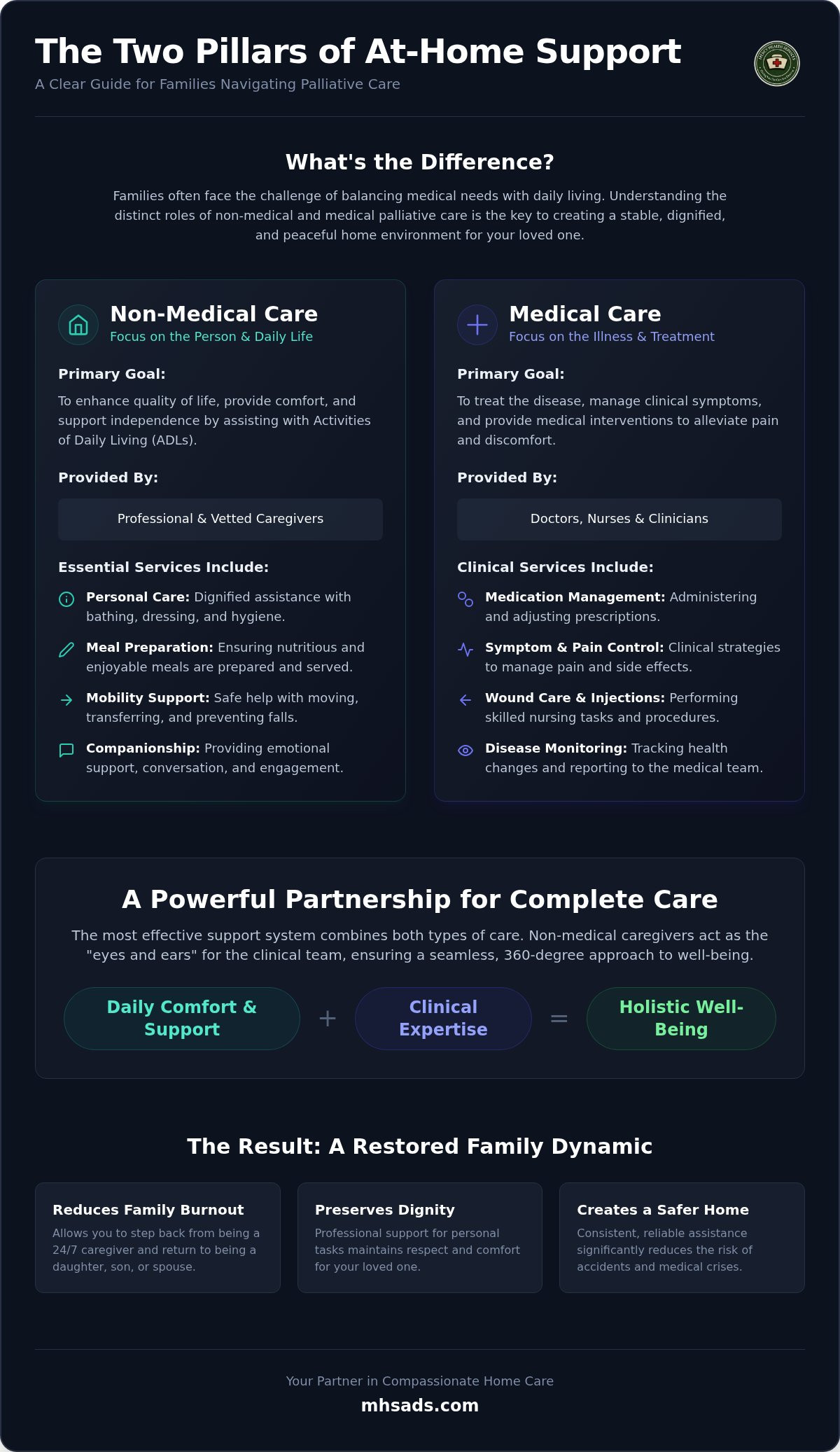
Are you feeling confused by the different types of support available for your loved one? It's common for families to use the terms "medical" and "non-medical" interchangeably, but they serve very distinct purposes. Medical palliative care involves clinical interventions, such as adjusting pain medications or managing symptoms of disease. In contrast, non-medical palliative care at home focuses on the practical and emotional needs that occur every single day. While doctors treat the illness, we focus on the person. Understanding these boundaries is the first step in creating a stable and dignified environment at home.
The Clinical Team vs. The Home Caregiver
Doctors and nurses are essential for tracking disease progression and pain management. However, they are rarely in the home for more than a few hours a week. This is where a private-duty caregiver becomes invaluable. They provide personal care assistance and emotional support, acting as the eyes and ears of the clinical team. By observing subtle changes in appetite, mood, or mobility, they can report concerns to the medical team before they become crises. This collaborative approach ensures a safer environment for medical treatment to be effective and consistent.
Identifying Your Primary Need
How do you know which service to prioritize? If your loved one requires wound care, injections, or specialized nursing, you're looking for medical home health. If the primary goal is help with bathing, dressing, and daily comfort, non-medical support is the right fit. Often, families find that a transitioning to home care services plan works best when it combines both teams. For more clarity on these definitions, the NIH provides a helpful resource for differentiating palliative and hospice care. Choosing between these paths depends on whether the current focus is on medical rehabilitation or long-term comfort and consistency.
The financial landscape of these choices also differs significantly. Medical palliative care is often governed by insurance or Medicare requirements, which can limit the amount of time a professional spends in your home. Non-medical support is typically a private-pay service, offering you the flexibility to choose hourly or 24/7 care based on your family's needs. This independence from insurance restrictions allows for a truly personalized care plan that evolves with the patient. If you're feeling uncertain about how to coordinate these layers of support, we invite you to speak with a Compassionate Navigator today to explore your options.
Essential Services: How In-Home Support Enhances Quality of Life
How does daily life change when professional support enters your home? It's often the small, quiet moments where non-medical palliative care at home makes the most significant difference. By focusing on the practicalities of living, we ensure that your loved one’s environment remains a place of peace rather than a source of stress. This specialized non-medical palliative care at home is built on four pillars: dignity, safety, nutrition, and connection.
Professional assistance with personal care and hygiene is about more than just cleanliness. It's about maintaining a sense of self. When a vetted caregiver helps with bathing or dressing, it removes the awkwardness that can sometimes occur between family members. Similarly, mobility assistance provides the physical strength needed for safe transfers and fall prevention. These services allow your loved one to move through their day with confidence, even when their physical strength is limited.
Nutrition also plays a vital role in maintaining comfort and energy levels. We provide meal preparation for elderly at home that respects specific dietary restrictions while making mealtime enjoyable again. Beyond the physical, companionship addresses the deep isolation that often follows a serious diagnosis. Having someone to talk to, share a hobby with, or simply sit with can be as restorative as any clinical treatment.
Daily Practical Assistance
How do we keep the household running smoothly? Our caregivers provide medication reminders to ensure your loved one stays on track with their doctor’s protocols. We also handle light housekeeping to keep the living area sanitary and organized, which significantly reduces anxiety for everyone in the home. If there are non-medical appointments or errands to run, we provide the transportation and support needed to get things done without the family having to miss work or other commitments.
Specialized High-Acuity Support
Does your family need more intensive assistance for a complex situation? We understand that every journey is unique, which is why we offer home care for special needs children and adults under 50. For those navigating the complexities of dementia or progressive memory loss, our caregivers use specific strategies to maintain a calm and familiar routine. When safety is a primary concern, 24/7 monitoring ensures that your loved one is never alone, providing you with the ultimate peace of mind that a professional is always observant and ready to help.
Selecting Professional Caregiving Services for Long-Term Support
How do you find a partner you can trust when the stakes are so high? Choosing a provider for non-medical palliative care at home is one of the most critical decisions your family will make. It isn't just about finding someone with the right skills; it's about finding a consistent, compassionate presence who understands your loved one's unique journey. A stable partnership provides the reliability you need to step back from the stress of daily logistics and focus on being a family again. This selection process requires a balance of intuition and evidence-based standards.
The Vetting Process
Why are background checks and vetting non-negotiable? When you invite someone into your sanctuary, peace of mind is paramount. A rigorous vetting process ensures that every caregiver has been thoroughly screened for safety, professionalism, and experience. Beyond basic safety, you should look for an agency that prioritizes one on one senior care. Having the same person visit each day allows for a deep bond to form. This consistency is essential for palliative patients who rely on routine and familiarity to feel secure. You can find more detailed inquiries in our guide on home care agencies to ensure you cover every angle before signing an agreement.
Assessing Reliability and Responsiveness
How quickly can the agency respond if your loved one's condition suddenly shifts? In a palliative setting, needs can change overnight. You need a partner that is proactive and responsive, with clear communication protocols between the family, the caregiver, and the agency office. Knowing how the agency handles emergencies or unexpected absences is vital. Will you be left without support, or is there a vetted backup ready to step in? A reliable agency acts as a stable anchor, ensuring that the level of non-medical palliative care at home remains consistent regardless of external changes. The best care begins with a rigorous selection process.
Finding the right fit doesn't have to be an overwhelming journey on your own. If you're ready to see the difference that a dedicated, vetted professional can make, we are here to help. You can request a free consultation with our team to begin building a care plan that honors your loved one's dignity and your family's needs.
How Mercy Health Services Navigates Palliative Support with You
Have you reached a point where you feel you can't do this alone anymore? It's a realization that comes with many emotions, but you don't have to navigate this path without a map. At Mercy Health Services, we act as your Compassionate Navigator, guiding you through the complexities of non-medical palliative care at home with a focus on vetted reliability and human warmth. We understand that every family's journey is different, which is why we don't offer one-size-fits-all solutions. Instead, we anchor our support in your specific needs, ensuring your loved one remains the center of every decision we make together.
One of our primary goals is to provide essential respite care for family members. You've likely been the primary source of support for so long that your own well-being has started to take a backseat. By stepping in to handle the physical and logistical tasks, we allow you to rest and recharge. This isn't just about the patient; it's about preserving the health of the entire family unit. When you aren't exhausted by the demands of 24/7 care, you can focus on the meaningful moments that matter most.
A Partner in Your Care Journey
We believe that every individual deserves a personalized care plan that respects their history and preferences. Whether you need support for a child with high-acuity needs, an adult under 50 managing a chronic condition, or a senior navigating a progressive illness, our caregivers are prepared to help. We offer flexible scheduling that ranges from a few hours a week for errands and light housekeeping to comprehensive 24/7 support. Our team is observant and proactive, ensuring that your loved one's environment remains consistent and respectful at all times. This empathetic guidance simplifies the world of home care, making it feel less like a transaction and more like a dedicated partnership.
Taking the First Step
Are you ready to find a sustainable path forward for your household? The process begins with a free in-home consultation. During this meeting, we listen to your concerns and observe the specific needs of your home environment. This isn't a sales pitch; it's a consultative session designed to build a foundation for professional support. From there, we carefully match your loved one with a professional caregiver whose skills and personality align with your family's dynamic. We often have the ability to start care within a few days, providing a quick transition to a more stable and dignified life. Schedule your free care consultation today to discover how we can help you regain your peace of mind and restore balance to your home.
Restoring Peace and Dignity to Your Home
Are you ready to move from being an exhausted caregiver back to being a loving family member? We've explored how non-medical palliative care at home bridges the gap between clinical treatments and daily living. You now understand that professional assistance with personal care and mobility isn't just about physical safety; it's about preserving your loved one's sense of self. By choosing a partner that prioritizes vetted reliability and personalized care plans for all ages, you create a stable foundation for the entire family.
You don't have to wait for a crisis to seek help. We can often start care within a few days, providing immediate relief and professional consistency. Our background-checked caregivers are ready to act as your Compassionate Navigator through this transition. Schedule a Free Consultation with Mercy Health Services today to discuss how we can support your unique journey. You have the strength to make this choice, and we have the expertise to guide you through it with respect and warmth.
Frequently Asked Questions
What is the difference between non-medical palliative care and hospice?
Palliative care is appropriate at any stage of a serious illness, whereas hospice is specifically for individuals with a life expectancy of six months or less. Non-medical palliative care at home focuses on the practical side of daily living, such as personal care and companionship. While hospice often involves a clinical team, our services provide the consistent, non-clinical support that maintains a person's dignity and comfort in their own environment.
Can non-medical palliative care be provided alongside hospital treatments?
Yes, this support is designed to work in tandem with your loved one's medical treatments. Unlike hospice, which often requires stopping curative efforts, non-medical palliative care at home can begin the moment a diagnosis is received. Our caregivers assist with mobility and meal preparation, ensuring the patient is physically supported while they navigate hospital visits or clinical therapies. This holistic approach bridges the gap between hospital-based medical care and a peaceful home life.
How do I know if my loved one needs professional caregiving services at home?
You might notice subtle signs like a decline in personal hygiene, missed medication doses, or an increase in falls. If you are feeling overwhelmed by the physical demands of support, it's likely time to consider professional help. We often see families seeking assistance when the primary caregiver faces burnout or when the patient requires more supervision than the family can safely provide. Professional reliability ensures that your loved one stays safe while you reclaim your role as a family member.
Does non-medical palliative care include nursing tasks like giving injections?
No, our services focus strictly on non-medical assistance and daily living support. We do not provide skilled nursing care, physical therapy, or medical injections. Instead, we assist with tasks like medication reminders, personal care, and light housekeeping. If your loved one requires clinical interventions, those must be handled by a licensed medical professional or a home health nurse. Our role is to provide the practical, hands-on support that keeps the household running smoothly and safely.
Is this type of home care available for children and young adults?
Yes, Mercy Health Services provides specialized in-home support for children with high-acuity needs and private-duty care for adults under 50. Serious illness affects families of all generations, and our approach is tailored to meet the developmental and personal needs of younger patients. Whether it's assisting a young adult with mobility or providing companionship for a child, our vetted caregivers focus on person-centered support that honors the individual's dignity regardless of their age.
How quickly can we begin receiving non-medical support at home?
We understand that care needs can arise suddenly, so we prioritize a responsive start. Families can often begin receiving professional support within a few days of their initial inquiry. The process starts with a free consultation to assess your specific situation and create a personalized plan. Once we match your loved one with a background-checked caregiver who fits their needs, we move quickly to establish a stable and supportive routine in your home.
Are the caregivers trained to handle patients with dementia or Parkinson’s?
Yes, our caregivers are experienced in supporting individuals living with progressive conditions like dementia, Alzheimer’s, and Parkinson’s. They are trained to be observant and proactive, using strategies that prioritize safety and reduce anxiety for the patient. By maintaining a calm, consistent routine and providing mobility assistance, they help manage the unique challenges of memory loss and limited physical strength. This specialized support ensures your loved one remains respected and comfortable as their needs evolve.
How is a personalized care plan created for my family?
Every plan begins with a free, in-home consultation where we listen to your family's concerns and goals. We evaluate the physical, emotional, and social needs of your loved one to build a structured path forward. This plan is not static; it evolves as the patient's condition changes. We consider everything from dietary restrictions for meal preparation to specific mobility requirements, ensuring that the support provided is as unique as the person receiving it.
Frequently Asked Questions
Are you wondering if your family situation fits this model? We provide personalized care plans for all ages, because serious illness doesn't discriminate by birth date. Seniors navigating progressive conditions often rely on us for mobility assistance and companionship to maintain their quality of life. Adults under 50 managing chronic illnesses use our private-duty care to stay independent while receiving the help they need. We also provide specialized in-home support for children with high-acuity needs, offering parents a reliable partner in a complex journey.
Palliative care is appropriate at any stage of a serious illness, whereas hospice is specifically for individuals with a life expectancy of six months or less. Non-medical palliative care at home focuses on the practical side of daily living, such as personal care and companionship. While hospice often involves a clinical team, our services provide the consistent, non-clinical support that maintains a person's dignity and comfort in their own environment.
Yes, this support is designed to work in tandem with your loved one's medical treatments. Unlike hospice, which often requires stopping curative efforts, non-medical palliative care at home can begin the moment a diagnosis is received. Our caregivers assist with mobility and meal preparation, ensuring the patient is physically supported while they navigate hospital visits or clinical therapies. This holistic approach bridges the gap between hospital-based medical care and a peaceful home life.
You might notice subtle signs like a decline in personal hygiene, missed medication doses, or an increase in falls. If you are feeling overwhelmed by the physical demands of support, it's likely time to consider professional help. We often see families seeking assistance when the primary caregiver faces burnout or when the patient requires more supervision than the family can safely provide. Professional reliability ensures that your loved one stays safe while you reclaim your role as a family member.
No, our services focus strictly on non-medical assistance and daily living support. We do not provide skilled nursing care, physical therapy, or medical injections. Instead, we assist with tasks like medication reminders, personal care, and light housekeeping. If your loved one requires clinical interventions, those must be handled by a licensed medical professional or a home health nurse. Our role is to provide the practical, hands-on support that keeps the household running smoothly and safely.
Yes, Mercy Health Services provides specialized in-home support for children with high-acuity needs and private-duty care for adults under 50. Serious illness affects families of all generations, and our approach is tailored to meet the developmental and personal needs of younger patients. Whether it's assisting a young adult with mobility or providing companionship for a child, our vetted caregivers focus on person-centered support that honors the individual's dignity regardless of their age.
We understand that care needs can arise suddenly, so we prioritize a responsive start. Families can often begin receiving professional support within a few days of their initial inquiry. The process starts with a free consultation to assess your specific situation and create a personalized plan. Once we match your loved one with a background-checked caregiver who fits their needs, we move quickly to establish a stable and supportive routine in your home.
Yes, our caregivers are experienced in supporting individuals living with progressive conditions like dementia, Alzheimer’s, and Parkinson’s. They are trained to be observant and proactive, using strategies that prioritize safety and reduce anxiety for the patient. By maintaining a calm, consistent routine and providing mobility assistance, they help manage the unique challenges of memory loss and limited physical strength. This specialized support ensures your loved one remains respected and comfortable as their needs evolve.
Every plan begins with a free, in-home consultation where we listen to your family's concerns and goals. We evaluate the physical, emotional, and social needs of your loved one to build a structured path forward. This plan is not static; it evolves as the patient's condition changes. We consider everything from dietary restrictions for meal preparation to specific mobility requirements, ensuring that the support provided is as unique as the person receiving it.