
How to Choose the Best Home Care Agencies in 2026: A Family Buying Guide
August 30, 2026 · 17 min read
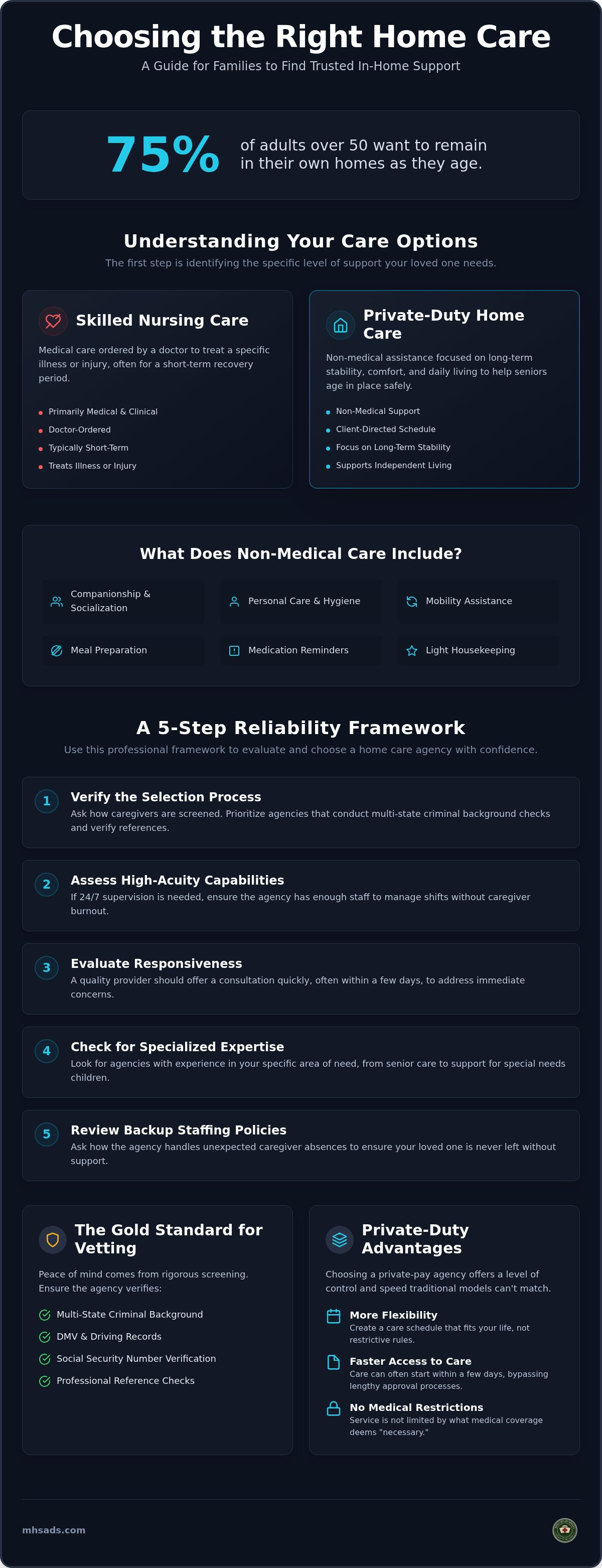
Did you know that 75% of adults over 50 want to stay in their own homes as they age, yet the thought of inviting a stranger into that private space often feels more like a risk than a relief? It's a heavy realization when you find yourself searching for home care agencies, wondering if you can truly trust someone with your parent's safety and dignity. You might worry about the difference between medical and companion care, or feel an underlying anxiety that professional help means a loss of independence for the person you love.
We understand that this transition is deeply emotional, not just logistical. We've created this guide to help you move through these choices with clarity and professional reassurance. You'll learn how to use our expert framework for vetting providers and finding a caregiver match that feels right from day one. We will walk you through the essential steps of background checks, explain how to build a manageable care plan, and provide the tools you need to ensure your loved one remains safe and respected in the place they call home.
Key Takeaways
- Identify the specific level of support your family needs by distinguishing between medical treatment and essential daily living assistance.
- Evaluate home care agencies using a professional 5-step framework that prioritizes rigorous background checks and caregiver reliability.
- Ensure long-term success by choosing a provider that matches caregivers based on personality and routine rather than just a basic checklist of skills.
- Gain more flexibility and faster access to care—often starting within just a few days—by understanding how private-duty options bypass restrictive medical coverage rules.
Understanding the Landscape: Skilled Nursing vs. Private Duty Home Care
Do you find yourself wondering if your loved one needs a medical professional or simply a helping hand with daily life? This is often the first point of confusion for families looking at home care agencies. Identifying the core need is vital because it determines the type of support that will best preserve your family member's dignity and safety. While many people assume all home care is medical, there is a distinct difference between clinical treatment and the support required for independent living.
The choice between Skilled Nursing vs. Private Duty Home Care depends on the primary goal of the assistance. Skilled nursing is typically short-term, medical care ordered by a doctor to treat a specific illness or injury. In contrast, private duty care focuses on long-term stability. It provides the consistent, non-medical assistance that allows seniors to age in place without the clinical feel of a facility. Families often prefer this path because it prioritizes the person's routine and comfort, rather than just their diagnosis.
What is Non-Medical Home Care?
Non-medical care is the heartbeat of aging in place. It encompasses companionship, socialization, and mobility assistance. At its core, personal care assistance provides the foundation for a safe home environment. This includes help with hygiene, grooming, and dressing; tasks that are deeply personal and require a caregiver who leads with respect. By handling these daily needs and providing consistent socialization, caregivers help prevent the isolation and physical decline that often lead to hospital readmissions.
When to Choose a Private Duty Agency
How do you know when it's time to step back from family caregiving and bring in professional support? Often, the signs are subtle. You might notice that meal preparation for elderly at home has become a struggle, resulting in missed nutrients or weight loss. Perhaps light housekeeping is piling up, or medication reminders are being ignored. These are the moments when private-duty home care agencies offer a breath of fresh air.
Choosing a private pay agency offers your family a level of flexibility that traditional medical models cannot match. You aren't forced to wait for Medicare approvals or restricted by restrictive medical necessity rules. Instead, you can create a schedule that fits your life, whether that means a few hours of companionship or 24/7 supervision. This control ensures that the care plan evolves with your loved one, maintaining their independence for as long as possible.
Vetting Home Care Agencies: A 5-Step Reliability Framework
How do you move from feeling overwhelmed by options to feeling certain about a single choice? Selecting the right support for your family requires a methodical approach that looks beyond a simple price quote. To help you find a partner that offers both safety and heart, we recommend using this 5-step framework to evaluate potential home care agencies.
- Verify the selection process: Ask exactly how caregivers are screened and if the agency conducts multi-state criminal background checks.
- Assess high-acuity capabilities: If your loved one requires 24/7 supervision, ensure the agency has the depth of staff to manage multiple shifts without burnout.
- Evaluate responsiveness: A quality provider should offer a consultation quickly, often within a few days, to address your immediate concerns.
- Check for specialized expertise: Look for agencies that offer tailored support, such as home care for special needs children, if your needs extend beyond senior care.
- Review backup staffing policies: Ask how the agency handles unexpected caregiver absences to ensure your loved one is never left without assistance.
When you begin Vetting Home Care Agencies, you'll find that government comparison tools offer a helpful baseline for quality. However, the deepest security comes from understanding an agency's internal standards for reliability and caregiver support.
The Gold Standard for Caregiver Vetting
Specific screening protocols are the only way to ensure peace of mind. You should ask if the agency verifies DMV records, social security numbers, and professional references before a caregiver ever enters a home. Beyond these technical checks, a trusted guide will vet for empathy and emotional intelligence. This ensures the person providing assistance isn't just checking off a list of tasks but is truly engaged with your loved one's well-being. Additionally, professional agencies manage all liability, workers' compensation, and bonding; this protects your family from the legal risks associated with hiring independent, unvetted contractors.
Red Flags to Watch For During the Interview
What should make you pause during a discovery call? If an agency cannot clearly explain their caregiver matching process, it's a sign they may prioritize scheduling convenience over personal compatibility. Vague answers regarding medication reminders or safety protocols are also significant warning signs. Every reliable provider should offer a formal, written care plan during the discovery phase. This document serves as a roadmap for support, ensuring that everyone is aligned on the goals for independence and dignity. If you're feeling unsure about how to start this conversation, you can speak with a care coordinator to explore your options.
The Heart of Quality Care: Personalization and the Caregiver Match
Have you ever wondered why some caregivers seem to intuitively know what your loved one needs before they even ask? The secret isn't just experience; it's the depth of the initial matching process. Many home care agencies treat scheduling like a puzzle of zip codes and available hours, but true quality care is built on human compatibility. A "one size fits all" approach fails because it ignores the unique rhythm and personality of the person receiving support. Finding the right match is a delicate balance of technical skills, shared interests, and a respect for established routines.
Personalization looks different for every age group. For instance, home care for adults under 50 often focuses on maintaining an active lifestyle or supporting career goals, whereas senior care might prioritize long-term stability and safety. Regardless of age, your family's input is the most valuable tool in this process. You are the experts on your loved one’s history and preferences, and your involvement ensures the care plan evolves as their needs change.
Creating a Dynamic Care Plan
A care plan should never be a static document tucked away in a folder. It must be a living roadmap that addresses both physical safety and social joy. Does your father enjoy a morning walk in the garden, or does he prefer a quiet afternoon of crossword puzzles? By integrating mobility assistance for seniors into these existing social preferences, the support feels like a natural part of the day rather than a medical intervention. We recommend formal reviews of these plans every few months to ensure the level of assistance remains perfectly calibrated to your loved one’s current abilities.
Ensuring Long-Term Caregiver Consistency
Consistency is the cornerstone of emotional security. When the same familiar face arrives each morning, it builds a foundation of trust that can significantly improve mental health outcomes, particularly for those managing early-stage dementia. To protect this vital bond, professional agencies proactively manage "respite for the caregiver" to prevent professional burnout and ensure your primary helper stays energized and engaged. It's also important to ask how an agency handles personality clashes. A compassionate navigator will listen to your concerns without judgment and facilitate a new match if the chemistry isn't quite right, ensuring the home remains a place of peace and dignity.
Navigating Costs: Understanding Private Pay and Scheduling Options
Does the financial side of choosing professional support feel like a maze of hidden fees and confusing terminology? We understand that while safety is your top priority, the budget is a reality you must manage with care. One of the most significant advantages of choosing private-duty home care agencies is the freedom from restrictive medical necessity rules. Unlike Medicare, which often limits support to "intermittent" visits or specific medical triggers, private pay allows you to decide exactly how much assistance your loved one needs. You aren't forced to wait for government approvals; you can simply focus on what makes your family member feel most comfortable.
In 2026, most agencies structure their fees based on the specific complexity of your care plan. You'll typically encounter hourly rates for companion care and slightly higher tiers for hands-on personal assistance. Daily or "live-in" rates are often structured to provide a more economical option for families requiring a constant 24-hour presence. When you compare these costs to assisted living facilities, remember that home care provides one-on-one attention that facilities cannot match. If you're unsure about committing to a long-term schedule, consider using respite care for dementia patients as a gentle way to trial an agency's services. This short-term approach lets your family experience the quality of care firsthand while providing primary caregivers a necessary break.
Scheduling Flexibility: From Hourly to 24/7
How do you determine if your budget should cover four hours a day or 24/7 supervision? Professional home care agencies offer the flexibility to scale support as your loved one's needs change. For families requiring overnight stays or continuous monitoring, an agency provides a level of reliability that independent contractors often cannot match. If a private hire falls ill or has an emergency, the burden of finding a replacement rests entirely on your shoulders. With a managed agency, backup staffing is a standard part of the service, ensuring your loved one is never left without a compassionate pair of hands.
Financial Planning for Home Care
Many families find that long-term care insurance is a vital tool for covering private-duty support. When you're reviewing service agreements, look for absolute transparency in billing; this includes clear hourly rates and a breakdown of any holiday or weekend adjustments. It's also helpful to remember the long-term value of this investment. Professional care reduces long-term costs by preventing falls and hospitalizations. By being proactive, you're not just buying hours of help; you're investing in the safety and longevity of your loved one's independence. To explore how we can tailor a schedule to your family's specific budget, you can request a free consultation today.
Why Mercy Health Services is the Trusted Choice for Your Family
How do you find a partner that feels less like a service provider and more like an extension of your own family? At Mercy Health Services, we believe the best home care agencies shouldn't just fill a schedule; they should provide a stable anchor for families in transition. We've built our reputation on a standard of vetted reliability that goes far beyond basic requirements. Whether you're seeking support for a child with special needs, an adult under 50, or a senior wishing to age in place, our approach remains the same. We lead with empathy and back it with professional reassurance.
Our role is to be your compassionate navigator. We understand the anxiety that comes with inviting someone new into your home. This is why we focus on dignity and respect in every interaction. We don't just provide assistance; we foster a collaborative partnership that prioritizes your loved one's independence and safety. By choosing a provider with national scale and local heart, you gain the peace of mind that comes from knowing every caregiver is fully background-checked and prepared to provide meaningful engagement from day one.
The Mercy Health Services Caregiver Selection Process
What does it mean to have a truly vetted caregiver? For us, it starts with a rigorous screening process that includes multi-state criminal background checks and professional reference verification. However, technical skills are only half of the story. We prioritize the human element by looking for traits like patience, observation, and deep attentiveness. This ensures that the caregiver match is based on personality and routine, not just a list of tasks. Our focus on consistency means we strive to build long-term relationships. We want your caregiver to become a familiar, trusted presence who understands the nuances of your loved one's daily life.
Getting Started: Your Pathway to Care
Are you ready to move from uncertainty toward a clear, manageable plan? The transition to professional support should be seamless and unhurried. Our process begins with a free consultation where we listen to your concerns and identify your specific needs. From there, we create a personalized care plan tailored to your situation. We pride ourselves on our responsiveness; in most cases, we can have care started within just a few days. This proactive approach ensures you aren't left waiting during stressful moments. You can Schedule a consultation with Mercy Health Services to begin your journey toward better care and find the helping hand your family deserves.
Empowering Your Family's Future at Home
How much lighter would your day feel if you knew your loved one was safe, respected, and truly cared for? Choosing between various home care agencies doesn't have to be a source of stress. By using a clear vetting framework and prioritizing a caregiver match based on personality, you've already taken the most important steps toward preserving your family's dignity. You now understand that private-duty care offers the flexibility to bypass clinical restrictions, allowing for a schedule that actually fits your life.
We're here to serve as your compassionate navigator throughout this entire transition. Our team provides vetted and background-checked caregivers who offer the reliable, one-on-one support your family deserves. Whether you need assistance for a child, an adult, or a senior, we create personalized care plans that evolve alongside your needs. This commitment to consistency ensures that professional help feels like a natural part of your home environment rather than a clinical intrusion.
You don't have to walk this path alone. Request a Free Consultation with Mercy Health Services today to see how a professional partnership can restore your peace of mind and help your loved one thrive at home. It's time to move forward with the confidence that your family is in good hands.
Frequently Asked Questions
How do I know if a home care agency is properly licensed and insured?
You should ask for proof of professional liability insurance and workers' compensation coverage during your initial consultation. A reputable agency will also be bonded to protect your home and belongings. While licensing requirements vary by state, professional providers should be able to provide documentation of their operational status and adherence to national standards. This ensures your family isn't held liable for caregiver injuries or accidents occurring on your property.
What is the difference between a home health aide and a companion?
A companion focuses on socialization, light housekeeping, and meal preparation, whereas a home health aide provides hands-on personal care. This includes assistance with activities of daily living like bathing, dressing, and grooming. Choosing between these roles depends on whether your loved one needs emotional support and help around the house or more direct, physical assistance to maintain their personal hygiene and safety throughout the day.
Can I change my caregiver if the personality match isn’t right?
Yes, you have the right to request a new caregiver match if the chemistry isn't quite right. We believe that the relationship between the caregiver and the client is the foundation of quality care. If you feel that a personality clash is affecting your loved one's comfort or dignity, a trusted navigator will listen to your concerns and facilitate a transition to a different vetted professional who better aligns with your family's routine.
How quickly can home care services typically begin?
Most families can begin receiving professional support within a few days after their initial discovery call. This timeline allows for a thorough, free consultation and the creation of a personalized care plan tailored to your specific situation. Because the need for help often arises during stressful transitions, reputable providers prioritize responsiveness to ensure your loved one remains safe and supported without unnecessary delays or administrative hurdles.
Does home care provide support for children with disabilities?
Yes, professional home care extends beyond senior support to include in-home assistance for children with special needs. This specialized care focuses on mobility assistance, personal care, and companionship tailored to a child's developmental goals. By providing a consistent, vetted caregiver, families gain the respite they need while knowing their child is receiving attentive, person-centered support in the familiar and comfortable environment of their own home.
What happens if my primary caregiver is sick or on vacation?
An organized agency maintains a depth of staff to provide backup coverage whenever your primary caregiver is unavailable. This is a significant advantage over hiring independent contractors, as the agency handles the logistics of finding a replacement. You'll be introduced to a secondary vetted professional who is already familiar with your personalized care plan, ensuring that there is never a gap in the essential support your family member relies on.
How do agencies ensure the safety of my loved one’s belongings and home?
Security is maintained through a combination of rigorous vetting, professional bonding, and consistent supervision. Every caregiver undergoes multi-state criminal background checks and reference verification before they are matched with a family. Additionally, professional home care agencies carry insurance and bonding that specifically protect clients against theft or property damage, providing a layer of financial and emotional security that independent hires simply cannot offer.
Is private duty home care covered by traditional health insurance?
Traditional health insurance and Medicare typically don't cover long-term, non-medical private duty care. These plans are generally designed for short-term, clinical interventions rather than daily living support. However, many families use long-term care insurance or private pay options to fund these services. Choosing a private pay model with home care agencies provides more flexibility in scheduling and caregiver choice since you aren't restricted by medical necessity rules.
Frequently Asked Questions
Non-medical care is the heartbeat of aging in place. It encompasses companionship, socialization, and mobility assistance. At its core, personal care assistance provides the foundation for a safe home environment. This includes help with hygiene, grooming, and dressing; tasks that are deeply personal and require a caregiver who leads with respect. By handling these daily needs and providing consistent socialization, caregivers help prevent the isolation and physical decline that often lead to hospital readmissions.
You should ask for proof of professional liability insurance and workers' compensation coverage during your initial consultation. A reputable agency will also be bonded to protect your home and belongings. While licensing requirements vary by state, professional providers should be able to provide documentation of their operational status and adherence to national standards. This ensures your family isn't held liable for caregiver injuries or accidents occurring on your property.
A companion focuses on socialization, light housekeeping, and meal preparation, whereas a home health aide provides hands-on personal care. This includes assistance with activities of daily living like bathing, dressing, and grooming. Choosing between these roles depends on whether your loved one needs emotional support and help around the house or more direct, physical assistance to maintain their personal hygiene and safety throughout the day.
Yes, you have the right to request a new caregiver match if the chemistry isn't quite right. We believe that the relationship between the caregiver and the client is the foundation of quality care. If you feel that a personality clash is affecting your loved one's comfort or dignity, a trusted navigator will listen to your concerns and facilitate a transition to a different vetted professional who better aligns with your family's routine.
Most families can begin receiving professional support within a few days after their initial discovery call. This timeline allows for a thorough, free consultation and the creation of a personalized care plan tailored to your specific situation. Because the need for help often arises during stressful transitions, reputable providers prioritize responsiveness to ensure your loved one remains safe and supported without unnecessary delays or administrative hurdles.
Yes, professional home care extends beyond senior support to include in-home assistance for children with special needs. This specialized care focuses on mobility assistance, personal care, and companionship tailored to a child's developmental goals. By providing a consistent, vetted caregiver, families gain the respite they need while knowing their child is receiving attentive, person-centered support in the familiar and comfortable environment of their own home.
An organized agency maintains a depth of staff to provide backup coverage whenever your primary caregiver is unavailable. This is a significant advantage over hiring independent contractors, as the agency handles the logistics of finding a replacement. You'll be introduced to a secondary vetted professional who is already familiar with your personalized care plan, ensuring that there is never a gap in the essential support your family member relies on.
Security is maintained through a combination of rigorous vetting, professional bonding, and consistent supervision. Every caregiver undergoes multi-state criminal background checks and reference verification before they are matched with a family. Additionally, professional home care agencies carry insurance and bonding that specifically protect clients against theft or property damage, providing a layer of financial and emotional security that independent hires simply cannot offer.
Traditional health insurance and Medicare typically don't cover long-term, non-medical private duty care. These plans are generally designed for short-term, clinical interventions rather than daily living support. However, many families use long-term care insurance or private pay options to fund these services. Choosing a private pay model with home care agencies provides more flexibility in scheduling and caregiver choice since you aren't restricted by medical necessity rules.