Aging in Place Support: Guide to Staying Independent
September 2, 2026 · 17 min read
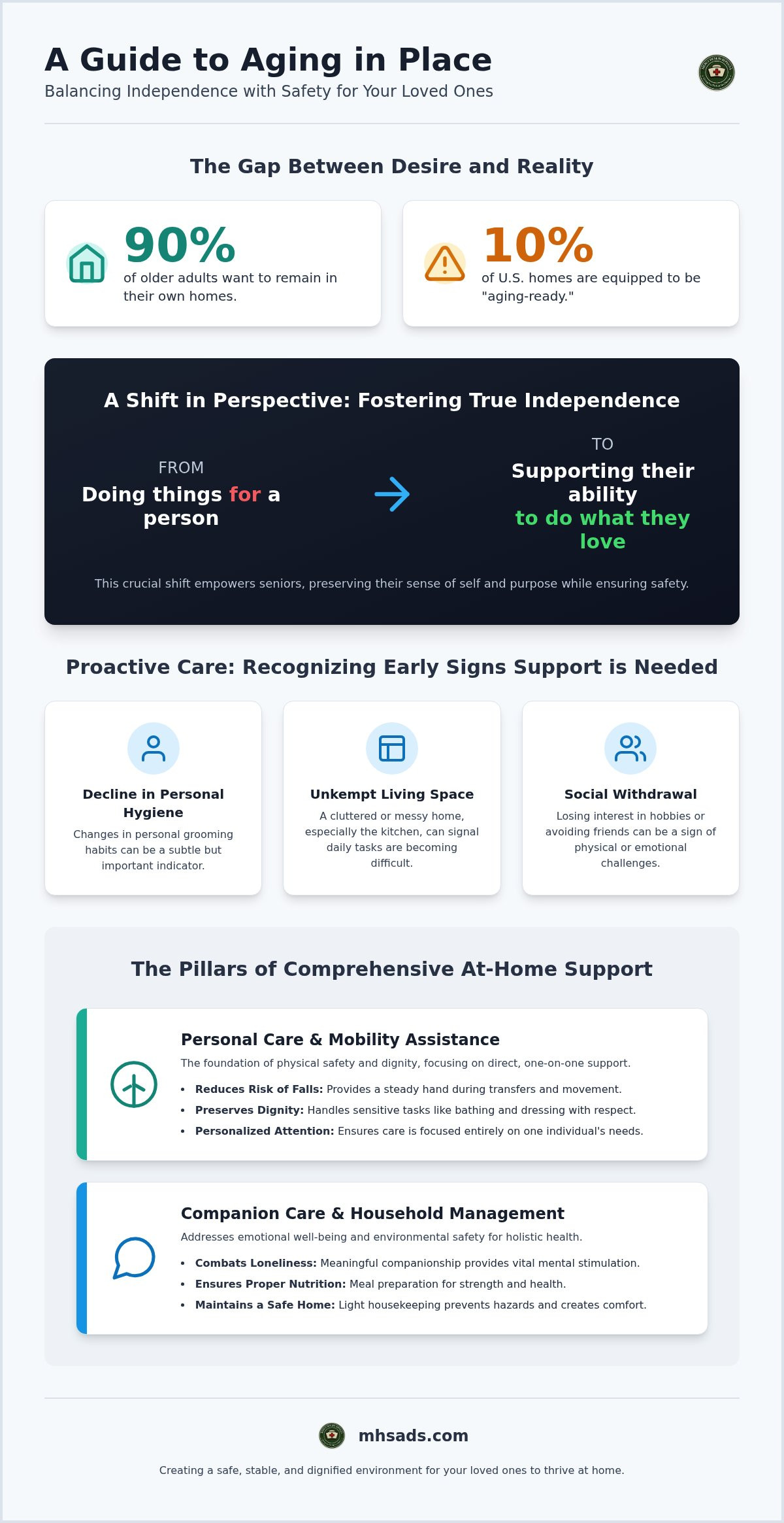
Did you know that while 90% of older adults prefer to stay in their own homes, only 10% of U.S. houses are actually "aging-ready" to accommodate their changing needs? This gap often leaves families caught between a loved one's desire for independence and the frightening reality of potential falls or medical emergencies. Have you found yourself lying awake at night wondering if your parent is safe, or feeling the heavy weight of burnout as you try to manage every detail alone? It's natural to feel overwhelmed when the path toward sustainable aging in place support isn't clear.
We understand that you want more than just a checklist; you want a way to honor your loved one's history while protecting their future. This guide will show you how to build a support system that balances professional reliability with the warmth of family. We'll walk through a clear plan for home safety, clarify the often-confusing differences between home care and assisted living, and explore how to maintain a senior's dignity through every transition. You can create a safe, stable environment that allows your family to focus on connection rather than just coordination.
Key Takeaways
- Understand why remaining in a familiar environment preserves a senior's sense of self and how a multifaceted system of assistance makes this possible.
- Learn how the one-on-one attention of home care compares to the staff-to-resident ratios found in facilities to help you make an informed choice.
- Discover how to conduct a thorough home safety assessment and clearly define roles between family members and professionals to prevent burnout.
- Explore the essential steps to building a sustainable aging in place support plan that evolves along with your loved one's changing needs.
- Find out how personalized caregiver matching ensures that professional assistance feels like a meaningful partnership rather than a transactional service.
What is Aging in Place Support and Why Does it Matter?
What does it mean to truly feel at home? For many seniors, home is more than just a physical structure; it's a collection of cherished memories, a familiar neighborhood, and a set of routines that provide comfort and stability. Aging in place support is a strategy for maintaining independence through targeted assistance. By viewing this support as a multifaceted system rather than a single service, families can ensure their loved ones remain in the environment they love while receiving the help they need. To understand what "aging in place" means in a modern context, we must look at it as a collaborative partnership that addresses both physical safety and emotional well-being.
Professional assistance often acts as a vital safety net against common failure points that can jeopardize a senior's ability to stay home. These challenges often include social isolation, which can lead to cognitive decline, and medication errors that might cause avoidable hospitalizations. By introducing consistent, reliable support, you're not just checking boxes; you're building a foundation for a safer, more dignified life. It's about creating a sustainable environment where a senior doesn't just exist, but thrives.
The Philosophy of Independence
Why do we often view help as a sign of weakness? In our experience, independence is deeply tied to mental health and longevity. When a senior struggles with daily chores, their energy is drained by the "how" of living rather than the "joy" of living. Effective aging in place support shifts the focus from "doing things for" a person to "supporting their ability to do" what they love. By removing obstacles like meal preparation or mobility challenges, we empower seniors to spend their energy on meaningful engagement and social connection. This shift in perspective preserves their sense of self and purpose.
Recognizing the Signs That Support is Needed
Have you noticed subtle changes in your loved one lately? It's rarely a single crisis that signals the need for help. Instead, look for small cues like a decline in personal hygiene, a kitchen that's unusually unkept, or a sudden withdrawal from social events they once enjoyed. Being proactive is the key to preventing a medical emergency. If you're noticing these changes, it's helpful to review our guide on 7 Signs Your Loved One Needs Personal Care Support. Addressing these needs early ensures that your loved one can continue to live with dignity rather than reacting to a crisis after it occurs. Taking action now provides the stability your family needs for the long term.
The Four Pillars of Comprehensive At-Home Support
How do we move beyond simply "getting by" at home? Many families view the choice between staying put and moving to a facility as a binary decision, but successful growing older at home is actually built on a spectrum of assistance. Effective aging in place support isn't a one-size-fits-all solution; it's a customized framework designed to address four specific areas of daily life. By strengthening these pillars, we create an environment where safety and dignity coexist.
Personal Care and Mobility Assistance
Falls are often the catalyst that forces a move away from home. Utilizing mobility assistance for seniors significantly reduces the risk of these life-altering events by providing a steady hand during transfers and movement. Beyond physical safety, personal care is deeply rooted in respect. Our caregivers handle sensitive tasks like bathing and dressing with a level of gentleness that preserves the individual's sense of self. This is where one on one senior care truly shines. It ensures the focus remains entirely on your loved one’s specific needs, allowing them to feel supported rather than supervised.
Companion Care and Household Management
Is loneliness affecting your loved one's physical health? Social engagement is just as critical as physical help. Meaningful companionship provides the mental stimulation that keeps the mind sharp and spirits high. Nutrition also plays a fundamental role in maintaining independence. Proper meal preparation for elderly at home ensures they receive the fuel they need to stay strong and healthy. Additionally, light housekeeping serves as a vital safety measure. By removing trip hazards like cluttered walkways or loose rugs, we proactively minimize risks. If you're feeling overwhelmed by these daily tasks, a personalized care plan can help balance the load.
Finally, safety support brings everything together. This involves consistent medication reminders to avoid health complications and the implementation of fall prevention strategies throughout the house. When these four pillars are in place, the home becomes a sanctuary of both freedom and security. This comprehensive approach allows families to breathe easier, knowing their loved ones are cared for by a trusted guide who understands the nuances of aging in place support.
Aging in Place vs. Assisted Living: A Direct Comparison
Have you found yourself weighing the pros and cons of moving a loved one into a facility? It's a heavy question that often brings up feelings of guilt and uncertainty. While assisted living provides a structured community, the personalized nature of aging in place support allows for a level of continuity that institutional settings simply cannot match. The decision often comes down to the difference between being a resident in a facility and being the master of one's own domain.
Personalization and Continuity of Care
In a facility, care is often dictated by a schedule that serves the needs of thirty or more residents at once. At home, the schedule serves only one person. This one-on-one attention means a dedicated caregiver learns the specific nuances of your loved one's day, from how they like their tea to the exact time they prefer to read the morning paper. For many families, transitioning to home care services offers a gentler path that preserves existing social networks and community ties. As noted in the National Institute on Aging guide to aging in place, staying connected to a familiar community is a cornerstone of emotional health that institutional settings can sometimes disrupt.
Financial and Lifestyle Considerations
From a financial perspective, the private duty model offers a flexibility that all-inclusive facility fees lack. Instead of paying for a massive infrastructure and services your loved one might not use, you're investing in the specific hours of support your family actually needs. This allows you to scale assistance up or down as circumstances change. Beyond the budget, there's the question of lifestyle freedom. Can your loved one keep their cherished pet? Can they walk into their garden whenever they choose? In a private home, these choices remain entirely theirs. Additionally, the safety outcomes of staying home are significant. Private residences naturally have lower infection risks compared to congregate living environments where illnesses can spread more easily through shared hallways and dining rooms.
Ultimately, the psychological impact of "home" cannot be overstated. It's where memories are kept and where a person feels most like themselves. By choosing at-home aging in place support, you're choosing to keep the heart of your loved one's life intact while ensuring they have the professional help necessary to stay safe.
Building a Sustainable Aging in Place Support Plan
How do you turn a heartfelt desire to stay home into a functional, daily reality? Building an effective aging in place support system requires a methodical approach that evolves alongside your loved one’s needs. It isn't just about reacting to the present; it's about anticipating the future to ensure safety and comfort are never compromised. A sustainable plan acts as a roadmap, providing clarity for the family and consistency for the senior.
The first step involves a comprehensive home safety and needs assessment. This process identifies specific areas where help is required, such as mobility in the bathroom or assistance with meal preparation. Once these needs are clear, you can define the roles of family members versus professional caregivers. While family often provides the emotional core of support, professionals handle the physically demanding or repetitive tasks that can lead to burnout. Establishing a consistent schedule that mirrors your loved one's current routines is also vital. Predictability reduces anxiety and helps seniors feel in control of their environment. Finally, don't wait for a crisis to incorporate respite care. Taking scheduled breaks is essential for maintaining the health of the entire support system.
Assessing Current and Future Needs
Are you looking at your loved one’s needs through a long-term lens? Effective planning requires evaluating both Activities of Daily Living (ADLs), like bathing and dressing, and Instrumental ADLs, such as managing finances or transportation. A truly sustainable plan accounts for progressive changes, including potential mobility decline or memory support needs. By creating a flexible care plan that can scale up or down, you ensure that your loved one always has the right level of assistance without feeling overwhelmed by unnecessary intervention.
The Role of Professional Caregivers
Why is the presence of a professional so transformative for a family? Vetted and background-checked caregivers provide a level of "vetted reliability" that offers immense peace of mind. These professionals act as a proactive second set of eyes, noticing subtle health changes or safety risks that a family member might miss due to proximity. Most importantly, they integrate into the home as a partner in care. The goal is to provide aging in place support that feels like a helping hand rather than constant supervision, preserving the senior’s dignity while ensuring their environment remains safe. If you are ready to build a customized roadmap for your family, you can schedule a free consultation to explore your options.
Finding Your Trusted Guide with Mercy Health Services
How do you find a partner who cares for your family as deeply as you do? It's a question every family asks when they begin looking for aging in place support. Mercy Health Services isn't just a provider; we act as a Compassionate Navigator for families in transition. We understand that the safety of your loved one is non-negotiable. That’s why we implement rigorous vetting and background checks for every caregiver we hire. You deserve the peace of mind that comes from knowing the person in your home is dependable, respectful, and prepared to help.
We don't just assign a name to a shift. We carefully match caregivers based on both specific care needs and personality traits. This ensures that the assistance provided feels like a natural extension of your family’s presence rather than a transactional service. By focusing on this level of personalization, we help create a stable environment where your loved one feels seen and valued.
Our Compassionate Approach to Support
Are you tired of feeling like a number in a clinical system? Our approach moves away from cold, medical management toward a meaningful partnership. While we often discuss seniors, our private-duty care extends to children with special needs and adults under 50. In every case, we focus on dignity and respect. We ensure the client's voice remains central to their care, preserving their sense of self-worth and autonomy throughout the process. It's about more than just checking tasks off a list; it’s about fostering a connection that enhances quality of life.
The Mercy Health Services Difference
When a need arises, time is often of the essence. We take pride in our ability to begin care within a few days of your initial request. This rapid response prevents the stress of a long waiting list during a vulnerable time. Once care begins, we prioritize consistency. Having a regular, trusted caregiver in the home allows for deep bonds to form and ensures that subtle changes in health are caught early by someone who knows the client well.
Getting started is designed to be simple and unhurried. It begins with a free consultation where we listen to your concerns and goals. From there, we create a personalized care plan that fits your family's unique rhythm and provides the specific aging in place support you need. If you're ready to take that first step toward a safer home environment, we invite you to Schedule your free aging in place consultation with Mercy Health Services today. We are here to help you navigate this transition with confidence and warmth.
Empowering Your Family's Future at Home
Choosing to stay at home is a powerful decision that honors a lifetime of memories and independence. Throughout this guide, we've explored how a sustainable aging in place support system transforms the home into a sanctuary of safety and dignity. By focusing on the four pillars of care and establishing a clear, proactive plan, you can navigate the complexities of caregiving without sacrificing your own well-being. Have you considered how a dedicated partner could ease the weight of these daily responsibilities? Mercy Health Services brings national expertise in private-duty home care to your doorstep, ensuring your loved one receives the respect they deserve.
Our commitment to excellence includes vetted and background-checked caregivers and personalized care plans for every stage of life. You don't have to manage this transition alone. We are here to act as your trusted guide, providing the stability and warmth your family needs to thrive. Begin your journey toward safe and independent living with a free consultation from Mercy Health Services. Together, we can create a future where your loved one ages with grace, comfort, and the highest standard of care.
Frequently Asked Questions
What is the most important type of aging in place support for a senior living alone?
The most critical type of support for a senior living alone is a combination of physical safety monitoring and meaningful companionship. Social isolation is a significant health risk that often leads to physical decline or memory issues. By introducing consistent aging in place support, you ensure that someone is present to prevent falls and provide the mental stimulation necessary for a high quality of life. This proactive approach keeps the home a safe, vibrant environment.
How do I know if aging in place is still safe for my parent?
You can determine if staying home is safe by observing changes in your parent's daily habits and their physical environment. Are they struggling with basic hygiene or forgetting to take their medications? Look for subtle signs like an unkept house, spoiled food in the fridge, or unexplained bruises. If these issues are present, it's time to evaluate your support plan. A professional assessment can help you decide if current assistance is enough.
Can aging in place support help with dementia or memory loss?
Yes, specialized support is often life-changing for those living with dementia or memory loss. We provide continuous monitoring and medication reminders that ensure your loved one stays safe in a familiar environment. This type of aging in place support reduces the confusion often caused by moving to an unfamiliar facility. By maintaining their established routines and providing a calm, steady presence, we help manage the unique challenges that come with progressive cognitive changes.
What is the difference between private duty home care and regular home health?
Private duty home care focuses on non-medical assistance with daily life, while home health typically involves skilled nursing or physical therapy. At Mercy Health Services, we specialize in private-duty care, which includes personal care, mobility assistance, and companionship. We don't provide medical treatments like wound care or therapy. Instead, we act as a trusted guide to help with the essential daily tasks that allow your loved one to remain independent and comfortable.
How do I convince a loved one to accept aging in place support?
The best way to introduce help is to frame it as a way to preserve their independence rather than a loss of control. Start by suggesting assistance with a specific, difficult task like meal preparation or light housekeeping. It's often helpful to position the caregiver as a personal assistant rather than a sitter. By starting with just a few hours a week, your loved one can build trust with their caregiver at a comfortable pace.
Does aging in place support include things like cooking and cleaning?
Yes, meal preparation and light housekeeping are foundational elements of our service. We understand that maintaining a clean, organized home is essential for preventing trip hazards and ensuring proper nutrition. Our caregivers can help with grocery shopping, cooking healthy meals, and keeping living areas tidy. This assistance removes the burden of heavy chores, allowing your loved one to focus their energy on the activities and hobbies they truly enjoy every day.
What happens if our support needs change over time?
Our support plans are designed to be flexible because we know that health needs can change unexpectedly. Whether your loved one requires just a few hours of companionship or transitions to needing 24/7 care, we can adjust the level of assistance accordingly. We regularly review care plans to ensure they still meet the individual's needs. This adaptability allows your family to scale support up or down without the stress of finding a new provider.
How do we find a vetted and reliable caregiver for at-home support?
Finding a reliable caregiver starts with choosing an agency that prioritizes rigorous vetting and background checks. At Mercy Health Services, we take this responsibility seriously to ensure your family's peace of mind. We also go beyond basic checks by matching caregivers based on personality and specific experience. This careful selection process ensures that the person entering your home is not just a worker, but a dependable partner who respects your loved one's dignity.
Frequently Asked Questions
The most critical type of support for a senior living alone is a combination of physical safety monitoring and meaningful companionship. Social isolation is a significant health risk that often leads to physical decline or memory issues. By introducing consistent aging in place support, you ensure that someone is present to prevent falls and provide the mental stimulation necessary for a high quality of life. This proactive approach keeps the home a safe, vibrant environment.
You can determine if staying home is safe by observing changes in your parent's daily habits and their physical environment. Are they struggling with basic hygiene or forgetting to take their medications? Look for subtle signs like an unkept house, spoiled food in the fridge, or unexplained bruises. If these issues are present, it's time to evaluate your support plan. A professional assessment can help you decide if current assistance is enough.
Yes, specialized support is often life-changing for those living with dementia or memory loss. We provide continuous monitoring and medication reminders that ensure your loved one stays safe in a familiar environment. This type of aging in place support reduces the confusion often caused by moving to an unfamiliar facility. By maintaining their established routines and providing a calm, steady presence, we help manage the unique challenges that come with progressive cognitive changes.
Private duty home care focuses on non-medical assistance with daily life, while home health typically involves skilled nursing or physical therapy. At Mercy Health Services, we specialize in private-duty care, which includes personal care, mobility assistance, and companionship. We don't provide medical treatments like wound care or therapy. Instead, we act as a trusted guide to help with the essential daily tasks that allow your loved one to remain independent and comfortable.
The best way to introduce help is to frame it as a way to preserve their independence rather than a loss of control. Start by suggesting assistance with a specific, difficult task like meal preparation or light housekeeping. It's often helpful to position the caregiver as a personal assistant rather than a sitter. By starting with just a few hours a week, your loved one can build trust with their caregiver at a comfortable pace.
Yes, meal preparation and light housekeeping are foundational elements of our service. We understand that maintaining a clean, organized home is essential for preventing trip hazards and ensuring proper nutrition. Our caregivers can help with grocery shopping, cooking healthy meals, and keeping living areas tidy. This assistance removes the burden of heavy chores, allowing your loved one to focus their energy on the activities and hobbies they truly enjoy every day.
Our support plans are designed to be flexible because we know that health needs can change unexpectedly. Whether your loved one requires just a few hours of companionship or transitions to needing 24/7 care, we can adjust the level of assistance accordingly. We regularly review care plans to ensure they still meet the individual's needs. This adaptability allows your family to scale support up or down without the stress of finding a new provider.
Finding a reliable caregiver starts with choosing an agency that prioritizes rigorous vetting and background checks. At Mercy Health Services, we take this responsibility seriously to ensure your family's peace of mind. We also go beyond basic checks by matching caregivers based on personality and specific experience. This careful selection process ensures that the person entering your home is not just a worker, but a dependable partner who respects your loved one's dignity.