

Respite Care for Children with Disabilities in Maryland
August 21, 2026 · 17 min read
Have you ever felt that seeking outside support for your child's care is somehow a sign of defeat? Many families across the state find themselves trapped in a cycle of chronic sleep deprivation and burnout, feeling that only they can provide the specialized attention their child requires. It's natural to worry about whether a caregiver can handle high-acuity needs or treat your child with the dignity they deserve. Finding reliable respite care for children with disabilities Maryland isn't just about getting a temporary break; it's a vital investment in the long-term health and stability of your entire family unit.
You deserve a care plan that brings peace of mind and physical rest without the anxiety of an eight-year waiting list. We'll help you understand how to move forward, whether you're looking at the Community Pathways Waiver or seeking the immediate reliability of private-duty support. This article outlines the practical steps to identifying a trustworthy partner who understands your child's unique personality and daily needs. By the end of this guide, you'll have a clear roadmap to restoring your family balance while ensuring your child remains safe, supported, and respected in the comfort of home.
Key Takeaways
- Distinguish between state-funded programs and private-duty options to determine the most reliable path for your family's immediate needs.
- Learn how to build a comprehensive care profile so that professional respite care for children with disabilities Maryland aligns perfectly with your child’s daily routines.
- Identify the specific questions you should ask an agency to ensure their caregivers prioritize both safety and the personal dignity of your child.
- Discover how to use a "Caregiver Bible" and a shadowing session to create a seamless, anxiety-free transition for your child.
- Explore how a personalized care plan provides a stable foundation for a partnership that restores your energy while keeping your child supported.
Understanding Respite Care Options in Maryland
Do you find yourself wondering if there's a way to balance your child's complex needs with your own well-being? For many parents, the answer lies in Understanding Respite Care as a supportive partnership rather than a temporary fix. It's essentially a planned interval of rest that allows the primary caregiver to recharge while a professional steps in to provide consistent, high-quality care. Securing respite care for children with disabilities Maryland provides the breathing room necessary to maintain your health so you can continue being the anchor your family needs.
State-Funded vs. Private-Duty Support
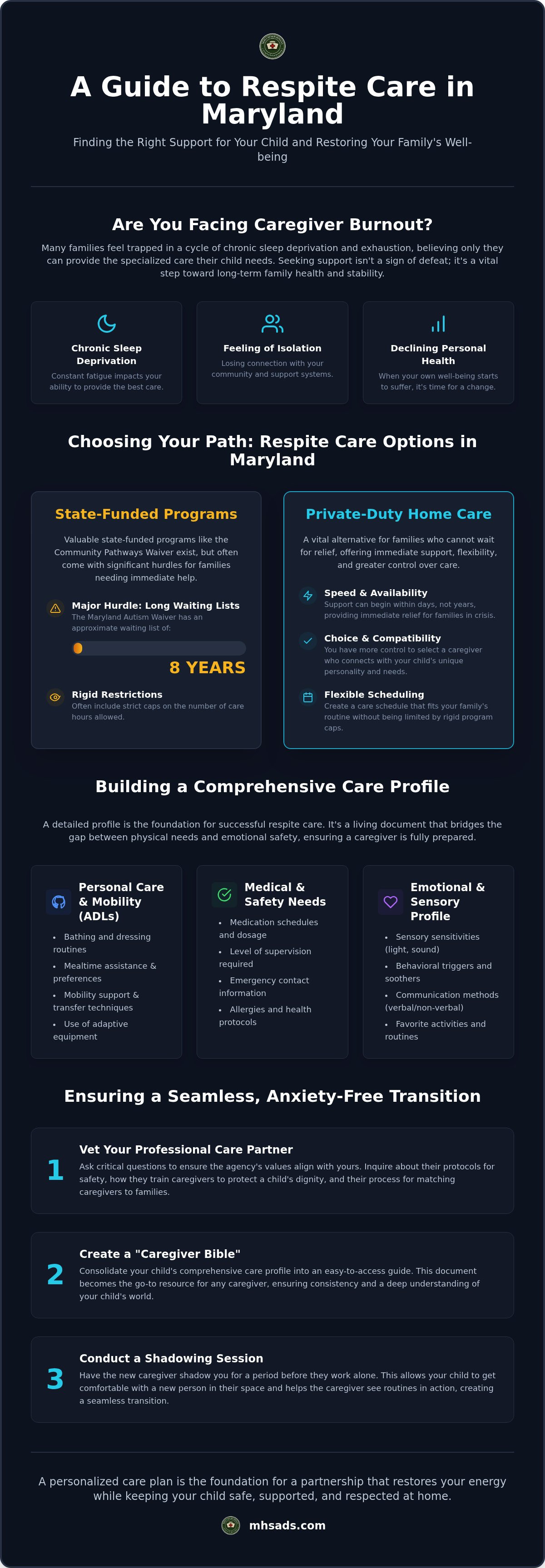
How do you choose between the different paths available in Maryland? The state offers programs through various Medicaid waivers, such as the Community Pathways Waiver, which recently consolidated several support tracks to streamline access. While these public grants are valuable, they often come with significant hurdles. For instance, the Maryland Autism Waiver currently has an approximate eight-year waiting list in several regions across the state. This can be devastating for a family in the middle of a burnout crisis who needs help now, not years down the line.
Private-duty home care serves as a vital alternative for families who cannot wait for relief. The benefits of this path include:
- Speed: Support can often begin within a few days of an initial consultation rather than years on a registry.
- Choice: You have more control over selecting a caregiver who truly connects with your child’s personality.
- Flexible Scheduling: You aren't restricted by the rigid hourly caps often found in state-funded programs.
The Role of In-Home Support for Children
Why is the home setting so critical for pediatric respite? For a child with sensory sensitivities or mobility challenges, a new environment can be deeply distressing. In-home support allows your child to remain in a familiar space where they feel safe. Caregivers can follow established routines, use the child's own equipment, and provide companionship that feels natural rather than clinical. This approach is a cornerstone of effective home care for special needs children, ensuring that the transition to a new face is as gentle as possible.
How do you know when it's time to seek professional intervention? It's rarely a single event but rather a collection of signs. If you're experiencing chronic sleep deprivation, feeling isolated from your community, or noticing that your own health is declining, these are clear indicators. Intervention isn't a sign of failure. It's a proactive step toward ensuring your child receives the highest level of care from a rested, capable parent. By integrating respite care for children with disabilities Maryland into your family's routine, you create a sustainable environment where everyone can thrive.
Evaluating Your Child’s Specific Support Needs
How do you begin to summarize your child's complex world for someone else? It's a daunting task, but creating a detailed profile is the first step toward successful respite care for children with disabilities Maryland. This isn't just a list of medications. It's a living document that captures the "acuity" of care. Does your child need light assistance with a meal, or do they require constant, one-to-one supervision to ensure their safety? Identifying these levels of support early helps prevent misunderstandings and ensures the caregiver is fully prepared for the day ahead.
A professional care plan must bridge the gap between physical needs and emotional safety. For instance, knowing that a specific sound or lighting change can trigger a behavioral response is just as vital as knowing a prescription schedule. While Maryland's Respite Care Program provides a foundation for understanding these needs, a truly personalized plan dives into the nuances that make your child unique, including non-verbal cues and sensory preferences.
Personal Care and Mobility Assistance
Documenting Activities of Daily Living (ADLs) ensures that a caregiver knows exactly where to step in. This includes everything from bathing and dressing to specialized mobility support. Many of the same safety principles found in mobility assistance for seniors apply here, such as proper transfer techniques and the use of adaptive equipment like standers or gait trainers. Identifying the specific equipment your child uses allows an agency to pair you with a caregiver who already has the right expertise. This level of preparation ensures that your child’s physical dignity is always respected during daily routines.
Socialization and Companionship Goals
Respite should be more than just "watching" a child. It's an opportunity for meaningful engagement. Is your child working on specific social goals in their IEP? A skilled caregiver can support these objectives through play and guided socialization. Consistency is key here. Pairing a child’s temperament with a caregiver’s personality ensures that respite becomes a highlight of the week rather than a source of stress. If you're ready to see how a tailored approach can work for your family, you might consider scheduling a free consultation to begin building your child's personalized care plan.
How to Find and Vet a Professional Caregiver
How do you find someone you can truly trust with your child’s safety and emotional well-being? It’s perhaps the most difficult question a parent faces when seeking respite care for children with disabilities Maryland. While the search can feel overwhelming, focusing on a few critical vetting criteria can transform a stressful process into a path toward peace of mind. You aren't just looking for a pair of eyes; you're looking for a partner who understands the nuances of your child's specific diagnosis, whether that's Autism, Down Syndrome, or a rare genetic condition.
When you speak with a potential agency, don't hesitate to ask direct questions about their caregiver training and specialized experience. Do they have staff familiar with non-verbal communication? How do they handle unexpected behavioral shifts? A professional agency acts as a stable anchor, managing the complex logistics of taxes, insurance, and liability. More importantly, they provide a reliable backup system. If your primary caregiver falls ill, an agency ensures your rest isn't cancelled, a level of security that private hires simply can't guarantee. For broader guidance on what to look for in a provider, exploring National Respite Resources can offer additional frameworks for safety and quality.
The Importance of Background Checks
Why should you insist on more than just a standard criminal record check? For pediatric care, "vetted" must mean a comprehensive review that includes driving records, professional references, and sex offender registry checks. Maryland families often choose agency-vetted professionals because the agency assumes the burden of this rigorous screening. This professional oversight creates a layer of accountability that protects your child and your home. When a caregiver has been thoroughly screened by a team of experts, you can finally let go of the "what-ifs" and focus on your own recovery.
Matching Personalities for Long-Term Success
Does the caregiver’s personality align with your child’s temperament? Technical skill is vital, but the "vibe" often determines if a care relationship will last. Agencies use matching processes to pair children with compatible caregivers, focusing on traits like patience, energy levels, and communication styles. You always have the right to request a different caregiver if the connection doesn't feel natural. During that first meeting, observe how the caregiver engages with your child. Are they observant? Do they treat your child with dignity? These soft skills are the foundation of a successful partnership in respite care for children with disabilities Maryland.
Preparing Your Home and Child for Respite Care
How do you prepare your heart and your home for a new presence? While the decision to seek support is a major milestone, the actual day of transition can feel heavy with anticipation. Effective respite care for children with disabilities Maryland relies on a foundation of clear communication and gradual introductions. By taking a few intentional steps before the first session, you can transform a period of uncertainty into a successful, long-term partnership that benefits everyone in the household.
Preparation begins with the environment. Organize your child’s supplies, such as mobility aids, sensory toys, and hygiene items, in a way that is easily accessible to a new caregiver. This reduces the need for them to search through cabinets, allowing their full attention to remain on your child. Establishing clear boundaries and communication protocols is equally vital. Decide early on how you prefer to receive updates. Do you want a text every hour, or a written log at the end of the day? Setting these expectations prevents anxiety and ensures you can truly disconnect during your break.
Creating the Caregiver Instruction Guide
We often refer to this document as the "Caregiver Bible." The Caregiver Bible is the primary tool for safety and continuity, serving as a comprehensive reference for your child's unique world. It should include medication schedules, specific allergy triggers, and a list of "non-negotiables" regarding house rules. Don't forget to include the soft details too. What are your child's favorite soothing techniques? Which cartoon always brings a smile? This guide empowers the caregiver to provide personalized assistance that mirrors your own care style.
Managing the Emotional Transition
How do you help an anxious or non-verbal child adjust to a new face? We recommend a "shadowing" session where the caregiver spends time in your home while you are still present. This allows your child to observe the new caregiver in a safe context. It also gives you a chance to demonstrate specific routines in real-time. During this phase, it’s helpful to maintain a positive, calm demeanor. Your child often looks to you for cues on how to feel about a new situation. Validating their feelings while remaining confident in the plan helps reduce separation anxiety for both of you.
If you are ready to begin this transition with a partner who values your child's routine, request a free consultation today. Starting with a short, two-hour "trial" break is often the best way to build confidence before moving toward full-day or overnight support. This methodical approach ensures that respite care for children with disabilities Maryland feels like a natural extension of your family’s life rather than a disruption.
Finding Your Compassionate Partner with Mercy Health Services
Why should the process of finding support feel like another burden on your shoulders? At Mercy Health Services, we believe that securing respite care for children with disabilities Maryland should be a seamless, supportive experience. We position ourselves as your "Compassionate Navigators," removing the guesswork and administrative hurdles that often delay much-needed relief. Instead of waiting years for state programs or navigating complex county referrals, you can access a stable, professional partner who is ready to listen to your family’s specific story today.
Our process begins with the understanding that "no one knows my child like I do." We address this concern directly by developing a personalized care plan that captures every nuance of your child's daily life. During our initial meeting, we don't just look at medical requirements; we observe your child’s preferences, their communication style, and the small details that make them feel safe. This document serves as the foundation for our partnership, ensuring that every caregiver who enters your home is fully briefed and prepared to maintain your child’s dignity and routine.
Personalized Care for Every Unique Need
How do we translate professional standards into a child-centered environment? We adapt our personal care assistance to meet the unique developmental and physical needs of pediatric clients. Whether your family requires a few hours of support each week or extended-hour care for more complex situations, our commitment to respect remains the same. Maryland families trust us because we treat every child as an individual with their own goals and personality, rather than a set of tasks to be completed. We focus on creating meaningful engagement that supports your child's growth while you take the time you need to recharge.
Ready to Begin Your Journey?
Are you worried about how long it will take to finally get a full night's sleep? Unlike public programs with indefinite waitlists, we can often begin care within a few days of your initial consultation. This speed is essential for families on the edge of caregiver burnout, providing a lifeline when it's needed most. Your journey toward a more balanced home life starts with a simple, no-pressure conversation. During your free consultation, we'll discuss your child’s needs, answer your questions about our vetting process, and begin the work of restoring your energy. Schedule your free consultation today and let us help you find the peace of mind you deserve.
Restoring Your Strength and Your Family’s Balance
Are you ready to trade chronic exhaustion for a sustainable path forward? We've explored how understanding your options and preparing a detailed Caregiver Bible can turn a stressful transition into a successful partnership. By prioritizing a caregiver who respects your child’s dignity and unique routines, you ensure their safety while finally giving yourself permission to rest. Securing professional respite care for children with disabilities Maryland isn't just about finding a temporary helper; it's about building a foundation for your family's long-term health.
Mercy Health Services is here to act as your trusted guide, offering vetted and background-checked caregivers and personalized care plans tailored to your child's specific world. Because we understand that some needs can't wait, we often begin support within just a few days of our first meeting. Schedule your free in-home consultation for pediatric care today. You don't have to navigate this journey alone. We're ready to help you rediscover the joy and balance your family deserves.
Frequently Asked Questions
What is the difference between respite care and traditional home care for children?
Respite care is specifically designed to provide a temporary interval of rest for the primary caregiver, whereas traditional home care focuses on the ongoing, long-term support of the child’s daily needs. Respite is often used periodically to prevent parental burnout. It allows you to step away for a few hours or days while ensuring your child remains safe in a familiar environment with a professional who understands their specific requirements.
How much does respite care for children with disabilities cost in Maryland?
Costs for support vary based on the level of acuity and the specific assistance your child requires. Private-pay rates differ from state-subsidized programs, and costs in high-density metropolitan areas may differ from those in more rural regions of the state. It is best to consult with individual providers to get a clear understanding of the rates for one-to-one attendant care versus general companionship based on your family's unique schedule.
Can I get state funding for respite care if my child has a disability?
Yes, Maryland offers several funding paths through the Developmental Disabilities Administration, including the Community Pathways Waiver and the Autism Waiver. These programs help eligible families cover the cost of support services. However, as previously noted, public programs often have long waitlists. Many families choose to use private-duty options to secure reliable respite care for children with disabilities Maryland while they wait for a state-funded slot to become available through the registry.
Is respite care available for children with behavioral or mental health challenges?
Specialized respite is available for children with high-acuity behavioral needs. Caregivers in these roles are trained to recognize triggers and use de-escalation techniques that prioritize the child’s dignity. When seeking this support, look for agencies that background-check their staff and provide specific training on neurodivergent behaviors. This ensures a safe, supportive environment for children who may struggle with sensory processing challenges or complex emotional needs during their care sessions.
What qualifications should I look for in a pediatric respite caregiver?
You should prioritize caregivers who have passed comprehensive background checks, including criminal and driving records. Look for professionals with documented experience assisting children with your child’s specific diagnosis. A great caregiver should demonstrate patience, strong communication skills, and a person-centered approach. It is also helpful to ask if the agency provides ongoing training to keep their staff updated on the best practices for pediatric mobility and personal care assistance.
How do I know if my child is ready for a respite caregiver?
Readiness is often more about the parent’s preparation than the child’s ability to adapt. If you can provide a clear Caregiver Bible with routines and preferences, most children can adjust with a slow, methodical introduction. Start with a short shadowing session where you stay in the house while the caregiver interacts with your child. If your child can engage with the new face while you are nearby, they are likely ready for a trial break.
Does respite care include overnight support for children?
Yes, respite care can be scheduled for overnight stays to give parents a full night of restorative rest. This is particularly helpful for families dealing with chronic sleep deprivation due to a child’s medical or sensory needs. A professional caregiver stays in your home to monitor the child, assist with nighttime routines, and ensure safety. This allows you to wake up refreshed and ready to manage your daily responsibilities with renewed energy.
Can a respite caregiver help with my child’s medication and meals?
Caregivers provide vital assistance with meal preparation and medication reminders as part of their daily support. They follow the specific instructions you provide in your child’s personalized care plan to ensure total consistency. Whether it is preparing a specialized diet or ensuring medications are taken at the correct time, these services are designed to maintain your child’s routine exactly as you have established it. This provides respite care for children with disabilities Maryland that you can trust.
Frequently Asked Questions
Are you worried about how long it will take to finally get a full night's sleep? Unlike public programs with indefinite waitlists, we can often begin care within a few days of your initial consultation. This speed is essential for families on the edge of caregiver burnout, providing a lifeline when it's needed most. Your journey toward a more balanced home life starts with a simple, no-pressure conversation. During your free consultation, we'll discuss your child’s needs, answer your questions about our vetting process, and begin the work of restoring your energy. Schedule your free consultation today and let us help you find the peace of mind you deserve. Are you ready to trade chronic exhaustion for a sustainable path forward? We've explored how understanding your options and preparing a detailed Caregiver Bible can turn a stressful transition into a successful partnership. By prioritizing a caregiver who respects your child’s dignity and unique routines, you ensure their safety while finally giving yourself permission to rest. Securing professional respite care for children with disabilities Maryland isn't just about finding a temporary helper; it's about building a foundation for your family's long-term health. Mercy Health Services is here to act as your trusted guide, offering vetted and background-checked caregivers and personalized care plans tailored to your child's specific world. Because we understand that some needs can't wait, we often begin support within just a few days of our first meeting. Schedule your free in-home consultation for pediatric care today. You don't have to navigate this journey alone. We're ready to help you rediscover the joy and balance your family deserves.
Respite care is specifically designed to provide a temporary interval of rest for the primary caregiver, whereas traditional home care focuses on the ongoing, long-term support of the child’s daily needs. Respite is often used periodically to prevent parental burnout. It allows you to step away for a few hours or days while ensuring your child remains safe in a familiar environment with a professional who understands their specific requirements.
Costs for support vary based on the level of acuity and the specific assistance your child requires. Private-pay rates differ from state-subsidized programs, and costs in high-density metropolitan areas may differ from those in more rural regions of the state. It is best to consult with individual providers to get a clear understanding of the rates for one-to-one attendant care versus general companionship based on your family's unique schedule.
Yes, Maryland offers several funding paths through the Developmental Disabilities Administration, including the Community Pathways Waiver and the Autism Waiver. These programs help eligible families cover the cost of support services. However, as previously noted, public programs often have long waitlists. Many families choose to use private-duty options to secure reliable respite care for children with disabilities Maryland while they wait for a state-funded slot to become available through the registry.
Specialized respite is available for children with high-acuity behavioral needs. Caregivers in these roles are trained to recognize triggers and use de-escalation techniques that prioritize the child’s dignity. When seeking this support, look for agencies that background-check their staff and provide specific training on neurodivergent behaviors. This ensures a safe, supportive environment for children who may struggle with sensory processing challenges or complex emotional needs during their care sessions.
You should prioritize caregivers who have passed comprehensive background checks, including criminal and driving records. Look for professionals with documented experience assisting children with your child’s specific diagnosis. A great caregiver should demonstrate patience, strong communication skills, and a person-centered approach. It is also helpful to ask if the agency provides ongoing training to keep their staff updated on the best practices for pediatric mobility and personal care assistance.
Readiness is often more about the parent’s preparation than the child’s ability to adapt. If you can provide a clear Caregiver Bible with routines and preferences, most children can adjust with a slow, methodical introduction. Start with a short shadowing session where you stay in the house while the caregiver interacts with your child. If your child can engage with the new face while you are nearby, they are likely ready for a trial break.
Yes, respite care can be scheduled for overnight stays to give parents a full night of restorative rest. This is particularly helpful for families dealing with chronic sleep deprivation due to a child’s medical or sensory needs. A professional caregiver stays in your home to monitor the child, assist with nighttime routines, and ensure safety. This allows you to wake up refreshed and ready to manage your daily responsibilities with renewed energy.
Caregivers provide vital assistance with meal preparation and medication reminders as part of their daily support. They follow the specific instructions you provide in your child’s personalized care plan to ensure total consistency. Whether it is preparing a specialized diet or ensuring medications are taken at the correct time, these services are designed to maintain your child’s routine exactly as you have established it. This provides respite care for children with disabilities Maryland that you can trust.