Medication Reminders: A Comprehensive Guide to Safety and Adherence (2026)
August 26, 2026 · 16 min read
What if the greatest threat to your loved one's independence isn't their health condition, but the small plastic pill organizer on their kitchen counter? Have you ever felt that sudden jolt of panic, wondering if your father took his blood pressure medicine this morning? Does the constant cycle of managing medication reminders leave you feeling more like a supervisor than a family member?
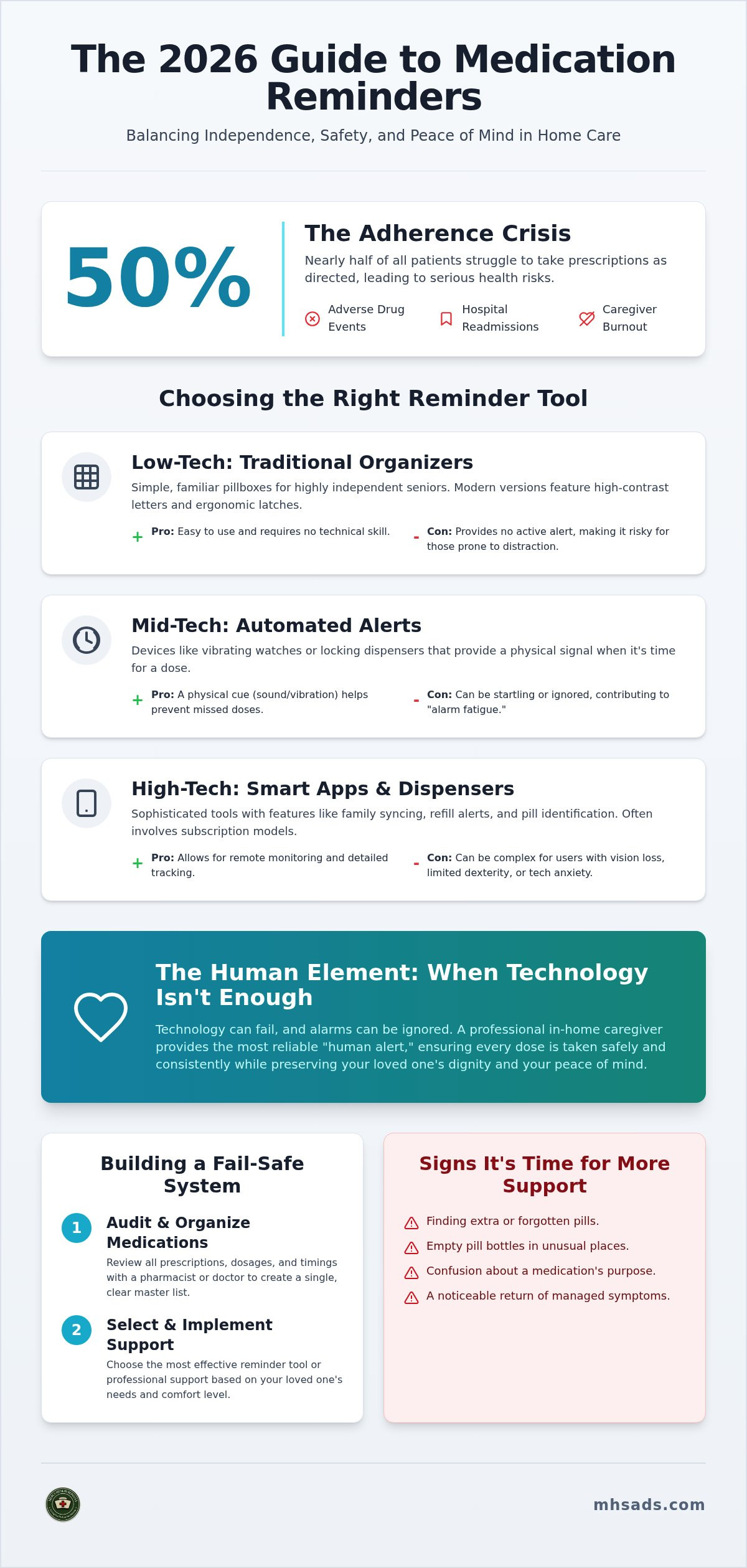
It's exhausting to carry the weight of someone else's safety, especially when nearly 50% of patients struggle to take prescriptions as directed. You deserve peace of mind. Your loved one deserves to feel capable and respected in their own home. Finding a reliable routine is the key to balancing these needs without causing resentment or caregiver burnout. This guide explores the most effective strategies for 2026, comparing high-tech smart apps with the personalized, human touch of professional in-home assistance. You'll discover how to build a fail-safe system that protects their health while honoring their dignity.
Key Takeaways
- Understand why managing multiple prescriptions requires a structured safety protocol rather than just a simple alarm.
- Compare the latest 2026 digital tools and physical organizers to find the right fit for your loved one's independence level.
- Learn how to combat "alarm fatigue" by combining technology with the reliable "human alert" of a compassionate caregiver.
- Follow a clear, two-step path to auditing medications and selecting the most effective medication reminders for your family's needs.
- Discover how professional in-home support preserves dignity while ensuring every dose is taken safely and consistently.
The High Stakes of Medication Reminders in Home Care
Does the responsibility of tracking every dose feel like a second job you never applied for? When we talk about medication reminders, it's easy to picture a simple phone alert or a sticky note on the fridge. However, for a senior living at home, these reminders are actually a vital safety protocol. They serve as the primary defense against adverse drug events that can lead to sudden health declines. It isn't just about "not forgetting"; it's about maintaining a stable baseline of health so your loved one can continue to live where they feel most comfortable.
The complexity of care increases significantly when a person manages five or more daily prescriptions, a situation known as polypharmacy. Research from organizations like GoodRx suggests that at least 25% of people take three or more medications daily, and for many seniors, that number is much higher. Managing this volume requires a rigorous system. Without one, the risk of drug interactions or missed doses climbs, which is a leading cause of hospital readmissions. When a dose is missed, the therapeutic level of the drug in the bloodstream drops, often resulting in a return of symptoms that could have been avoided with consistent support.
For the family caregiver, the emotional weight of "playing pharmacist" is immense. You aren't just a daughter or a spouse anymore; you're a monitor, a record-keeper, and an enforcer. This shift in roles often leads to burnout and strained relationships. It's difficult to enjoy a Sunday visit when the first thing you have to do is audit a pillbox and ask uncomfortable questions about missed doses.
Why "Just Remembering" Is Not a Strategy
Expectations of perfect memory often clash with the reality of cognitive fatigue. Even for those without a formal diagnosis, the mental energy required to track timing, food requirements, and dosages is taxing. We define patient adherence to medication as the consistent alignment between prescribed timing and actual intake. As we age, memory loss or even simple distractions can disrupt this alignment. Adherence is a fragile thing; it only takes one busy morning or a late nap to throw an entire day's schedule off balance.
Identifying the Signs Your Loved One Needs Help
How do you know when the current routine is no longer enough? You might start finding "extra" pills at the bottom of a drawer or empty bottles tucked away in unusual places. Sometimes, the sign is more subtle, such as your loved one appearing confused about what a specific pill is meant to treat. If you notice these red flags, it might be time to look closer at their daily environment. You can find more detailed indicators in our guide on 7 signs your loved one needs personal care support. Recognizing these moments early allows you to transition to a more reliable system of medication reminders before a safety incident occurs.
Digital vs. Physical: Comparing Modern Medication Reminder Tools
Choosing the right medication reminders depends entirely on your loved one’s daily rhythm and cognitive comfort. Are they still managing their own schedule with ease, or do they find modern technology frustrating? We can categorize these tools into three main paths based on the level of independence and support required. Finding the right fit is about balancing safety with the person's desire to remain in control of their own routine.
Low-tech solutions, like the traditional plastic pillbox, remain a staple for seniors who are highly independent. In 2026, these designs have evolved to include high-contrast lettering and ergonomic latches for those with arthritis. However, they don't provide an active "alert," which makes them risky for anyone prone to distraction. Mid-tech options, such as vibrating watches or automated dispensers with locking lids, bridge the gap. These devices provide a physical signal when it's time for a dose and can physically prevent a person from taking too much medicine at once.
Top Medication Reminder Apps for 2026
For those comfortable with a smartphone, high-tech apps offer sophisticated features like family syncing and photo identification of pills. However, the market has shifted significantly this year. Many popular platforms, such as Medisafe, have moved to subscription models, often costing around $4.99 per month for premium features. While these apps provide helpful refill alerts, they often fail for users with vision loss or limited dexterity. If a digital interface feels like another source of stress rather than a solution, you might consider how personalized in-home support can provide a more reliable, human connection.
Smart Pill Dispensers and Hardware
Locked dispensers are a powerful tool for preventing accidental double-dosing. These machines use loud, audible alerts to break through background noise, ensuring the notification isn't ignored. They are excellent for individuals who struggle with phone pings but still have the physical ability to pick up a pill from a tray. One detail to remember is that these machines aren't self-filling. They still require a family member or a professional partner to organize and load the medications correctly each week to ensure the system remains fail-safe.
The Human Element: When Technology Isn’t Enough
Have you ever watched a smartphone alert go off, only for your loved one to silence it and forget the task entirely? Gadgets are helpful, but they lack the intuition to know if a person is actually swallowing the pill or just clearing a notification. Research indicates that approximately 44% of people still forget their doses even when using digital reminder systems. This often happens because of "alarm fatigue," where the constant pings of a device become background noise that the brain eventually ignores. When a notification feels like a nuisance rather than a priority, the safety of the routine breaks down.
A caregiver provides something a machine cannot: the "why" behind the routine. They don't just mark a checkbox; they offer encouragement and explain how a specific medication helps keep your loved one strong enough for their daily walk or afternoon tea. This human connection reduces the "pill burden," turning a stressful medical chore into a natural part of a supportive, consistent relationship. By providing these person-centered medication reminders, a professional partner ensures that the "human alert" is never silenced or ignored.
Professional Caregivers as Living Reminders
In-home support offers a layer of observation that technology simply misses. While an app tracks time, a vetted caregiver notices if a loved one seems unusually drowsy, dizzy, or confused after a new prescription. These subtle changes are often the first signs of a side effect that needs attention. By integrating companionship and social support into the daily routine, the process of taking medication becomes less about "management" and more about overall well-being. It’s about having a dependable presence who is proactive and observant, ensuring every dose is part of a broader care plan.
Addressing Resistance and Maintaining Dignity
Talking to a parent about needing help with their meds is one of the hardest conversations a family can have. It often feels like a loss of control to the senior, which can lead to resistance or even secrecy about missed doses. We've found that framing assistance as a tool for independence, rather than a sign of decline, makes a significant difference. Sometimes, having a neutral third-party caregiver step in removes the emotional friction between parent and child. This allows you to return to your role as a family member who provides love and connection, while your professional partner handles the daily logistics of medication reminders with respect and patience.
Building a Fail-Safe Medication Management System
How do we move from a collection of scattered bottles to a reliable system that truly protects your loved one? It's not enough to simply have the prescriptions; you need a methodical approach that accounts for the environment, the timing, and the physical reality of daily life. A fail-safe system provides a safety net that catches errors before they happen, giving you the confidence that your family member is safe even when you aren't in the room.
The first step is a full medication audit with a primary care physician. Bring every bottle, including vitamins and supplements, to ensure there are no hidden interactions. Once the list is verified, you can choose your primary tool for medication reminders. Whether you select a high-tech dispenser or a professional caregiver, this tool becomes the heartbeat of the routine. Finally, establish a secondary check-and-balance. This might be a weekly log that a family member reviews or a digital notification that alerts you when a dose is confirmed.
Organizing the Home for Safety
Did you know that the kitchen and bathroom are often the worst places to store medicine? Heat from appliances and humidity from showers can degrade the efficacy of certain pills. It's better to choose a cool, dry, and well-lit area where labels are easy to read without straining. You can use light housekeeping as a strategy to keep this area free of clutter, ensuring that only current medications are visible. Clear, accessible spaces reduce the chance of grabbing the wrong bottle during a busy morning.
The Connection Between Nutrition and Adherence
Many prescriptions come with the specific instruction to "take with food," which adds another layer of complexity to the schedule. If a meal is skipped or delayed, the medication schedule often falls apart too. This is where proper meal preparation becomes a vital part of the safety protocol. Ensuring your loved one has nutritious, timely meals makes it much easier to stick to their prescribed routine. Don't forget the role of hydration; many seniors struggle with swallowing pills simply because they haven't had enough water throughout the day. If you're feeling overwhelmed by these moving parts, professional medication reminders can bridge the gap between nutrition and safety.
How Mercy Health Services Simplifies Daily Care
Are you ready to stop being the "medication police" and return to being a supportive daughter, son, or spouse? At Mercy Health Services, we understand that the weight of constant monitoring can overshadow the joy of your relationship. Our approach to medication reminders is built on a foundation of professional reassurance and compassionate consistency. We don't just provide a service; we provide a stable anchor for your family during what can be a very stressful transition.
We bridge the gap between knowing a dose is due and ensuring the routine is actually followed. While technology provides a ping, our vetted caregivers provide a presence. They are background-checked professionals who are trained to be observant and proactive. By matching your family with a caregiver who understands your specific care plan, we ensure that daily health tasks feel like a natural, respectful part of the day rather than a clinical interruption.
Customized Care Plans for Every Acuity Level
Every family’s needs are unique, which is why we offer personalized care plans that adapt to your specific situation. Whether your loved one needs a simple morning check-in or more comprehensive supervision, we're here to help. Our support extends beyond seniors; we also provide private-duty home care for adults under 50 and in-home support for children with special needs. Knowing that a dependable professional is there to provide medication reminders and personal care assistance gives you the freedom to focus on what matters most: your loved one’s dignity and happiness.
Your Partner in the Caregiving Journey
The path of caregiving is often long and winding, and it's okay to ask for a helping hand. By taking the stress of medication adherence off your plate, we help reduce the risk of caregiver burnout. We see ourselves as your partner, a "Compassionate Navigator" helping you navigate the complexities of daily support with ease. Getting started is simple and pressure-free. We begin with a personalized assessment to understand your family's rhythm and needs. If you’re ready to bring peace of mind back to your home, schedule your free care consultation with Mercy Health Services today.
Restoring Harmony and Safety at Home
What if the next chapter of caregiving felt less like a burden and more like a partnership? We've seen how the most effective safety protocols combine modern tools with the watchful eye of a professional partner. While gadgets provide valuable alerts, they cannot replace the human connection that ensures a dose is actually taken and understood. By auditing the home environment and focusing on the vital link between nutrition and health, you can build a routine that truly protects your loved one's independence.
You don't have to navigate these transitions alone. As a trusted guide for families, we offer personalized care plans for all ages, ensuring that medication reminders are delivered with dignity and respect. Our vetted and background-checked caregivers are here to act as a stable anchor for your family. Let us help you manage the daily routine. Schedule a free consultation with our compassionate caregivers today. You deserve the peace of mind that comes with knowing your loved one is safe, supported, and flourishing in their own home.
Frequently Asked Questions
What is the difference between a medication reminder and medication administration?
A medication reminder is a non-medical support service that involves verbal cues or help opening a container for a self-directing individual. In contrast, medication administration involves clinical tasks like physically placing a pill in a person's mouth or giving injections. Private-duty caregivers provide reminders to ensure safety while respecting the boundary of non-medical care. This distinction is vital for families to understand when choosing between home care and skilled nursing services.
Can a home care agency help if my parent is resistant to taking their medicine?
Professional caregivers often act as a neutral third party that reduces family friction. When a parent resists help from a child, it's often due to a fear of losing independence. A compassionate caregiver frames the support as a collaborative partnership rather than supervision. By building a consistent relationship, the caregiver helps the senior see medication reminders as a tool that actually preserves their ability to live safely at home.
Are medication reminder apps safe to use for seniors with dementia?
While apps are helpful for many, they are often unsafe for seniors with advanced dementia who may forget how to use the device. A phone ping can cause confusion or anxiety rather than action. For those with cognitive decline, the human alert of an in-home partner is much more reliable. A caregiver can observe the physical act of taking the medicine, providing the safety and reassurance that a digital screen cannot.
How much does it cost to have a caregiver provide medication reminders?
The cost of assistance depends on the level of support your family requires and the overall care plan. Since every situation is unique, we provide a personalized assessment to determine the right frequency of visits. Whether you need a few hours of help with medication reminders or more comprehensive personal care, the investment is tailored to your specific needs. This approach ensures you only pay for the support that truly benefits your loved one.
What should I do if a dose is missed despite having a reminder system?
If a dose is missed, you should contact your primary care physician or pharmacist immediately for specific instructions. You should never assume it's safe to double up on the next dose, as this can lead to dangerous health risks. Having a caregiver present helps prevent these incidents by maintaining a consistent log. They can also help you communicate accurately with medical professionals if a scheduled dose is accidentally skipped or delayed.
Can a caregiver help with refilling prescriptions at the pharmacy?
Yes, caregivers can assist with prescription refills as part of their broader support and companionship services. While they don't perform medical tasks, they can provide transportation to the pharmacy or pick up prepared prescriptions during their scheduled visits. This assistance ensures that there is never a gap in the routine due to an empty bottle. Integrating these errands into a care plan simplifies the logistics for busy family members.
Is it better to use a smart pill dispenser or a mobile app?
The best choice depends on your loved one’s level of independence and comfort with technology. A smart pill dispenser is often better for those who struggle with phone interfaces but can still physically handle a tray. A mobile app works well for independent seniors who just need a gentle nudge. However, if neither tool feels reliable, combining them with professional support provides the highest level of safety and consistent human observation.
How do medication reminders improve the quality of life for seniors?
Reliable reminders significantly improve quality of life by reducing the anxiety associated with potential errors. For seniors, it means fewer hospital visits and better management of chronic symptoms. For the family, it restores the natural relationship between parent and child by removing the need for constant monitoring. When the stress of the medical routine is handled professionally, everyone can focus on enjoying meaningful time together and maintaining a sense of normalcy.
Frequently Asked Questions
A medication reminder is a non-medical support service that involves verbal cues or help opening a container for a self-directing individual. In contrast, medication administration involves clinical tasks like physically placing a pill in a person's mouth or giving injections. Private-duty caregivers provide reminders to ensure safety while respecting the boundary of non-medical care. This distinction is vital for families to understand when choosing between home care and skilled nursing services.
Professional caregivers often act as a neutral third party that reduces family friction. When a parent resists help from a child, it's often due to a fear of losing independence. A compassionate caregiver frames the support as a collaborative partnership rather than supervision. By building a consistent relationship, the caregiver helps the senior see medication reminders as a tool that actually preserves their ability to live safely at home.
While apps are helpful for many, they are often unsafe for seniors with advanced dementia who may forget how to use the device. A phone ping can cause confusion or anxiety rather than action. For those with cognitive decline, the human alert of an in-home partner is much more reliable. A caregiver can observe the physical act of taking the medicine, providing the safety and reassurance that a digital screen cannot.
The cost of assistance depends on the level of support your family requires and the overall care plan. Since every situation is unique, we provide a personalized assessment to determine the right frequency of visits. Whether you need a few hours of help with medication reminders or more comprehensive personal care, the investment is tailored to your specific needs. This approach ensures you only pay for the support that truly benefits your loved one.
If a dose is missed, you should contact your primary care physician or pharmacist immediately for specific instructions. You should never assume it's safe to double up on the next dose, as this can lead to dangerous health risks. Having a caregiver present helps prevent these incidents by maintaining a consistent log. They can also help you communicate accurately with medical professionals if a scheduled dose is accidentally skipped or delayed.
Yes, caregivers can assist with prescription refills as part of their broader support and companionship services. While they don't perform medical tasks, they can provide transportation to the pharmacy or pick up prepared prescriptions during their scheduled visits. This assistance ensures that there is never a gap in the routine due to an empty bottle. Integrating these errands into a care plan simplifies the logistics for busy family members.
The best choice depends on your loved one’s level of independence and comfort with technology. A smart pill dispenser is often better for those who struggle with phone interfaces but can still physically handle a tray. A mobile app works well for independent seniors who just need a gentle nudge. However, if neither tool feels reliable, combining them with professional support provides the highest level of safety and consistent human observation.
Reliable reminders significantly improve quality of life by reducing the anxiety associated with potential errors. For seniors, it means fewer hospital visits and better management of chronic symptoms. For the family, it restores the natural relationship between parent and child by removing the need for constant monitoring. When the stress of the medical routine is handled professionally, everyone can focus on enjoying meaningful time together and maintaining a sense of normalcy.