Light Housekeeping and Home Safety for Maryland Seniors
August 25, 2026 · 17 min read
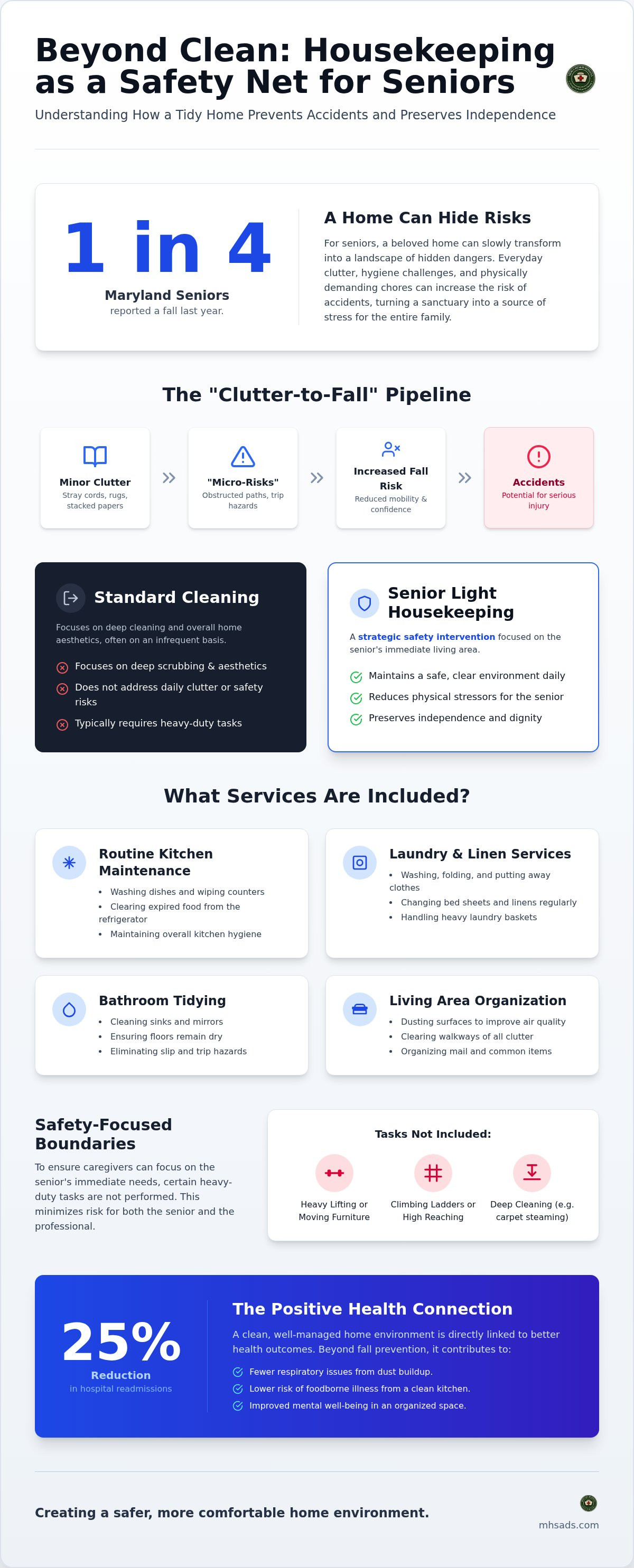
Did you know that nearly one in four Maryland seniors reported a fall last year? It's a sobering statistic that highlights how quickly a beloved home can transform from a sanctuary into a landscape of hidden risks. Have you found yourself worrying about the growing clutter in your parent's hallway or the hygiene of a kitchen they can no longer easily scrub? You aren't alone in feeling that weight of responsibility and the quiet guilt that often follows when you can't be there to handle every chore yourself.
We believe that every senior deserves to age with dignity in the place they feel most comfortable. This guide shows how light housekeeping for seniors Maryland serves as a strategic safety intervention rather than just a simple cleaning service. By removing physical burdens, these personalized supports help preserve senior independence and create a significantly healthier living space. We'll outline exactly what these services include, how they prevent common household accidents, and the ways they restore a sense of calm to your family caregiving journey.
Key Takeaways
- Understand that professional light housekeeping is a specialized safety intervention focused on maintaining a senior's immediate environment for maximum comfort and security.
- Identify the subtle "micro-risks" in the home, such as poorly placed cords or cluttered pathways, that often lead to preventable accidents.
- Recognize the physical red flags that suggest it is time to seek light housekeeping for seniors Maryland, ensuring your loved one remains safe and independent.
- Learn how to introduce the idea of home assistance using empathetic communication that prioritizes your loved one's dignity and minimizes potential conflict.
- Explore how background-checked professionals integrate housekeeping with other essential supports to create a comprehensive and reliable safety net.
What is Light Housekeeping for Seniors?
Have you ever wondered what exactly distinguishes professional home support from a standard cleaning service? It's a common question for families exploring the various paths of home care. While a maid service focuses primarily on aesthetics and deep scrubbing, light housekeeping for seniors Maryland is a strategic safety intervention. It centers on the "immediate environment," the specific areas of the home where your loved one spends the majority of their time. The core philosophy is simple: we remove the physical stressors that often lead to exhaustion, frustration, or accidental injury.
This service isn't about a one-time deep clean. Instead, it's about consistent, daily maintenance that preserves a senior's dignity. When a professional handles the chores that have become physically taxing, it allows your parent to focus their energy on what matters most, like their health, hobbies, and family. We view this as a collaborative partnership that keeps the home a sanctuary rather than a source of stress.
Common Tasks Included in Senior Housekeeping
What does this look like in practice? Our caregivers focus on routine tasks that maintain hygiene and organization throughout the day. These include:
- Routine kitchen maintenance: Washing dishes, wiping down countertops, and checking the refrigerator to clear out expired food.
- Laundry and linen services: Handling the heavy lifting of washing, folding, and putting away clothes, as well as changing bed sheets.
- Bathroom tidying: Cleaning sinks and mirrors while ensuring floors remain dry and free of slip hazards.
- Living area organization: Dusting surfaces and, most importantly, clearing walkways of clutter or tripping hazards.
Understanding the Limits: What Caregivers Do Not Do
Why do we set specific boundaries on what a caregiver can perform? It's essential to understand that light housekeeping is distinct from industrial cleaning. For the safety of both the senior and the professional, caregivers don't engage in heavy lifting, moving large furniture, or climbing ladders to reach high places. Tasks like carpet steaming, exterior window washing, or scrubbing baseboards on hands and knees fall into the category of deep cleaning, which is a separate industry.
These limits exist to ensure the caregiver's primary focus remains on the senior's immediate needs and safety. By managing these expectations, we create a reliable environment where the support is consistent and the risks are minimized. We are here to navigate the daily challenges of home life, ensuring the living space remains a safe, manageable, and welcoming place for your loved one to thrive.
The Safety Connection: Why a Tidy Home is a Fall-Proof Home
Have you ever noticed how a single stack of magazines or a stray electrical cord can suddenly feel like a hurdle? For many older adults, these small items aren't just minor inconveniences; they represent the start of what we call the "clutter-to-fall" pipeline. When hallways become narrow and surfaces become crowded, the risk of a life-changing accident increases. Reliable light housekeeping for seniors Maryland ensures these obstacles are cleared before they cause harm, transforming a potentially dangerous environment back into a safe haven.
Professional caregivers are trained to look beyond the obvious. While you might see a familiar rug, a "Compassionate Navigator" sees a "micro-risk" that could catch a toe or slide under a walker. Beyond physical trips, hygiene plays a critical role in overall health. A neglected kitchen can harbor bacteria that lead to foodborne illnesses, while dust buildup often triggers respiratory issues. Research indicates that a clean, well-managed home environment can reduce hospital readmissions by up to 25% for seniors recovering from acute illnesses. If you're feeling overwhelmed by these risks, speaking with a care coordinator can help you identify the best starting point for your family.
Fall Prevention Through Environmental Control
Maintaining clear walkways is one of the most effective ways to reduce the risk of hip fractures and head injuries. It's not just about picking up items; it's about the strategic placement of furniture and the elimination of shadows. Clutter often creates dark corners that hide floor level changes or spills. By following professional home safety tips, such as ensuring high-traffic areas are well-lit and free of loose textiles, we create a predictable path for movement. For a deeper look at maintaining physical confidence, our Senior Mobility Guide 2026 offers expanded strategies for safety and independence.
The Psychological Impact of a Clean Environment
Does a messy room make your loved one feel anxious or defeated? A disorganized home often leads to cognitive overload, where the sheer volume of "stuff" makes it difficult to focus on daily tasks. This is particularly true for those with early-stage dementia, where a tidy space can significantly improve mental clarity and reduce agitation. When we provide light housekeeping for seniors Maryland, we are also protecting the "dignity of the home." A clean house helps seniors feel in control of their lives rather than buried under the weight of chores they can no longer manage. This sense of order fosters hope and allows them to welcome visitors without the shame of a neglected living space.
Signs Your Loved One Needs Help with Daily Chores
Have you noticed your parent's home feeling a little different lately? As a "Compassionate Navigator" for your family, your role isn't to judge, but to observe with love. Subtle changes in a living environment often speak louder than words. You might see unexplained bruising on a loved one's arms, which can indicate they're using furniture for balance while navigating a cluttered room. Perhaps they seem hesitant to bend down to pick up a dropped napkin. These small physical cues are often the first indicators that light housekeeping for seniors Maryland is no longer just a luxury, but a necessity for their safety.
Conduct a gentle "Kitchen Audit" during your next visit. Are there stacks of dirty dishes that haven't been touched in days? Check the refrigerator; finding expired milk or moldy produce often signals that a senior is losing track of daily maintenance or is simply too fatigued to care. When "mail piles" begin to grow on the counter or "laundry mountains" take over the bedroom, it's usually a sign of cognitive or physical exhaustion. These are clear signs your aging parents need help before a safety crisis occurs.
Physical and Cognitive Indicators
An unkept home is often a symptom of chronic pain or mobility issues rather than a lack of effort. When every movement causes discomfort, the motivation to scrub a counter or vacuum a rug vanishes. It's also important to consider mental health. In many seniors, depression manifests as a profound lack of interest in their surroundings. They might even begin skipping meals simply because the effort required to clean up the kitchen afterward feels insurmountable. This cycle of neglect can quickly lead to a decline in nutrition and overall health.
The Family Caregiver Assessment
Distinguishing between normal aging and a growing safety risk is difficult. Use this 5-point checklist to evaluate if it's time to introduce professional support:
- Are the main walkways clear of laundry, shoes, and general clutter?
- Is the kitchen free of strange odors, moldy surfaces, and old food?
- Are the bathrooms sanitary, and are the floors kept dry?
- Is the mail being sorted, or are bills and letters piling up unopened?
- Does your loved one seem visibly overwhelmed or exhausted by their daily routine?
If you find yourself checking multiple boxes, your loved one may be struggling more than they're willing to admit. For broader context on these transitions, you can explore our guide on 7 Signs Your Loved One Needs Personal Care Support. Recognizing these signs early allows you to intervene before a fall or health complication changes everything.
How to Introduce Housekeeping Support Without Conflict
Do you feel like you're walking on eggshells when you visit your parent's home? It's a delicate situation. For many seniors, their home is the last bastion of their independence, and suggesting help can feel like an indictment of their abilities. When you first consider suggesting light housekeeping for seniors Maryland, it's natural to feel a sense of hesitation. The key is to approach the topic not as a critic, but as a supportive partner in their journey to stay at home safely.
One of the most effective strategies is replacing "You" statements with "I" statements. Instead of saying, "You can't keep up with the laundry anymore," try saying, "I feel so worried about you carrying those heavy baskets down the stairs." This shifts the focus from their perceived failure to your genuine concern. If resistance remains high, consider framing the assistance as a "trial period" or even a "gift" from the family. This allows the senior to maintain their dignity while experiencing the immediate relief that professional support provides.
The Empathy-First Conversation
How do you start this dialogue without causing a defensive reaction? You might wait for a casual moment during a visit and say, "Mom, I’ve noticed how much time you spend on the dishes lately. I’d love for you to have that time back for your gardening instead." By focusing on what they gain, such as more time, energy, or safety, the help feels like an asset rather than a loss of control. If they insist they can do it themselves, acknowledge their strength. You can respond with, "I know you can, but having someone else handle the heavy lifting means you can stay in this home you love for much longer." Always involve them in the process of choosing a caregiver so they feel empowered, not managed.
Starting Small: The Incremental Approach
Change doesn't have to happen overnight. In fact, beginning with just two hours of support a week is often the most successful path. This low-pressure start allows your loved one to build a personal connection with their caregiver through small, shared tasks like folding towels or organizing a pantry. It's essential that the senior feels like the "boss" of their environment. By framing light housekeeping for seniors Maryland as a way to preserve their energy for family visits and hobbies, you help them see the caregiver as a teammate. If you're ready to explore how this gentle transition can work for your family, connect with our care team today to discuss a personalized plan.
Integrating Housekeeping into a Comprehensive Care Plan
Why settle for a simple cleaning service when you can have an integrated safety net? When we talk about light housekeeping for seniors Maryland, we aren't just discussing dust and laundry. We're looking at the foundation of a comprehensive care plan that supports every aspect of your loved one's life. By folding these chores into a broader support system, we create an environment where health, safety, and happiness can thrive together.
Having a vetted and background-checked professional in the home offers a level of security that a standard cleaning agency simply can't match. These caregivers act as proactive observers, trained to notice subtle shifts that a family member might miss during a busy visit. If a senior's mobility changes or they seem more fatigued than usual, the caregiver reports these health changes directly to the family. Mercy Health Services manages these complex logistics so you can step back from being a task manager and focus on being a family member again.
Combining Nutrition and Cleanliness
A tidy kitchen is more than just pleasant to look at; it's a critical component of physical health. It's much easier to facilitate healthy eating when countertops are clear and the refrigerator is organized. Our caregivers ensure that food is stored at the correct temperatures and that expired items are removed before they become a hazard. This natural flow between housekeeping and nutrition is explored further in our guide to Elderly Meal Prep: A Guide to Independence. When the environment is sanitary, preparing a nutritious meal becomes a safe and enjoyable part of the day.
The Role of Companionship
Did you know that doing chores together can be a powerful form of socialization? Folding laundry or sorting through a mail pile provides a natural opportunity for cognitive engagement and conversation. This collaborative approach is a key element of Companion Care for Seniors, turning routine maintenance into a meaningful social connection. Additionally, a tidy home reduces the social isolation many seniors feel. When the house is clean and welcoming, your loved one will feel more confident hosting friends and neighbors, keeping their social ties strong and vibrant. Professional light housekeeping for seniors Maryland ensures the home remains a place of connection rather than a source of embarrassment.
Empowering Your Loved One's Independence at Home
Are you ready to transform your worry into a proactive plan for safety? We've explored how maintaining a tidy home is a vital intervention that directly prevents falls and reduces the risk of hospital readmissions. By recognizing the subtle signs that a parent is struggling and introducing support with empathy, you ensure they remain the "boss" of their own environment. Choosing professional light housekeeping for seniors Maryland is a strategic step that allows you to step back from the burden of chores and enjoy your time as a family again.
Our caregivers are meticulously vetted and background-checked for your peace of mind. We specialize in personalized care plans that respect your loved one's independence while providing the consistent support they need to thrive. Schedule a free consultation with Mercy Health Services to discuss a personalized care plan today. You don't have to navigate these complex choices alone; we are here to be your trusted guide in creating a safer, more vibrant home for your family.
Frequently Asked Questions
Is light housekeeping the same as hiring a maid?
No. Maid services focus primarily on deep cleaning and aesthetics. In contrast, light housekeeping for seniors Maryland is a safety-focused service integrated into a personalized care plan. It centers on the immediate living environment to prevent falls and maintain hygiene. While a maid might scrub baseboards once a month, a caregiver provides consistent, daily support with dishes, clutter, and surface tidying to ensure the home remains a safe sanctuary.
Will Medicare cover light housekeeping for my parents?
Medicare generally doesn't cover standalone light housekeeping or non-medical home care. It primarily focuses on clinical, short-term medical needs following a hospital stay. However, if your loved one has a long-term care insurance policy, it may provide coverage for these essential support services. Some families also explore Medicaid waiver programs, though most private-duty home care is managed through private pay to ensure immediate and consistent assistance for their family.
How many hours of light housekeeping do most seniors need?
The amount of support varies based on your loved one's specific mobility and cognitive needs. Many families find that starting with just two to four hours a week provides a significant improvement in home safety and organization. This incremental approach allows the senior to build a trusting relationship with their caregiver. As needs change, these hours can be adjusted to include more frequent visits or combined with other support like meal preparation.
Can the caregiver help with laundry and changing bed sheets?
Yes, laundry and linen changes are core components of our housekeeping support. Managing heavy laundry baskets and bending over a bed can be physically taxing and increase the risk of a fall. Caregivers handle the washing, drying, and folding of clothes, as well as refreshing bed sheets to ensure a sanitary sleeping environment. This assistance preserves the senior's energy for more meaningful activities while maintaining high standards of personal hygiene and comfort.
What happens if my parent refuses to let the caregiver clean?
Resistance is a natural response to feeling a loss of control. We recommend starting with small, non-intrusive tasks to build trust. If a parent refuses, the caregiver will patiently pivot to companionship or another area of the care plan. We focus on empowering the senior to feel like the "boss" of their home. Often, once they experience the relief of a tidy space without the physical strain, their initial hesitation begins to fade.
Are the caregivers insured and background-checked?
Absolutely. Every professional we place in a home undergoes a rigorous vetting process, including comprehensive criminal background checks and professional reference verification. We understand that inviting someone into a private space requires a high level of trust. Our caregivers are also fully insured, providing an extra layer of protection for your family. This commitment to vetted reliability ensures that your loved one receives support from a dependable, qualified, and compassionate partner.
Can housekeeping be combined with medication reminders?
Yes, integrating different types of support is the most effective way to ensure senior safety. A caregiver can easily provide medication reminders while they are tidying the kitchen or preparing a light meal. This holistic approach ensures that no part of your loved one's health is neglected. By combining light housekeeping for seniors Maryland with other essential services, we create a comprehensive safety net that addresses both environmental risks and daily health needs.
Does light housekeeping include outdoor work like raking leaves?
No, light housekeeping is strictly limited to the interior living environment. Tasks like raking leaves, mowing the lawn, or cleaning gutters fall outside the scope of home care services. These boundaries exist to ensure that the caregiver’s primary focus remains on the senior’s immediate safety and well-being inside the home. For outdoor maintenance or heavy yard work, we recommend hiring a specialized landscaping service or a general handyman to handle those specific tasks.
Frequently Asked Questions
No. Maid services focus primarily on deep cleaning and aesthetics. In contrast, light housekeeping for seniors Maryland is a safety-focused service integrated into a personalized care plan. It centers on the immediate living environment to prevent falls and maintain hygiene. While a maid might scrub baseboards once a month, a caregiver provides consistent, daily support with dishes, clutter, and surface tidying to ensure the home remains a safe sanctuary.
Medicare generally doesn't cover standalone light housekeeping or non-medical home care. It primarily focuses on clinical, short-term medical needs following a hospital stay. However, if your loved one has a long-term care insurance policy, it may provide coverage for these essential support services. Some families also explore Medicaid waiver programs, though most private-duty home care is managed through private pay to ensure immediate and consistent assistance for their family.
The amount of support varies based on your loved one's specific mobility and cognitive needs. Many families find that starting with just two to four hours a week provides a significant improvement in home safety and organization. This incremental approach allows the senior to build a trusting relationship with their caregiver. As needs change, these hours can be adjusted to include more frequent visits or combined with other support like meal preparation.
Yes, laundry and linen changes are core components of our housekeeping support. Managing heavy laundry baskets and bending over a bed can be physically taxing and increase the risk of a fall. Caregivers handle the washing, drying, and folding of clothes, as well as refreshing bed sheets to ensure a sanitary sleeping environment. This assistance preserves the senior's energy for more meaningful activities while maintaining high standards of personal hygiene and comfort.
Resistance is a natural response to feeling a loss of control. We recommend starting with small, non-intrusive tasks to build trust. If a parent refuses, the caregiver will patiently pivot to companionship or another area of the care plan. We focus on empowering the senior to feel like the "boss" of their home. Often, once they experience the relief of a tidy space without the physical strain, their initial hesitation begins to fade.
Absolutely. Every professional we place in a home undergoes a rigorous vetting process, including comprehensive criminal background checks and professional reference verification. We understand that inviting someone into a private space requires a high level of trust. Our caregivers are also fully insured, providing an extra layer of protection for your family. This commitment to vetted reliability ensures that your loved one receives support from a dependable, qualified, and compassionate partner.
Yes, integrating different types of support is the most effective way to ensure senior safety. A caregiver can easily provide medication reminders while they are tidying the kitchen or preparing a light meal. This holistic approach ensures that no part of your loved one's health is neglected. By combining light housekeeping for seniors Maryland with other essential services, we create a comprehensive safety net that addresses both environmental risks and daily health needs.
No, light housekeeping is strictly limited to the interior living environment. Tasks like raking leaves, mowing the lawn, or cleaning gutters fall outside the scope of home care services. These boundaries exist to ensure that the caregiver’s primary focus remains on the senior’s immediate safety and well-being inside the home. For outdoor maintenance or heavy yard work, we recommend hiring a specialized landscaping service or a general handyman to handle those specific tasks.