Companion Care for Seniors: Social Support Guide (2026)
August 24, 2026 · 17 min read
Did you know that social isolation is associated with a roughly 50% increased risk of dementia? It is a sobering reality that highlights how deeply our social connections influence our physical well-being. Are you currently feeling a sense of guilt because you cannot visit your parent as often as you wish? Perhaps you worry about their safety or notice a decline in their spirits during those long, quiet hours spent alone.
We understand the weight of these concerns. Professional companion care for lonely seniors is more than just a helping hand, it is a clinical-grade intervention for social health that extends physical independence. By introducing a consistent, friendly presence, you can help restore a sense of purpose to your loved one’s daily life while ensuring they remain safe in the comfort of their own home. This type of support creates a collaborative partnership that prioritizes dignity and respect.
In this guide, you will discover how personalized social support combats isolation, improves health outcomes, and provides your family with the peace of mind you have been seeking. We will walk you through the essential benefits of companionship and how it integrates with daily tasks like meal preparation to create a holistic environment for aging with dignity.
Key Takeaways
- Understand why social health is a critical pillar of well-being and how to break the "Loneliness-Health Loop" that impacts physical safety.
- Discover how professional companion care for lonely seniors provides emotional support and daily assistance while keeping them in the comfort of home.
- Use a simple five-point evaluation to identify when early intervention is necessary to preserve your loved one's long-term independence.
- Learn how to frame support as a collaborative partnership so your family member feels respected and in control of their daily routine.
- Find out why working with vetted, background-checked professionals ensures a level of reliability and safety that independent hires cannot match.
The Impact of Social Isolation: Why Loneliness is a Health Crisis for Seniors
Are the changes you see in your loved one just natural aging, or are they symptoms of isolation? This is a question many families face as they observe a parent or relative withdrawing from the world. In our modern approach to Elderly care, we recognize social health as a critical pillar of well-being, standing equal to physical and mental health. When social connections fade, the impact isn't just emotional; it's physiological.
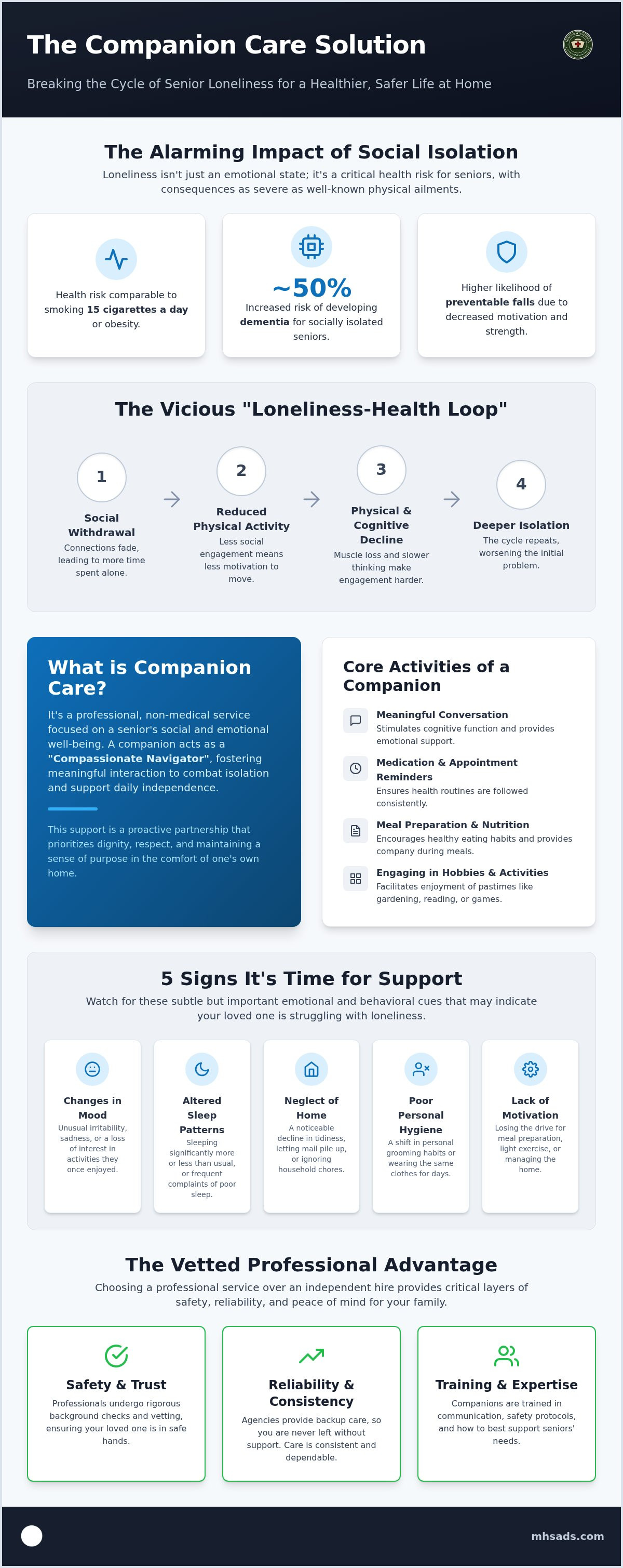
The "Loneliness-Health Loop" creates a dangerous cycle for seniors. It often begins with subtle social withdrawal, which leads to reduced physical activity. This inactivity then accelerates muscle loss and cognitive slowing, making it harder for the senior to engage with others, further deepening their isolation. By 2026, the epidemic of loneliness has been recognized as a primary factor in reduced life expectancy, comparable to the risks of smoking or obesity.
The Biological Cost of Living Alone
Living in isolation isn't just quiet; it's stressful for the body. Chronic loneliness triggers the constant release of stress hormones like cortisol. In seniors, elevated cortisol levels can weaken the immune system and increase inflammation, making them more vulnerable to illness. This biological strain is a key reason why social withdrawal is linked to accelerated cognitive decline. Without the mental stimulation of regular conversation, the brain's processing speed can falter.
Physical safety is also at stake. Isolated seniors are statistically more likely to experience preventable falls. When someone is lonely, they often lose the motivation to maintain their strength or nutrition. This is where companion care for lonely seniors becomes a vital safety measure. A companion doesn't just provide conversation; they encourage movement and provide the watchful eye that prevents a stumble from becoming a crisis.
Emotional Signs Your Loved One is Struggling
Loneliness often wears a mask. You might notice your loved one becoming unusually irritable or experiencing changes in their sleep patterns. Sometimes, it shows up as a sudden neglect of the home or personal hygiene. It's vital to distinguish between "being alone" and "feeling lonely." A person can be alone and content, but feeling lonely implies a painful gap between the connection they have and the connection they need.
Social isolation is a lack of meaningful connection rather than just a lack of people. Identifying these emotional cues early allows for a proactive approach. Choosing companion care for lonely seniors helps bridge that gap, transforming a house that feels empty into a home filled with purposeful engagement and consistent support.
What is Companion Care? Understanding the Role of a Social Health Partner
What does it mean to truly support a senior who values their independence but struggles with the silence of an empty house? Companion care is a specialized form of non-medical support that focuses on emotional well-being and daily assistance. It's designed for seniors who can handle physical tasks but need a social health partner to help them stay connected to the world around them. While it's often used alongside personal care assistance, its primary goal is to combat the health risks of social isolation by fostering meaningful human interaction.
We view this role as a "Compassionate Navigator." Rather than just sitting in a chair and watching the clock, a professional companion facilitates an active life. They look for ways to turn a mundane afternoon into an opportunity for engagement. This might mean organizing a photo album together, taking a walk in the garden, or simply having a deep conversation over tea. This proactive approach ensures that companion care for lonely seniors feels like a partnership rather than a transaction.
Core Activities of Professional Companions
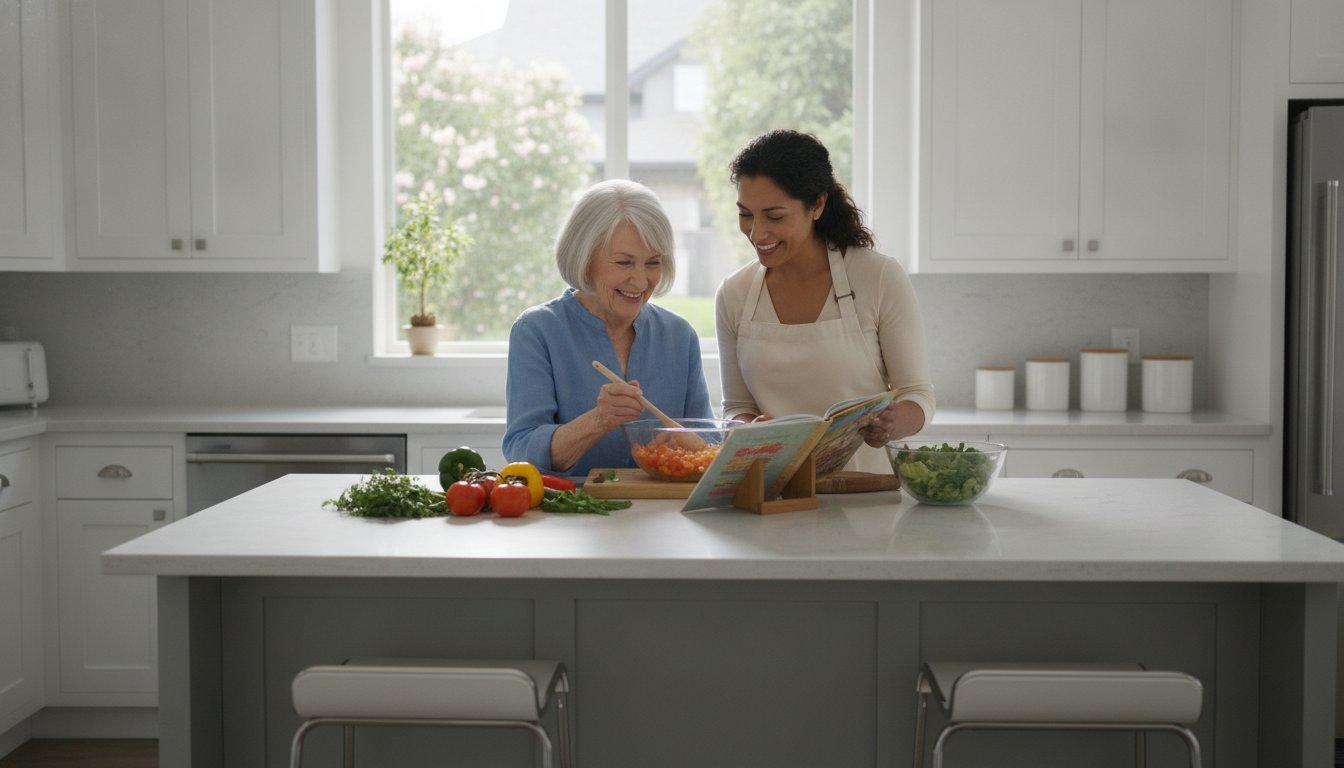
Conversation is the heartbeat of this service. Whether it's discussing current events or sharing family stories, this cognitive stimulation is vital for maintaining mental clarity and a sense of self. Nutrition is another key focus. Through meal preparation for elderly at home, companions ensure your loved one eats well while enjoying the company of a shared kitchen ritual. They also provide transportation for social outings, religious services, and community events, keeping the senior's social calendar full and vibrant.
The Safety Element: Medication Reminders and Observation
Safety is woven into the social fabric of every visit. Companions act as the "eyes and ears" for families, noticing subtle health changes or behavioral shifts that might go unnoticed during a quick phone call or a weekend visit. They provide essential medication reminders to prevent accidental double-dosing or missed scripts, ensuring consistency in daily health routines. Additionally, light housekeeping helps with fall prevention by keeping walkways clear of clutter and ensuring the environment remains a safe sanctuary. These small observations often prevent major health crises before they begin.
If you're ready to see how a dedicated partner can brighten your loved one's home, we invite you to explore our personalized care plans.
When to Consider Professional Support: A 5-Point Evaluation
Do you find yourself second-guessing the changes you see in your parent? It's natural to wonder if it's "too soon" to seek outside help. Many families wait for a crisis to occur before considering professional support, but early intervention is the most effective way to preserve long-term independence. Starting with a service like respite care can act as a gentle trial period, allowing your loved one to get comfortable with a new face in the home without feeling overwhelmed by a permanent change.
Physical and Environmental Red Flags
Sometimes the signs are visible in the surroundings before they are obvious in the person. We recommend looking for these three indicators during your next visit:
- Nutrition shifts: Noticing weight loss or a kitchen that lacks fresh food often points to a lack of interest in cooking for one.
- Mobility concerns: Look for unexplained bruising or a sudden fear of moving around the house independently.
- Household neglect: If light housekeeping is becoming an overwhelming burden, the physical energy required to maintain the home is likely being diverted elsewhere.
Companion care for lonely seniors addresses these gaps by providing the extra set of hands needed to keep the environment safe and the body nourished through collaborative meal preparation.
Social and Cognitive Indicators
The emotional shifts are just as telling as the physical ones. If a parent who used to love their social groups is suddenly withdrawing or refusing to answer the phone, it might be more than just "slowing down." Research indicates that the health risks of loneliness in seniors can lead to increased confusion or repetitive storytelling that wasn't there before. These cognitive dips often sharpen when there's no one around to provide daily mental stimulation or conversation.
Finally, perform a "Family Caregiver Burnout" check. Is your own health or career suffering from the pressure of being the sole source of stimulation for your loved one? If you're feeling guilty or exhausted, it's a clear signal that the current arrangement isn't sustainable. Introducing companion care for lonely seniors isn't about stepping away, it's about adding a layer of vetted reliability that allows you to focus on quality time rather than constant coordination.
Preserving Dignity: How to Introduce a Companion Without Causing Offense
How do you start a conversation about support when your loved one insists they are "doing just fine"? The most common hurdle families face is the senior’s fear that accepting help means they are losing their mind or becoming helpless. This "dignity gap" often leads to resistance, even when the need is obvious. Introducing companion care for lonely seniors requires a shift in perspective, moving away from the idea of "care" and toward the concept of a "partnership."
We recommend a "pathway to acceptance" that respects their autonomy. This begins by framing the professional as a personal assistant or a house manager rather than a caregiver. By starting with just a few hours a week, the transition feels like a collaborative choice rather than a loss of independence. This gradual approach allows a genuine bond to form before more consistent support is introduced.
The "Assistant" Strategy vs. The "Care" Strategy
Language matters deeply when introducing someone new into a senior's private sanctuary. Calling a professional a "driver" or a "helper" often reduces resistance because it focuses on utility rather than vulnerability. Focus the conversation on the chores your loved one dislikes, such as laundry, grocery shopping, or light housekeeping. By justifying the professional's presence through these tasks, the social connection happens naturally without the senior feeling "supervised."
If you aren't sure what to say, try using a script like this: "Mom, I know you’ve been frustrated with the heavy laundry and the drive to the grocery store. I’ve found a personal assistant who can handle those chores and get you to your appointments so you can focus on your gardening. Would you be open to meeting them just to see if you like them?" This framing positions the companion as a tool for freedom, not a sign of decline.
Empowering the Senior in the Selection Process
Control is the best antidote to anxiety. Involving your loved one in the initial selection process gives them a sense of agency over their own home. During a free consultation, encourage them to ask questions and share their interests. This ensures the matching process aligns personalities and hobbies, which is essential for successful companion care for lonely seniors. When a senior feels they have "vetted" their own partner for socialization, they are far more likely to welcome the engagement.
Setting clear boundaries is another vital step. Discuss exactly what the companion will and will not do, ensuring the senior knows they remain the "boss" of their household. This psychological shift from being a patient to being a partner preserves their dignity and fosters a sense of purpose. If you’re ready to start this conversation with your family, you can schedule a free consultation to discuss a personalized approach that respects your loved one’s unique needs.
Finding Reliable Care: The Vetted Professional Advantage
How do you ensure the person entering your loved one's home is truly dependable? While the "gig economy" or private hires might seem convenient, they often lack the oversight necessary for long-term safety and peace of mind. Professional companion care for lonely seniors through an established agency provides a level of security that independent options cannot replicate. We act as a "Trusted Guide" for families, ensuring that every caregiver is not only skilled but also a safe, compassionate presence in the home.
Choosing a professional path means you aren't just hiring a set of hands; you're entering a collaborative partnership. This structure provides a stable anchor for families in transition, reducing the anxiety that often comes with arranging daily support. By prioritizing vetted reliability, you can focus on being a daughter, son, or spouse again, rather than a care coordinator.
What to Look for in a Caregiving Agency
A rigorous vetting process is the foundation of trust. Does the agency perform comprehensive background checks on all home health personnel? At Mercy Health Services, we ensure that every caregiver undergoes strict screening and receives ongoing training. This preparation ensures they are proactive and observant, ready to notice subtle changes in your loved one's well-being.
Consistency of care is another vital factor to consider. For a senior who feels isolated, seeing a different face every week can be disorienting and counterproductive. Having the same companion for every visit allows a genuine bond to form, which is the heartbeat of successful companion care for lonely seniors. Transparency in communication is equally important. You should expect a seamless flow of information between the agency, the caregiver, and your family, ensuring everyone is aligned on the daily goals and the senior's mood.
Next Steps: From Consultation to First Visit
The journey toward better social health begins with a personalized care plan. This plan is developed during a free consultation, where we look at your loved one's social history, medical needs, and personal interests. This ensures the support is person-centered rather than transactional. We don't just assign a caregiver; we look for a "Compassionate Navigator" who will truly resonate with your family member's personality.
What should you expect during the first week? It's natural to have an "adjustment period" as the senior and the companion find their rhythm. We stay deeply attentive during this time, making sure the transition is smooth and unhurried. This methodical approach ensures that the new routine feels like a natural extension of your loved one's life. If you are ready to see how a dedicated partner can brighten your loved one's home, we invite you to schedule a free consultation with Mercy Health Services to find the perfect companion match.
Restoring Connection and Purpose to Every Day
Are you ready to trade your worry for the peace of mind that comes with a reliable partner in care? We've explored how social health is a foundational pillar of senior well-being and why proactive engagement is essential for breaking the "loneliness loop." By choosing companion care for lonely seniors, you're introducing a compassionate navigator who facilitates a more vibrant, active lifestyle while preserving your loved one’s cherished independence.
Since our founding, we've provided compassionate support through vetted and background-checked caregivers who prioritize the safety and dignity of every individual. Our personalized care plans are designed to evolve alongside your family's needs, ensuring consistency and respect at every stage. You don't have to navigate this transition alone. Discover Compassionate Companion Care for Your Loved One today and take the first step toward a more connected future. Your loved one deserves to feel valued and seen, and we are here to help you make that a reality.
Frequently Asked Questions
What is the difference between companion care and personal care?
Companion care focuses on emotional well-being and social interaction, while personal care provides physical assistance with tasks like bathing, dressing, and grooming. If your loved one is generally mobile but struggles with isolation, companionship is the right path. However, if they need help with hygiene or mobility, personal care assistance is a necessary addition. We often combine these services into a single, personalized plan to ensure all needs are met.
Can companion care help a senior with early-stage dementia?
Yes, companion care for lonely seniors is highly effective for those in the early stages of dementia. Professional companions provide the cognitive stimulation and social engagement that research suggests can slow decline. By engaging in shared hobbies, storytelling, or puzzles, the caregiver helps maintain mental clarity. This consistent presence also reduces the anxiety and confusion that often occur when a senior with memory challenges spends too much time alone.
Is companion care covered by Medicare or private insurance?
Medicare typically does not cover non-medical companion care as it is not considered "skilled nursing." However, many private long-term care insurance policies do provide coverage for these services. It's also worth checking with the VA if your loved one is a veteran, as they may offer aid and attendance benefits. We recommend reviewing your specific policy or speaking with an insurance representative to understand your available options for private-duty support.
How many hours a week of companion care is typical for a lonely senior?
The typical schedule varies based on individual needs, but many families start with 12 to 20 hours per week. This often looks like three or four visits for a few hours each day. This frequency provides enough consistency to build a meaningful bond without being overwhelming. Some seniors prefer daily check-ins, while others find that a few well-placed social visits throughout the week are sufficient to restore their sense of purpose.
What happens if my parent does not like the caregiver assigned to them?
We prioritize the personality match as much as the skill set. If your parent doesn't feel a connection with their assigned companion, we will work with you to find a different match. It's vital that the senior feels comfortable and respected in their own home. We view the caregiver as a partner in your loved one's social health, so we encourage open feedback to ensure the relationship is positive and productive.
Are companions allowed to drive my loved one to doctor appointments?
Yes, transportation is a core component of our companionship and socialization services. Our caregivers can drive your loved one to medical appointments, religious services, or social outings with friends. This support helps seniors maintain their community connections and ensures they don't miss important health check-ups. Having a reliable driver reduces the fear of isolation that often comes when a senior stops driving their own vehicle, preserving their sense of freedom.
How do you ensure the caregivers are safe to have in the home?
Safety is our highest priority. We ensure every caregiver undergoes a rigorous vetting process, including comprehensive background checks and professional reference reviews. Beyond the initial screening, our team receives ongoing training to maintain high standards of care. This "vetted reliability" gives your family the peace of mind that a trustworthy professional is supporting your loved one. We position ourselves as a stable anchor, providing a level of security that independent hires cannot offer.
Can companion care be combined with medication reminders and meal prep?
Absolutely. Companion care for lonely seniors works seamlessly alongside daily tasks like meal preparation and medication reminders. We believe these services are synergistic. For instance, a companion can prepare a nutritious meal while engaging in a meaningful conversation, making the ritual of eating more enjoyable. These reminders ensure health consistency, while light housekeeping keeps the environment safe, allowing the senior to focus on the joy of social connection rather than household burdens.
Frequently Asked Questions
Companion care focuses on emotional well-being and social interaction, while personal care provides physical assistance with tasks like bathing, dressing, and grooming. If your loved one is generally mobile but struggles with isolation, companionship is the right path. However, if they need help with hygiene or mobility, personal care assistance is a necessary addition. We often combine these services into a single, personalized plan to ensure all needs are met.
Yes, companion care for lonely seniors is highly effective for those in the early stages of dementia. Professional companions provide the cognitive stimulation and social engagement that research suggests can slow decline. By engaging in shared hobbies, storytelling, or puzzles, the caregiver helps maintain mental clarity. This consistent presence also reduces the anxiety and confusion that often occur when a senior with memory challenges spends too much time alone.
Medicare typically does not cover non-medical companion care as it is not considered "skilled nursing." However, many private long-term care insurance policies do provide coverage for these services. It's also worth checking with the VA if your loved one is a veteran, as they may offer aid and attendance benefits. We recommend reviewing your specific policy or speaking with an insurance representative to understand your available options for private-duty support.
The typical schedule varies based on individual needs, but many families start with 12 to 20 hours per week. This often looks like three or four visits for a few hours each day. This frequency provides enough consistency to build a meaningful bond without being overwhelming. Some seniors prefer daily check-ins, while others find that a few well-placed social visits throughout the week are sufficient to restore their sense of purpose.
We prioritize the personality match as much as the skill set. If your parent doesn't feel a connection with their assigned companion, we will work with you to find a different match. It's vital that the senior feels comfortable and respected in their own home. We view the caregiver as a partner in your loved one's social health, so we encourage open feedback to ensure the relationship is positive and productive.
Yes, transportation is a core component of our companionship and socialization services. Our caregivers can drive your loved one to medical appointments, religious services, or social outings with friends. This support helps seniors maintain their community connections and ensures they don't miss important health check-ups. Having a reliable driver reduces the fear of isolation that often comes when a senior stops driving their own vehicle, preserving their sense of freedom.
Safety is our highest priority. We ensure every caregiver undergoes a rigorous vetting process, including comprehensive background checks and professional reference reviews. Beyond the initial screening, our team receives ongoing training to maintain high standards of care. This "vetted reliability" gives your family the peace of mind that a trustworthy professional is supporting your loved one. We position ourselves as a stable anchor, providing a level of security that independent hires cannot offer.
Absolutely. Companion care for lonely seniors works seamlessly alongside daily tasks like meal preparation and medication reminders. We believe these services are synergistic. For instance, a companion can prepare a nutritious meal while engaging in a meaningful conversation, making the ritual of eating more enjoyable. These reminders ensure health consistency, while light housekeeping keeps the environment safe, allowing the senior to focus on the joy of social connection rather than household burdens.