

Comprehensive Post-Surgery Home Care Checklist: Preparing for a Safe Recovery in 2026
August 29, 2026 · 17 min read
What if the most critical part of your surgical journey isn't the procedure itself, but the first forty-eight hours you spend back in your own living room? It's a question that many families face as they prepare for a transition that feels both hopeful and daunting. If you're looking for reliable home care for surgery recovery, you might be feeling anxious about managing daily tasks while your mobility is limited. Do you worry about the physical safety of your home environment or the possibility of becoming a burden to your loved ones during those first few weeks?
We understand that these concerns are deeply personal and valid. You deserve a recovery process that prioritizes your comfort and your dignity. This article serves as your comprehensive guide for 2026, offering a clear roadmap to transform your house into a sanctuary for healing. We'll provide a detailed checklist for home preparation and explain how a dedicated caregiver assists with non-medical essentials like meal preparation and mobility support. By the end of this guide, you'll have the confidence to navigate the path from hospital to home with a steady, expert partner by your side.
Key Takeaways
- Learn why the first 72 hours post-discharge are the most critical for preventing complications and how professional support stabilizes the transition home.
- Discover how to set up a ground-floor "Recovery Command Center" to eliminate stair-related risks and ensure all your essentials are within reach.
- Understand the vital role of home care for surgery recovery in managing daily wellness, from nutritional meal preparation to consistent medication reminders.
- Identify the specific mobility and weight-bearing questions to ask your surgical team to ensure your home environment is safely prepared for your return.
- Find out how a vetted, compassionate recovery partner can handle the logistics of daily life, allowing you to focus entirely on your physical healing and dignity.
Why Professional Home Care is Essential for Surgery Recovery
How do you bridge the gap between the sterile safety of a hospital room and the familiar, yet often physically challenging, environment of your own home? This period, which we call the transition window, is the time between your discharge and the moment you regain full, confident mobility. It's a vulnerable stage where the physical demands of daily life can easily outpace your current strength.
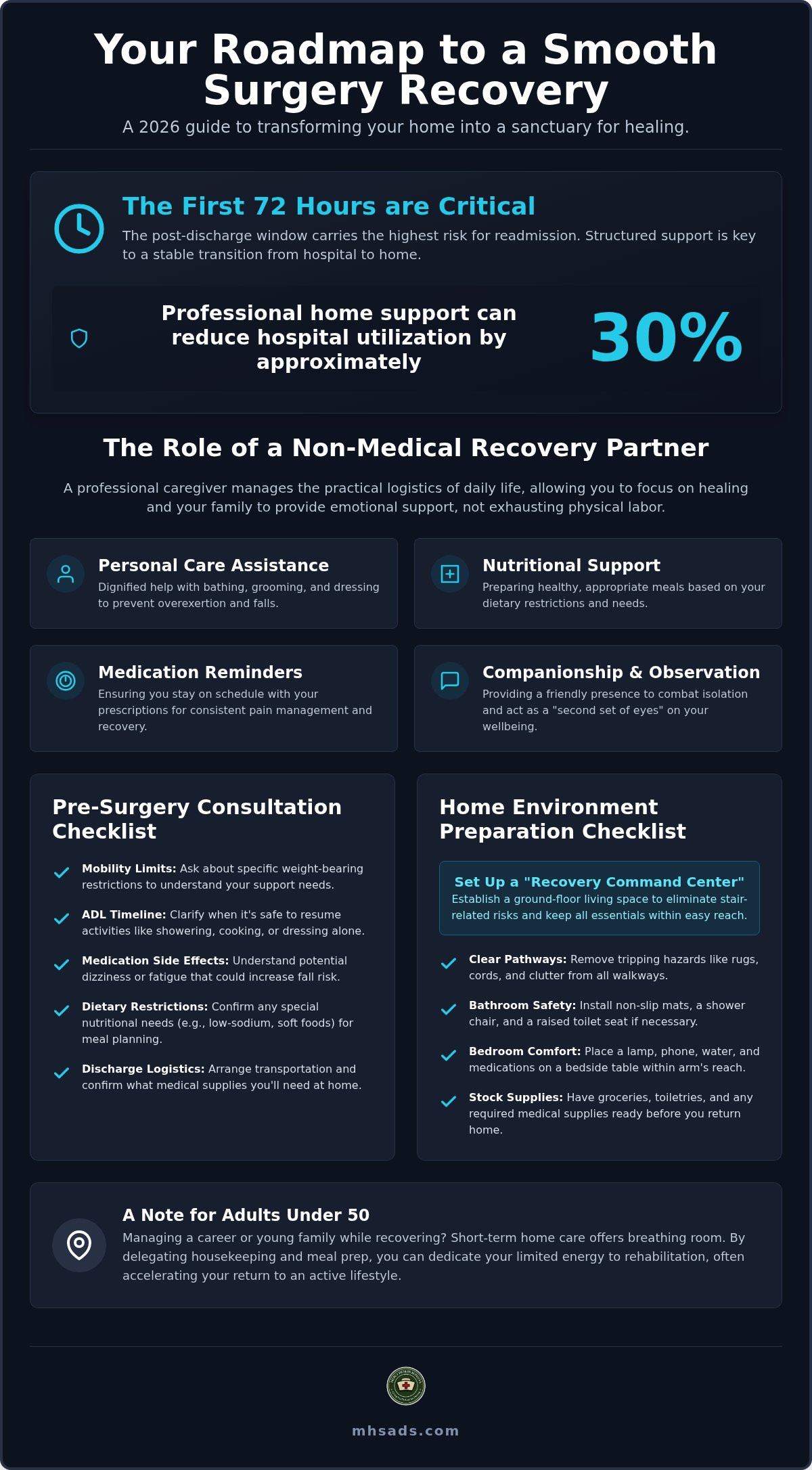
The first 72 hours after leaving the hospital are particularly critical. Research into transitional care programs shows this window carries the highest risk for readmission. However, having a structured support system can reduce hospital utilization by approximately 30%. While your medical team focuses on your clinical needs, home care for surgery recovery addresses the practical realities of your day. It provides a stable anchor, ensuring you don't have to choose between your safety and your independence during this delicate time.
It's vital to distinguish between medical services and personal support. We don't provide skilled nursing or physical therapy; instead, we focus on the non-medical logistics that keep a household running. This distinction allows family members to return to their roles as daughters, sons, or spouses rather than acting as exhausted, untrained medical orderlies. This shift significantly reduces the emotional strain on everyone involved, allowing the home to remain a place of peace rather than a place of stress.
Understanding the Role of a Recovery Caregiver
A recovery partner is more than just a helper; they're a proactive observer of your wellness. They provide essential personal care assistance, helping with dignified tasks like bathing, grooming, and dressing when your range of motion is limited. This support prevents the overexertion that frequently leads to post-operative falls.
Companionship also plays a vital role in your mental health. Isolation can lead to post-operative depression, but having a consistent, friendly presence keeps you engaged. A caregiver acts as a "second set of eyes," noticing subtle changes in your energy or mood that might otherwise go unobserved during the quiet hours of recovery.
Recovery Needs for Adults Under 50
Is it possible to heal properly while managing the pressures of a career or a young family? For adults under 50, the challenge of recovery is often complicated by the desire to remain productive. You might be attempting to manage work-from-home responsibilities or parenting duties while your body is still mending. Short-term home care for surgery recovery offers the breathing room you need. By delegating light housekeeping and meal preparation, you can dedicate your limited energy to your rehabilitation. This focused rest often accelerates your timeline for returning to the active lifestyle you enjoy.
The Pre-Surgery Consultation: Checklist for Your Medical Team
Have you ever felt that the conversation with your surgeon happened so quickly that you forgot to ask the most practical questions? Preparing for a safe return home begins well before your procedure date. While the medical team focuses on the surgery itself, your focus should be on the logistics of your daily life afterward. Understanding your specific weight-bearing and mobility restrictions is essential. For example, if you're recovering from a joint replacement, knowing exactly how much pressure you can put on your leg determines how much home care for surgery recovery support you'll need for simple tasks like moving from the bed to a chair.
You'll also want to ask about the expected timeline for basic activities of daily living (ADLs). When is it safe to stand at the stove to cook, or even more importantly, when can you safely step into a shower? Medication schedules are another critical piece of the puzzle. Beyond just knowing when to take a pill, you must understand the potential side effects. Many post-operative medications cause dizziness or fatigue, which significantly increases your risk of a fall. Finally, clarify any dietary restrictions. If you need a low-sodium or soft-food diet, this information allows your recovery partner to handle your nutrition with your specific health needs in mind.
Logistics and Discharge Planning
Who will drive you to your first follow-up appointment? Many patients assume they'll be ready to drive sooner than they actually are. Ask your team about transportation requirements and which medical supplies you're responsible for sourcing. Some hospitals provide basic bandages or walkers, while others require you to have these items ready at home before you arrive. Knowing the exact criteria for being cleared for independent movement helps prevent you from pushing yourself too hard, too soon. If you feel overwhelmed by these details, a free consultation with a care navigator can help you organize these questions into a clear plan.
Setting Realistic Recovery Goals
Success in the first week might simply mean managing your pain and staying hydrated. By the first month, your goals will shift toward regaining strength and returning to your normal routine. It's often helpful to involve your home care agency in these discharge conversations so they can align their daily support with your doctor's orders. In the context of post-op healing, recovery milestones are the specific, measurable markers of physical progress that signal your body is successfully returning to its baseline function. By setting these goals early, you create a roadmap that fosters confidence and reduces the anxiety of the unknown.
Home Environment Checklist: Room-by-Room Preparation
How can you transform your familiar home into a space that actively supports your healing? While your house is a place of comfort, it often contains hidden obstacles that become significant hazards during your first few weeks of home care for surgery recovery. Preparing your environment room-by-room ensures that your focus remains on physical progress rather than navigating physical barriers. This proactive approach is a cornerstone of effective home care for surgery recovery in 2026.
We recommend establishing a "Recovery Command Center" on the ground floor. By centralizing your sleeping, dressing, and hygiene needs on one level, you completely remove the risk and exertion associated with stairs. This area should be stripped of common fall hazards like loose area rugs, extension cords, and decorative clutter. Adequate lighting is equally vital. Motion-activated nightlights in the hallways and bathrooms provide a clear, safe path for those middle-of-the-night trips when you might feel slightly disoriented or fatigued from medication side effects.
Bathroom and Bedroom Safety
Is your bed at the right height for a safe transition? A bed that's too low requires excessive leg strength to exit, while one that's too high can lead to instability. Adjusting these heights, often with the help of mobility assistance for seniors, allows for smoother transfers between surfaces. In the bathroom, non-slip mats are non-negotiable. Ensure that all your hygiene supplies, from towels to soap, are positioned where they can be reached without bending or overextending your surgical site. Stable, wide pathways must be maintained throughout these rooms to accommodate a walker or wheelchair without snagging on furniture.
Kitchen and Common Area Adjustments
Nutrition is the fuel for your recovery, but standing for long periods to cook isn't feasible in the early days. Pre-stocking your pantry with easy-to-digest, nutritious foods ensures you stay nourished without the physical strain of meal preparation. In the living area, clear wide paths between your favorite chair and the kitchen to allow for assistive devices. This is also the perfect time to set up a dedicated charging station. Keeping your phone, tablet, and any medical alert devices within arm's reach ensures you can always call for assistance or stay connected with loved ones without needing to stand up. These small, proactive adjustments create a calm environment where safety is a given, not a struggle.
Daily Support Checklist: Managing Tasks and Wellness
Once you are home, the challenge shifts from environmental preparation to daily execution. How do you maintain a rhythm that supports healing without feeling overwhelmed by the clock? A structured daily routine is the backbone of successful home care for surgery recovery. It ensures that medication reminders and hydration goals aren't just met, but are woven into a predictable, stress-free day. This methodical approach reduces the anxiety of managing complex schedules while your energy is naturally lower.
Cleanliness is more than just comfort; it's a medical necessity. Recovering at home can lead to a lower risk of infection compared to a hospital setting because there is a lower concentration of bacteria. While Medicare limitations in 2026 mean that basic homemaker services are often not covered by traditional insurance, professional home care for surgery recovery fills this vital gap. By assisting with light housekeeping, a caregiver maintains a sterile environment while you follow surgical site restrictions during hygiene and grooming. This support ensures you stay refreshed without risking a fall or straining an incision during those first delicate weeks.
Nutrition and Hydration for Healing
Proper nutrition is the silent partner in tissue repair. High protein intake and consistent hydration are essential for maintaining energy levels and accelerating cellular healing. Coordinating meal preparation for elderly at home allows for specialized post-op diets that meet these needs without requiring you to stand for long periods or lift heavy cookware. A caregiver ensures that fresh water and nutritious snacks are always accessible, preventing the fatigue that often leads to physical setbacks. This proactive support helps you maintain the stamina required for your rehabilitation exercises.
Monitoring and Communication
Healing isn't always a straight line, and tracking your daily progress is essential for a safe outcome. Professional caregivers notice the subtle shifts in your physical state or mood that might signal a need for a clinical adjustment. They maintain a detailed communication log for family members and medical teams to ensure everyone stays informed about your recovery trajectory. The vetted reliability of a professional caregiver ensures that every subtle shift in your physical or emotional state is documented with expert precision to prevent complications. This constant, observant presence has been shown to contribute to the 30% to 60% reduction in readmissions seen in structured home recovery programs.
If you're ready to see how a structured routine can transform your healing process, you can request a personalized care plan tailored to your specific surgery.
Choosing Your Recovery Partner: The Mercy Health Services Difference
How do you choose the right person to step into your home during your most vulnerable moments? Selecting a partner for home care for surgery recovery is a decision that balances physical needs with emotional comfort. We believe that recovery is deeply personal. We don't simply assign a name from a list; we carefully match our caregivers to you based on the specific requirements of your post-operative plan and your individual personality. This ensures that the person helping you with mobility or meal preparation feels like a trusted companion rather than a stranger in your living room.
You deserve the peace of mind that comes from knowing exactly who is providing your support. Every one of our professionals is thoroughly vetted and background-checked, maintaining the high standards of reliability you expect in 2026. As your strength returns, your needs will change. We develop a personalized care plan that evolves alongside you, shifting from intensive daily assistance to light check-ins as you regain your independence. Throughout this process, our commitment to your dignity remains unwavering. Whether assisting with bathing or grooming, we ensure that every task is performed with the utmost respect for your privacy and self-worth.
Starting Your Recovery Journey
What can you expect when you first reach out for support? Your journey begins with a free initial consultation where we listen to your concerns and review your doctor's discharge instructions. We understand that surgery dates can sometimes shift, which is why we emphasize speed and flexibility. In most cases, home care for surgery recovery can be implemented within a few days of your consultation, ensuring a stable environment is ready for your arrival. Whether you require a few hours of assistance each morning or more consistent support during the first week, our hourly and 24/7 options provide the flexibility your recovery demands.
Support for the Whole Family
How does professional support benefit those who love you most? While family members often want to provide all the care themselves, the physical and emotional toll can be significant. Our services provide essential respite care, allowing your loved ones to step back from the logistics of caregiving. By reducing the "caregiver burden," we empower your family to focus on providing the emotional encouragement that is so vital to healing. We act as a professional bridge, ensuring a seamless handoff from hospital staff to the home environment, so you never feel a gap in your support system.
Taking Your First Confident Steps Toward Healing
Are you ready to turn your focus from the stress of surgery to the peace of your recovery? Preparing your home environment and establishing a daily routine are the most effective ways to ensure your safety once you leave the hospital. By creating a ground-floor command center and securing reliable home care for surgery recovery, you significantly reduce the risk of falls and complications. Our team is here to act as your stable anchor during this transition, providing the observant presence you need to heal with dignity.
With vetted, background-checked caregivers and personalized care plans for all ages, we provide the national coverage your family needs to move forward with confidence. You don't have to navigate these first few weeks alone. We invite you to Schedule a Free Consultation for Post-Surgery Support today. Let us handle the logistics of your daily support so you can focus entirely on regaining your strength and your independence. Your journey back to wellness is our priority, and we are honored to be your trusted guide.
Frequently Asked Questions
How soon after surgery can home care begin?
Home care for surgery recovery can often begin within just a few days of your initial consultation. We understand that discharge dates from the hospital can be unpredictable, so we prioritize a fast and flexible implementation process. Whether you need support immediately upon returning home or are planning for a procedure weeks in advance, our team coordinates with your schedule to ensure a seamless transition from the hospital to your front door.
Do home care agencies provide medical treatments like physical therapy?
Our agency focuses exclusively on non-medical support and personal assistance. We do not provide clinical medical treatments such as physical therapy or skilled nursing care. Instead, we act as your recovery partner by assisting with mobility, personal hygiene, and daily tasks like meal preparation. If your doctor has ordered medical treatments, our caregivers can work alongside those clinical providers to ensure your daily environment remains safe and supportive of your professional rehabilitation goals.
What is the difference between home health care and private-duty home care?
The primary difference lies in the type of support provided to the patient. Home health care typically involves clinical services like wound care or therapy that are ordered by a physician. Private-duty home care focuses on the human element of recovery, including companionship, medication reminders, and mobility assistance. While home health handles your medical needs, our team handles the logistics of your daily life, ensuring you can focus entirely on your physical healing.
Can a caregiver stay overnight during the first few days of recovery?
Yes, we offer flexible scheduling that includes overnight stays and 24/7 continuous support. During the first few days of recovery, having a professional present through the night can significantly reduce anxiety and the risk of falls. Our caregivers provide a watchful eye and assistance with nighttime bathroom trips or medication reminders. This level of support ensures that you are never alone during the most critical hours of your transition back to independence.
How do I prepare my home for a caregiver to visit?
Preparing your home involves creating a clear, safe environment for both you and your caregiver. We recommend establishing a ground-floor command center and removing obstacles like loose rugs or electrical cords. It's also helpful to have your discharge instructions and a list of medications readily available. Ensuring that pets are secured and providing clear instructions for home entry allows your caregiver to focus their full attention on your personal care and mobility needs from the moment they arrive.
Is home care for surgery recovery covered by insurance or Medicare?
In 2026, Medicare typically covers intermittent skilled nursing or physical therapy if a doctor certifies you are homebound, but it does not pay for 24-hour care or meal delivery. Most private-duty services are funded through long-term care insurance or private pay. It's important to verify your specific policy details, as professional home care for surgery recovery provides the essential non-medical support that Medicare's clinical coverage often leaves as the responsibility of the family.
What happens if my recovery takes longer than expected?
We believe that recovery is a journey, not a fixed timeline. If your healing process takes longer than initially expected, your personalized care plan is designed to evolve with you. We regularly assess your progress and can adjust the level of support from intensive daily assistance to light check-ins as your strength returns. This flexibility ensures that you always have the right amount of help, providing a stable anchor for as long as your recovery requires.
How are caregivers vetted for safety and reliability?
Every caregiver in our network undergoes a rigorous vetting process to ensure your safety and peace of mind. We conduct thorough background checks and verify professional references to maintain a high standard of dependability. Our goal is to match you with a compassionate professional who isn't just qualified, but also fits your personality and specific recovery needs. This commitment to vetted reliability allows you to welcome a caregiver into your home with complete confidence.
Frequently Asked Questions
Home care for surgery recovery can often begin within just a few days of your initial consultation. We understand that discharge dates from the hospital can be unpredictable, so we prioritize a fast and flexible implementation process. Whether you need support immediately upon returning home or are planning for a procedure weeks in advance, our team coordinates with your schedule to ensure a seamless transition from the hospital to your front door.
Our agency focuses exclusively on non-medical support and personal assistance. We do not provide clinical medical treatments such as physical therapy or skilled nursing care. Instead, we act as your recovery partner by assisting with mobility, personal hygiene, and daily tasks like meal preparation. If your doctor has ordered medical treatments, our caregivers can work alongside those clinical providers to ensure your daily environment remains safe and supportive of your professional rehabilitation goals.
The primary difference lies in the type of support provided to the patient. Home health care typically involves clinical services like wound care or therapy that are ordered by a physician. Private-duty home care focuses on the human element of recovery, including companionship, medication reminders, and mobility assistance. While home health handles your medical needs, our team handles the logistics of your daily life, ensuring you can focus entirely on your physical healing.
Yes, we offer flexible scheduling that includes overnight stays and 24/7 continuous support. During the first few days of recovery, having a professional present through the night can significantly reduce anxiety and the risk of falls. Our caregivers provide a watchful eye and assistance with nighttime bathroom trips or medication reminders. This level of support ensures that you are never alone during the most critical hours of your transition back to independence.
Preparing your home involves creating a clear, safe environment for both you and your caregiver. We recommend establishing a ground-floor command center and removing obstacles like loose rugs or electrical cords. It's also helpful to have your discharge instructions and a list of medications readily available. Ensuring that pets are secured and providing clear instructions for home entry allows your caregiver to focus their full attention on your personal care and mobility needs from the moment they arrive.
In 2026, Medicare typically covers intermittent skilled nursing or physical therapy if a doctor certifies you are homebound, but it does not pay for 24-hour care or meal delivery. Most private-duty services are funded through long-term care insurance or private pay. It's important to verify your specific policy details, as professional home care for surgery recovery provides the essential non-medical support that Medicare's clinical coverage often leaves as the responsibility of the family.
We believe that recovery is a journey, not a fixed timeline. If your healing process takes longer than initially expected, your personalized care plan is designed to evolve with you. We regularly assess your progress and can adjust the level of support from intensive daily assistance to light check-ins as your strength returns. This flexibility ensures that you always have the right amount of help, providing a stable anchor for as long as your recovery requires.
Every caregiver in our network undergoes a rigorous vetting process to ensure your safety and peace of mind. We conduct thorough background checks and verify professional references to maintain a high standard of dependability. Our goal is to match you with a compassionate professional who isn't just qualified, but also fits your personality and specific recovery needs. This commitment to vetted reliability allows you to welcome a caregiver into your home with complete confidence.