
Assistance with ADLs: 2026 Family Guide
August 19, 2026 · 17 min read
What if the assistance with activities of daily living your loved one needs isn't a sign they're losing their independence, but rather the very tool that helps them keep it? It's a question many families face as they notice a parent or spouse struggling with tasks that used to be second nature. You might feel a heavy mix of physical exhaustion and the quiet fear that your loved one is losing their sense of self. It's common to feel overwhelmed by clinical terms or worry that bringing in help means giving up. We understand that this transition is deeply personal and often stressful.
You deserve a clear path forward that prioritizes safety without sacrificing respect. This guide explains exactly what these services entail and how professional support serves as a stable anchor for your family. We'll break down the differences between ADLs and IADLs, help you recognize when it's time for a compassionate navigator to step in, and outline how vetted care preserves dignity at home. By the end, you'll have a logical plan to restore your peace of mind and ensure your loved one remains in the place they love most.
Key Takeaways
- Understand how assistance with activities of daily living bridges the gap between basic self-care and complex life tasks to ensure your loved one thrives.
- Learn to identify subtle behavioral changes and navigate the "denial phase" common when seniors begin to struggle with daily routines.
- Discover how a personalized care plan creates a supportive partnership that adapts to your family's unique needs and schedule.
- Explore why professional help actually restores a loved one's autonomy and relieves the emotional strain on family caregivers.
- Find out how to transition from noticing a problem to securing peace of mind through background-checked, professional support.
What is Assistance with Activities of Daily Living (ADLs)?
Have you ever wondered why healthcare professionals focus so much on specific daily tasks? These fundamental skills, known as Activities of daily living (ADLs), are the essential building blocks of a person's independence. While they might seem like simple routines, they represent the ability to live safely and autonomously at home. When a loved one begins to struggle with these tasks, seeking professional assistance with activities of daily living isn't about taking over their life. It's about providing the right level of support to ensure they continue to live with grace and comfort.
Why are these specific metrics so vital for families? Doctors and care providers use them as a universal language to determine exactly how much help a person needs. It's a way to move away from vague worries and toward a concrete, personalized plan. By identifying specific gaps in self-care, we can provide targeted support that fosters confidence rather than dependency. This distinction is crucial because it keeps the focus on what your loved one can still do, which is the heart of preserving their dignity and sense of self.
The Six Basic ADLs Explained
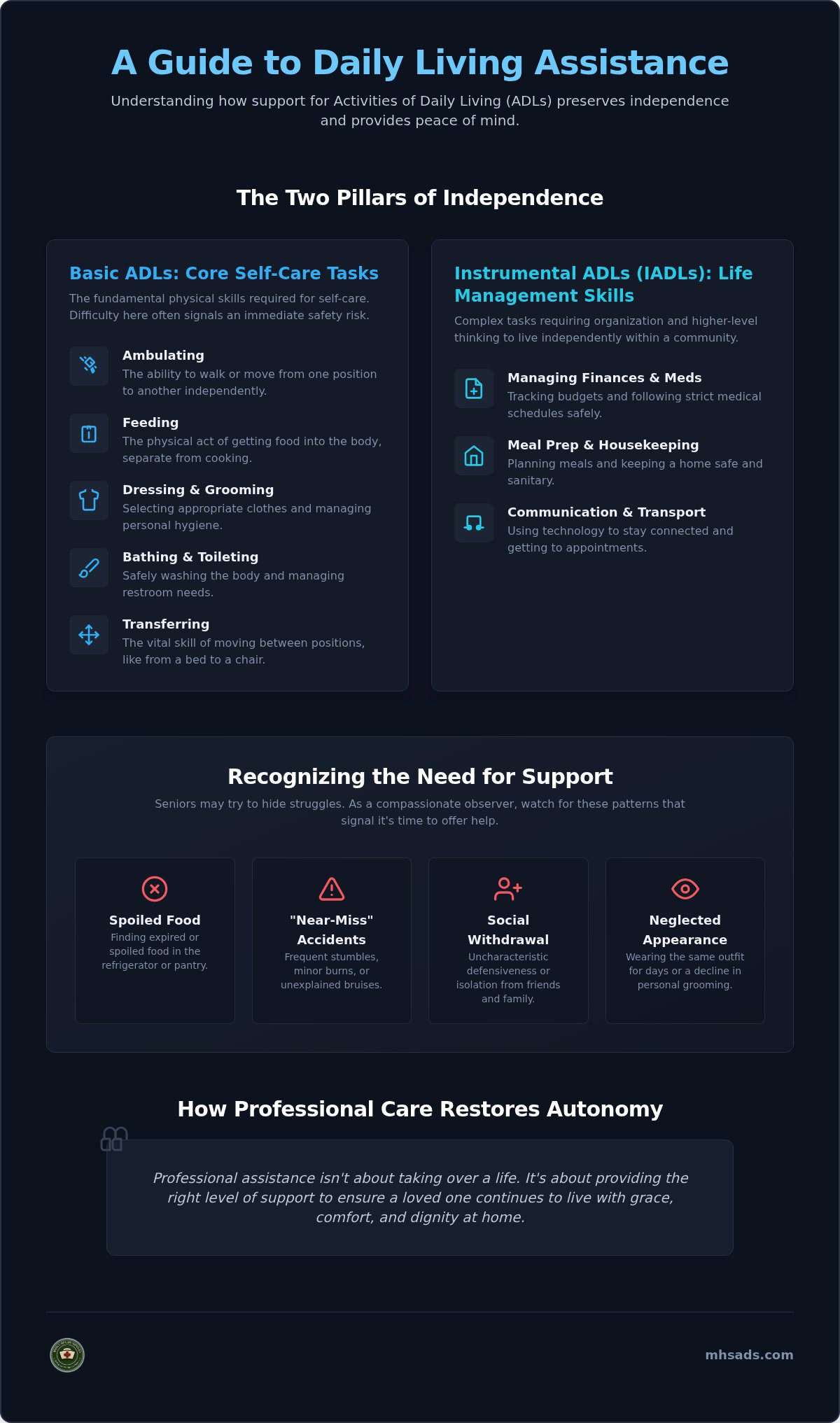
Basic ADLs are the physical tasks we perform to care for our bodies. When these become difficult, it often signals that a person's safety is at risk. While you might only notice a few changes, professionals look at these six core categories to understand the full picture:
- Ambulating: The ability to walk or move from one position to another independently.
- Feeding: The physical act of eating, separate from the ability to cook.
- Dressing and Personal Grooming: Selecting appropriate clothes and managing hair or dental care.
- Toileting and Continence: Managing the physical and mental aspects of using the restroom.
- Bathing: Safely washing the body in a shower or bath.
- Transferring: The vital skill of moving the body between positions, like getting in and out of bed.
Understanding Instrumental ADLs (IADLs)
How do we distinguish between physical needs and cognitive ones? Instrumental ADLs (IADLs) are more complex tasks that allow a person to live independently within a community. They often require higher-level thinking and organizational skills. We often see that a person loses the ability to manage IADLs before they struggle with basic physical tasks:
- Managing finances and medications: These involve tracking budgets and following strict medical schedules safely.
- Meal preparation and housekeeping: This includes the mental work of planning a meal and the physical work of keeping a home sanitary.
- Communication and transportation: Staying connected through technology and getting to essential appointments or social events.
Signs Your Loved One Needs Support with Daily Tasks
Have you noticed your loved one becoming a bit more guarded about their daily routine? It's often the first sign of what experts call the "denial phase." Seniors who value their autonomy may try to hide their struggles, fearing that admitting they need help will lead to a permanent loss of control. As a family member, your role isn't to be a supervisor; it's to be a compassionate observer who looks for the quiet signals that things are changing. Recognizing these shifts early allows you to offer assistance with activities of daily living before a minor struggle turns into a major safety crisis.
Watching a parent or spouse decline is emotionally taxing, but your observations are the most reliable tool for keeping them safe. It's important to watch for patterns rather than isolated incidents. When a person starts to withdraw or becomes uncharacteristically defensive about their home life, they're often signaling that they feel overwhelmed by the weight of maintaining their own well-being.
Physical and Behavioral Red Flags
Sometimes the signs are subtle enough to miss if you aren't looking for them. You might find spoiled food in the back of the fridge or notice they're wearing the same outfit several days in a row. These aren't just lapses in memory. They're indicators that the physical energy required for self-care is becoming a burden. Frequent "near-miss" accidents, such as a stumble in the bathroom or a burn in the kitchen, are particularly concerning. It's helpful to remember that home care promotes independence by proactively managing these risks. By addressing these concerns early, you help prevent the major injuries that often force a move away from home.
- Unexplained weight loss: This often suggests difficulty with meal preparation or swallowing.
- Poor hygiene: A noticeable change in grooming or a persistent odor can indicate a fear of falling in the shower.
- Home neglect: Piles of unopened mail or a generally messy living space often point to a lack of energy or cognitive focus.
The Impact of Cognitive Decline on ADLs
Cognitive changes often manifest in tasks that require multiple steps. Does your loved one seem confused by the microwave or the TV remote? Are they forgetting vital medications or accidentally taking double doses? These challenges often lead to social withdrawal. It's often easier for a senior to stay home than to face the frustration of struggling with a routine task in front of others. This isolation can accelerate decline, making early intervention even more critical.
When you recognize the need for assistance with activities of daily living, it's a signal to start a conversation about support while your loved one can still participate in the planning. If you're feeling unsure about what you're observing, reaching out for a vetted professional consultation can provide the clarity you need to move forward with confidence. You don't have to navigate these observations alone; having a trusted guide can simplify the overwhelming process of arranging daily support.
How Professional Caregivers Provide ADL Assistance
How do you transition from the exhausting role of a full-time caregiver back to being a supportive daughter, son, or spouse? It begins by introducing a private-duty caregiver who serves as a compassionate partner rather than a clinical supervisor. This shift allows you to focus on your emotional connection while a professional handles the intricate details of daily life. When providing assistance with activities of daily living, our focus remains on the person, not just the task. We believe that care is most effective when it feels like a natural extension of the family's own support system.
Every individual has a unique rhythm and set of preferences. We honor this by developing a personalized care plan that evolves alongside your loved one. This approach ensures that support is never intrusive but always available when needed. We also understand that trust is built on more than just professional skill. That's why we prioritize matching caregivers based on personality and temperament, ensuring the person entering the home feels like a dependable friend. Our caregivers are thoroughly vetted and background-checked, providing a foundation of reliability you can count on during stressful times.
Personal Care and Mobility Support
Helping with intimate tasks like bathing and dressing requires a high level of sensitivity. Our caregivers use dignified techniques that prioritize privacy and comfort at every step, ensuring your loved one never feels vulnerable. Safety is equally vital, particularly when moving between the bed, chair, or bathroom. By integrating mobility assistance for seniors into the daily routine, we help prevent the falls that often lead to hospital visits. These safe transferring methods protect both the client and the caregiver from injury, maintaining a calm and secure atmosphere throughout the day.
Nutrition and Household Management
A healthy home environment is the foundation of physical well-being. Caregivers provide meal preparation tailored to specific dietary needs, ensuring your loved one receives proper nutrition without the stress of planning or cooking. Light housekeeping helps maintain a hygienic, trip-free space, while medication reminders provide the consistency needed for stable health outcomes. This comprehensive assistance with activities of daily living ensures the home remains a sanctuary of health and safety. It allows your loved one to focus on what brings them joy rather than the chores that cause them fatigue or frustration.
The Emotional Transition: Preserving Dignity and Autonomy
How do we handle the fear that often comes when a loved one realizes they can't do everything alone anymore? For many seniors, the prospect of assistance with activities of daily living feels like a surrender of their independence. They worry their home will no longer be their own or that they'll be treated like a child. We believe that dignity in care is the right to participate in one’s own life choices. By acknowledging this fear, we shift the perspective from "being cared for" to "being supported." A professional caregiver doesn't take over; they act as a Compassionate Navigator, helping the individual chart a course that keeps them in command of their own story.
One of the most significant benefits of professional help is the restoration of family harmony. When a daughter has to constantly remind her father to bathe or take his pills, the relationship often shifts into a "nagging" dynamic. This creates tension and resentment on both sides. Bringing in a trusted guide to handle these tasks allows family members to step back into their original roles. You can go back to being the daughter who visits for tea and conversation, rather than the one who is constantly checking the medication log.
From Family Caregiver to Family Member
Professional support offers a lifeline to families experiencing the physical and emotional exhaustion of 24/7 care. It's about reducing burnout so your time together remains meaningful. This is particularly vital in high-need situations, such as seeking non-medical home care for stroke survivors. In these cases, the complexity of assistance with activities of daily living can quickly overwhelm even the most dedicated family member. Having a vetted professional step in ensures technical needs are met with expertise, allowing you to focus on emotional recovery and connection.
Fostering a Sense of Mastery
Does your loved one still enjoy choosing their own clothes or helping with light dusting? We encourage our clients to do as much as they safely can. This approach fosters a sense of mastery, which is essential for mental well-being. A clean, well-ordered home also provides a psychological boost, making the environment feel stable and safe. Beyond the physical tasks, the companionship provided by a regular caregiver reduces the isolation that often follows physical decline. If you're ready to see how a supportive partner can change your family's daily life, you can speak with a care coordinator today to explore your options.
How to Start Your Journey with Professional Home Care
How do you move from a place of worry to a place of action? Once you've identified that your loved one needs assistance with activities of daily living, the next step shouldn't feel like a high-pressure sales pitch. It's a transition that requires patience and a clear, logical path. We see ourselves as a stable anchor for your family, helping you navigate the complexities of arranging support with ease. Starting this journey is about gathering information so you can make the best choice for your loved one's safety and your own peace of mind.
We understand that every family's situation is different. Some may only need a few hours of help with meal preparation or light housekeeping, while others require more comprehensive private-duty care. Whether you're looking for flexible hourly support or need a more consistent presence, the goal is to create a partnership that fits your life. A consultation is simply a conversation to explore these paths, and it carries no obligation. It's your opportunity to ask questions and see how professional support can preserve your loved one's dignity at home.
The Care Assessment Process
What can you expect during a free home care consultation? This meeting is designed to be unhurried and consultative. We'll sit down with you and your loved one to identify specific ADL gaps and safety risks within the home environment. By observing how they move and interact with their space, we can build a care schedule that integrates seamlessly with your family's existing routine. This proactive approach ensures that the assistance with activities of daily living provided is exactly what's needed, no more and no less.
Vetting Your Care Team
How do you trust someone new in your home? We take this concern seriously by ensuring all caregivers are thoroughly vetted and background-checked. Reliability is the foundation of our service, and we go beyond simple background checks to provide rigorous training for every team member. We also focus on "best-fit" matching, looking at personality traits and temperament to ensure a harmonious relationship between the caregiver and your loved one. Once care begins, we provide ongoing supervision and adjust the personalized care plan as needs change. This ensures that the support remains consistent and effective, often allowing care to begin within a few days of your initial inquiry.
Restoring Peace of Mind and Safety at Home
Are you ready to move from a place of exhaustion to a place of confidence? Choosing to arrange assistance with activities of daily living isn't about giving up; it's about making a strategic choice to preserve your loved one's safety and your family's emotional health. By understanding these specific care needs and recognizing the subtle signs that a parent or spouse requires support, you can act before a crisis occurs. Professional caregivers serve as compassionate navigators, handling the physical tasks so you can focus on being a family member again.
Our national support network is dedicated to providing vetted, background-checked caregivers who follow personalized care plans designed for all ages. This ensures that your loved one receives dependable support that respects their unique rhythm and dignity. You don't have to navigate these complex choices alone. We're here to provide the expert guidance and reliable care your family deserves.
Schedule a free consultation for compassionate ADL support today.
Take the first step toward a safer, more balanced home life. You've done the hard work of noticing the need; let us help you build the solution.
Frequently Asked Questions
What are the 6 activities of daily living (ADLs)?
The six basic ADLs are ambulating, feeding, dressing and personal grooming, toileting and continence, bathing, and transferring. These represent the fundamental physical tasks required for safe self-care. Understanding these categories helps families identify specific areas where a loved one might need support. By focusing on these metrics, our caregivers develop a plan that addresses physical safety while respecting the individual's existing abilities and personal rhythm. This approach ensures that help is always person-centered.
How is ADL assistance different from skilled nursing care?
Are you trying to determine if your loved one needs medical care or just a helping hand with daily routines? ADL assistance focuses on non-medical support, whereas skilled nursing care involves medical treatments performed by licensed nurses. Our caregivers help with tasks like meal preparation, mobility, and personal care. We don't provide clinical services like wound care or physical therapy. This allows families to secure companion-based support without the clinical atmosphere of medical intervention, preserving a sense of home.
Can I pay for ADL assistance through long-term care insurance?
Yes, many long-term care insurance policies cover assistance with activities of daily living once a policyholder meets specific triggers, such as needing help with two or more ADLs. It's essential to review your specific policy to understand elimination periods and benefit limits. While we don't manage insurance claims directly, our care coordinators provide the necessary documentation of services to help you navigate the reimbursement process with your provider and secure the benefits you've earned for your care.
What happens if my loved one refuses help with their daily activities?
Have you noticed your loved one becoming defensive about their independence? It's natural for seniors to feel fearful when first offered support. We recommend starting with a gentle approach, perhaps introducing a caregiver for light housekeeping or companionship before transitioning to more intimate personal care tasks. This allows trust to build organically between the client and their navigator. By framing the support as a way to stay independent, you help your loved one feel more comfortable with the partnership.
Is assistance with activities of daily living available for younger adults with disabilities?
Yes, we provide private-duty home care for adults under 50 and children who require support with daily routines. Assistance with activities of daily living is not exclusive to seniors; it's a valuable resource for anyone managing a physical or developmental disability. Our personalized care plans are tailored to the individual's age and lifestyle, ensuring that every client receives the specific mobility and personal care support they need to maintain their dignity and reach their personal goals.
How quickly can home care services for ADLs typically begin?
Is your family facing an urgent need for support following a recent change? We understand that many reach out during a time of transition. In many cases, care can begin within a few days of your initial consultation. This quick response time is designed to provide immediate relief and prevent the accidents that often occur when a person struggles without support. Our goal is to be a stable anchor, simplifying the process of arranging help when it matters most.
Do I need a doctor’s referral to start receiving ADL assistance at home?
Are you wondering if you need medical authorization to arrange for a helping hand? No, you don't need a formal doctor's referral to begin private-duty home care services. Because our support is non-medical, families can initiate the process directly by scheduling a free consultation. We often work alongside a client's healthcare team to ensure our personalized care plan aligns with their wellness goals. This collaborative approach ensures that your loved one's daily routine supports their long-term health and safety.
What is the difference between ADLs and IADLs?
ADLs are basic physical tasks like bathing and dressing, while IADLs (Instrumental Activities of Daily Living) are more complex cognitive tasks required for independent living. IADLs include managing finances, handling medications, and using transportation. Often, a person will struggle with these complex life tasks before they need help with basic physical care. Recognizing these early shifts allows families to introduce support gradually, fostering mastery and confidence in the home environment while ensuring safety. We help bridge the gap between these levels.
Frequently Asked Questions
The six basic ADLs are ambulating, feeding, dressing and personal grooming, toileting and continence, bathing, and transferring. These represent the fundamental physical tasks required for safe self-care. Understanding these categories helps families identify specific areas where a loved one might need support. By focusing on these metrics, our caregivers develop a plan that addresses physical safety while respecting the individual's existing abilities and personal rhythm. This approach ensures that help is always person-centered.
Are you trying to determine if your loved one needs medical care or just a helping hand with daily routines? ADL assistance focuses on non-medical support, whereas skilled nursing care involves medical treatments performed by licensed nurses. Our caregivers help with tasks like meal preparation, mobility, and personal care. We don't provide clinical services like wound care or physical therapy. This allows families to secure companion-based support without the clinical atmosphere of medical intervention, preserving a sense of home.
Yes, many long-term care insurance policies cover assistance with activities of daily living once a policyholder meets specific triggers, such as needing help with two or more ADLs. It's essential to review your specific policy to understand elimination periods and benefit limits. While we don't manage insurance claims directly, our care coordinators provide the necessary documentation of services to help you navigate the reimbursement process with your provider and secure the benefits you've earned for your care.
Have you noticed your loved one becoming defensive about their independence? It's natural for seniors to feel fearful when first offered support. We recommend starting with a gentle approach, perhaps introducing a caregiver for light housekeeping or companionship before transitioning to more intimate personal care tasks. This allows trust to build organically between the client and their navigator. By framing the support as a way to stay independent, you help your loved one feel more comfortable with the partnership.
Yes, we provide private-duty home care for adults under 50 and children who require support with daily routines. Assistance with activities of daily living is not exclusive to seniors; it's a valuable resource for anyone managing a physical or developmental disability. Our personalized care plans are tailored to the individual's age and lifestyle, ensuring that every client receives the specific mobility and personal care support they need to maintain their dignity and reach their personal goals.
Is your family facing an urgent need for support following a recent change? We understand that many reach out during a time of transition. In many cases, care can begin within a few days of your initial consultation. This quick response time is designed to provide immediate relief and prevent the accidents that often occur when a person struggles without support. Our goal is to be a stable anchor, simplifying the process of arranging help when it matters most.
Are you wondering if you need medical authorization to arrange for a helping hand? No, you don't need a formal doctor's referral to begin private-duty home care services. Because our support is non-medical, families can initiate the process directly by scheduling a free consultation. We often work alongside a client's healthcare team to ensure our personalized care plan aligns with their wellness goals. This collaborative approach ensures that your loved one's daily routine supports their long-term health and safety.
ADLs are basic physical tasks like bathing and dressing, while IADLs (Instrumental Activities of Daily Living) are more complex cognitive tasks required for independent living. IADLs include managing finances, handling medications, and using transportation. Often, a person will struggle with these complex life tasks before they need help with basic physical care. Recognizing these early shifts allows families to introduce support gradually, fostering mastery and confidence in the home environment while ensuring safety. We help bridge the gap between these levels.