
Senior Independence at Home: A Comprehensive 2026 Guide
August 17, 2026 · 17 min read
What if the key to preserving your loved one’s autonomy isn’t about doing everything yourself, but about finding a partner who knows exactly when to step back? It's common to feel a heavy sense of guilt when you realize you can’t personally provide every hour of support. You want them to remain in the home they love, yet the fear of family conflict or the anxiety of inviting a stranger into their sanctuary can feel overwhelming. Understanding how home care promotes independence is the first step in moving from a place of worry to a position of confidence.
We believe that independence isn’t the absence of help, but the presence of the right support to maintain control over one’s own life. This guide will show you how professional assistance transforms from a simple service into a collaborative partnership that preserves dignity and maximizes autonomy. We’ll explore how to create a clear plan for aging in place, reduce caregiver burnout, and ensure your loved one remains the primary decision-maker in their own daily routine. By the end, you'll have a roadmap to navigate these transitions with grace and reliability.
Key Takeaways
- Learn how the "Independence Paradox" reframes professional support as a tool for greater personal agency rather than a loss of control.
- Discover how home care promotes independence through the four essential pillars of safety, mobility, cognitive engagement, and social connection.
- Follow a clear, step-by-step path to conducting an "Autonomy Audit" to balance daily safety with your loved one’s need for freedom.
- Explore how personalized care plans foster developmental milestones for children and maintain dignity for adults under 50 living with chronic conditions.
- Understand the value of a "Compassionate Navigator" who matches caregiver personalities to your family’s unique dynamics for a seamless partnership.
Redefining Autonomy: What Maintaining Senior Independence at Home Really Means
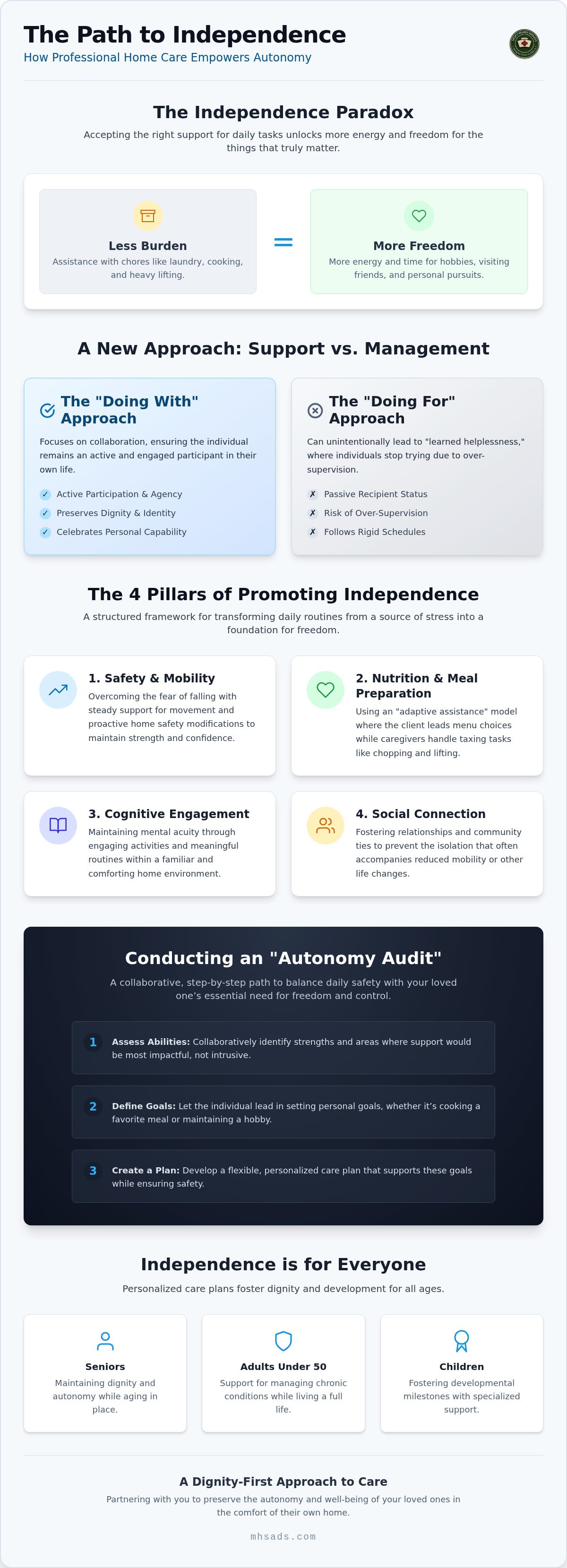
Does independence mean being entirely alone, or does it mean having the power to choose how you live your day? For many, the word "independence" conjures images of isolation, but in a modern care context, it truly means agency. It's about the ability to make decisions and maintain control over your own environment. This leads us to the "Independence Paradox." It might seem counterintuitive, but accepting a little assistance with laundry or meal preparation often provides more freedom. When a professional handles the heavy lifting, your loved one has more energy to focus on what they actually enjoy, like visiting friends or working on a favorite hobby. This is a primary way how home care promotes independence; it removes the physical obstacles that make daily life a struggle.
By contrast, institutional settings often unintentionally foster "learned helplessness," a psychological state where seniors stop attempting tasks because a rigid schedule dictates that everything be done for them. Professional home care interrupts this cycle by encouraging active participation in daily life. It ensures that the individual remains the protagonist of their own story, rather than a passive recipient of a service.
The Difference Between Management and Support
Have you ever felt the frustration of someone doing a task for you that you were perfectly capable of doing yourself? There is a thin line between helpful support and over-supervision. Professional caregivers focus on "doing with" rather than "doing for." This approach ensures that your loved one remains active and engaged. Our caregivers are trained to observe the tipping point where safety is ensured, but personal capability is still celebrated. They know exactly when to step in and, more importantly, when to step back to let the client lead.
The Emotional Value of the Home Environment
Why does the smell of a certain kitchen or the view from a specific window matter so much? For seniors, a home is more than a building; it is a living map of their memories and identity. In 2026, we understand more than ever how familiar routines and surroundings contribute to cognitive health and emotional stability. Understanding how home care promotes independence within these four walls is essential for long-term dignity. We define Aging in Place as a purposeful strategy for long-term dignity that allows individuals to remain in their own homes safely and comfortably regardless of their age or care needs.
The 4 Pillars of Promoting Independence Through In-Home Care
How can we transform a senior's daily routine from a source of stress into a foundation for freedom? It starts with a structured framework. We view support through four essential pillars: physical mobility, cognitive engagement, social connectivity, and the mastery of daily tasks. This methodical approach is exactly how home care promotes independence; it addresses the specific barriers that often lead to a loss of autonomy while ensuring the individual remains the primary decision-maker in their own home.
Pillar 1: Mobility Assistance for Seniors
Does the fear of a fall keep your loved one confined to a single chair? When movement becomes frightening, activity levels naturally drop, which quickly impacts physical strength and confidence. Our caregivers provide mobility assistance for seniors by offering steady support during transfers and daily walks. This assistance helps maintain muscle tone and bone density without taking over the activity. We also look at the home environment proactively. By suggesting simple modifications like better lighting or the removal of loose rugs, we make Growing Older at Home a sustainable and safe choice for those who value their freedom.
Pillar 2: Nutrition and Meal Preparation
Why should someone lose their connection to the kitchen just because standing for long periods has become difficult? We view mealtime as an opportunity for engagement rather than a chore to be managed by others. Our "adaptive assistance" model means the caregiver handles the taxing parts of cooking, like heavy lifting or chopping, while the client remains the lead chef for the menu. Proper nutrition is the fuel required for independent activity. When someone eats well and enjoys the companionship of a shared meal, their overall energy levels and mood significantly improve, giving them the strength to stay active.
Pillar 3: Medication Reminders and Health Literacy
Is the complexity of a new medication schedule causing unnecessary anxiety for your family? Staying consistent with prescriptions is often what prevents the hospital visits that can strip away a person's autonomy. We focus on reminders to ensure the client stays in the driver's seat of their own health regimen. The caregiver serves as a dependable guide, helping to execute the doctor's orders without taking over the process. This leads into our final focus: social connectivity and the mastery of daily tasks. Using adaptive assistance for daily routines ensures your loved one stays engaged with their world. This holistic approach shows how home care promotes independence by treating the person, not just the task. If you're looking for this kind of balanced support, our companionship and socialization services can help bridge the gap.
Balancing Safety and Freedom: A Step-by-Step Approach to Collaborative Care
How do you introduce help without making it feel like a surrender? The transition to in-home support works best when it's treated as a partnership rather than a takeover. By following a methodical, step-by-step approach, you can ensure your loved one feels empowered to maintain independence for as long as possible. This process begins with an "Autonomy Audit," which focuses on what your loved one can still do independently. Instead of looking for deficits, we identify strengths. This shift in perspective is exactly how home care promotes independence; it builds on existing capabilities rather than replacing them.
The second step involves framing. Position the support as a "concierge service" designed to handle tedious chores rather than "medical supervision." We suggest starting with "low-impact" services like companionship or light housekeeping. As trust deepens, you can naturally integrate personal care assistance into the routine. This slow and steady rhythm allows the relationship to grow without feeling like an intrusion on their privacy.
How to Talk to a Resistant Loved One
Does the idea of a stranger in the house spark anxiety? When discussing care, use "I" statements. You might say, "I feel worried when I'm at work and can't check on you," rather than "You need help." This reframes the caregiver as a "helper for the family." It reduces the guilt a senior might feel about being a "burden." Suggesting a "trial period" is another excellent strategy. It lowers the stakes and allows the relationship to develop without the pressure of a permanent commitment.
Creating a Personalized Care Plan
Every plan we build includes specific "Independence Goals." These aren't just clinical marks; they're personal victories. For example, a goal might be "Mom wants to walk to the mailbox alone every morning." To reach these, consistency is vital. Having a regular caregiver allows for a deep understanding of how home care promotes independence through subtle, daily encouragement. We adjust these plans carefully. This ensures your loved one feels supported, not monitored, as their needs evolve.
Beyond Seniors: Promoting Independence for Adults Under 50 and Children
While we often think of seniors when discussing home support, the benefits extend to individuals across the entire lifespan. Whether it is a young adult managing a chronic illness or a child with developmental delays, the goal remains the same: fostering autonomy. Understanding how home care promotes independence for these groups requires a shift in how we view "care." It is not about supervision; it is about providing the specific tools needed to engage with the world on one's own terms.
Home Care for Chronically Ill or Disabled Adults
How can someone maintain a social life or hold a job when physical tasks become exhausting? For adults under 50 living with conditions like MS or Parkinson’s, independence is often tied to community integration. Professional support becomes transformative in these scenarios. By assisting with mobility and daily preparation, a caregiver enables a younger adult to focus their energy on vocational goals and social connections. We prioritize vetting caregivers for high-acuity needs, ensuring that the support provided is as sophisticated as the individual's lifestyle requires. This specialized assistance ensures that a diagnosis does not become a barrier to a fulfilling, active life.
Supporting Families with Special Needs Children
When a child has special needs, parents often find themselves acting as full-time nurses, which can strain the parent-child relationship. Professional in-home support allows parents to return to their primary role. Caregivers can help a child practice "Activities of Daily Living" (ADLs) in a way that fosters developmental milestones and self-reliance. We often use the structured approach found in respite care for dementia patients as a model for managing complex pediatric needs. This ensures consistency and safety for the child while giving the family much-needed relief.
As children grow, the focus shifts toward transitioning from pediatric to adult care while maintaining the individual's voice in every decision. Respite care plays a critical role here, keeping the family unit functional and preventing the burnout that can lead to institutionalization. This is another way how home care promotes independence by providing a stable foundation of support that helps every member of the family remain independent. If you are ready to explore how specialized support can help your family, our private-duty home care for adults and children offers a path forward.
Partnering with Mercy Health Services for a Dignity-First Approach
How do you find a partner who values your loved one’s dignity as much as you do? At Mercy Health Services, we don't just provide a service; we act as a Compassionate Navigator for your family. We understand that inviting someone into your home is a profound act of trust. This is why our philosophy centers on dignity and respect, ensuring that every interaction illustrates how home care promotes independence. We view our role as a bridge between the challenges of today and the autonomy of tomorrow.
Our "Vetted Reliability" promise means that while every caregiver undergoes rigorous background checks, those are just the starting point. We screen specifically for empathy and emotional intelligence. We look for individuals who understand that their role is to support, not to take over. This distinction is vital for maintaining the agency we discussed during the "Autonomy Audit" in previous steps. By matching the right personality to the right client, we ensure that the care feels like a natural extension of the family's own support system.
Our care plans are dynamic, not static. They evolve as your loved one gains confidence or as their needs shift. If a client achieves a goal, like regaining the strength to prepare their own morning tea, our support adapts to celebrate that win. This dynamic approach is fundamentally how home care promotes independence; it scales back as the individual grows stronger. We remain proactive and observant, adjusting the rhythm of care to match the person’s progress toward their unique autonomy goals.
The Mercy Health Selection Process
How do we ensure a perfect fit? We believe that personalized care is the only way to truly guarantee independence. During our initial free consultation, we don't just assess physical needs. We listen to your family’s concerns about potential conflict and anxiety. This bridge of trust allows us to select a caregiver whose personality complements your loved one’s temperament. We prioritize empathy over a simple checklist of skills because a meaningful connection is what makes the support feel dependable rather than clinical.
Next Steps: From Consultation to First Visit
What happens after you decide to move forward? The first 72 hours are a critical period for establishing comfort and routine. During this initial window, we focus on three key areas:
- Observation: Ensuring the caregiver understands the subtle nuances of your loved one's preferences and home environment.
- Adjustment: Fine-tuning the care plan based on real-time feedback from the family and the client.
- Trust-Building: Establishing the rapport that is necessary for a successful, long-term partnership.
We monitor the matching process closely to ensure long-term compatibility. Our goal is to make the transition seamless, reducing the caregiver burnout that often plagues families. Are you ready to see the difference a dedicated partner can make? You can schedule your consultation today to begin the journey back to independence and lasting peace of mind.
Embracing a Future of Dignity and Choice
Can you imagine a daily routine where help doesn't feel like a burden, but like a gateway to new possibilities? We've explored how true autonomy is preserved through a balance of safety and freedom, using a collaborative care plan that prioritizes the individual’s voice. By focusing on agency rather than isolation, we see exactly how home care promotes independence by giving your loved one the support they need to remain in control of their own life.
At Mercy Health Services, we're more than just a provider; we're a stable anchor for families in transition. Our vetted, background-checked caregivers deliver personalized care plans tailored to individual goals, providing compassionate, one-on-one private-duty support for all ages. Whether you're navigating care for a senior, an adult under 50, or a child with special needs, we're here to act as your trusted guide.
You don't have to navigate this complex path alone. With the right support, your home can remain a place of comfort, growth, and lasting dignity for years to come.
Frequently Asked Questions
How exactly does home care help maintain independence?
Home care maintains independence by providing targeted support that removes daily obstacles without stripping away a person's agency. Instead of taking over tasks, caregivers use an "adaptive assistance" model to help with the taxing parts of a routine, such as heavy lifting or meal prep, while the individual remains in charge. This is a primary way how home care promotes independence; it preserves energy for meaningful activities like socializing or hobbies rather than exhausting it on chores.
Can home care help if my loved one is resistant to help?
Yes, home care can be introduced successfully by reframing the support as a "concierge service" for the family rather than a medical necessity for the individual. Starting with low-impact tasks like light housekeeping or companionship often reduces the initial friction. We suggest using a "trial period" strategy to lower the stakes of the decision. This approach allows the relationship to develop naturally and helps the senior see the caregiver as a helpful partner rather than an intruder.
What is the difference between home care and assisted living for independence?
The main difference lies in the environment and the level of personalized control. Home care allows an individual to stay in their familiar surroundings, following their own preferred schedule and routines. In assisted living, residents often have to adapt to facility-wide meal times and group activities. Home care offers a one-on-one ratio that focuses entirely on the client’s specific autonomy goals. It ensures the person remains the protagonist of their own story in the home they love.
Is home care safe for someone with high mobility risks?
Professional home care is designed to maximize safety for those with mobility challenges through proactive support and environmental awareness. Caregivers assist with transfers and walking to maintain muscle tone while reducing the fear of falling. They can also suggest practical home modifications, like improved lighting or grab bar placement. This expert presence provides the "vetted reliability" needed to ensure safety without confining the individual to a single room, allowing them to move confidently through their own space.
How do you ensure a caregiver respects my loved one’s privacy?
Respecting privacy is a cornerstone of our "Compassionate Navigator" philosophy. We screen caregivers for emotional intelligence and professional boundaries to ensure they know when to step in and when to step back. During the matching process, we prioritize finding a personality fit that aligns with your loved one’s comfort levels. Caregivers are trained to provide support with personal care assistance in a way that is discreet and maintains the individual’s dignity, treating the home as a sanctuary.
Can home care support independence for younger adults with disabilities?
Home care is highly effective for younger adults under 50 who are living with chronic illnesses or disabilities. It focuses on community integration and vocational support, providing the physical assistance needed to maintain an active social and professional life. This is another example of how home care promotes independence; it allows younger individuals to focus their energy on their own goals and interests. We match these clients with caregivers vetted for high-acuity needs to ensure specialized and reliable support.
How often should a care plan be updated to reflect changing independence levels?
Care plans should be dynamic documents that evolve alongside the client. We recommend a formal review every few months, but our caregivers are trained to be observant daily. If a loved one regains strength or if their needs increase, the support levels are adjusted immediately. The first 72 hours of care often involve the most rapid adjustments as we fine-tune the routine. This ensures the level of assistance is always "just right," encouraging growth and preventing the cycle of learned helplessness.
Frequently Asked Questions
Home care maintains independence by providing targeted support that removes daily obstacles without stripping away a person's agency. Instead of taking over tasks, caregivers use an "adaptive assistance" model to help with the taxing parts of a routine, such as heavy lifting or meal prep, while the individual remains in charge. This is a primary way how home care promotes independence; it preserves energy for meaningful activities like socializing or hobbies rather than exhausting it on chores.
Yes, home care can be introduced successfully by reframing the support as a "concierge service" for the family rather than a medical necessity for the individual. Starting with low-impact tasks like light housekeeping or companionship often reduces the initial friction. We suggest using a "trial period" strategy to lower the stakes of the decision. This approach allows the relationship to develop naturally and helps the senior see the caregiver as a helpful partner rather than an intruder.
The main difference lies in the environment and the level of personalized control. Home care allows an individual to stay in their familiar surroundings, following their own preferred schedule and routines. In assisted living, residents often have to adapt to facility-wide meal times and group activities. Home care offers a one-on-one ratio that focuses entirely on the client’s specific autonomy goals. It ensures the person remains the protagonist of their own story in the home they love.
Professional home care is designed to maximize safety for those with mobility challenges through proactive support and environmental awareness. Caregivers assist with transfers and walking to maintain muscle tone while reducing the fear of falling. They can also suggest practical home modifications, like improved lighting or grab bar placement. This expert presence provides the "vetted reliability" needed to ensure safety without confining the individual to a single room, allowing them to move confidently through their own space.
Respecting privacy is a cornerstone of our "Compassionate Navigator" philosophy. We screen caregivers for emotional intelligence and professional boundaries to ensure they know when to step in and when to step back. During the matching process, we prioritize finding a personality fit that aligns with your loved one’s comfort levels. Caregivers are trained to provide support with personal care assistance in a way that is discreet and maintains the individual’s dignity, treating the home as a sanctuary.
Home care is highly effective for younger adults under 50 who are living with chronic illnesses or disabilities. It focuses on community integration and vocational support, providing the physical assistance needed to maintain an active social and professional life. This is another example of how home care promotes independence; it allows younger individuals to focus their energy on their own goals and interests. We match these clients with caregivers vetted for high-acuity needs to ensure specialized and reliable support.
Care plans should be dynamic documents that evolve alongside the client. We recommend a formal review every few months, but our caregivers are trained to be observant daily. If a loved one regains strength or if their needs increase, the support levels are adjusted immediately. The first 72 hours of care often involve the most rapid adjustments as we fine-tune the routine. This ensures the level of assistance is always "just right," encouraging growth and preventing the cycle of learned helplessness.