Non-Medical Home Care for Stroke Survivors: 2026 Guide
August 18, 2026 · 18 min read
What if the most vital stage of your loved one's recovery isn't the time spent in a rehabilitation center, but the hours lived in their own living room? When the hospital doors close, the reality of daily life can feel heavy. Are you worried about being able to provide constant supervision while managing your own work and family? Do you feel unsure about the difference between medical therapy and the practical help needed for basic tasks?
It's completely normal to feel this way. Transitioning home is a major milestone, but it often brings a new set of anxieties about safety and caregiver burnout. This 2026 guide shows how professional non-medical home care for stroke survivors acts as a reliable anchor during this transition. You'll learn how dedicated support with mobility and personal care prevents dangerous falls and fosters consistent progress. We'll also outline how this partnership restores balance to your family, allowing you to focus on being a daughter, son, or spouse again rather than just a full-time monitor. By choosing a path of structured assistance, you can ensure a safe environment where dignity and independence remain the primary goals.
Key Takeaways
- Understand why the first 30 days back home are the most critical window for preventing hospital readmissions and ensuring a smooth transition.
- Discover how professional non-medical home care for stroke survivors provides the mobility and transfer assistance necessary to prevent dangerous falls.
- Learn to identify common household hazards and how simple environmental adjustments can create a safer, more accessible space for recovery.
- Evaluate the emotional and physical benefits of choosing a vetted recovery partner over the potential for family caregiver burnout.
- See how personalized care plans evolve alongside the survivor, shifting support as they regain independence and reach new milestones.
Navigating the Critical Transition: Why the First 30 Days Post-Stroke Matter
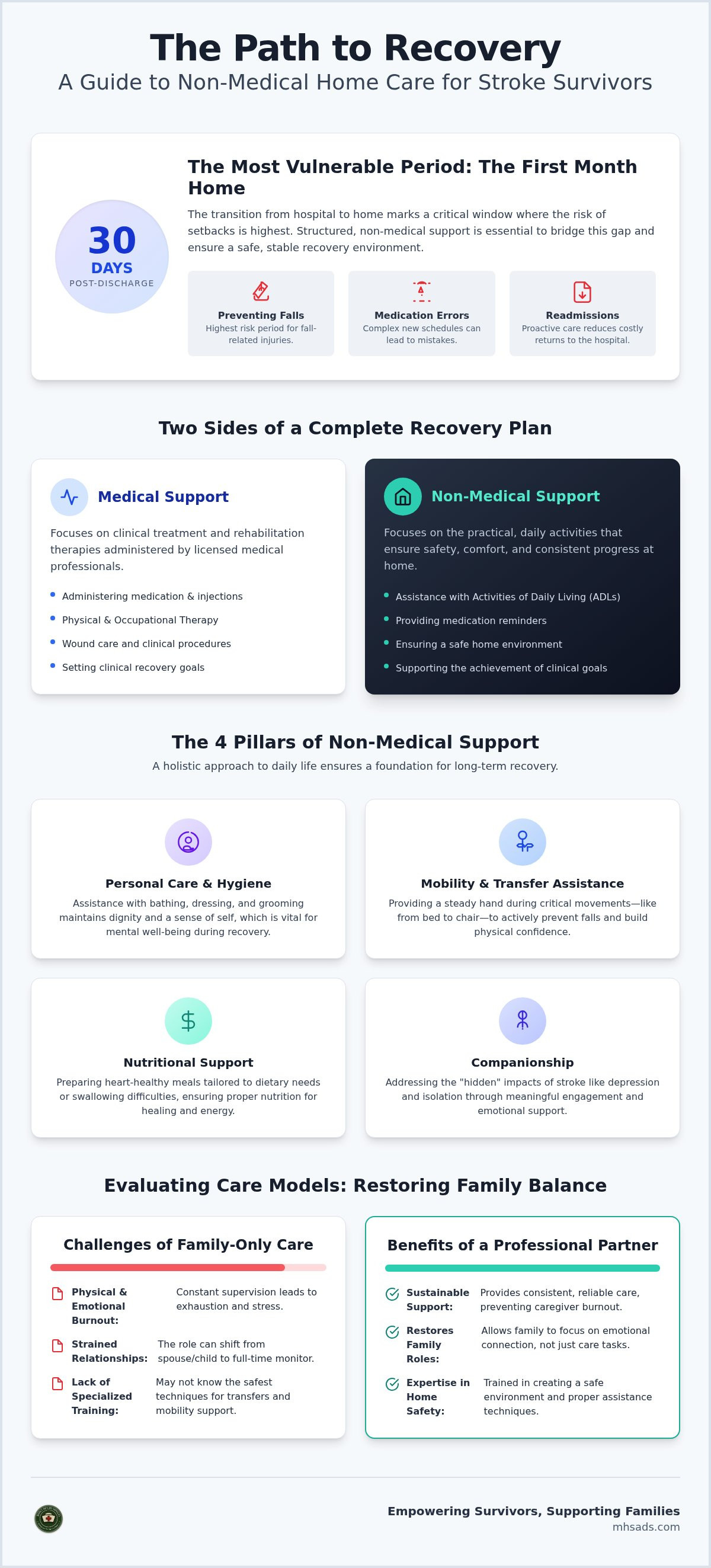
Have you felt a wave of uncertainty as the discharge date for your loved one approaches? It's a common experience for families to feel a mix of relief and sudden anxiety. While leaving the hospital is a victory, it also marks the beginning of a complex new chapter. The first 30 days at home are the most vulnerable period for any survivor. During this window, the risk of hospital readmission is at its highest, often due to falls, medication errors, or simple exhaustion. Professional non-medical home care for stroke survivors serves as the supportive bridge that helps families cross from clinical supervision to sustainable independence.
How do we manage when the professional physical therapist leaves the house? This is the question that keeps many caregivers awake at night. The Stroke recovery process doesn't pause when the clinical appointments end; it continues in every meal, every walk to the bathroom, and every night's sleep. Think of a dedicated caregiver as a "Compassionate Navigator." They're there to handle the logistical weight of the day, ensuring the transition is smooth and that safety remains the top priority while you find your footing in this new reality.
The Difference Between Medical and Non-Medical Support
It's helpful to understand where clinical care ends and supportive assistance begins. While medical teams focus on clinical procedures, non-medical support focuses on the Activities of Daily Living (ADLs) that make life possible. Caregivers don't replace the physical therapist, but they are vital in supporting the functional goals those therapists set. If a therapist recommends practicing standing balance, a caregiver provides the steady hand needed to do so safely during morning grooming.
Medication reminders are another essential pillar of this support. In 2026, secondary stroke prevention relies heavily on consistent, timely adherence to prescriptions. Having a reliable partner to prompt these doses reduces the cognitive load on the survivor and the stress on the family. By integrating non-medical home care for stroke survivors into your daily routine, you ensure that the clinical plan is followed with precision and warmth.
Setting Realistic Milestones for Home Recovery
The shift from 24/7 clinical monitoring to home life requires a change in perspective. Recovery isn't a sprint to the finish line; it's a marathon that requires consistent, daily support to build confidence. In the early weeks, a milestone might be as simple as safely navigating the hallway or completing a dressing routine without total exhaustion. These small wins are the building blocks of long-term independence.
Consistency is the key to progress. When a survivor has structured supervision, they feel more empowered to try daily tasks because they know help is inches away. Non-medical stroke support is the foundation of daily home safety. By providing a stable environment, we allow the survivor to focus their energy on healing rather than fearing the next step.
The 4 Pillars of Non-Medical Support for Stroke Survivors
How can we ensure your home remains a place of healing rather than a source of stress? Success in the months following a stroke often depends on the quality of daily assistance. While clinical rehab focuses on recovery, non-medical home care for stroke survivors focuses on the foundation of living. We categorize this essential support into four primary pillars:
- Personal Care and Hygiene: Maintaining dignity is vital. Our recovery partners assist with bathing, dressing, and grooming, ensuring your loved one feels like themselves every day.
- Mobility and Transfer Assistance: We provide a steady hand during those critical movements between the bed, chair, or bathroom to prevent injuries.
- Nutritional Support: We prepare heart-healthy meals tailored to specialized diets or swallowing difficulties, ensuring nutrition stays on track.
- Companionship: We address the "hidden" symptoms of stroke, such as depression, anxiety, and social isolation, through meaningful engagement.
Safe Mobility and Fall Prevention
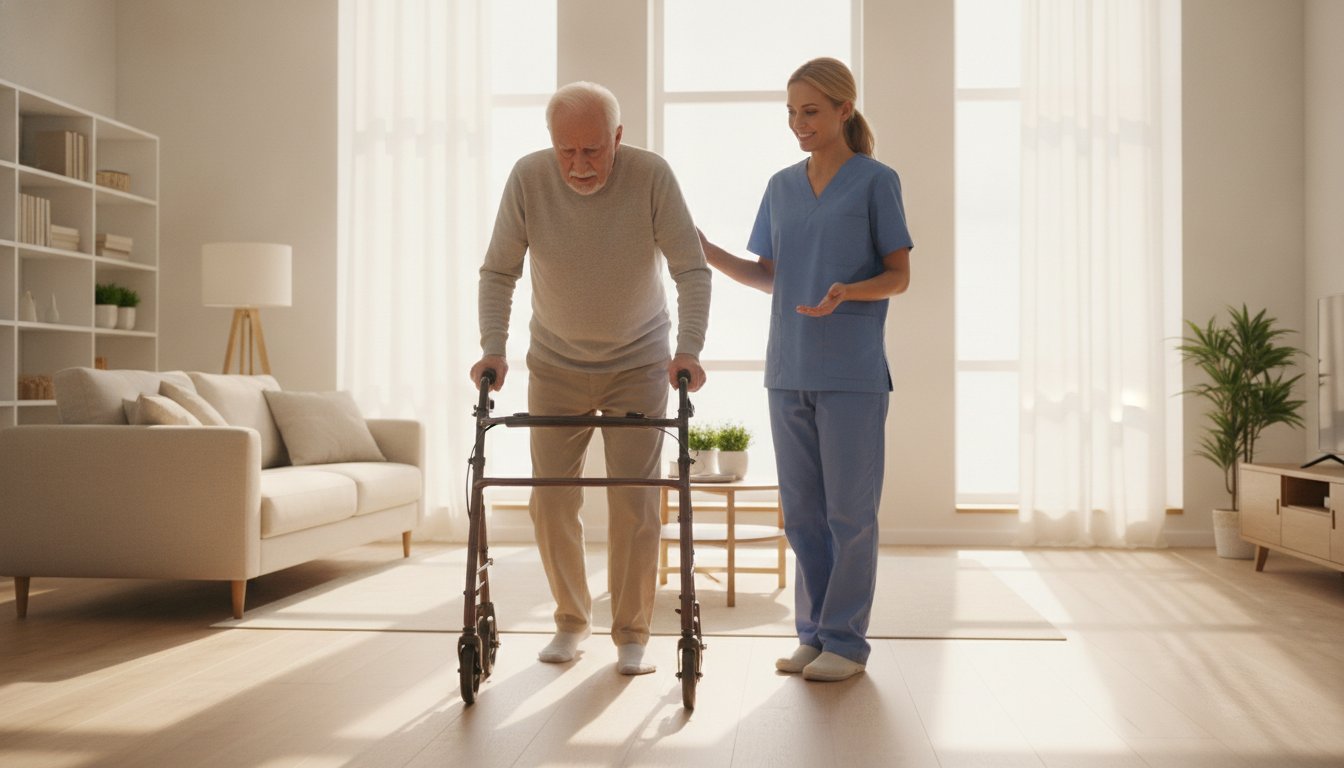
Active supervision is key to a safe home environment. It's not just about watching; it's about being a proactive partner in every movement. Our caregivers provide physical stability during transfers, which is the moment most falls occur. This consistent support does more than just prevent accidents. It actually promotes muscle memory and builds the survivor's confidence as they navigate their surroundings. When a survivor feels secure, they're more likely to stay active, which is essential for long-term progress. You can find more detailed safety tips in our Senior Mobility Guide 2026: Safety and Independence.
Every step taken with assistance is a step toward independence. We understand that care plans must evolve as the survivor regains their strength. What starts as total physical support often transitions into light supervision as mobility improves. This gradual shift ensures safety is never compromised while respecting the survivor's growing autonomy.
The Cognitive Connection: Companionship and Engagement
Did you know that regular conversation can actually aid in speech recovery? Social interaction stimulates brain activity and provides the emotional lift needed during a long recovery marathon. A dedicated caregiver does more than sit in the room; they engage the survivor in ways that combat the isolation often felt after a major health event. These professionals are trained to notice subtle changes in mood or cognitive function that a busy family member might miss during a hectic day.
This level of professional companionship is a vital resource for preventing family caregiver burnout. It's difficult to be a full-time monitor while also being a spouse or a child. Choosing professional non-medical home care for stroke survivors ensures that your loved one has a steady, background-checked companion during the hours between therapy sessions. If you're feeling the weight of these responsibilities, exploring supportive care options can help you reclaim your role as a family member rather than a full-time caregiver. We're here to be your trusted guide through this transition.
Creating a Stroke-Friendly Environment: Safety and Accessibility
Have you looked around your home lately and seen it through the eyes of someone with limited mobility or a visual field deficit? After a stroke, a familiar hallway can suddenly feel like an obstacle course. Identifying household hazards is the first step in transforming your living space into a sanctuary for healing. While physical modifications like grab bars are essential, senior safety is truly a combination of these physical changes and a consistent human presence. Professional non-medical home care for stroke survivors provides the active environmental monitoring that technology alone cannot replace. A camera can tell you if someone has fallen, but a caregiver can spot the loose rug or the dim lighting that would have caused the fall in the first place.
Lighting and clear pathways are particularly vital for survivors experiencing visual field loss. When a portion of the vision is obscured, shadows or cluttered floors become high-risk factors for tripping. We focus on creating high-contrast environments and ensuring that every path to a chair, bed, or bathroom is wide and unobstructed. This proactive approach allows the survivor to move with greater confidence, reducing the anxiety that often follows a major health event.
Room-by-Room Safety Checklist
Creating a safe environment requires a methodical, room-by-room assessment. We recommend focusing on these high-traffic areas:
- The Bathroom: This is often the most dangerous room. Assistance with transfers in and out of the shower is critical. Additionally, monitoring water temperature is essential to prevent burns, as stroke survivors may have altered sensation in their limbs.
- The Kitchen: Cognitive deficits can make cooking a risky activity. A caregiver handles meal preparation to avoid the use of stoves or knives by the survivor, ensuring they receive heart-healthy nutrition without the fire or injury risk.
- The Bedroom: Falls often occur during late-night or early-morning hours when a survivor tries to get up unassisted. We ensure easy, safe access to help during these vulnerable times, keeping mobility aids within reach and paths well-lit.
The Role of Human Monitoring
How does a caregiver bridge the gap between a safe house and a safe person? It starts with integrating medication reminders into the daily routine. In 2026, recovery protocols are more precise than ever, and strict compliance is necessary for secondary stroke prevention. A caregiver ensures these doses are taken exactly as scheduled, removing the guesswork for both the survivor and the family.
Personal care assistance also ensures that safety devices are used correctly every time. It's common for survivors to forget their walker or use it improperly when they're in a hurry. A caregiver provides the gentle prompting and steady hand needed to ensure that every step is a supported one. A caregiver acts as the family's eyes and ears at home, providing real-time observations that ensure the environment remains as safe as possible. By choosing non-medical home care for stroke survivors, you're investing in a watchful partner who prioritizes your loved one's safety in every room of the house.
Evaluating Care Models: Private Duty vs. Family Caregiving
Are you finding it difficult to balance your career and family life with the heavy physical demands of your loved one's recovery? It's a common struggle. Many families begin this journey with a "do it all" mindset, only to find that the emotional and physical toll of constant supervision leads to rapid burnout. While family help is rooted in deep love, it often lacks the specialized training required for safe transfers or recognizing the subtle signs of secondary complications. Professional non-medical home care for stroke survivors provides a sustainable alternative. These vetted caregivers act as recovery partners, handling the essential daily tasks so you can focus on providing the emotional support your loved one needs most.
Respite care isn't just a luxury; it's a strategic tool for long-term family health. By bringing in a professional, you create space for yourself to rest and recharge. This partnership also benefits the survivor. Professional caregivers are trained to encourage "active participation." They don't just do things for the survivor; they guide them through safe tasks that build muscle memory and restore a sense of agency. This approach promotes independence much faster than the over-assistance that often happens with well-meaning but untrained family members.
When to Consider 24/7 Supervision
How do you know when your loved one needs around-the-clock support? High-acuity needs often arise when a survivor is prone to nocturnal confusion or wandering during the night. In these cases, a single family caregiver cannot safely provide the necessary monitoring without sacrificing their own health. Overnight stays by a professional ensure that help is always seconds away, preventing falls during late-night bathroom trips. This level of constant presence is often the deciding factor in whether a survivor can stay in their own home. For a deeper look at maintaining autonomy, see our Senior Independence at Home: A Comprehensive 2026 Guide.
The Value of a Personalized Care Plan
Recovery is not a static process, and your support system shouldn't be either. A personalized care plan is designed to evolve. In the early weeks, your loved one might require intensive assistance with every activity. As they progress, these visits can transition into lighter "check-in" support. We also prioritize the "human match" by pairing caregivers whose personalities and temperaments align with the survivor's needs. Consistency in these relationships leads to significantly better long-term outcomes. When a survivor works with the same trusted face every day, they feel more secure and are more willing to push toward their recovery goals. This continuity is a hallmark of high-quality non-medical home care for stroke survivors. If you're ready to see how a tailored approach can help, schedule a free care consultation to begin your journey.
Personalized Recovery Plans: How Mercy Health Services Empowers Survivors
How do you find a partner who truly understands the delicate balance between professional assistance and personal dignity? At Mercy Health Services, we recognize that stroke recovery is a deeply personal journey. We don't just provide services; we act as a dedicated partner to help your family navigate the complexities of life after a stroke. Our approach is built on a foundation of "Vetted Reliability." Every one of our caregivers undergoes rigorous background checks, ensuring that the person entering your home is someone you can trust implicitly. We focus on person-centered care, which means we see the individual behind the diagnosis, prioritizing their sense of self and their right to be treated with unwavering respect.
The process of arranging non-medical home care for stroke survivors shouldn't add to your stress. We've simplified the path to support. It begins with a free consultation where we listen to your specific concerns and goals. From there, we develop a personalized care plan that can often be implemented within a few days. This speed is crucial in 2026, as hospital stays are often shorter and the need for immediate home support is higher than ever. Our goal is to bridge the gap between clinical discharge and long-term independence with as little friction as possible.
A Trusted Guide for Your Family's Journey
Feeling overwhelmed by logistical demands is natural. As your "Compassionate Navigator," we simplify these choices for you. Whether your family needs just a few hours of help with morning routines or requires daily private-duty assistance, we offer flexible options to fit various recovery budgets. You don't have to figure this out alone. We provide the structure and consistency your loved one needs to feel safe. For more details on how these services work, explore The Ultimate Guide to Personal Care Assistance at Home in 2026.
Starting the Conversation Early
When is the best time to start planning for home support? We encourage families to reach out even before the official hospital discharge. By starting the conversation early, we can work alongside your medical team to ensure a seamless transition. This coordination helps us understand the survivor's specific mobility and nutritional needs before they even cross the threshold of their home. Taking this proactive step reduces the "discharge day" anxiety and ensures that safety is established from the very first hour. If you're ready to create a stable environment for your loved one's recovery, Schedule your free consultation with Mercy Health Services today.
Empowering Your Loved One's Journey Toward Independence
Are you ready to shift your focus from being a constant monitor back to being a supportive family member? We've explored how the first 30 days are a critical window for healing and why a safe, accessible home environment is the cornerstone of long-term progress. By integrating professional non-medical home care for stroke survivors, you ensure that every daily task becomes an opportunity for regaining strength and dignity. You don't have to carry the weight of this transition alone.
At Mercy Health Services, our vetted, background-checked caregivers are here to act as your trusted guides. We offer personalized care plans tailored to stroke recovery with flexible hourly and 24/7 care options to fit your family's specific situation. This structured support allows you to reclaim your peace of mind while your loved one receives the attentive assistance they deserve. Schedule a free consultation for personalized stroke recovery support today. We're here to help you navigate this path with confidence, ensuring your home remains a place of safety and steady healing.
Frequently Asked Questions
How soon can home care for stroke recovery begin after hospital discharge?
Care can often begin within a few days of your initial consultation. We understand that discharge dates can change quickly, so we aim to be as responsive as possible. Starting non-medical home care for stroke survivors promptly ensures that the safety protocols established in the hospital are maintained the moment your loved one enters their front door. This rapid response helps prevent the confusion and anxiety that often accompany a sudden return home.
Is home care for stroke survivors covered by insurance or is it private pay?
Private-duty home care is typically a private pay service, though it may be covered by long-term care insurance policies. It's a common misconception that Medicare covers ongoing non-medical assistance; generally, it only funds short-term skilled nursing. Some state Medicaid programs offer waivers for home-based support, but these often have waiting lists. We recommend reviewing your specific insurance policy or speaking with a care coordinator to understand your available funding options.
Can a caregiver help with the exercises prescribed by my physical therapist?
While caregivers aren't physical therapists, they play a vital role in encouraging the daily exercises your medical team has prescribed. They provide the steady supervision and motivation needed to stay consistent with your recovery routine. By helping with mobility and providing a safe environment, a caregiver ensures that your loved one can practice their movements without the fear of falling. This daily support turns clinical goals into sustainable home habits.
What is the difference between home health care and private-duty home care?
Home health care involves clinical services like wound care or physical therapy, while private-duty home care focuses on daily living assistance. Think of home health as medical treatment and private-duty as the supportive foundation for life at home. Our caregivers assist with bathing, dressing, and meal preparation, handling the practical tasks that clinical teams don't cover. This distinction is important because both types of care often work together to ensure a full recovery.
How do I know if my loved one needs 24/7 care or just a few hours a day?
Determining the right level of support depends on your loved one's safety risks and your own ability to provide supervision. If your family member experiences nocturnal confusion or is a high fall risk, 24/7 monitoring might be necessary. For those who are more stable but need help with morning routines or meals, a few hours a day can be sufficient. We offer free consultations to help you evaluate these specific needs and choose the right path.
What happens if our assigned caregiver isn't a good fit for my family member?
Your comfort and your loved one's dignity are our highest priorities, so we are always ready to make adjustments. If the initial caregiver isn't the right fit for your family's personality or specific needs, we'll work with you to find a better match. We believe that a strong, trusting relationship is essential for a successful recovery. Our goal is to provide a companion who feels like a natural extension of your family.
Can a caregiver help with specialized diets or difficulty swallowing (dysphagia)?
Yes, our caregivers are trained to assist with meal preparation that follows specific heart-healthy or texture-modified diets. If your loved one has dysphagia or other swallowing difficulties, a caregiver can ensure that meals are prepared and consumed according to the safety guidelines provided by your medical team. This consistent support reduces the risk of aspiration and ensures that nutritional needs are met without the stress of independent meal management.
How does professional home care help prevent a second stroke?
Professional support reduces the risk factors for a second event by ensuring strict medication compliance and providing heart-healthy nutritional support. When you choose non-medical home care for stroke survivors, a caregiver acts as a proactive observer, identifying early signs of health changes. By managing the physical demands of daily life, we also reduce the survivor's stress levels, which is a key component of secondary prevention. This comprehensive approach creates a stable environment for long-term health.
Frequently Asked Questions
Care can often begin within a few days of your initial consultation. We understand that discharge dates can change quickly, so we aim to be as responsive as possible. Starting non-medical home care for stroke survivors promptly ensures that the safety protocols established in the hospital are maintained the moment your loved one enters their front door. This rapid response helps prevent the confusion and anxiety that often accompany a sudden return home.
Private-duty home care is typically a private pay service, though it may be covered by long-term care insurance policies. It's a common misconception that Medicare covers ongoing non-medical assistance; generally, it only funds short-term skilled nursing. Some state Medicaid programs offer waivers for home-based support, but these often have waiting lists. We recommend reviewing your specific insurance policy or speaking with a care coordinator to understand your available funding options.
While caregivers aren't physical therapists, they play a vital role in encouraging the daily exercises your medical team has prescribed. They provide the steady supervision and motivation needed to stay consistent with your recovery routine. By helping with mobility and providing a safe environment, a caregiver ensures that your loved one can practice their movements without the fear of falling. This daily support turns clinical goals into sustainable home habits.
Home health care involves clinical services like wound care or physical therapy, while private-duty home care focuses on daily living assistance. Think of home health as medical treatment and private-duty as the supportive foundation for life at home. Our caregivers assist with bathing, dressing, and meal preparation, handling the practical tasks that clinical teams don't cover. This distinction is important because both types of care often work together to ensure a full recovery.
Determining the right level of support depends on your loved one's safety risks and your own ability to provide supervision. If your family member experiences nocturnal confusion or is a high fall risk, 24/7 monitoring might be necessary. For those who are more stable but need help with morning routines or meals, a few hours a day can be sufficient. We offer free consultations to help you evaluate these specific needs and choose the right path.
Your comfort and your loved one's dignity are our highest priorities, so we are always ready to make adjustments. If the initial caregiver isn't the right fit for your family's personality or specific needs, we'll work with you to find a better match. We believe that a strong, trusting relationship is essential for a successful recovery. Our goal is to provide a companion who feels like a natural extension of your family.
Yes, our caregivers are trained to assist with meal preparation that follows specific heart-healthy or texture-modified diets. If your loved one has dysphagia or other swallowing difficulties, a caregiver can ensure that meals are prepared and consumed according to the safety guidelines provided by your medical team. This consistent support reduces the risk of aspiration and ensures that nutritional needs are met without the stress of independent meal management.
Professional support reduces the risk factors for a second event by ensuring strict medication compliance and providing heart-healthy nutritional support. When you choose non-medical home care for stroke survivors, a caregiver acts as a proactive observer, identifying early signs of health changes. By managing the physical demands of daily life, we also reduce the survivor's stress levels, which is a key component of secondary prevention. This comprehensive approach creates a stable environment for long-term health.