
2026 Private Pay Home Care Guide: Choosing Family Support
August 15, 2026 · 17 min read
What if the care your family needs didn't have to fit into a pre-approved insurance box? Are you feeling the weight of finding a caregiver who truly sees your loved one as a person rather than a case number? It's exhausting to hit walls when providers tell you what's "covered" instead of listening to what your family actually requires for daily comfort. Choosing private pay home care represents a shift toward independence, allowing you to bypass those restrictions and build a support system around your specific life.
We understand that the transition to professional assistance is deeply emotional and often confusing. You're likely balancing the need for reliability with concerns about hourly versus live-in costs. This guide helps you clear the fog by detailing selection criteria and personalized care planning. You'll learn how to identify a vetted, compassionate caregiver match and create a path that ensures safety and dignity. We'll walk through the practical steps to secure the non-medical support your family deserves, providing a clear route to lasting peace of mind.
Key Takeaways
- Learn how self-funded models offer the freedom to bypass insurance restrictions, ensuring your family's specific needs always come first.
- Understand why the agency model provides essential protection through rigorous caregiver vetting and consistent, professional support.
- Discover how to plan for private pay home care by evaluating hourly structures and the specific level of assistance your loved one requires.
- Find out how involving your family in a personalized consultation preserves dignity while simplifying the search for a compassionate match.
- Explore how person-centered assistance can be tailored for all ages, including children and adults under 50, to ensure a safe home environment.
Understanding Private Pay Home Care: Why Families Choose Private Duty
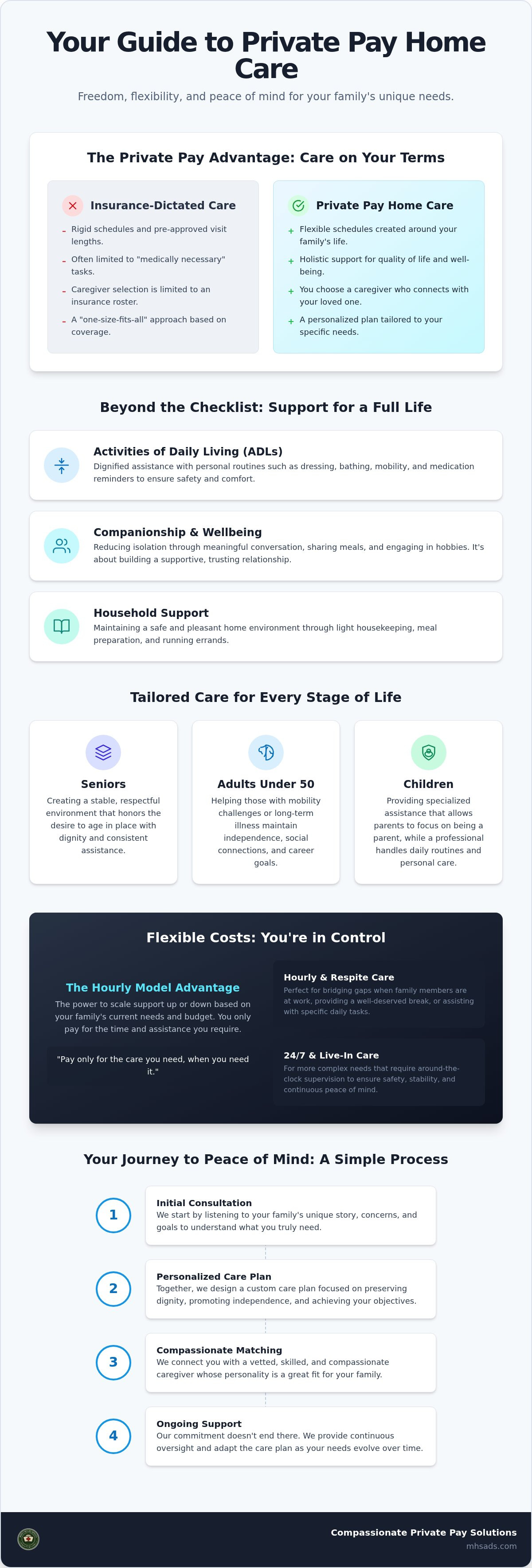
Have you ever felt frustrated by the rigid boundaries of insurance coverage? It's a common struggle for families who realize that standard "home health" often leaves out the very things that make life meaningful. Private pay home care is a self-funded model that prioritizes your family's preferences over a provider's checklist. It's about choosing the right person to enter your home on a schedule that actually works for you. Unlike insurance-restricted models that might only allow for a brief clinical check-in, private duty support allows for longer visits and deeply personalized companionship. This model transforms care from a series of tasks into a consistent, supportive relationship that adapts as your needs change.
The Freedom of Non-Medical Support
Why should your support be limited to medical necessities? When you choose a private-duty path, the focus shifts toward total quality of life. This includes essential assistance with activities of daily living (ADLs) such as dressing or mobility, but it goes much further. It's about having someone there to prepare a fresh meal, tidy the living room, or simply share a conversation. Companionship is often the cornerstone of this support. It reduces the isolation that can come with physical limitations and ensures your loved one feels seen and valued every day. You aren't just hiring a pair of hands; you're inviting a supportive presence into your home.
Care for Every Life Stage: Children to Seniors
Does your family need support for a child with special needs or a younger adult facing a chronic illness? Many people mistakenly believe that home assistance is only for the elderly. In reality, private pay home care offers a vital lifeline for all ages. By removing clinical restrictions, families can secure the specific help they need:
- Support for Children: Providing specialized assistance that allows parents to focus on being a parent while a professional handles daily routines and personal care.
- Adults Under 50: Helping those with mobility challenges or long-term illnesses maintain their independence, social connections, and career goals.
- Seniors: Creating a stable environment that honors their desire to age in place with dignity, respect, and consistent assistance.
Choosing your own caregiver isn't just a logistical decision; it's an emotional one. When you aren't tied to an insurance roster, you have the power to find a personality that clicks with your family. This consistency builds trust and reduces the anxiety often associated with having a new person in your private space. You set the rhythm of the day, ensuring that care happens when it's most needed, not just when a slot is available.
Evaluating the Cost of Care: How Private Pay Fees are Structured
How do you plan for the financial side of support without feeling overwhelmed? Understanding the structure of private pay home care fees is the first step toward clarity and confidence. Most agencies utilize an hourly model for their services. This approach offers a significant advantage: it allows your family to scale support up or down based on your current reality. Whether you need a few hours of help with morning routines or consistent daily assistance, the power to decide remains in your hands. This flexibility is a hallmark of the private-duty model, ensuring you only pay for the specific time and support your loved one requires. It's a collaborative way to ensure needs are met without unnecessary clinical overhead.
Hourly vs. 24/7 Care Models
Is a few hours of supplemental help enough to maintain balance at home? For many families, hourly care provides the perfect solution for respite or assistance with specific tasks like light housekeeping and medication reminders. It's an ideal way to bridge the gap when family members are at work or need a well-deserved break. However, as needs become more complex, you may find yourself weighing the logistics of an overnight caregiver vs 24/7 care. Determining the right frequency of visits is a methodical process. It involves looking at your family budget alongside the safety requirements of your loved one. Short-term respite visits can provide immediate relief, while long-term daily support offers a more permanent foundation for independence and safety.
Factors That Influence Care Fees
Why do fees sometimes vary between different care plans? The primary factor is "acuity," or the specific level of care your family member needs. If a person requires specialized dementia support or intensive mobility assistance, the care plan requires a higher level of observation and proactive engagement. The value of your investment is also found in the quality of the person entering your home. While "cheap" care options might seem attractive initially, they often lead to high caregiver turnover and lower safety standards. Choosing a provider that prioritizes rigorous vetting and background checks ensures consistency. You're paying for the peace of mind that comes with a reliable, professional match. Many families find that utilizing personal savings or long-term care insurance provides the necessary resources to secure this high standard of assistance. If you're ready to explore your options, a personalized consultation can help you map out a sustainable path forward that respects both your needs and your resources.
Key Criteria for Selecting a Private Pay Home Care Agency
How do you move from the initial realization that help is needed to actually inviting someone into your home? This decision often hinges on whether you choose to hire an independent contractor or partner with a professional agency. While hiring an individual might seem straightforward, the agency model for private pay home care provides a vital safety net that most families need for true peace of mind. Agencies handle the complexities of payroll taxes, workers' compensation, and liability insurance. If a caregiver is injured on the job or an unexpected absence occurs, the agency is responsible for finding a solution. This professional oversight ensures your loved one is never left without support, transforming a transactional hire into a reliable, long-term partnership.
The Vetting Checklist: Questions to Ask
Are you prepared to ask the tough questions that ensure your family's safety? When interviewing potential agencies, your focus should be on their standards of "vetted reliability." You deserve to know exactly who is crossing your threshold and what standards they've met. Consider asking these specific questions during your initial consultation:
- Are your caregivers employees or contractors? This distinction is crucial for insurance and liability. Employed caregivers are typically covered by the agency's policies, protecting you from personal legal risks if an accident happens in the home.
- What specific background checks are performed? Look for agencies that conduct multi-state criminal searches, social security verification, and thorough reference checks before a caregiver ever meets a client.
- How do you handle caregiver absences or emergencies? A robust agency should have a clear protocol for backup coverage so your schedule remains uninterrupted and your loved one remains safe.
Personalized Care Plans and Consistency
Does the agency truly see your loved one as an individual with unique preferences? A cookie-cutter approach rarely works in a home setting. A high-quality provider will offer one-on-one personal care assistance that is reviewed and updated as needs evolve. Consistency is the key to building trust, which is why the matching process is so important. It isn't just about finding someone with the right skills; it's about cultural and personality compatibility. You want a caregiver who respects your family's traditions and communicates in a way that feels natural. This deep level of personalization ensures that the support provided is not just effective, but also dignifying and respectful of the life your loved one has built.
Planning Your Care Journey: From Consultation to Daily Support
How do you move from the weight of decision-making to the relief of daily support? The transition into private pay home care is a journey that begins with a simple, free initial consultation. This meeting is a compassionate dialogue where we listen to your concerns and identify core needs. By involving your loved one in this conversation, you preserve their dignity and ensure the support feels like a choice rather than an imposition. It's also a vital step in managing the transition to help prevent caregiver burnout for family members who've been carrying the load alone. Setting realistic expectations for the first 30 days is essential. This period is about building trust and fine-tuning the relationship between the caregiver and your family.
The In-Home Assessment
What actually happens during a professional assessment? This step involves observing the home environment through an expert lens to ensure safety and long-term comfort. We look for "hidden" needs that might not be obvious, such as the requirement for medication reminders or the need for consistent social engagement to prevent isolation. The goal is to create a schedule that mirrors existing routines perfectly. If your loved one enjoys a specific morning ritual or an afternoon walk, the care plan protects those moments. Because we can often initiate care within a few days, this assessment serves as the blueprint for a rapid and safe start to professional assistance.
Ongoing Management and Communication
How do you stay connected to your loved one's daily life when you're at work or living elsewhere? Modern support relies on clear communication and total transparency. Care logs keep families informed about daily activities, mood, and nutrition, providing a window into the home. Regular check-ins with a dedicated care manager ensure that the plan remains effective as circumstances change. Whether it's increasing assistance after a health setback or adjusting hours for a family vacation, the process is designed to be fluid and responsive. Private pay home care allows for this level of agility, ensuring the support evolves alongside your family. If you're ready to start this journey, you can schedule your free consultation today to begin building a personalized path for your family.
The Mercy Health Services Difference: Compassionate Private Pay Solutions
Are you searching for a partner who understands that care isn't just about tasks, but about the person behind them? At Mercy Health Services, we believe that private pay home care should be a collaborative journey rooted in dignity and respect. We don't just provide assistance; we act as a compassionate navigator for families during some of their most vulnerable moments. Our approach is built on the foundation of person-centered care, ensuring that every individual we support feels seen, heard, and valued. Whether your family is managing a new diagnosis or looking for long-term companionship, we are here to provide a stable anchor through every transition.
Comprehensive Support for All Ages
Why should quality support be restricted by age or clinical categories? We recognize that life’s challenges don’t wait for senior years. Our team provides specialized in-home support for children with high-acuity needs, allowing parents to regain their role as parents while we handle the daily routines of personal care and mobility. For adults under 50, we offer tailored assistance in managing chronic illness or recovery, helping them maintain their independence and social connections. Additionally, we provide dedicated respite care for dementia patients. This service gives primary family caregivers the necessary space to recharge, knowing their loved one is engaging in meaningful social interaction in a safe environment.
Your Trusted Partner in Home Care
How can you be certain that the person entering your home is truly reliable? We answer this question through a rigorous, background-checked caregiver selection process. Every member of our team is vetted to ensure they meet our high standards for both professional skill and human empathy. We also understand that when a crisis hits or a need arises, you often need help immediately. That’s why we prioritize rapid care initiation, typically beginning services within a few days of your initial assessment. This responsiveness ensures that your family doesn't have to wait for the support you deserve.
Our personalized care plans aren't static documents; they're living guides that adapt to your family’s unique story. The peace of mind that comes with a professionally managed agency means you don't have to worry about the logistics of scheduling or liability. You can simply focus on being present with your loved one. If you're ready to explore a pathway toward better support, your next step is simple. You can schedule a free, no-obligation consultation to discuss your needs and see how our compassionate team can provide the assistance your family requires for a safe and fulfilling life at home.
Embracing a Path of Dignity and Independence
Are you ready to move past the restrictions of traditional coverage and build a support system that truly fits your life? Choosing private pay home care means you're prioritizing quality, consistency, and the specific needs of your family member. Whether you're seeking assistance for a child, a younger adult, or a senior, the right support transforms the daily routine into a series of meaningful connections. It's about more than just tasks; it's about preserving the life your loved one has built.
By focusing on vetted, background-checked caregivers and personalized care plans for all ages, we ensure that every person in our care is treated with the utmost respect. We understand the urgency of these moments. Our commitment to rapid care initiation means you can begin receiving professional support within a few days. You don't have to carry the weight of caregiving on your own. Schedule your free home care consultation with Mercy Health Services today. Take comfort in knowing that a compassionate navigator is here to guide you toward a safer, more balanced home life.
Frequently Asked Questions
What is the difference between private pay home care and home health care?
Are you confused by the different types of support available for your family? Private pay home care is a self-funded model focused on quality of life and non-medical assistance. Home health care is typically clinical and prescribed by a doctor for specific medical needs. Our services focus on companionship, personal care, and daily tasks that help you stay independent without the rigid clinical requirements of insurance-based models.
Does Medicare or private health insurance cover private pay home care fees?
Do you find insurance policies difficult to navigate during a time of transition? Medicare and most private health insurance plans typically don't cover the fees for private pay home care. These providers usually prioritize short-term medical recovery rather than long-term personal assistance. Because this is a self-funded model, it offers you the freedom to choose your own schedule and caregiver without waiting for insurance approvals or meeting strict clinical criteria.
Can I use long-term care insurance to pay for private duty services?
Are you looking for ways to make professional support more sustainable for your family? Many families successfully use long-term care insurance to fund private-duty assistance. While each policy is unique, most are designed to help with the costs of non-medical support at home once certain eligibility criteria are met. We recommend reviewing your specific policy details to see how it can help you secure the consistent, compassionate care your loved one deserves.
What happens if our assigned caregiver is sick or on vacation?
Do you worry about being left without help on a difficult day? One of the primary benefits of working with an agency is our commitment to consistency. If your primary caregiver is unavailable due to illness or vacation, we proactively arrange for a vetted backup caregiver. This ensures that your loved one's routine remains uninterrupted and you never have to scramble for last-minute assistance or compromise on safety and comfort.
How quickly can private pay home care services start for my family?
Is your family facing an urgent need for extra hands to ensure safety at home? We understand that care needs can change overnight. After your free initial consultation and assessment, we can typically initiate services within a few days. This rapid response allows your family to move from a state of anxiety to a place of relief and stability as quickly as possible, ensuring help is there when it matters most.
Is there a minimum number of hours required for a home care visit?
Are you wondering how to structure your support schedule to best fit your daily routine? Most agencies require a minimum number of hours per visit, often starting at four hours. This duration ensures that the caregiver has enough time to provide meaningful engagement and complete essential tasks like meal preparation or personal care without rushing. During our consultation, we'll help you determine a schedule that respects your family's needs and budget.
Are your caregivers trained to handle specific conditions like Alzheimer’s or Parkinson’s?
Does your loved one have unique needs that require a specialized, observant touch? Our caregivers are selected for their experience in supporting individuals with various conditions, including Alzheimer's and Parkinson's. We focus on matching your family with a professional who understands the nuances of these challenges. This approach ensures that the assistance provided is not just safe, but also deeply respectful of your loved one's dignity and their specific life journey.
What tasks are caregivers prohibited from doing in a private pay arrangement?
Are you clear on where non-medical support ends and clinical care begins? To ensure safety and follow professional standards, our caregivers don't perform clinical tasks. This includes wound care, administering injections, or managing medical equipment. Our role is to provide essential non-medical support like mobility assistance, meal preparation, and companionship. If your loved one requires clinical intervention, we recommend coordinating with a skilled nursing provider alongside our daily assistance and companionship.
Frequently Asked Questions
Private pay home care focuses on non-medical support like companionship and personal care assistance, whereas home health care is clinical and medical in nature. Are you looking for help with daily routines rather than wound care or therapy? While home health is often prescribed by a doctor for short-term recovery, private duty care is self-funded and offers the flexibility to choose your own schedule and caregiver for as long as you need.
Medicare and traditional private health insurance typically don't cover the fees for private pay home care services. Do you find that insurance providers restrict the type of help you can receive? These programs generally prioritize medical necessity and short-term clinical goals. Because private duty care is funded out-of-pocket, it allows you to bypass these rigid requirements and receive personalized assistance that focuses on your loved one’s overall quality of life.
Yes, most long-term care insurance policies are specifically designed to cover private duty services in the home. Have you reviewed your policy for "non-medical" or "custodial care" benefits? These policies often provide the financial support needed for daily help with mobility, personal care, and meal preparation. We recommend contacting your insurance provider to confirm your eligibility and understand any waiting periods before your benefits begin to help cover your care costs.
If your regular caregiver is ill or scheduled for a vacation, we provide a qualified substitute to ensure your family’s routine remains uninterrupted. Are you worried about a lapse in support for your parent or child? As a professionally managed agency, we maintain a team of vetted caregivers who can step in seamlessly. We prioritize consistency and will introduce a background-checked professional who understands your loved one's specific care plan and preferences.
Private pay home care services can typically begin within just a few days after your initial free consultation. Do you have an urgent need for support following a hospital discharge or a sudden change in health? Our rapid care initiation process is designed to reduce your anxiety and provide immediate relief. We move quickly to perform an in-home assessment and match your family with a compassionate caregiver who fits your specific needs.
We offer flexible scheduling options to meet your family’s unique requirements, though specific visit minimums may apply depending on your personalized care plan. Are you looking for just a few hours of respite or more comprehensive daily support? During your consultation, we'll discuss your budget and routine to create a path that works for you. This ensures your loved one receives consistent engagement without you paying for more time than is actually necessary.
Yes, our caregivers are background-checked and have the experience necessary to support individuals living with conditions like Alzheimer’s or Parkinson’s. Do you need a partner who understands the nuances of memory loss or mobility challenges? We prioritize dignity and safety, ensuring that our team members are prepared to handle the specific behavioral and physical needs associated with these conditions. This specialized engagement helps your loved one feel safe and respected in their own home.
Caregivers in a private pay arrangement are prohibited from performing clinical medical tasks such as skilled nursing, physical therapy, or medication administration. Are you clear on where non-medical support ends and medical care begins? Our focus is on assistance with daily living, including meal preparation, light housekeeping, and medication reminders. If your loved one requires injections or medical equipment management, those specific services must be provided by a licensed medical professional or home health agency.