Overnight Caregiver vs. 24/7 Care: A 2026 Comparison Guide for Families
August 14, 2026 · 17 min read
Does your heart race every time you hear a floorboard creak in the middle of the night? Perhaps you've found yourself sitting upright in bed, wondering if an overnight caregiver is the only way to ensure your father reaches the bathroom safely. You aren't alone in this anxiety. Many families reach a point where the fear of a midnight fall outweighs their ability to provide care on their own.
It's natural to feel a sense of duty, but the physical exhaustion of waking up multiple times a night is unsustainable. When you're depleted, it's harder to offer the warmth and patience your loved one deserves during the day. You deserve a full night of restful sleep, and your family member deserves the security of professional assistance.
This comparison guide clarifies the vital differences between hiring nighttime help and arranging for 24/7 care. We'll help you understand whether you need "active support" through the night or if a different level of assistance is more appropriate for your family's unique situation.
By the end of this article, you'll have a clear path forward. We'll break down the specific care levels, safety benefits, and the differences in support for each option. This knowledge will empower you to choose a solution that protects your loved one's dignity while finally giving you the peace of mind you need to rest.
Key Takeaways
- Learn how an overnight caregiver offers essential non-medical support to prevent falls and manage wandering, ensuring your loved one is never alone during vulnerable hours.
- Understand the difference between "Active Overnight" care and "Sleeper" models to determine which level of alertness is necessary for your family's safety.
- Compare the benefits of focused nighttime assistance against 24/7 shift care to find the most supportive and cost-effective path for your situation.
- Discover how to conduct a nighttime safety audit and develop a clear care plan to seamlessly integrate professional support into your home.
What is an Overnight Caregiver and Why Do Families Need One?
Is the sunset bringing a sense of dread rather than peace to your household? For many families, nighttime is when the challenges of aging or illness become most visible. An overnight caregiver is a dedicated professional who provides non-medical assistance during the late-night and early-morning hours. Unlike a clinical provider, their focus is on maintaining a safe, dignified environment while you get the rest you need. This support isn't just a luxury; it's a vital safety net for those who are most vulnerable when the world is asleep.
The primary goals of this support are clear: preventing dangerous falls, managing wandering, and providing immediate peace of mind. While some families eventually explore more comprehensive live-in care, starting with targeted nighttime help is often the most effective way to address specific triggers. These triggers might include "sundowning" in dementia patients, where confusion peaks as light fades, or the delicate recovery period following a major surgery. By stepping in during these critical hours, professional support plays a vital role in preventing caregiver burnout services from becoming a necessity for the primary family member.
Signs Your Family Needs Nighttime Assistance
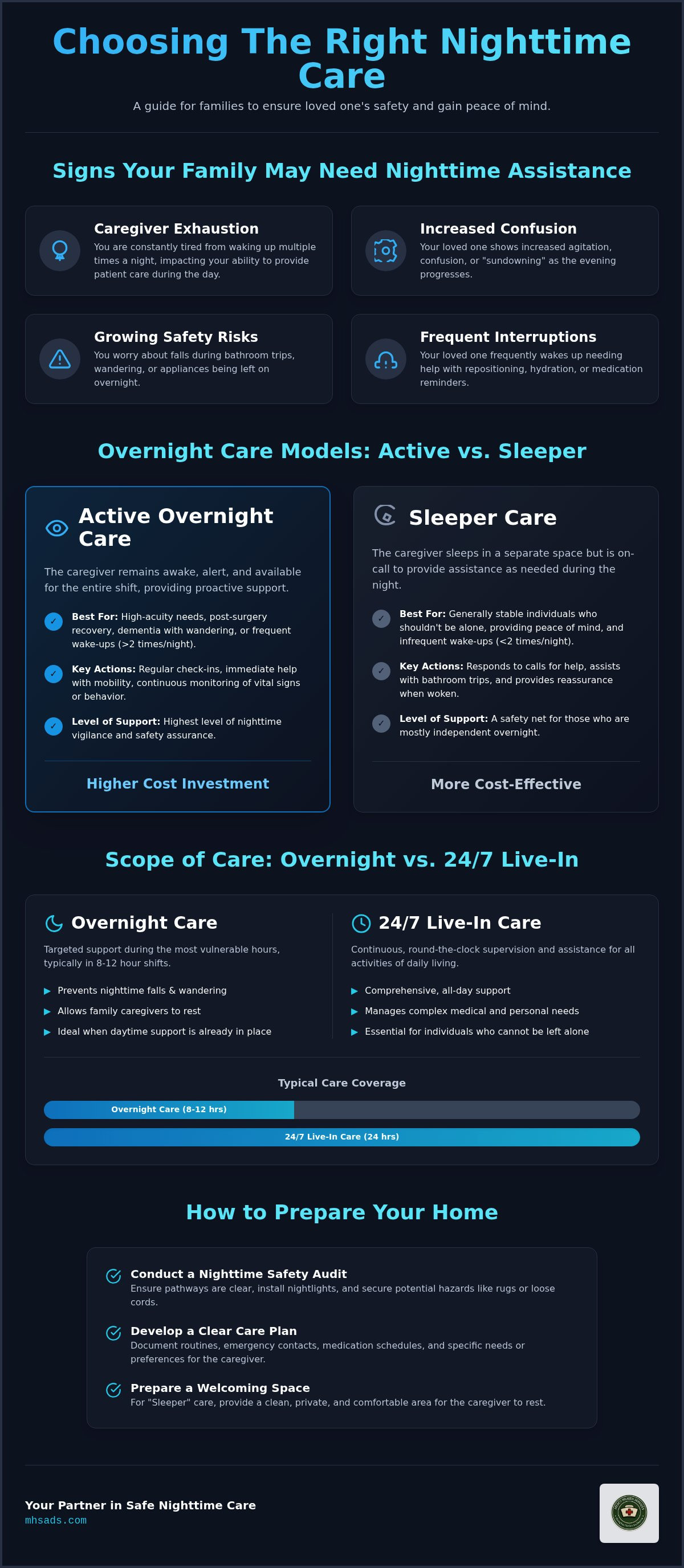
How do you know when it's time to reach out for a helping hand? Often, the signs are subtle until they reach a breaking point. You might find yourself listening for every sound, unable to reach a deep sleep because you're on high alert. Consider these common indicators:
- Are you frequently waking up to help with bathroom trips or repositioning?
- Is your loved one becoming increasingly confused or agitated as the evening progresses?
- Do you worry about safety risks like the stove being left on or exterior doors being unlocked at 2 AM?
If these scenarios sound familiar, the current routine is likely taking a heavy toll on your physical health and your loved one's safety. Choosing a qualified overnight caregiver ensures that your family member is never truly alone during their most confused moments.
The Role of Compassionate Support at Night
Nighttime assistance isn't just about watching a door. It's about active, meaningful engagement that preserves dignity. A professional caregiver ensures your loved one stays hydrated and has light snacks if they wake up hungry. They provide essential help with "activities of daily living" (ADLs) that don't stop just because the clock says it's midnight. Most importantly, they offer gentle companionship. This presence reduces the anxiety and fear that often accompany nighttime wakefulness, turning a stressful night into a calm, supported experience.
Active Care vs. Sleeper Care: Comparing Your Options
When you begin searching for an overnight caregiver, you'll quickly discover that not all nighttime support looks the same. Are you looking for someone to remain vigilantly awake, or do you simply need a reliable presence in the home? Understanding the distinction between "Active" and "Sleeper" care is the first step in ensuring your loved one's safety while respecting your family's budget and specific needs.
In an Active Overnight model, the professional remains fully alert and awake for the entire shift, which typically lasts between 8 and 12 hours. They don't sleep. Instead, they perform regular check-ins, assist with needs immediately, and stay observant of any changes in the environment. This level of vigilance is often essential for high-acuity needs where every second counts. Conversely, the Sleeper model provides a middle ground. The caregiver is provided with a bed and a private space to rest, but they remain on-call. They wake up only if the client needs assistance. It's a supportive partnership that offers security for those who are generally stable but shouldn't be left entirely alone.
How many times does your loved one wake up during the night? This is the most critical question when choosing a path. If they wake up more than twice, or if their needs are unpredictable, active care is usually the safer choice. While sleeper care is often more cost-effective, it isn't designed for clients who require constant monitoring or frequent physical assistance. If you're unsure which path fits your family, scheduling a consultation can help clarify the right level of support for your home.
When to Choose Active Overnight Care
This model is vital for families managing advanced respite care for dementia patients. When confusion leads to wandering or agitation, an awake caregiver can intervene before a fall occurs. It's also necessary for those who need frequent repositioning to prevent pressure sores or for high-risk patients who might forget they shouldn't walk unassisted at 3 AM.
When Sleeper Care is Sufficient
Is your loved one mostly independent but anxious about being alone? Sleeper care is often sufficient for seniors who just need the comfort of a "standby" presence. It works well for stable clients who might only need help once or twice per night. It's a respectful way to maintain independence while having a safety net in place for the occasional midnight emergency.
Overnight Care vs. 24/7 Live-In Care: Which is Best?
Are you finding that the challenges your loved one faces aren't limited to the midnight hours? While an overnight caregiver provides a specific safety net, some families realize they need a more comprehensive presence. Choosing between nighttime-only support and 24/7 care requires a careful look at your daily routine, your loved one's stamina, and the layout of your home. It's about finding the balance between the help you need and the privacy you want to maintain.
Shift care involves a team of professionals who rotate through the home to provide constant, 24-hour alertness. This approach ensures that someone is always awake and ready to assist, which is often vital for those with high medical or safety needs. In contrast, live-in care involves one professional who stays for several days at a time. While this offers excellent continuity and familiar faces, the provider requires a private room and scheduled time for sleep and breaks. If your home lacks a spare bedroom or if your loved one needs active help throughout the entire night, shift care is generally the more reliable path to ensure staff are always rested and alert.
The Benefits of Overnight-Only Support
For many families, nighttime-only care is the "sweet spot" that balances support with independence. It allows you to maintain your role as the primary caregiver during the day while ensuring you get the eight hours of sleep necessary to stay healthy. This model is also significantly more affordable for families who don't require round-the-clock supervision. Additionally, it preserves your family's privacy during daylight hours, allowing for a more natural home life when the sun is up and the house is active.
Transitioning from Overnight to 24/7 Support
How do you know when it's time to expand your support? The transition usually happens when daytime tasks, such as bathing, dressing, or meal preparation, become too physically demanding for the family to manage alone. Integrating professional personal care assistance into a full-day plan ensures that your loved one receives consistent help with their daily routine. This shift shouldn't feel like a loss of independence. Instead, it's a proactive step that protects their dignity by ensuring they are always clean, comfortable, and well-supported. If you notice that your loved one's needs are spilling over into every hour of the day, hiring an overnight caregiver may have been your starting point, but a more robust care plan is now necessary to maintain a safe environment.
How to Prepare Your Home for an Overnight Caregiver
Welcoming an overnight caregiver into your home is a significant transition for the entire family. How can you ensure the first night goes smoothly for everyone involved? Preparation is the key to turning uncertainty into a predictable, supportive routine. By taking a few intentional steps, you can create an environment where both your loved one and the professional feel confident and secure.
Your first priority should be a nighttime safety audit. Walk the path from the bedroom to the bathroom in the dark. Is the lighting sufficient to prevent a stumble? Are there rug edges or cords that could cause a trip? Once the physical space is ready, define your expectations clearly. A "Nighttime Care Plan" developed with your agency ensures everyone is on the same page regarding wake-up routines, preferred calming techniques, and emergency protocols. This document acts as a roadmap for the caregiver, providing them with the details they need to offer personalized support.
Organization also reduces stress during the quiet hours of the night. Group all essential supplies in one accessible location. This includes medications, incontinence products, and a clear list of emergency contacts. Finally, try to introduce the caregiver during the daylight hours before their first shift. Building rapport over a brief afternoon meeting makes the transition to nighttime care feel much more natural and less intrusive for your loved one. To start building a safe nighttime environment for your family, request a free consultation to discuss your home’s specific requirements.
Setting Up the Environment for Success
Does the caregiver have a designated space to store their belongings or a quiet spot to sit while your loved one sleeps? Clear house rules regarding kitchen use or internet access prevent simple misunderstandings. Implementing tracking logs for nighttime medication doses ensures consistency and safety. You might also consider using technology like motion sensors or monitors. These tools assist the overnight caregiver by providing an extra layer of awareness, allowing them to respond quickly without needing to hover over your loved one's bed.
Vetting Your Nighttime Provider
Trust is built on transparency and rigorous standards. Why are background-checked caregivers non-negotiable for these shifts? Because your family's safety is paramount during the hours when you are most vulnerable. Ask potential agencies about their specific backup plans. What happens if a night caregiver is sick at 8 PM? A reliable agency will have a clear protocol for immediate replacements. Additionally, verify their experience with specific conditions. Whether you need support for dementia or specialized pediatric care, the professional's background must match the complexity of your loved one’s unique needs.
Mercy Health Services: Your Partner in Safe Nighttime Care
Are you ready to trade nighttime anxiety for a sense of profound relief? At Mercy Health Services, we understand that inviting an overnight caregiver into your home is a decision rooted in love and the desire for safety. We don't just provide a service; we act as your "Compassionate Navigator," guiding you through the complexities of nighttime support with a steady, expert hand. Our commitment is to ensure that your loved one is supported with dignity while you finally get the restorative sleep you need.
We take immense pride in our vetting process. Every professional in our network is background-checked and chosen for their reliability and warmth. We recognize that care isn't one-size-fits-all. Whether you're seeking support for a child with special needs, an adult under 50, or a senior managing memory loss, our personalized care plans evolve as your needs change. This adaptability is the "Mercy difference," a focus on the human element that transforms a standard shift into a meaningful partnership built on trust and consistency.
The Process of Starting Overnight Care
How do we begin this journey together? It starts with a free consultation where we listen to your specific concerns. We'll discuss the nighttime challenges your loved one faces, from mobility issues to sundowning behaviors. Following this, our matching process identifies a professional whose skills and personality align with your household's unique rhythm. We don't stop there. We provide ongoing monitoring to ensure the care plan remains effective, making adjustments as your loved one's health or routine shifts over time.
Ready for a Restful Night?
Professional support does more than just protect the person receiving care. It restores the health of the entire family unit. When you aren't waking up every two hours, you have more energy to be a present, patient, and loving daughter, son, or spouse during the day. Taking this first step toward a safer home environment is a gift to yourself and your loved one. Don't wait until you're at the point of exhaustion. Schedule a free consultation with Mercy Health Services today and discover how we can help your family find peace after dark.
Finding Your Path to Peace of Mind
Choosing the right level of support is a deeply personal decision that impacts your entire family's well-being. Whether you've determined that an overnight caregiver is the perfect fit for "active support" or you're leaning toward a more comprehensive 24/7 plan, your goal remains the same. You want a home where safety is guaranteed and dignity is preserved. By understanding the nuances between sleeper care and awake shifts, you've already taken the most important step toward a sustainable solution.
At Mercy Health Services, we're here to help you navigate these choices with confidence. Our team provides vetted and background-checked caregivers who offer compassionate, one-on-one support tailored to your unique situation. From personalized care plans for all ages to specialized dementia assistance, we ensure your loved one is never alone during the night's most vulnerable moments. It's time to stop worrying and start resting, knowing your family is in capable hands.
Ready to reclaim your sleep and secure your loved one's safety? Begin your journey to a safer home with a free care consultation today. You don't have to manage this transition on your own; we're ready to walk beside you every step of the way.
Frequently Asked Questions
Is an overnight caregiver the same as a nurse?
No, an overnight caregiver provides non-medical assistance rather than clinical medical care. While they are highly trained in safety, mobility assistance, and personal care, they don't perform tasks like wound care or administering injections. Their role is to be a supportive presence who ensures your loved one stays safe, comfortable, and well-monitored throughout the night. This focus on companionship and physical assistance helps maintain a calm home environment.
Can an overnight caregiver help with medication in the middle of the night?
Yes, they can provide essential medication reminders to ensure your loved one stays on their prescribed schedule. While they don't prescribe or manage complex medical dosages, they'll assist the person in taking their pre-poured or organized medications. This support is vital for maintaining consistency and preventing missed doses during late-night or early-morning hours, which is especially helpful for those managing chronic illnesses or post-surgical recovery.
How much does nighttime care typically cost compared to daytime care?
Nighttime care costs are structured differently than daytime care depending on the level of alertness required. Active shifts where the professional stays awake usually carry a standard hourly rate similar to daytime support. However, some families find that "sleeper" shifts are more cost-effective if the client only needs occasional help. We'll discuss these specific options during your consultation to find a path that fits your family's unique needs and budget.
What happens if the caregiver falls asleep during an "active" shift?
Protocol for an active shift requires the professional to remain fully alert and awake for the entire duration. If a caregiver falls asleep during a shift designated as "active," it's considered a serious breach of our safety standards. Reliable agencies use monitoring systems and regular check-ins to ensure staff remain vigilant. We prioritize your loved one's safety above all else, ensuring our team is rested and ready before they arrive at your home.
Do I need to provide a bedroom for an overnight caregiver?
The requirement for a bedroom depends entirely on whether you choose "active" or "sleeper" care. For active care, the professional stays awake and doesn't require a bed; they just need a comfortable, well-lit place to sit. If you opt for a sleeper shift, you must provide a private room with a bed so they can rest while remaining on-call. We'll help you evaluate your home's layout to see which option works best for your family.
Can an overnight caregiver assist with pets or light housekeeping at night?
Yes, our professionals can help with light housekeeping tasks or pet care during the quiet hours of the night. This might include tidying up the kitchen, folding a load of laundry, or ensuring a pet is let out before bed. These tasks are secondary to your loved one's safety, but they're a wonderful way to help your household run more smoothly while the rest of the family gets their necessary rest.
How quickly can we start overnight care for a family member?
We aim to start care as quickly as possible, often within a few days of your initial consultation. The process involves assessing your loved one's specific needs and matching them with a professional whose skills and personality fit your home. While we prioritize urgent situations, we never rush the matching process. Taking the time to find the right person ensures a stable and successful partnership from the very first night.
Is overnight care covered by insurance or Medicare?
Standard Medicare typically doesn't cover non-medical custodial care, which includes the services of an overnight caregiver. Some long-term care insurance policies may provide coverage depending on the specific terms of your plan. We recommend reviewing your policy or speaking with your insurance provider to understand your benefits. We're happy to provide the necessary documentation to help you navigate the reimbursement process with your insurance company if your plan allows it.
Frequently Asked Questions
Professional support does more than just protect the person receiving care. It restores the health of the entire family unit. When you aren't waking up every two hours, you have more energy to be a present, patient, and loving daughter, son, or spouse during the day. Taking this first step toward a safer home environment is a gift to yourself and your loved one. Don't wait until you're at the point of exhaustion. Schedule a free consultation with Mercy Health Services today and discover how we can help your family find peace after dark. Choosing the right level of support is a deeply personal decision that impacts your entire family's well-being. Whether you've determined that an overnight caregiver is the perfect fit for "active support" or you're leaning toward a more comprehensive 24/7 plan, your goal remains the same. You want a home where safety is guaranteed and dignity is preserved. By understanding the nuances between sleeper care and awake shifts, you've already taken the most important step toward a sustainable solution. At Mercy Health Services, we're here to help you navigate these choices with confidence. Our team provides vetted and background-checked caregivers who offer compassionate, one-on-one support tailored to your unique situation. From personalized care plans for all ages to specialized dementia assistance, we ensure your loved one is never alone during the night's most vulnerable moments. It's time to stop worrying and start resting, knowing your family is in capable hands. Ready to reclaim your sleep and secure your loved one's safety? Begin your journey to a safer home with a free care consultation today. You don't have to manage this transition on your own; we're ready to walk beside you every step of the way.
No, an overnight caregiver provides non-medical assistance rather than clinical medical care. While they are highly trained in safety, mobility assistance, and personal care, they don't perform tasks like wound care or administering injections. Their role is to be a supportive presence who ensures your loved one stays safe, comfortable, and well-monitored throughout the night. This focus on companionship and physical assistance helps maintain a calm home environment.
Yes, they can provide essential medication reminders to ensure your loved one stays on their prescribed schedule. While they don't prescribe or manage complex medical dosages, they'll assist the person in taking their pre-poured or organized medications. This support is vital for maintaining consistency and preventing missed doses during late-night or early-morning hours, which is especially helpful for those managing chronic illnesses or post-surgical recovery.
Nighttime care costs are structured differently than daytime care depending on the level of alertness required. Active shifts where the professional stays awake usually carry a standard hourly rate similar to daytime support. However, some families find that "sleeper" shifts are more cost-effective if the client only needs occasional help. We'll discuss these specific options during your consultation to find a path that fits your family's unique needs and budget.
Protocol for an active shift requires the professional to remain fully alert and awake for the entire duration. If a caregiver falls asleep during a shift designated as "active," it's considered a serious breach of our safety standards. Reliable agencies use monitoring systems and regular check-ins to ensure staff remain vigilant. We prioritize your loved one's safety above all else, ensuring our team is rested and ready before they arrive at your home.
The requirement for a bedroom depends entirely on whether you choose "active" or "sleeper" care. For active care, the professional stays awake and doesn't require a bed; they just need a comfortable, well-lit place to sit. If you opt for a sleeper shift, you must provide a private room with a bed so they can rest while remaining on-call. We'll help you evaluate your home's layout to see which option works best for your family.
Yes, our professionals can help with light housekeeping tasks or pet care during the quiet hours of the night. This might include tidying up the kitchen, folding a load of laundry, or ensuring a pet is let out before bed. These tasks are secondary to your loved one's safety, but they're a wonderful way to help your household run more smoothly while the rest of the family gets their necessary rest.
We aim to start care as quickly as possible, often within a few days of your initial consultation. The process involves assessing your loved one's specific needs and matching them with a professional whose skills and personality fit your home. While we prioritize urgent situations, we never rush the matching process. Taking the time to find the right person ensures a stable and successful partnership from the very first night.
Standard Medicare typically doesn't cover non-medical custodial care, which includes the services of an overnight caregiver. Some long-term care insurance policies may provide coverage depending on the specific terms of your plan. We recommend reviewing your policy or speaking with your insurance provider to understand your benefits. We're happy to provide the necessary documentation to help you navigate the reimbursement process with your insurance company if your plan allows it.