

Understanding Home Care Costs in Maryland: A 2026 Comprehensive Buying Guide
September 4, 2026 · 17 min read
Have you ever found yourself staring at a loved one's growing needs and wondering if the comfort of staying home is a luxury your family can't afford? It's a common fear, and the process of understanding home care costs Maryland families must manage can often feel like solving a puzzle with missing pieces. You want the best for your parents or spouse, yet the worry that professional support might be more expensive than a facility often creates unnecessary stress during an already difficult time.
We understand the emotional weight of these decisions and the desire to protect your family's financial stability while ensuring high-quality care. This guide provides a clear framework to help you compare your options with confidence. We'll break down the specific factors that influence pricing, compare home-based support to assisted living, and show you how to structure a care plan that fits your unique budget. By the end, you'll have the knowledge needed to act as a steady, informed guide for your loved one's journey.
Key Takeaways
- Identify how the specific level of support your loved one requires, from companionship to intensive personal care assistance, serves as the primary driver of your care plan's value.
- Compare the transparent nature of hourly home care rates against the complex fee structures and shared attention found in many Maryland assisted living facilities.
- Master the process of understanding home care costs Maryland families face by learning how to utilize respite care and insurance benefits to maintain long-term affordability.
- Explore why agency-vetted caregivers provide a higher level of reliability and safety compared to the hidden risks and administrative burdens associated with independent hiring.
- Learn to structure a flexible care journey that adapts to your family's evolving needs, whether you are seeking support for an aging senior or private-duty care for a younger adult.
The Landscape of In-Home Care Costs in Maryland
How do we ensure our loved ones remain safe and dignified while staying in the home they love? With Maryland's senior population reaching over 1.1 million residents, the demand for personalized, in-home support has reached an all-time high. Families are increasingly looking for ways to bypass institutional settings in favor of "aging in place," a choice that offers both emotional comfort and significant lifestyle benefits. However, the first step in this journey is understanding home care costs Maryland families encounter, as these rates are shaped by a unique regulatory environment designed to protect both the caregiver and the client.
Maryland's Approach to Private-Duty Care
What defines the standard of care in our state? In Maryland, non-medical support is regulated through Residential Service Agencies (RSAs), which are licensed by the Office of Health Care Quality. This oversight ensures that when you seek What is Home Care?, you're receiving assistance that meets strict safety and vetting standards. A significant shift occurred on January 1, 2026, with the full implementation of the Homecare Worker Rights Act. This law requires most caregivers to be classified as employees rather than independent contractors. While this change reflects a commitment to a professionalized workforce, it also means that choosing an agency-managed model provides you with vetted reliability and handles the complex administrative burdens of employment taxes and insurance.
Why Families are Choosing Home Over Facilities
Is a large facility truly the best environment for someone who values their independence? Many families find that private-duty care offers a level of one-on-one attention that even the most prestigious assisted living centers struggle to match. In a home setting, the focus remains entirely on the individual; this prevents that "lost in the crowd" feeling that often occurs in communal living environments. This personalized approach ensures that dignity remains at the forefront of every interaction.
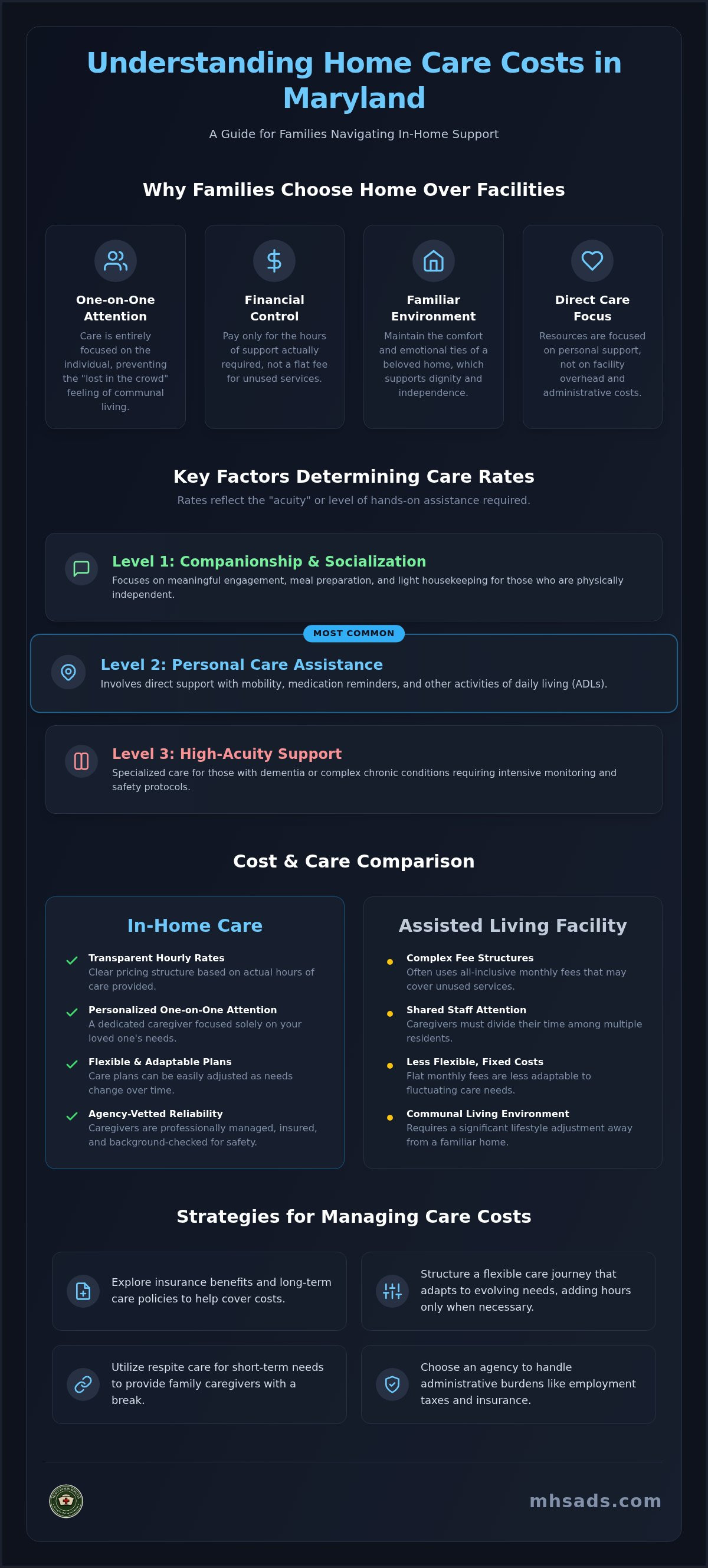
Choosing home-based support also provides a level of financial control that facilities often cannot offer. Instead of paying a flat, all-inclusive monthly fee for services your loved one may not use, you can structure a plan based on specific needs. This flexibility allows you to:
- Pay only for the hours of support actually required.
- Adjust the level of assistance as needs change over time.
- Maintain the social and emotional ties of a familiar environment.
- Focus resources on direct, personal care assistance rather than facility overhead.
By prioritizing personalized care plans, families can achieve a balance of professional support and financial sustainability. Understanding these cost structures isn't just about the numbers. It's about securing a path toward long-term independence and providing a stable anchor for your family during a time of transition.
Key Factors That Determine Private-Duty Care Rates
How do we find a balance between the support our family deserves and the budget we've worked hard to maintain? The answer lies in the details of the care plan itself. When you're understanding home care costs Maryland families navigate, it's essential to recognize that rates aren't static. Instead, they reflect the "acuity" of the situation, which is a professional way of describing how much hands-on assistance a person needs throughout the day. By identifying the specific tasks required, you can build a sustainable plan that honors your loved one's dignity without overextending your resources.
Service Levels and Their Financial Impact
Does your loved one simply need a friendly face and help with the groceries, or do they require physical help with morning routines? We categorize these needs into distinct levels to help you choose the right path:
- Companionship and Socialization: This focuses on meaningful engagement, meal preparation, and light housekeeping. It's an excellent option for those who are physically independent but benefit from a helping hand.
- Personal Care Assistance: This involves more direct support with mobility, medication reminders, and other activities of daily living. Because it requires more physical coordination and specialized training, it typically involves a different rate structure.
- High-Acuity Support: For those living with dementia or complex chronic conditions, specialized care ensures safety and consistency through more intensive monitoring.
It's also important to remember that private-duty care isn't exclusive to seniors. Many families seek in-home support for children with special needs or adults under 50 who require mobility assistance after an injury. Each of these scenarios requires a tailored approach that respects the individual's specific stage of life. To explore how these levels might apply to your specific situation, you can request a personalized care assessment to determine the right acuity level for your family.
Scheduling Options for Every Budget
Is constant supervision necessary, or would a few hours a week make the difference? Scheduling is one of the most flexible tools you have. Many families start with respite care, which provides short-term relief for family caregivers. This prevents burnout while keeping costs manageable. When looking into Strategies for Managing Affordable Home Care, you'll find that scaling hours based on peak needs, such as morning dressing or evening meals, is often more cost-effective than a 24/7 arrangement.
The value of your investment also covers the "vetted reliability" of the caregiver. With the Homecare Worker Rights Act of 2024 now in effect as of January 2026, professional agencies handle the legal requirements of employee classification and background checks. This gives you peace of mind that the person in your home is fully supported by a professional team. Understanding home care costs Maryland requires looking beyond the hourly rate to the safety and stability that professional oversight provides.
Comparing Home Care Costs vs. Alternative Living Options
How do we measure the true value of a care environment? While it's easy to look at a monthly facility bill and compare it to an hourly home care rate, the numbers don't tell the whole story. Understanding home care costs Maryland families encounter requires looking at the depth of support provided. In a communal setting, a single staff member may be responsible for eight or more residents. In contrast, private-duty home care ensures your loved one is the sole focus of a dedicated caregiver, providing a level of safety and attention that communal settings simply cannot replicate.
The One-on-One Advantage
Does a personalized care plan really make a difference in health outcomes? Research consistently shows that one-on-one attention leads to better medication adherence and a higher quality of life. Consistent companionship is a vital tool in reducing hospital readmissions. A dedicated caregiver is the first to notice subtle changes in health or mood, allowing for proactive adjustments before a minor issue becomes a crisis. For a deeper look at these benefits, you may find our Benefits of One-on-One Senior Care: 2026 Guide helpful in your decision-making process.
Hidden Costs of Senior Living Communities
Why do facility bills often seem to grow every month? Many senior living communities in Maryland utilize tiered pricing models. This means the base rent covers only the basics. Assistance with mobility, meal reminders, or personal care often triggers additional "care levels" that increase the monthly cost significantly. When you review The Landscape of In-Home Care Costs in Maryland, it becomes clear that transparent hourly rates for home care offer more predictable budgeting. This clarity is essential for families who want to avoid the surprise of "add-on" fees for services they assumed were included.
Choosing to stay at home also allows families to preserve their home equity. Facility living often requires significant entry fees or the sale of a primary residence. By opting for in-home support, you maintain your family's most significant asset while paying only for the specific hours of assistance your loved one actually needs. This approach provides a level of financial flexibility and long-term stability that institutional settings often lack. Understanding home care costs Maryland families face means looking at the total financial picture, including the assets you keep, not just the bills you pay.
Strategies for Finding and Managing Affordable Home Care
How do we transition from feeling overwhelmed by caregiving to finding a sustainable, professional solution? Many families find that understanding home care costs Maryland requires a strategic look at how hours are utilized rather than just searching for the lowest hourly rate. By focusing on high-value support during critical times, you can create a care plan that protects both your loved one's health and your family's financial future. This proactive approach ensures that dignity remains the priority while keeping the process manageable.
One of the most effective ways to manage costs is through respite care. This isn't just a way for family members to take a break; it's a method for introducing professional support gradually. Starting with a few hours a week allows you to vet the chemistry between the caregiver and your loved one before committing to a larger schedule. Professional vetting also plays a crucial role in long-term affordability. When an agency handles the background checks and training, you avoid the hidden costs of high caregiver turnover and the administrative headaches of managing a private hire under Maryland's 2026 employment regulations.
Financial Resources and Assistance Programs
Are there resources available to help bridge the gap for private-duty care? For many Maryland residents, long-term care insurance and veteran benefits, such as the Aid and Attendance program, provide essential funding. It's also helpful to view personal care as a preventative investment. Simple services like medication reminders and mobility assistance are often the key to preventing falls, which are a leading cause of expensive hospitalizations and long-term facility stays. Investing in Aging in Place Support: Guide to Staying Independent today can save thousands in emergency medical costs later.
Optimizing Your Care Schedule
How can we structure a schedule that provides maximum support without unnecessary expense? A "Care Plan Audit" is a collaborative process where we identify "peak need" hours. These are typically times when assistance with dressing, meal preparation, or medication is most vital. By blending family support during quieter times of the day with professional assistance during these peak windows, you can maintain a high standard of care while staying within your budget. Early planning is the best defense against "crisis-mode" pricing, which often happens when a family is forced to make a rushed decision after a sudden health change.
To see how a tailored schedule can work for your family, you can request a personalized budget review to explore the most cost-effective paths for your specific situation.
How Mercy Health Services Provides High-Value, Personalized Support
How do you find a partner who sees your loved one as a unique individual rather than just another appointment on a calendar? Understanding home care costs Maryland residents encounter is about more than just the hourly rate. It's about the value of consistency and the security that comes with a truly personalized match. At Mercy Health Services, we believe that high-quality care is built on a foundation of dignity and respect. We don't just provide assistance; we act as a steady anchor for your family during times of change, ensuring that every care plan is as unique as the person receiving it.
Our approach begins with a deep understanding of your family's specific needs through our free consultations. We use this time to determine care acuity and match your loved one with a caregiver whose skills and personality align with their lifestyle. This methodical process reduces the stress of the unknown and allows for rapid start-times, often within just a few days. By focusing on a "vetted reliability" model, we provide a level of one-on-one attention that facilities cannot match, giving your loved one the dedicated support they deserve in the comfort of their own home.
A Partner for the Entire Family
Are you looking for support for a younger family member or a child with special needs? While many providers focus exclusively on senior care, we recognize that the need for compassionate assistance spans all ages. We provide specialized in-home support for children with high-acuity needs and dedicated care for adults under 50 who are managing chronic illnesses or recovering from injuries. Our goal is to empower every individual to maintain their independence and quality of life. For more information on how we support younger populations, please explore our Home Care for Adults Under 50: 2026 Support Guide.
The Peace of Mind of Professional Vetting
How can you be certain that the person entering your home is trustworthy and capable? We take this responsibility seriously by implementing a rigorous background check and vetting process for every Maryland caregiver on our team. This commitment to safety allows us to serve as your Compassionate Navigator, guiding you through the complexities of caregiving with professional reassurance. We handle the administrative details and regulatory compliance, so you can focus on what matters most: spending meaningful time with your family. Understanding home care costs Maryland becomes much simpler when you have a trusted guide to help you manage the journey.
You don't have to navigate these choices alone. We are here to listen, observe, and provide the proactive support your family needs to thrive. Schedule your free home care consultation today to begin building a care plan that honors your loved one's dignity and fits your family's budget.
Securing Your Family's Future with Confidence
Choosing the right path for a loved one is a journey of both the heart and the mind. You've learned that the secret to managing your budget lies in matching care acuity to specific needs and utilizing flexible scheduling to avoid the hidden fees of institutional living. Professional vetting doesn't just provide safety; it offers the consistency your family needs to avoid the high costs of caregiver turnover. By understanding home care costs Maryland families can navigate, you've taken the first step toward a solution that prioritizes both dignity and financial stability.
Mercy Health Services is ready to be your trusted guide. With our background-checked caregivers and personalized care plans for all ages, we provide the dependable support you deserve. We're proud to offer a trusted Maryland-wide service that simplifies the transition to professional assistance. Request a Free Home Care Consultation with Mercy Health Services to build a plan that fits your life. You don't have to carry this weight alone. We're here to help you find the balance that brings peace of mind to your entire family.
Frequently Asked Questions
Is home care in Maryland covered by Medicare or standard health insurance?
Standard Medicare and most health insurance policies rarely cover non-medical home care services. These programs are typically designed for short-term medical recovery rather than ongoing assistance with daily living. To manage the process of understanding home care costs Maryland families often look toward long-term care insurance or state-specific Medicaid waivers. It's helpful to review your specific policy to see if it includes provisions for personal care assistance or companionship.
What is the difference between private-duty home care and skilled nursing?
Private-duty home care focuses on non-medical support like mobility and personal care assistance. Skilled nursing involves clinical medical care performed by licensed nurses, such as wound management or injections. It's important to clarify that Mercy Health Services provides professional non-medical support but does not offer skilled nursing or physical therapy services. This distinction helps families choose the right level of support for their loved one's specific health requirements.
How many hours of home care do most families in Maryland typically start with?
Many families begin their journey with 12 to 20 hours of support per week to address peak needs. This often involves a few hours in the morning for dressing and breakfast or evening assistance with meal preparation. Starting with a smaller schedule through respite care allows your loved one to adjust to a new presence in the home. You can always scale these hours as you become more comfortable with the care plan.
Can home care agencies assist with children who have special needs?
Yes, professional agencies can provide dedicated in-home support for children with special needs. This assistance focuses on helping children with activities of daily living and providing socialization while giving parents much-needed respite. Mercy Health Services offers personalized care plans specifically designed for high-acuity pediatric needs. This ensures that every member of the family receives the consistent, vetted support they need to maintain a stable and nurturing home environment.
What happens if our assigned caregiver is not a good fit for our loved one?
What if the chemistry between the caregiver and your loved one doesn't feel quite right? We prioritize personalized matching, but we understand that personal connection is essential for successful care. If a caregiver isn't the perfect fit, we work closely with you to identify a new professional who better aligns with your loved one's personality and preferences. Your peace of mind and your loved one's dignity are always the primary focus of our service.
How quickly can home care services begin after the initial consultation?
How soon can you expect a helping hand to arrive? After your initial free consultation, care services can often begin within just a few days. We understand that many families reach out during a time of transition or urgent need, so we prioritize a rapid and organized start-time. This efficiency allows you to move from the stress of planning to the relief of professional support without unnecessary delays or administrative hurdles.
Are there specific Maryland programs that help pay for respite care?
Are there state resources available to help offset the cost of temporary relief? Maryland offers several programs, such as the Community First Choice program and the Community Options Waiver, which can assist eligible individuals with the cost of home-based support. While some programs have waitlists, they are vital tools for understanding home care costs Maryland residents must plan for. These programs aim to help individuals remain in their homes rather than transitioning to facility-based care.
Does home care include assistance with medication and meal preparation?
Yes, a comprehensive care plan includes daily assistance with meal preparation and medication reminders. While caregivers do not administer medication in a clinical sense, they provide essential prompts to ensure your loved one follows their prescribed schedule. They also handle light housekeeping and prepare nutritious meals that align with specific dietary needs. These services are designed to promote independence and physical well-being while reducing the daily burden on family members.
Frequently Asked Questions
Standard Medicare and most health insurance policies rarely cover non-medical home care services. These programs are typically designed for short-term medical recovery rather than ongoing assistance with daily living. To manage the process of understanding home care costs Maryland families often look toward long-term care insurance or state-specific Medicaid waivers. It's helpful to review your specific policy to see if it includes provisions for personal care assistance or companionship.
Private-duty home care focuses on non-medical support like mobility and personal care assistance. Skilled nursing involves clinical medical care performed by licensed nurses, such as wound management or injections. It's important to clarify that Mercy Health Services provides professional non-medical support but does not offer skilled nursing or physical therapy services. This distinction helps families choose the right level of support for their loved one's specific health requirements.
Many families begin their journey with 12 to 20 hours of support per week to address peak needs. This often involves a few hours in the morning for dressing and breakfast or evening assistance with meal preparation. Starting with a smaller schedule through respite care allows your loved one to adjust to a new presence in the home. You can always scale these hours as you become more comfortable with the care plan.
Yes, professional agencies can provide dedicated in-home support for children with special needs. This assistance focuses on helping children with activities of daily living and providing socialization while giving parents much-needed respite. Mercy Health Services offers personalized care plans specifically designed for high-acuity pediatric needs. This ensures that every member of the family receives the consistent, vetted support they need to maintain a stable and nurturing home environment.
What if the chemistry between the caregiver and your loved one doesn't feel quite right? We prioritize personalized matching, but we understand that personal connection is essential for successful care. If a caregiver isn't the perfect fit, we work closely with you to identify a new professional who better aligns with your loved one's personality and preferences. Your peace of mind and your loved one's dignity are always the primary focus of our service.
How soon can you expect a helping hand to arrive? After your initial free consultation, care services can often begin within just a few days. We understand that many families reach out during a time of transition or urgent need, so we prioritize a rapid and organized start-time. This efficiency allows you to move from the stress of planning to the relief of professional support without unnecessary delays or administrative hurdles.
Are there state resources available to help offset the cost of temporary relief? Maryland offers several programs, such as the Community First Choice program and the Community Options Waiver, which can assist eligible individuals with the cost of home-based support. While some programs have waitlists, they are vital tools for understanding home care costs Maryland residents must plan for. These programs aim to help individuals remain in their homes rather than transitioning to facility-based care.
Yes, a comprehensive care plan includes daily assistance with meal preparation and medication reminders. While caregivers do not administer medication in a clinical sense, they provide essential prompts to ensure your loved one follows their prescribed schedule. They also handle light housekeeping and prepare nutritious meals that align with specific dietary needs. These services are designed to promote independence and physical well-being while reducing the daily burden on family members.