

Maryland Emergency Respite Care: 2026 Family Guide
August 13, 2026 · 16 min read
What if the sudden crisis that keeps you up at night didn't have to mean compromising the safety of your loved one or your own mental health? It is natural to feel a wave of panic when your regular support system disappears, making it vital to understand your options for emergency respite care that families can access quickly. You might feel a heavy sense of guilt at the thought of leaving your family member with someone new, or perhaps you fear that a stranger won't understand their unique daily routines. We understand that in these moments, you aren't just looking for a worker; you are looking for a steady hand and a compassionate heart.
This 2026 guide is designed to transform that uncertainty into a clear, actionable plan for securing immediate support during your most difficult hours. You will discover how to access professional assistance that protects your own well-being while ensuring your loved one remains safe and respected. We will walk through available assistance programs, explain how to navigate finding support systems, and help you understand the logistics of connecting with a vetted partner like Mercy Health Services who can step in when you need them most.
Key Takeaways
- Learn how to secure professional, short-term support during unplanned life events such as caregiver illness or sudden travel needs.
- Identify the specific physical and emotional signs of caregiver burnout that signal it is time to arrange emergency respite care Maryland families can trust.
- Compare the cost-saving benefits of state programs with the rapid, flexible placement options offered by private-duty agencies.
- Follow a clear, step-by-step process to organize medical information and daily routines for a smooth transition to a new caregiver.
- See how a proactive partnership with a vetted agency creates a reliable safety net for both children and seniors during future crises.
What is Emergency Respite Care and When is it Necessary?
Have you ever wondered what would happen if you were suddenly unable to provide the care your loved one relies on every day? Life is unpredictable; sometimes a sudden illness, a family crisis, or an urgent work trip can leave you without a backup plan. This is where emergency respite care Maryland families utilize becomes a vital safety net. Unlike scheduled breaks that you might plan weeks in advance, this service is designed for short-term, professional support provided on very short notice during unplanned events. It serves as an immediate bridge to ensure your family member remains safe while you attend to your own urgent needs.
To understand the broader context of these services, looking at What is Respite Care reveals that its primary purpose is to provide temporary relief to primary caregivers. In an emergency context, this relief isn't just a luxury; it's a necessity. While planned respite might involve a pre-scheduled weekend away, emergency intervention is a reactive solution to a crisis. Maryland families often turn to these services to prevent the total collapse of their household routine. It's a way to maintain stability when the primary caregiver is temporarily sidelined by life's unexpected turns.
The Role of Respite in Caregiver Mental Health
Are you reaching a point where your own health is beginning to suffer? Caregiving is a marathon, but everyone has a tipping point where they can no longer provide safe support. When physical and emotional exhaustion sets in, the risk of accidental neglect or safety lapses increases for both the caregiver and the loved one. Using emergency breaks is a responsible way to protect your family's well-being. By exploring preventing caregiver burnout services, you are taking a proactive step toward long-term stability. It's about recognizing that you cannot pour from an empty cup, especially during high-stress periods.
Who Can Benefit from Respite Services?
Who exactly can receive this type of assistance? The professional emergency respite care Maryland providers offer is versatile enough to support various age groups and needs. We focus on delivering dignity and consistency for several different populations:
- Seniors: Those living with cognitive decline or mobility challenges who require a steady, familiar environment.
- Children: Kids with high-acuity special needs who need a caregiver capable of following complex daily routines.
- Adults under 50: Individuals recovering from a major surgery or managing a chronic illness who require temporary help with personal care or meal preparation.
Whether the need involves medication reminders or simple companionship, the goal is to provide a seamless transition that keeps your loved one comfortable in their own home while you are away.
Identifying the Signs You Need Immediate Respite Support
Do you find yourself struggling to keep up with the daily physical demands of caregiving? It's easy to overlook your own needs when you are focused on someone else, but physical symptoms like chronic back pain, persistent fatigue, and frequent headaches are often the body's way of signaling a breaking point. When these signs appear, the risk of a domestic accident increases. Recognizing these indicators early allows you to seek emergency respite care Maryland families trust before a minor strain becomes a major health crisis for both you and your loved one.
Sometimes the need for help isn't about your own health, but rather an "unavoidable absence" caused by external factors. An unexpected family emergency, a sudden funeral, or an urgent work obligation can leave a dangerous gap in supervision. In these moments, you aren't just looking for a babysitter; you are looking for a professional who can maintain the continuity of care your family member deserves. Acting quickly to fill this gap ensures that your loved one remains safe and comfortable while you attend to life's unpredictable demands.
Sudden Changes in Caregiver Health
What happens when the primary caregiver becomes the patient? If you are facing a sudden hospitalization or an acute illness, the worry about your loved one's safety can hinder your own recovery. Professional agencies are designed to respond with a speed that most family members simply cannot match. While the state's Respite Care Program for family caregivers offers excellent resources, a private-duty agency can often place a vetted caregiver in the home much faster during a true emergency. This ensures that even if you are temporarily sidelined, your loved one's routine remains uninterrupted.
Behavioral and Safety Red Flags
Crisis indicators can also arise from sudden changes in your loved one's condition. Managing unexpected "sundowning" or increased agitation requires specific expertise, particularly when you are navigating respite care for dementia patients. High-acuity care is support for complex medical or behavioral needs that require professional expertise and constant monitoring. If a loved one's mobility changes overnight or their cognitive symptoms escalate, the care requirements may suddenly exceed your physical capacity. If you feel overwhelmed by these new challenges, a free consultation can help you determine the best path forward to restore safety and peace of mind in your home.
Comparing Public Grants vs. Private Emergency Respite in Maryland
Are you wondering how to balance the urgent need for support with the financial realities of caregiving? Choosing the right path for emergency respite care Maryland families require often comes down to a choice between public grants and private-duty home care. Both options serve a vital purpose, but they operate on very different timelines. Understanding these differences is the first step toward securing the peace of mind you need during a family transition.
State-funded programs, like the Maryland Lifespan Respite Care Program, are designed to alleviate the financial burden on family caregivers. These grants can be a lifesaver for those who have the time to navigate an application process. However, when a crisis strikes on a weekend or holiday, the administrative requirements of a public program can feel like an insurmountable barrier. Private-duty care, while typically paid out-of-pocket or through long-term care insurance, offers a level of responsiveness that government programs often cannot match.
Understanding State-Funded Options
If your situation allows for a few weeks of planning, contacting your local Department of Social Services is a wise move. They can provide information on current grant availability and specific eligibility requirements for your county. In Maryland, the Elizabeth Cooney Personnel Agency manages the distribution of these emergency grants, acting as a bridge between the state and the care provider. it's important to remember that grant money is frequently subject to budget cycles; this means funds might not be available for immediate, same-day needs if the program's allocation has already been met for the current period.
The Advantages of Private-Pay Respite Care
When speed is your highest priority, private-duty agencies provide a more direct route to assistance. These providers offer significant flexibility in scheduling, whether you need a few hours of help or 24/7 support during a sudden family emergency. Because they operate outside of government red tape, agencies can focus on creating highly tailored personal care assistance plans that match your loved one's specific personality and medical needs. The vetting process is also a cornerstone of private care; agencies ensure every caregiver is background-checked and professionally trained before they ever step into your home. This direct coordination allows you to bypass the waitlist and focus on what matters most: your family's safety.
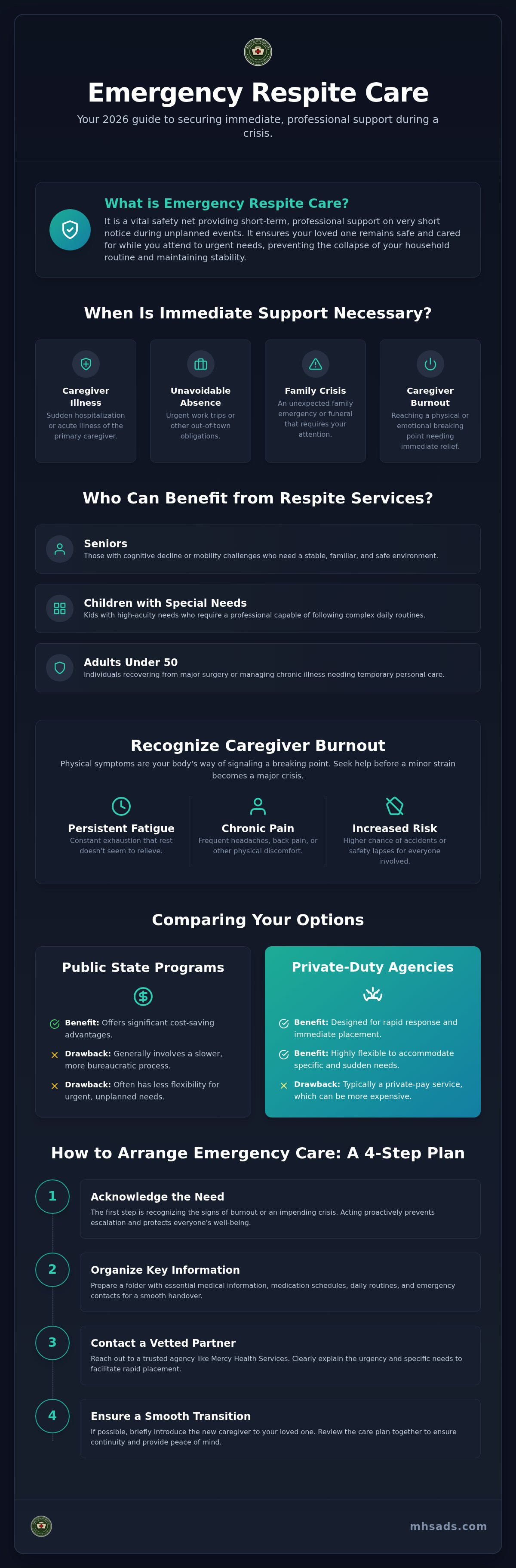
How to Arrange Emergency Care Quickly: A Step-by-Step Guide
Are you feeling the pressure of an ticking clock while trying to find support for your family? When a crisis occurs, the process of finding emergency respite care Maryland families can rely on shouldn't add to your stress. By following a methodical path, you can move from a state of panic to a place of professional stability in just a few hours. The first step is to gather your thoughts and your loved one's essential details. This preparation allows a provider to step in with the confidence and knowledge needed to maintain a safe environment.
Once you have your information ready, your next move is to contact a Maryland-based private duty agency. During your initial conversation, you will want to verify their vetting process to ensure every caregiver has undergone a rigorous background check. After this, you will review and approve a personalized, short-term care plan. A care plan is a living document that guides professional support by outlining specific medical needs and personal preferences. Finally, you will facilitate a smooth hand-off. This transition period is vital for building trust between your loved one and their new caregiver.
Essential Information for an Emergency Intake
To help an agency assist you as quickly as possible, it's helpful to have a "grab-and-go" folder of information ready. This reduces the time spent on administrative questions during a consultation. Please try to include the following:
- Medical Essentials: Current medication lists, known allergies, and primary physician contact details.
- Daily Living Requirements: Instructions for mobility aids, specific meal preferences, and typical sleep schedules.
- Emergency Contacts: A clear list of family members or friends who should be notified in case of a change in status.
Questions to Ask an Emergency Care Provider
Even in a rush, you deserve to feel confident in the person entering your home. Asking the right questions helps you gauge the reliability and professionalism of the agency. Consider these three queries during your intake:
- "How quickly can a qualified caregiver be in the home to start support?"
- "What is your specific process for matching a caregiver with my loved one’s unique medical and social needs?"
- "Are your caregivers employees of the agency or independent contractors?"
If you find yourself in the middle of a sudden transition and need immediate guidance, contact us today for a free consultation to see how we can help stabilize your situation. We are here to act as your trusted guide through the complexities of arranging daily support on short notice.
Transitioning from Crisis to Consistent Support with Mercy Health Services
Have you found that once the initial crisis passes, the underlying challenges of caregiving still remain? It's common for a single event to reveal that your current support system is more fragile than you realized. While emergency respite care Maryland families utilize is a perfect short-term solution, it often serves as the first step toward a more sustainable, long-term arrangement. By transitioning from a reactive approach to a proactive partnership, you can ensure that you are never caught off guard by an unexpected absence again. Mercy Health Services acts as your stable anchor during these transitions, offering a level of dependability that restores balance to your home.
Building a relationship with a pre-vetted agency provides a permanent safety net for your household. We specialize in a wide range of in-home supports designed to protect the dignity of your loved one, including:
- Personal care and mobility assistance for seniors.
- Dedicated in-home support for children with special needs.
- Private-duty care for adults under 50 managing chronic conditions.
- Medication reminders and meal preparation to maintain daily health.
Our goal is to offer a consistent presence that adapts to your life, whether you need a few hours of companionship each week or 24/7 assistance during a recovery period. This flexibility ensures that your loved one always receives dignified, person-centered care. By having a plan for emergency respite care Maryland providers can implement quickly, you reduce the emotional weight of being a sole caregiver.
The Mercy Health Services Caregiver Matching Process
How do we ensure your loved one feels comfortable with a new person in their home? We look beyond basic certifications to match caregivers based on personality, temperament, and specialized skills. Every member of our team is background-checked and vetted for reliability, giving you the peace of mind to step away without worry. We handle the complex logistics of scheduling and payroll so you can focus entirely on your own health and recovery.
Building a Sustainable Care Schedule
Would your life feel more manageable if you had a guaranteed break every Tuesday or Thursday? Integrating respite into your weekly routine is the most effective way to prevent future emergencies and caregiver burnout. As your loved one’s needs evolve, we adjust the care plan to ensure they always receive the right level of assistance. To start building your personalized safety net, schedule your free care consultation with Mercy Health Services today.
Moving Forward with Confidence and Support
Are you ready to replace the weight of uncertainty with a reliable plan? Identifying the early signs of caregiver exhaustion and understanding the speed of private-duty support are the first steps to preventing a household crisis. By organizing your loved one's essential medical details now, you ensure that any transition to professional assistance is seamless and respectful. Whether you're managing a sudden illness or an unavoidable absence, having a trusted partner makes all the difference in maintaining stability.
Mercy Health Services is dedicated to providing emergency respite care Maryland families can depend on. Our team offers vetted and background-checked caregivers and personalized care plans for all ages, serving families throughout the state with dignity. You don't have to navigate these challenges alone. Request a Free Consultation for Emergency Respite Support to begin building a safety net that protects both you and your loved one. You're doing a wonderful job, and it's okay to ask for the helping hand you deserve.
Frequently Asked Questions
How quickly can emergency respite care start in Maryland?
Are you wondering if you can get help before the day is over? Service can often begin within a few days of your initial consultation. In true crisis situations, private agencies strive to move as quickly as possible to stabilize your home environment. This timeline is generally much faster than state-funded programs, which often require a longer administrative approval process before a caregiver can be placed.
Does insurance cover the cost of emergency in-home respite care?
Do you have questions about how to fund this support? While standard health insurance rarely covers non-medical assistance, Long-Term Care Insurance (LTCI) often includes benefits for respite services. Additionally, veterans may qualify for stipends through the VA’s caregiver support programs. For many families, this remains a private-pay service, though state grants can sometimes help offset the costs if you have time to apply.
What is the Maryland Lifespan Respite Care Program?
Is there a state resource that can help with the financial burden? This program provides limited grants to family caregivers to help pay for temporary relief. It is designed to support those caring for individuals with disabilities or chronic conditions across all age groups. While it is an excellent resource for planned breaks, the application requirements mean it is rarely available for immediate, same-day crisis needs.
Can I get emergency respite care for a child with special needs?
Are you looking for someone who understands your child’s unique routines? Yes, emergency respite care Maryland providers often offer specialized in-home support for children with high-acuity needs. This ensures that your child stays in a familiar environment with a caregiver trained to handle their specific medical or behavioral requirements. It allows you to focus on your emergency without worrying about a disruption in their care.
What happens if my emergency lasts longer than a few days?
Will the support disappear just when you still need it most? You can easily transition from short-term emergency intervention to a consistent, ongoing care schedule. Most agencies offer flexible plans that scale from a few hours a week to 24/7 assistance. This ensures that if your recovery or family crisis extends beyond your original timeline, your loved one continues to receive stable and compassionate support.
Are emergency caregivers vetted for safety and experience?
How can you be sure a stranger is safe to have in your home? Every professional caregiver undergoes a rigorous vetting process that includes comprehensive background checks and experience verification. We prioritize your peace of mind by ensuring that every team member is trained in personal care, mobility assistance, and medication reminders. This high standard of preparation ensures that your loved one is treated with the utmost dignity.
Do I need to sign a long-term contract for emergency services?
Are you worried about being locked into a commitment you don't need? Emergency respite is typically designed for flexibility, allowing you to secure help on an as-needed basis without restrictive long-term contracts. You can use the service for a few days to get through a crisis and then decide later if you want to integrate regular support into your weekly routine to prevent future burnout.
What is the difference between respite care and home health care?
Are you confused by the different types of in-home assistance? Respite care focuses on companionship, personal care, and daily living support to give the primary caregiver a rest. Home health care involves skilled nursing or physical therapy, which are clinical medical services. While we assist with meal preparation and medication reminders, we do not provide skilled medical treatments or sell medical equipment.
Frequently Asked Questions
Who exactly can receive this type of assistance? The professional emergency respite care Maryland providers offer is versatile enough to support various age groups and needs. We focus on delivering dignity and consistency for several different populations: Whether the need involves medication reminders or simple companionship, the goal is to provide a seamless transition that keeps your loved one comfortable in their own home while you are away. Do you find yourself struggling to keep up with the daily physical demands of caregiving? It's easy to overlook your own needs when you are focused on someone else, but physical symptoms like chronic back pain, persistent fatigue, and frequent headaches are often the body's way of signaling a breaking point. When these signs appear, the risk of a domestic accident increases. Recognizing these indicators early allows you to seek emergency respite care Maryland families trust before a minor strain becomes a major health crisis for both you and your loved one. Sometimes the need for help isn't about your own health, but rather an "unavoidable absence" caused by external factors. An unexpected family emergency, a sudden funeral, or an urgent work obligation can leave a dangerous gap in supervision. In these moments, you aren't just looking for a babysitter; you are looking for a professional who can maintain the continuity of care your family member deserves. Acting quickly to fill this gap ensures that your loved one remains safe and comfortable while you attend to life's unpredictable demands.
Are you wondering if you can get help before the day is over? Service can often begin within a few days of your initial consultation. In true crisis situations, private agencies strive to move as quickly as possible to stabilize your home environment. This timeline is generally much faster than state-funded programs, which often require a longer administrative approval process before a caregiver can be placed.
Do you have questions about how to fund this support? While standard health insurance rarely covers non-medical assistance, Long-Term Care Insurance (LTCI) often includes benefits for respite services. Additionally, veterans may qualify for stipends through the VA’s caregiver support programs. For many families, this remains a private-pay service, though state grants can sometimes help offset the costs if you have time to apply.
Is there a state resource that can help with the financial burden? This program provides limited grants to family caregivers to help pay for temporary relief. It is designed to support those caring for individuals with disabilities or chronic conditions across all age groups. While it is an excellent resource for planned breaks, the application requirements mean it is rarely available for immediate, same-day crisis needs.
Are you looking for someone who understands your child’s unique routines? Yes, emergency respite care Maryland providers often offer specialized in-home support for children with high-acuity needs. This ensures that your child stays in a familiar environment with a caregiver trained to handle their specific medical or behavioral requirements. It allows you to focus on your emergency without worrying about a disruption in their care.
Will the support disappear just when you still need it most? You can easily transition from short-term emergency intervention to a consistent, ongoing care schedule. Most agencies offer flexible plans that scale from a few hours a week to 24/7 assistance. This ensures that if your recovery or family crisis extends beyond your original timeline, your loved one continues to receive stable and compassionate support.
How can you be sure a stranger is safe to have in your home? Every professional caregiver undergoes a rigorous vetting process that includes comprehensive background checks and experience verification. We prioritize your peace of mind by ensuring that every team member is trained in personal care, mobility assistance, and medication reminders. This high standard of preparation ensures that your loved one is treated with the utmost dignity.
Are you worried about being locked into a commitment you don't need? Emergency respite is typically designed for flexibility, allowing you to secure help on an as-needed basis without restrictive long-term contracts. You can use the service for a few days to get through a crisis and then decide later if you want to integrate regular support into your weekly routine to prevent future burnout.
Are you confused by the different types of in-home assistance? Respite care focuses on companionship, personal care, and daily living support to give the primary caregiver a rest. Home health care involves skilled nursing or physical therapy, which are clinical medical services. While we assist with meal preparation and medication reminders, we do not provide skilled medical treatments or sell medical equipment.