
Preparing for a Home Care Consultation: 2026 Guide
August 12, 2026 · 17 min read
What if the first step toward professional support didn't feel like a loss of independence, but rather the start of a more dignified and secure chapter? It's completely natural to feel a sense of hesitation when you begin researching how to prepare for a home care consultation. You might be navigating the delicate balance of your loved one’s desire for autonomy against their need for safety, all while wondering how to choose a truly reliable partner. We understand that this process is deeply personal and often emotionally heavy.
This 2026 guide is here to replace that anxiety with a structured, compassionate roadmap. You'll learn exactly how to organize your home, gather vital documentation, and facilitate family conversations that ensure every concern is heard and every preference is respected. We'll guide you through the essential steps to turn this no-pressure conversation into a productive partnership. By the end, you'll have the tools to secure a personalized care plan and ensure a seamless transition to professional assistance that respects your family's unique needs.
Key Takeaways
- View the initial meeting as a collaborative discovery session focused on creating a personalized care plan rather than a clinical assessment.
- Use gentle, pre-planned scripts to discuss support options with your loved one, ensuring their dignity and independence remain at the heart of the conversation.
- Master how to prepare for a home care consultation by gathering medication schedules and medical histories to provide a clear picture of your family's needs.
- Conduct a simple home walk-through to identify safety enhancements, such as improved lighting or removing trip hazards, before professional support begins.
- Empower yourself to evaluate agency reliability by asking the right questions about caregiver background checks and the timeline for starting support.
Understanding the Purpose of a Home Care Consultation
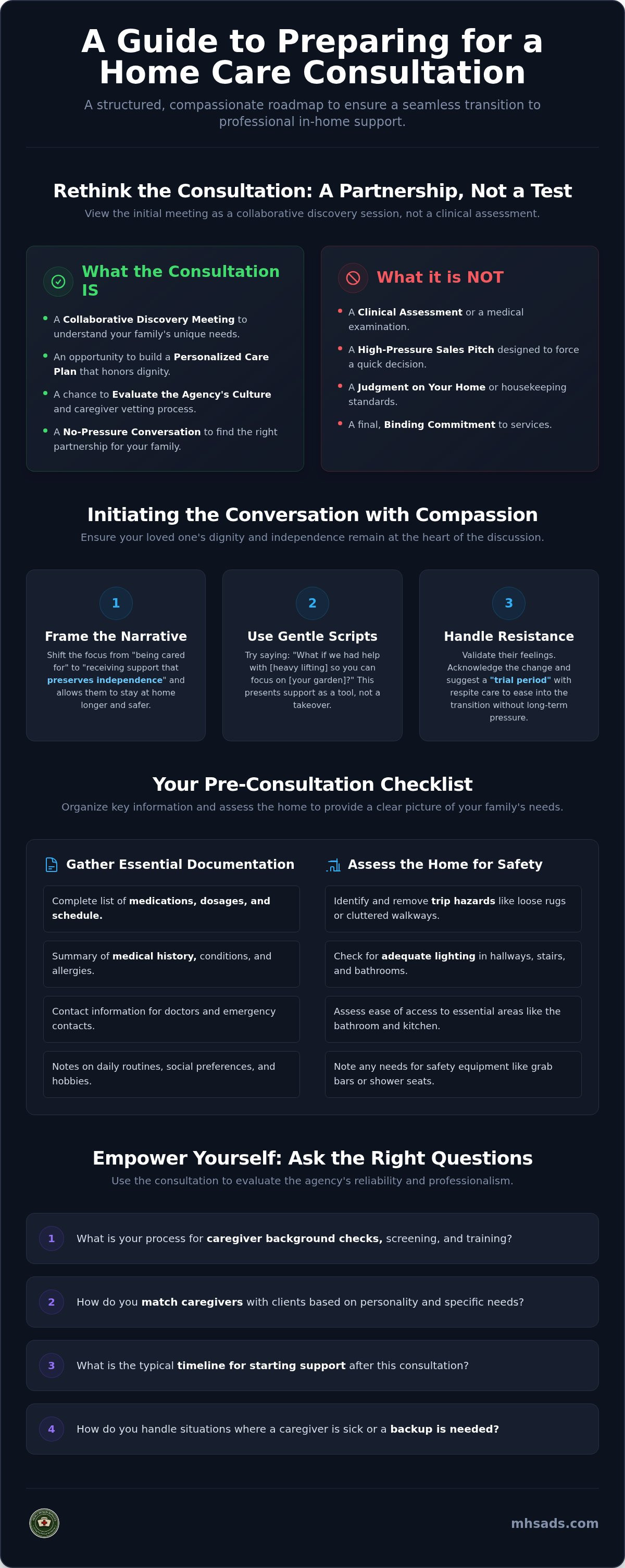
Have you felt a weight of uncertainty as you consider inviting a professional into your home? It's a significant transition, and it's natural to feel protective of your family's privacy and your loved one's independence. A home care consultation isn't a clinical assessment or a high-pressure sales pitch. Instead, think of it as a collaborative discovery meeting. The primary goal is to align your family’s specific needs with the right level of professional support, ensuring everyone feels heard and respected.
When you begin researching how to prepare for a home care consultation, it's helpful to remember that this is an educational step. You aren't just looking for a service quote; you're looking for a partnership. The consultant’s role is to help you build a personalized care plan that honors your loved one’s dignity. This is also your best opportunity to evaluate the agency’s culture and their caregiver vetting process. Are they compassionate? Do they seem organized? This non-binding conversation allows you to test the waters before making any commitments.
What the Consultant Looks For
During the visit, the consultant acts as a proactive navigator for your family’s safety. They aren't there to judge your housekeeping. Instead, they identify physical safety hazards like loose area rugs, cluttered walkways, or inadequate lighting that could lead to falls. They also observe how your loved one moves through the home to assess the level of assistance needed for Activities of Daily Living (ADLs), such as dressing or grooming. Beyond the physical, they seek to understand social and emotional preferences. Does your loved one enjoy specific hobbies? What is their daily rhythm? These details help ensure the support provided feels natural and welcome.
Why This Meeting is Essential for Your Peace of Mind
Why is this face-to-face interaction so critical? It serves as a bridge between your current challenges and a sustainable solution. Meeting in person reduces the anxiety of the unknown by putting a face to the agency. It's the perfect time to ask detailed questions about personal care assistance and how caregivers are matched to families. If there are specific medical or behavioral requirements, this meeting ensures the agency can handle those needs with the necessary expertise. Learning how to prepare for a home care consultation empowers you to walk away from the meeting feeling confident, informed, and ready for the next step.
Preparing Your Loved One for the Conversation
How do you introduce the idea of professional help without making your loved one feel like they are losing control? This is perhaps the most delicate part of the entire process. It's completely natural for a parent or spouse to feel a sense of defensiveness or even fear when the topic of home care arises. They might worry that their home will no longer feel like their own or that their independence is slipping away. Knowing how to prepare for a home care consultation includes managing these emotions with the same care you'd give to the logistics.
The key is to shift the narrative from "being cared for" to "receiving support that preserves independence." When you frame assistance as a way to stay at home longer, it often feels like an opportunity rather than a loss. Try using scripts that focus on your own peace of mind or specific tasks that have become burdensome. For example, you might say, "I’ve noticed that keeping up with the laundry is taking away from your time in the garden. What if we had someone help with the heavy lifting so you can focus on what you actually enjoy?" Including your loved one in the meeting from the very beginning ensures their voice is heard and their dignity remains intact.
Handling Resistance and Anxiety
What should you do if your loved one remains resistant? Start by validating their feelings rather than dismissing them. Acknowledge that having a new person in the house is a big change. To ease into the transition, you might suggest a "trial period" for respite care. This allows everyone to see how the routine feels without the pressure of a long-term commitment. For many, the resistance fades when they realize the caregiver is there for companionship and socialization, not just "supervision." It's about finding a friendly visitor who can share a meal or a walk, making the support feel more like a partnership than a service.
Setting Realistic Expectations
Confusion about what a caregiver actually does can lead to unnecessary anxiety. It's helpful to explain that a caregiver is there to assist with daily tasks like meal preparation, medication reminders, or light housekeeping, rather than performing medical procedures. Reassure your loved one that they remain the "boss" of their own home. At Mercy Health Services, our caregiver matching process is specifically designed to find a personality and skill set that fits your family's unique dynamic. If you're ready to see how a compassionate partner can simplify your daily life, you can schedule a no-pressure conversation to explore your options together.
Gathering Essential Documentation and Information
Do you ever find yourself struggling to remember the exact dosage of a medication or the date of a past hospital visit? When emotions are high, these details can easily slip through the cracks. Organizing your family’s medical history and daily preferences is a vital part of how to prepare for a home care consultation. This preparation ensures that the care plan is built on a foundation of safety and accuracy, whether you're seeking support for a child with special needs, an adult under 50, or a senior family member.
Start by compiling a comprehensive list of all current medications, including dosages and the times they're taken. It's also helpful to document a broad medical history that includes chronic conditions and any recent hospitalizations. Don't forget to include emergency contact information and the names of preferred medical providers. Having this information ready allows the consultant to focus on the human side of care rather than spending the entire meeting filling out clinical forms.
Medical and Health Records
What specific health details will the agency need to know? Beyond the basics, you should provide a list of all known allergies and dietary restrictions. This is especially critical if your loved one requires meal preparation services. If you're transitioning a family member from a hospital or a rehabilitation facility, have the recent discharge papers available. These documents often contain specific instructions from doctors that can be integrated directly into the new care plan. Including contact information for primary care physicians and specialists allows for better coordination between all members of the support team.
Daily Life and Preferences
How can we ensure the caregiver feels like a natural addition to the home? The most successful care plans prioritize the person's social and emotional well-being alongside their physical needs. Take a moment to outline a typical daily routine, including preferred meal times, sleep patterns, and favorite hobbies. It's also essential to share any religious or cultural practices that the caregiver should respect. This level of detail helps the agency match you with a professional who shares similar interests or values.
To help the agency truly understand your loved one, try to summarize their "ideal day" in a single sentence. For example, you might write: "A perfect day for my father includes a quiet morning with the newspaper, a light walk in the garden, and an afternoon spent listening to classical music." This simple exercise gives the consultant a clear vision of what success looks like for your family. By organizing these details, you're taking a proactive step in learning how to prepare for a home care consultation that is both productive and deeply personal.
Assessing the Home Environment for Safety and Access
Does your home currently support the level of care your loved one needs, or are there hidden obstacles that might complicate their daily routine? Creating a safe and welcoming environment is a fundamental part of how to prepare for a home care consultation. During this process, you aren't just looking at the physical structure; you're ensuring that the home remains a sanctuary where professional support can be delivered effectively and safely.
Start by conducting a thorough walk-through of every room. Look for potential trip hazards like loose area rugs, bunched-up carpets, or cluttered paths that could lead to a fall. It's also vital to check the lighting in hallways and bathrooms, especially for nighttime safety. If your loved one needs to move around after dark, even a small dim spot can become a significant risk. Thinking through these physical details is a critical step in how to prepare for a home care consultation that focuses on both comfort and security. You should also consider where a caregiver might store their belongings or take a short break during their shift. Designating a small, comfortable area for them helps them stay focused and refreshed while they support your family.
Mobility and Fall Prevention
How easily can your loved one access the most essential parts of their home? Evaluate the path from the bed to the bathroom and the kitchen. If these routes are narrow or obstructed, it might be time to reconsider the furniture layout. Identifying the need for mobility assistance for seniors early on allows the agency to match you with a caregiver who has specific experience in safe transfer techniques. You might also find that specialized equipment, such as grab bars in the shower or a sturdy shower chair, is necessary. Planning for any necessary home modifications before care begins ensures a smoother transition for everyone involved.
Logistics for the Caregiver
Beyond safety, think about the practical logistics of a new person entering your home. How will the caregiver gain access? You might decide on a spare key, a secure lockbox, or a digital security code. If you have pets, consider how they will react to a new presence. Preparing your animals for a visitor helps prevent any unnecessary stress for both the pet and the caregiver. Finally, designate a specific area for a "care log." This is a central spot where notes can be exchanged between the family and the professional, ensuring consistency and clear communication. If you're feeling overwhelmed by these details, our team can help you schedule a free home safety assessment as part of your consultation process.
Making the Most of Your Consultation with Mercy Health Services
How can you ensure that the time spent with a care consultant truly addresses your family’s deepest concerns? By now, you’ve organized the paperwork and assessed the home for safety. The final step in learning how to prepare for a home care consultation is knowing which questions will reveal the agency’s true commitment to your loved one’s well-being. At Mercy Health Services, we view this meeting as a no-pressure conversation where your goals take center stage. Whether you need support for a child, an adult under 50, or a senior family member, this is your time to verify that our standards of reliability match your family's needs.
Don't hesitate to ask about the specifics of our caregiver vetting and background checks. You deserve to know exactly who is entering your home and what standards they've met. We also offer significant flexibility in scheduling; your needs might range from a few hours of companionship a week to comprehensive 24/7 support. If the initial caregiver match doesn't feel like a perfect fit, it's vital to understand the process for requesting a different professional. We prioritize the relationship between the caregiver and the family, so a seamless, comfortable connection is our top priority. We also understand that many families are in a period of transition when they call, which is why our services can often begin within just a few days of your initial meeting.
Questions to Ask Your Care Consultant
When you sit down with us, what specific details should you explore to feel fully confident? You might ask how we handle unexpected caregiver absences or emergencies to ensure your loved one is never left without support. If you're seeking respite care for dementia patients, ask about the specialized training our team receives to manage memory-related challenges with patience and dignity. Finally, inquire about how the care plan evolves over time. As your loved one’s needs change, the assistance they receive should be updated through regular, proactive reviews to maintain the highest quality of life.
Defining Your Goals for Care
What does a successful outcome look like for your family? Clearly stating your primary goal, whether it's improved safety, increased socialization, or recovery after a hospital stay, helps us tailor our approach from day one. This is also the best time to discuss the budget and payment options for private-duty services. We aim to make the financial aspect as transparent and straightforward as possible so you can focus on what matters most: your loved one's comfort. Once these goals are defined, we'll finalize the next steps together, moving smoothly from a consultation to active, compassionate support in the home.
Taking Your Next Step Toward Peace of Mind
Do you feel more equipped to begin this new chapter for your family? Deciding to seek professional assistance is a profound act of love, and your preparation ensures that this transition is as smooth and respectful as possible. By organizing essential medical records and conducting a proactive home safety walk-through, you've already laid the groundwork for a successful partnership. Understanding how to prepare for a home care consultation empowers you to advocate for a care plan that truly honors your loved one's unique personality and daily rhythm.
At Mercy Health Services, we're committed to being your trusted guide through this process. We provide vetted and background-checked caregivers and create personalized care plans for all ages, often starting services within just a few days. You don't have to navigate these complex choices alone. When you're ready to explore your options in a calm, supportive environment, we invite you to schedule your free, no-obligation home care consultation with Mercy Health Services. Your family's comfort and dignity are our highest priorities; we're here to support you every step of the way.
Frequently Asked Questions
How long does a home care consultation usually take?
A typical consultation usually lasts between 60 and 90 minutes. We ensure the pace is unhurried so you have ample time to discuss your family's unique needs without feeling rushed. This duration allows us to conduct a thorough safety walk-through and begin crafting a personalized care plan that respects your loved one's dignity and preferences. We want you to feel heard and supported throughout the entire conversation.
Do I need to have my loved one present during the consultation?
We strongly encourage having your loved one present if they're able and willing to participate. Their voice is central to a successful care plan, and including them helps maintain their sense of autonomy and respect. If they feel anxious about the change, we can focus on the companionship aspect of our support to help them feel more comfortable with the transition to receiving professional assistance in their home.
What happens if we decide not to move forward after the meeting?
There's absolutely no obligation to start services after our meeting is finished. We view the consultation as an educational step designed to help you understand your options and feel more confident about the future. If you decide that now isn't the right time, we respect your choice and remain available as a resource whenever your family feels ready to revisit the conversation or explore different support paths.
Can we discuss costs and insurance coverage during the consultation?
Yes, we believe transparency is essential for your family's peace of mind. During the meeting, we'll discuss the costs associated with our private-duty services and explore available payment options together. While we focus on non-medical support, we can help you understand how to prepare for a home care consultation by clarifying which specific services, like meal preparation or mobility assistance, fit within your family's specific budget.
How soon can care begin after the initial meeting is completed?
Support can often begin within just a few days once the personalized care plan is finalized. We understand that many families reach out during urgent transitions, so we've streamlined our process to be as responsive as possible. Our goal is to provide a seamless start to professional assistance so you can focus on your family's well-being while we handle the logistics of arranging consistent daily support.
What if my loved one is currently in the hospital or a rehab facility?
We can conduct the consultation while your loved one is still in a facility to ensure a safe transition home. By meeting early, we can review discharge papers and coordinate with medical staff to align our support with their recovery goals. This proactive approach allows us to have everything ready, from mobility assistance to medication reminders, the moment they return to their own familiar and comfortable environment.
Are the consultants at Mercy Health Services trained to handle pediatric care needs?
Yes, our team is highly experienced in coordinating in-home support for children with diverse needs. We understand that pediatric care requires a specialized, gentle approach that involves the whole family and respects the child's daily routine. Our consultants are trained to help you learn how to prepare for a home care consultation that addresses the unique developmental, social, and emotional requirements of our younger clients with care.
Is there a fee for the initial home care consultation?
There's no fee for our initial home care consultation. We offer this as a free, no-pressure service to help families navigate the complexities of arranging professional support without any financial burden. Our priority is to act as a trusted guide, providing you with the information and reassurance you need to make a confident, informed decision for your loved one's long-term comfort and safety.
Frequently Asked Questions
A typical consultation usually lasts between 60 and 90 minutes. We ensure the pace is unhurried so you have ample time to discuss your family's unique needs without feeling rushed. This duration allows us to conduct a thorough safety walk-through and begin crafting a personalized care plan that respects your loved one's dignity and preferences. We want you to feel heard and supported throughout the entire conversation.
We strongly encourage having your loved one present if they're able and willing to participate. Their voice is central to a successful care plan, and including them helps maintain their sense of autonomy and respect. If they feel anxious about the change, we can focus on the companionship aspect of our support to help them feel more comfortable with the transition to receiving professional assistance in their home.
There's absolutely no obligation to start services after our meeting is finished. We view the consultation as an educational step designed to help you understand your options and feel more confident about the future. If you decide that now isn't the right time, we respect your choice and remain available as a resource whenever your family feels ready to revisit the conversation or explore different support paths.
Yes, we believe transparency is essential for your family's peace of mind. During the meeting, we'll discuss the costs associated with our private-duty services and explore available payment options together. While we focus on non-medical support, we can help you understand how to prepare for a home care consultation by clarifying which specific services, like meal preparation or mobility assistance, fit within your family's specific budget.
Support can often begin within just a few days once the personalized care plan is finalized. We understand that many families reach out during urgent transitions, so we've streamlined our process to be as responsive as possible. Our goal is to provide a seamless start to professional assistance so you can focus on your family's well-being while we handle the logistics of arranging consistent daily support.
We can conduct the consultation while your loved one is still in a facility to ensure a safe transition home. By meeting early, we can review discharge papers and coordinate with medical staff to align our support with their recovery goals. This proactive approach allows us to have everything ready, from mobility assistance to medication reminders, the moment they return to their own familiar and comfortable environment.
Yes, our team is highly experienced in coordinating in-home support for children with diverse needs. We understand that pediatric care requires a specialized, gentle approach that involves the whole family and respects the child's daily routine. Our consultants are trained to help you learn how to prepare for a home care consultation that addresses the unique developmental, social, and emotional requirements of our younger clients with care.
There's no fee for our initial home care consultation. We offer this as a free, no-pressure service to help families navigate the complexities of arranging professional support without any financial burden. Our priority is to act as a trusted guide, providing you with the information and reassurance you need to make a confident, informed decision for your loved one's long-term comfort and safety.