
Private Duty Care: A Comprehensive Guide to One-on-One Home Support
August 9, 2026 · 17 min read
Have you ever found yourself lying awake at night, wondering if your aging parent is safe in the room next door or across town? It's a heavy burden to carry, especially when you're balancing your own life with the constant worry of a sudden fall or a missed medication. You want your loved one to stay in the home they love, but the physical and emotional exhaustion of being their sole provider is likely starting to take its toll.
This is where private duty care steps in to bridge the gap between complete independence and a care facility. It's about more than just a helping hand; it's a tailored partnership designed to preserve your family member's autonomy. By choosing this personalized, one-on-one support, you ensure your loved one remains safe and dignified while you regain the peace of mind you deserve.
In this guide, we'll help you understand the differences between insurance-based medical care and private support. We'll also explore how to find a caregiver you can actually trust and the best ways to navigate the transition into professional home assistance without the stress.
Key Takeaways
- Understand how private duty care provides tailored, one-on-one support that prioritizes your loved one's dignity and personal routines.
- Learn the crucial differences between intermittent medical "Home Health" and the consistent daily assistance that keeps a home running smoothly.
- Discover why agency-managed support is a safer, more reliable alternative to the legal and financial complexities of hiring independent caregivers.
- Explore how professional meal preparation and mobility assistance serve as vital health stabilizers for seniors and adults living with disabilities.
- Gain a clear roadmap for transitioning from family caregiver burnout to a sustainable, expert-led care plan that restores peace of mind.
What is Private Duty Care? Defining the One-on-One Support Model
Have you noticed that the simple tasks your loved one once handled with ease are becoming a source of frustration? It's a common crossroads for many families. Private duty care is a personalized, non-medical support model that brings professional assistance directly into the comfort of home. Unlike the rotating staff often found in assisted living facilities, where one person might be responsible for many residents, this model focuses on a dedicated one-on-one relationship. This ensures that your family member isn't just another room number, but a person whose unique routines and preferences are respected every single day.
How do families typically manage this type of support? Most often, private duty care is funded through private pay or long-term care insurance policies. As your "Compassionate Navigator," we see this as an investment in dignity. By choosing home-based support, you're allowing your loved one to age in a familiar environment, surrounded by their own memories, which is essential for emotional well-being during life's transitions.
The Core Pillar: Assistance with Activities of Daily Living (ADLs)
When physical limitations begin to interfere with daily life, it can be difficult for a family member to step into the role of a caregiver. Professional assistance with hygiene, bathing, and dressing helps maintain a healthy boundary in your relationship while ensuring your loved one feels refreshed and confident. Our caregivers are also trained in mobility assistance, which is a critical factor in preventing the falls that often lead to unnecessary hospitalizations. Activities of Daily Living, or ADLs, are the essential self-care tasks that represent the foundation of a person's ability to live safely and independently at home.
Beyond Physical Needs: The Value of Companionship
Is your loved one spending more time alone than they used to? Loneliness is often called the "silent epidemic" among seniors, and its impact on health can be just as significant as physical illness. Private duty care addresses this by providing meaningful social engagement and cognitive stimulation. Whether it's sharing a conversation over tea or taking a gentle walk, these interactions are vital. Caregivers provide various forms of engagement, such as:
- Engaging in stimulating card games or puzzles
- Reading aloud from favorite books or newspapers
- Assisting with hobbies like gardening or light crafting
- Accompanying them on social outings or to religious services
Consistent companionship has been shown to improve mental health and support cognitive longevity, helping your loved one stay sharp and connected to the world around them. This holistic approach ensures that their emotional needs are met alongside their physical requirements, creating a truly supportive environment.
Private Duty Care vs. Home Health: Which Does Your Family Need?
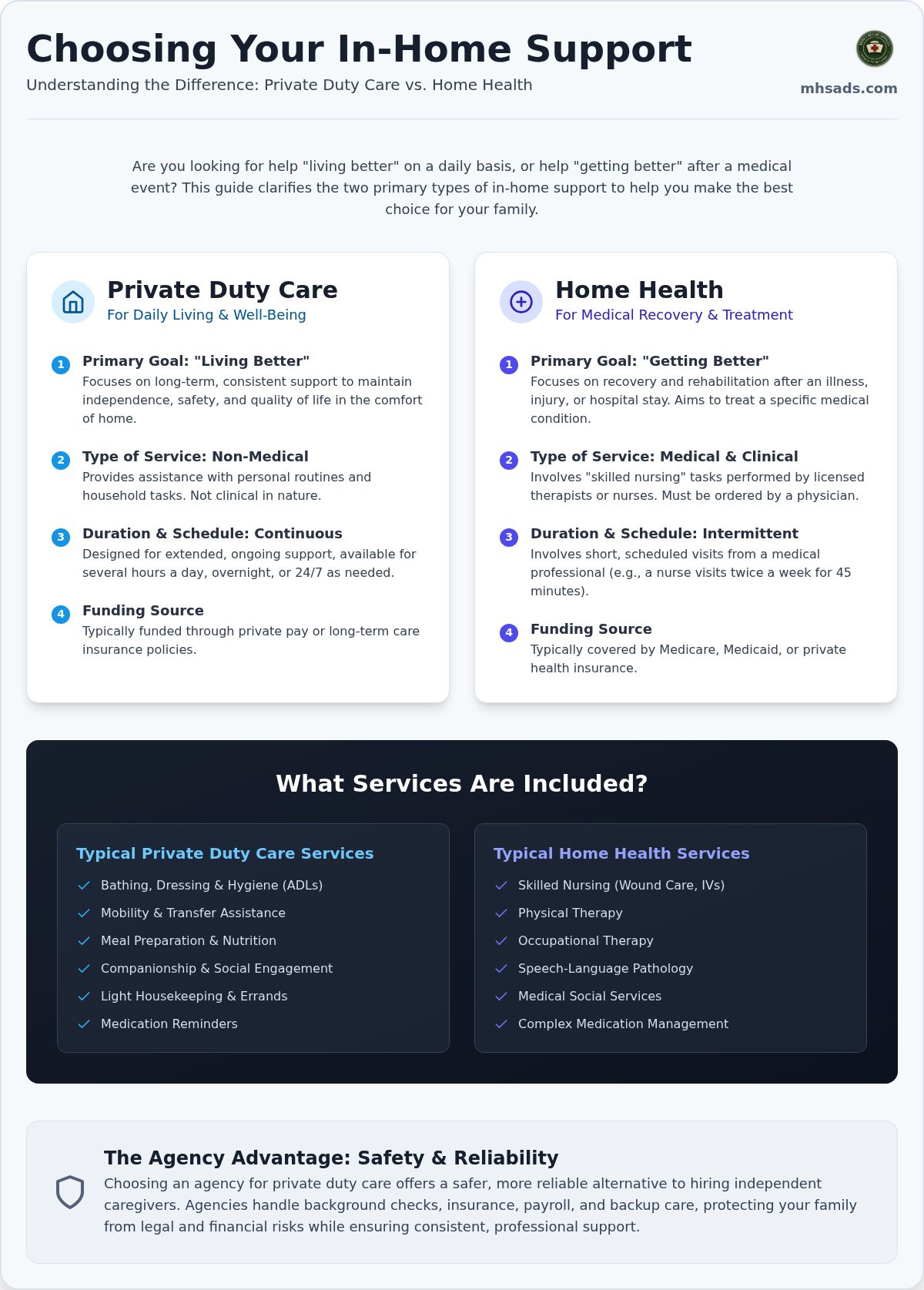
Are you feeling overwhelmed by the different terms your doctor and insurance company are using? It's understandable to feel confused when you're just trying to find the best support for your parent or spouse. The choice often comes down to one simple question: does your loved one need help "getting better" or help "living better"? While they sound similar, the services are quite different in how they are ordered, delivered, and funded.
Home health is a medical service. It is usually intermittent, meaning a therapist or nurse visits for a short time, perhaps twice a week, to provide a specific treatment. It must be ordered by a physician and is typically focused on recovery after a hospital stay. On the other hand, private duty care is designed for extended, continuous support. It focuses on the non-medical aspects of daily life that keep a home running smoothly and safely. This is the support that steps in when the medical visits end, providing the steady presence your family needs to avoid the "grey area" where safety risks often hide.
Understanding the Medical Boundary
How do you know if you need "Skilled Nursing" or a professional caregiver? Skilled nursing involves clinical tasks like wound care, managing complex IV medications, or physical therapy. Mercy Health Services focuses specifically on the non-medical spectrum of care, providing the essential assistance that preserves a person's dignity without the clinical feel of a hospital. If you're unsure which path is right for your situation, you can always request a free consultation to explore your options.
You likely need a caregiver if your loved one requires help with:
- Safely navigating the stairs or getting into the shower
- Remembering to take daily medications on time
- Preparing nutritious meals to maintain strength
- Keeping up with light housekeeping to ensure a sanitary environment
Funding and Duration: Insurance vs. Private Pay
It's a common misconception that Medicare covers long-term assistance at home. In reality, traditional Medicare rarely covers ongoing private duty care because it is considered "custodial" rather than "medical." For 2026, the Centers for Medicare & Medicaid Services finalized a 1.3 percent net payment reduction for home health agencies, which continues to shift the focus of government-funded care toward short-term, high-acuity needs.
Because of this, most families utilize long-term care insurance, VA benefits, or private funds to secure the help they need. This path offers much more flexibility. You aren't limited by a doctor's prescription or a specific "recovery window." Instead, you can choose the schedule that works for your family, whether that's a few hours of companionship each week or 24/7 support to ensure your loved one is never alone. This control allows you to build a care plan that truly mirrors your family's unique rhythm and needs.
The Daily Impact: How Private Duty Care Transforms Quality of Life
Are you spending your visits doing chores instead of making memories? Many family caregivers find that their precious time with a loved one is consumed by laundry, scrubbing floors, and checking pill bottles. This shift in the relationship can lead to exhaustion and a sense of loss. Private duty care changes this dynamic by handling the daily "must-dos," allowing you to return to your role as a daughter, son, or spouse. It creates a ripple effect of relief that restores the emotional health of the entire family while ensuring your loved one feels supported rather than managed.
One of the most critical aspects of this support is medication reminders. Missing a dose or accidentally doubling up on a prescription is a leading cause of emergency room visits for those living independently. A consistent caregiver provides a vital layer of safety by ensuring that medications are taken exactly as directed. This simple act of observation can prevent a medical crisis and keep your loved one's health stable over the long term.
Nutrition and Household Stability
Eating well is a primary health stabilizer, yet it's often the first thing to decline when someone struggles to live alone. Our caregivers provide meal preparation to ensure dietary compliance for chronic conditions such as diabetes or heart disease. Beyond the kitchen, light housekeeping tasks maintain a safe and sanitary environment, which is essential for preventing infections or respiratory issues. We also provide transportation for errands and medical appointments, ensuring that your loved one stays connected to their community and their healthcare providers without the stress of navigating traffic.
Support for All Ages: Beyond Senior Care
While many people associate home support with aging, private duty care is a versatile solution for any life stage. Does your family include an adult under 50 living with a chronic illness or a physical disability? We provide the specific assistance they need to maintain their autonomy and stay active in their daily lives. This model also extends to children with special needs, offering parents the professional support and respite required to manage complex care at home. By focusing on the individual's unique needs rather than just their age, we ensure that every person receives the dignity and respect they deserve, regardless of the challenges they face.
Agency-Managed Care vs. Independent Caregivers: Evaluating the Risks
Have you found yourself comparing hourly rates and wondering if hiring an independent caregiver might be the simpler, more affordable path? It is a common question for families trying to balance a budget with the need for quality support. While the lower upfront cost of a "private hire" is tempting, it often comes with hidden complexities and significant risks that many families don't realize until a crisis occurs. When you hire an individual directly, you aren't just a family looking for help; you legally become a household employer. This means you are responsible for payroll taxes, verifying work eligibility, and ensuring you have the proper insurance to cover any injuries that might happen on your property.
Choosing an agency-managed model for private duty care removes these administrative burdens from your shoulders. It transforms the experience from a stressful management role into a collaborative partnership. Instead of worrying about tax filings or liability, you can focus on being a supportive family member. Our role is to act as your stable anchor, handling the legal and operational details so that your home remains a place of sanctuary rather than a workplace.
The Vetting and Security Advantage
How do you truly know who you are inviting into your loved one's home? A professional agency goes far beyond a simple reference call. Our vetting process includes rigorous multi-state background checks, drug screening, and thorough verification of previous experience and character. We also provide professional oversight and continuous training to ensure every caregiver stays current on the best practices for mobility assistance and personal care. By working with an agency, your family is protected by professional liability insurance and bonding, which shields you from the financial risks associated with theft or accidental injury. To learn more about starting this journey safely, read our guide on How to Transition a Loved One to In-Home Care.
Consistency and Continuity of Care
What happens if your independent caregiver gets the flu or needs a vacation? In an independent model, a single "no-show" can leave your loved one in a dangerous situation without any backup. Agencies solve this problem by maintaining a team of vetted professionals who can step in seamlessly. This continuity is guided by a formal Care Plan, a detailed document that ensures every caregiver knows your loved one's specific routines, medication reminders, and personal preferences. This structured approach guarantees that the quality of assistance remains high, regardless of who is at the door. If you are ready to experience the peace of mind that comes with professional support, we invite you to schedule your free consultation today.
Choosing Mercy Health Services: Your Trusted Guide in Home Care
Have you reached the point where you feel you've exhausted every possible way to manage on your own? It's a vulnerable place to be. Mercy Health Services acts as a bridge, moving your family from a state of constant worry to one of dignified stability. We understand that inviting someone into your home is a decision rooted in trust. Our goal is to provide the professional support needed so your loved one can remain independent, while you reclaim the space in your life to simply be a family member again.
We don't believe in one-size-fits-all solutions. Our approach to private duty care begins with a deep understanding of the individual. We look beyond the physical requirements to see the person, their history, and their preferences. This ensures that the assistance provided isn't just about completing tasks, but about fostering a meaningful connection that respects their autonomy. We pay special attention to personality matching, ensuring the caregiver's temperament aligns with your loved one's spirit and daily rhythm.
Our Personalized Care Planning Process
How do we ensure the care plan truly fits? During our initial consultation, we conduct a comprehensive assessment that covers physical health, emotional well-being, and social engagement goals. This allows us to support even high-acuity non-medical needs, such as specialized mobility assistance for those with advanced conditions. Whether your family requires just a few hours of respite each week or comprehensive 24/7 support, our schedules remain flexible to adapt as your needs change over time.
Getting Started: A Step-by-Step Path
We know that once the decision is made, you don't want to wait weeks for help to arrive. Our streamlined process allows for a rapid start-of-care, often within just a few days of our first meeting. This efficiency doesn't come at the expense of quality; every step is handled with the meticulous attention of a "Compassionate Navigator" who knows how much this transition matters to your family. We are here to guide you through every choice, ensuring you never feel pressured or alone in the process.
Are you ready to trade the stress of constant caregiving for the joy of shared moments? We invite you to reach out for a no-obligation conversation to see how we can support your family's journey. It's time to stop being the "manager" and start being the daughter or son again. Schedule your free home care consultation with Mercy Health Services today.
Restoring Balance to Your Family Home
Are you ready to stop worrying about the "what-ifs" and start enjoying your time together again? Choosing private duty care is a significant step toward ensuring your loved one remains safe, independent, and respected in their own home. We've explored how this personalized support differs from short-term medical visits, providing the consistent, one-on-one assistance that actually improves daily quality of life. By opting for an agency-managed model, you gain the security of vetted, background-checked caregivers and a professional safety net that independent hiring simply cannot match.
Mercy Health Services is locally owned and family-focused; we treat your family with the same dignity we would want for our own. Our personalized care plans are designed for children, adults, and seniors, ensuring that support is tailored to every unique life stage. You don't have to navigate this transition alone. We're here to be your trusted guide, helping you move from the exhaustion of caregiving back to the warmth of being a family member again. Start your journey to better home care with a free consultation today and take the first step toward a more peaceful, supported future.
Common Questions About One-on-One Home Support
What is the difference between private duty care and home health care?
Private duty care focuses on non-medical support for daily living, while home health care provides clinical medical treatments ordered by a doctor. Home health visits are usually short and focused on recovery from a specific injury or illness. In contrast, private duty services offer continuous assistance with tasks like meal preparation and personal hygiene to help your loved one remain independent and safe at home.
Does insurance or Medicare cover the cost of private duty care?
Traditional Medicare does not typically cover the cost of private duty care because it is considered "custodial" rather than "medical" support. Most families utilize long-term care insurance, VA benefits, or private funds to pay for these essential services. Since these plans are personalized, you have the flexibility to choose the exact level of support that fits your family's budget and specific needs without a doctor's order.
Can private duty care be provided in an assisted living facility?
Yes, our caregivers can provide one-on-one support even if your loved one already lives in an assisted living community or nursing home. Facilities often have a high staff-to-resident ratio, which can limit the amount of individual attention your family member receives. Adding private support ensures they have a dedicated companion for walks, meal assistance, or extra help with personal care throughout the day and night.
What happens if our assigned caregiver is sick or can't make it?
If your assigned caregiver is unable to make it, our agency coordinates a qualified backup to ensure there is no gap in your loved one's support. This is one of the primary benefits of working with an organized provider rather than an independent individual. We maintain detailed care plans so that any replacement caregiver understands your loved one's unique routines and preferences from the moment they arrive.
Is private duty care only for seniors, or do you help younger adults too?
No, we provide assistance to individuals of all ages, including children with special needs and adults under 50 living with chronic illnesses or disabilities. Whether it's helping a younger adult maintain their autonomy or providing respite care for parents, our services are adaptable. We focus on the unique goals and dignity of the individual, ensuring they have the support they need to thrive at any life stage.
How do you ensure the safety and background of your caregivers?
We ensure the safety of your home by conducting rigorous multi-state background checks, drug screenings, and thorough reference verifications for every professional we hire. Beyond the initial vetting, we provide ongoing training and supervision to maintain our high standards of reliability. This process is designed to reduce your anxiety and ensure the person entering your home is a trustworthy and dependable partner in care.
Can I change the schedule or level of care if my loved one's needs change?
You can absolutely adjust the schedule or level of care as your loved one's situation evolves over time. We understand that health needs can change unexpectedly, so we remain proactive and observant in updating our personalized care plans. Whether you need to increase hours during a recovery period or decrease them as your loved one regains strength, we work with you to ensure the support remains appropriate.
What is the minimum number of hours required for a private duty visit?
While our services are highly flexible, we typically recommend a minimum visit length to ensure your loved one receives meaningful engagement and consistent assistance. Most families find that visits of at least a few hours allow the caregiver to complete tasks like meal preparation and light housekeeping without feeling rushed. During your free consultation, we'll discuss the ideal schedule that balances your family's needs with your personal budget.
Frequently Asked Questions
Private duty care focuses on non-medical support for daily living, while home health care provides clinical medical treatments ordered by a doctor. Home health visits are usually short and focused on recovery from a specific injury or illness. In contrast, private duty services offer continuous assistance with tasks like meal preparation and personal hygiene to help your loved one remain independent and safe at home.
Traditional Medicare does not typically cover the cost of private duty care because it is considered "custodial" rather than "medical" support. Most families utilize long-term care insurance, VA benefits, or private funds to pay for these essential services. Since these plans are personalized, you have the flexibility to choose the exact level of support that fits your family's budget and specific needs without a doctor's order.
Yes, our caregivers can provide one-on-one support even if your loved one already lives in an assisted living community or nursing home. Facilities often have a high staff-to-resident ratio, which can limit the amount of individual attention your family member receives. Adding private support ensures they have a dedicated companion for walks, meal assistance, or extra help with personal care throughout the day and night.
If your assigned caregiver is unable to make it, our agency coordinates a qualified backup to ensure there is no gap in your loved one's support. This is one of the primary benefits of working with an organized provider rather than an independent individual. We maintain detailed care plans so that any replacement caregiver understands your loved one's unique routines and preferences from the moment they arrive.
No, we provide assistance to individuals of all ages, including children with special needs and adults under 50 living with chronic illnesses or disabilities. Whether it's helping a younger adult maintain their autonomy or providing respite care for parents, our services are adaptable. We focus on the unique goals and dignity of the individual, ensuring they have the support they need to thrive at any life stage.
We ensure the safety of your home by conducting rigorous multi-state background checks, drug screenings, and thorough reference verifications for every professional we hire. Beyond the initial vetting, we provide ongoing training and supervision to maintain our high standards of reliability. This process is designed to reduce your anxiety and ensure the person entering your home is a trustworthy and dependable partner in care.
You can absolutely adjust the schedule or level of care as your loved one's situation evolves over time. We understand that health needs can change unexpectedly, so we remain proactive and observant in updating our personalized care plans. Whether you need to increase hours during a recovery period or decrease them as your loved one regains strength, we work with you to ensure the support remains appropriate.
While our services are highly flexible, we typically recommend a minimum visit length to ensure your loved one receives meaningful engagement and consistent assistance. Most families find that visits of at least a few hours allow the caregiver to complete tasks like meal preparation and light housekeeping without feeling rushed. During your free consultation, we'll discuss the ideal schedule that balances your family's needs with your personal budget.