
10 Signs Your Loved One Needs Personal Care Support
August 7, 2026 · 17 min read
Have you ever spent your workday worrying if your father remembered his morning pills, or if a simple trip to the kitchen might lead to a fall? It's a heavy burden to carry, especially when you want to be there but simply can't do it all yourself. You aren't alone in this struggle. With 80% of adults over 50 expressing a desire to age in place, many families find themselves at this exact crossroads. Finding reliable daily living assistance for seniors isn't about taking away their independence. Instead, it's about building a supportive partnership that honors your loved one's routine while lifting the weight of worry from your shoulders.
We understand the quiet guilt that comes with realizing your parent needs more help than you can provide. This 2026 guide is designed to help you distinguish between medical and non-medical support and find a path forward that preserves your family's peace of mind. We'll explore how personalized care plans can create a safe environment at home and help you determine exactly when it's time to bring a professional into your family circle.
Key Takeaways
- Understand how non-medical support acts as a supportive scaffold, allowing your loved one to "age in place" while maintaining their familiar daily routines.
- Learn to identify specific physical and instrumental needs to determine exactly when daily living assistance for seniors becomes a vital resource for their safety.
- Compare the emotional and financial benefits of flexible, hourly in-home care against the high costs and significant lifestyle changes of assisted living facilities.
- Discover a gentle roadmap for navigating sensitive care conversations and ensuring a smooth, dignity-first transition for your family member.
- Explore how personalized care plans and vetted caregivers provide the professional reliability needed to restore your family's peace of mind.
What is Daily Living Assistance for Seniors?
Are you starting to notice small changes that feel like big worries? Perhaps your mother’s kitchen isn't quite as tidy as it used to be, or your father seems a bit unsteady when he stands up from his favorite chair. These moments often spark a deep sense of anxiety for families. You want to help, but you also want to respect their independence. This is where daily living assistance for seniors steps in as a vital bridge. It isn't medical treatment; rather, it's a personalized layer of support that helps older adults manage the essential tasks of their day while staying in the home they love.
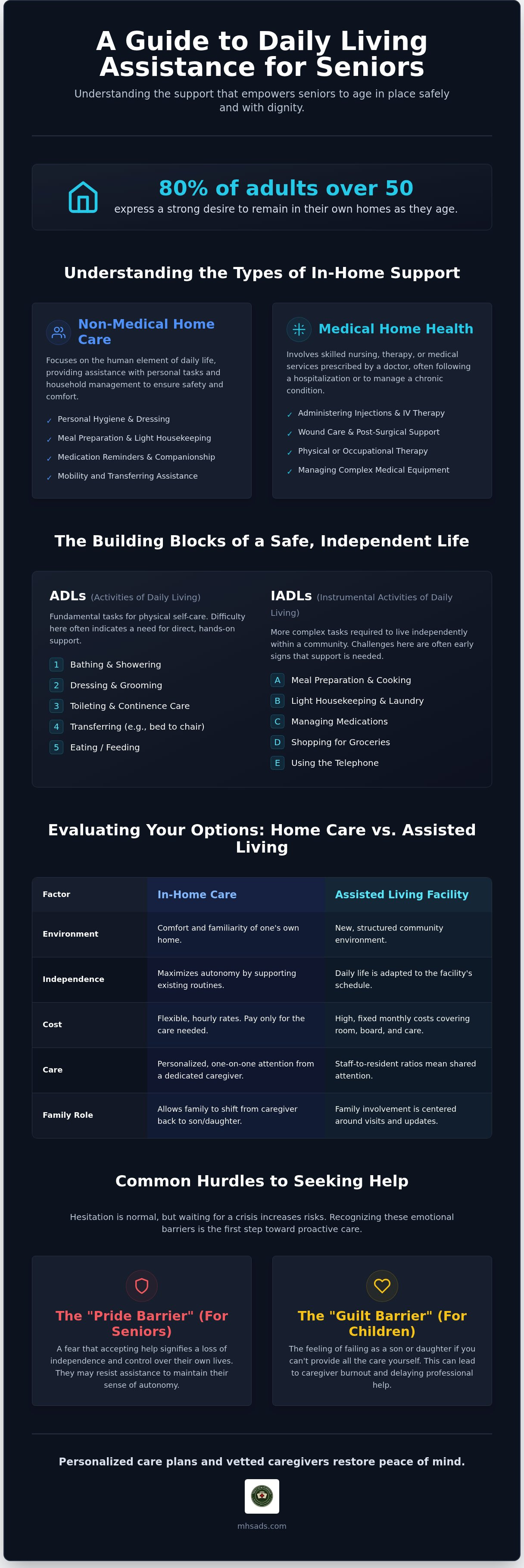
At its heart, this service is built on the philosophy of "aging in place." Data shows that 80% of adults over age 50 prefer to remain in their own homes as they grow older. Assistance makes this possible by providing the necessary scaffolding to keep a senior safe and comfortable. This support typically centers around Activities of daily living (ADLs), which include fundamental tasks like bathing, dressing, and moving safely around the house. By handling these practical needs, professional caregivers allow seniors to focus on what matters most: their dignity and their routine.
The Difference Between Medical and Non-Medical Support
It's easy to feel confused by the various terms used in the care industry. The primary distinction lies in the type of help provided. Medical care, often called "home health," involves skilled nursing or physical therapy prescribed by a doctor. In contrast, daily living assistance for seniors is non-medical "home care." It focuses on the human element of daily life. This support includes hygiene, meal preparation, and medication reminders rather than administering injections or managing complex medical equipment. These two services often work beautifully together. For instance, after a surgery, a nurse might handle wound care while a professional caregiver ensures the senior has nutritious meals and a clean, safe environment to recover in.
Why Families Wait Too Long to Seek Assistance
Many families hesitate to reach out until a crisis occurs. This delay often stems from two emotional hurdles: the "pride barrier" in seniors and the "guilt barrier" in their children. Your loved one may fear that accepting help means losing their autonomy. Meanwhile, you might feel like you're failing if you can't do it all yourself. However, waiting too long increases the risk of caregiver burnout or preventable falls. Bringing in professional support isn't a sign of defeat. It's a strategic choice that allows you to step out of the "caregiver" role and back into your role as a daughter or son. It restores the relationship while ensuring your loved one receives the consistent, reliable support they deserve.
Understanding ADLs and IADLs: The Core of Senior Support
How do you know if your loved one is truly safe at home? It's a question that keeps many family caregivers awake at night. To answer it, care professionals use a specific framework to evaluate independence. This framework is divided into two categories: Activities of Daily Living (ADLs) and Instrumental Activities of Daily Living (IADLs). Think of these as the building blocks of a safe, functional life. When a senior starts to struggle with these tasks, daily living assistance for seniors provides the necessary support to fill those gaps and maintain their quality of life.
The six basic ADLs focus on essential physical self-care. These are the tasks we often take for granted until they become difficult: bathing, dressing, toileting, transferring (such as moving from a bed to a chair), eating, and maintaining continence. IADLs are more complex. They involve managing a household and interacting with the community. Common examples include meal preparation, light housekeeping, managing medications, and using the telephone. While a senior might still be able to dress themselves, they may struggle to cook a balanced meal or remember their dosage schedule. A professional assessment looks at both categories to create a plan that addresses specific vulnerabilities.
Personal Care and Hygiene (ADLs)
Preserving dignity is the most vital part of personal care. For many seniors, needing help with bathing or toileting feels deeply personal and sometimes embarrassing. A professional caregiver approaches these moments with respect and gentleness, ensuring your loved one feels supported rather than managed. Beyond hygiene, mobility assistance is a cornerstone of safety. According to the National Institute on Aging guide, having physical support and modifying the home environment can prevent the falls that often lead to hospitalization. Consistent incontinence care also plays a major role in preventing skin irritation and maintaining daily comfort.
Household Management and Socialization (IADLs)
A safe home environment is one that is clean, organized, and well-nourished. Proper nutrition and hydration are essential for maintaining physical strength and cognitive function, yet they're often the first things to slip when a senior lives alone. Professional support ensures that dietary restrictions are followed and meals are both appetizing and healthy. Equally important is the human connection. Social isolation can lead to depression and faster cognitive decline. Companionship and socialization services provide the meaningful engagement that keeps a senior's spirit bright and their mind active. If you aren't sure which level of help is right, you can schedule a free consultation to discuss your family's unique situation.
Evaluating Your Options: Home Care vs. Assisted Living
Are you feeling torn between the comfort of your parent’s long-term home and the perceived security of a senior living community? It’s a crossroad that carries immense emotional weight. While assisted living facilities offer a structured environment, they often require a significant loss of autonomy and come with a high national median monthly cost of $5,419. Choosing daily living assistance for seniors within their own home provides a different path. It allows your loved one to remain in the space where they feel most like themselves, surrounded by their own belongings and memories, while receiving the precise level of support they need.
This choice isn't just about location; it's about the quality of the connection. In a facility, staff members are often responsible for many residents at once. This can sometimes lead to a transactional feel to care. In-home support flips this dynamic. It focuses on a one-on-one partnership where the caregiver isn't just checking off a list of tasks but is actively engaged with the senior’s well-being. When choosing an in-home care provider, you’re selecting a dedicated navigator who becomes an extension of your family.
The One-on-One Advantage
Why does personalized attention matter so much for health monitoring? When a single, consistent caregiver is present, they develop a deep familiarity with your loved one’s normal. They're often the first to notice subtle health shifts, such as a slight change in gait or a decrease in appetite, that a rotating staff might miss. This consistency builds a foundation of trust. Your loved one doesn't have to explain their preferences to a new face every shift. Instead, they can enjoy a steady relationship with a professional who understands exactly how they like their tea or which morning routine makes them feel most prepared for the day.
Private Duty Care: Flexibility for Every Situation
Does your family need help only during the stressful morning hours, or are you looking for overnight peace of mind? One of the greatest benefits of private-duty support is its inherent flexibility. Unlike the fixed contracts of institutional settings, in-home care scales with your needs. You might start with respite care to give yourself a well-deserved break or to cover a family emergency. As needs evolve, those few hours can transition into more comprehensive support without the trauma of a physical move. This adaptability ensures that the support always fits the person, rather than forcing the person to fit a facility's schedule.
How to Transition a Loved One to In-Home Care
Are you worried about how your parent will react to a "stranger" entering their private space? It's a common fear that often leads families to delay seeking help. The transition to daily living assistance for seniors works best when it's treated as a collaborative journey rather than a forced decision. Start by having the "care conversation" early, focusing on the shared goal of staying at home safely. Instead of listing what they can no longer do, highlight how a little extra help can protect their energy for the activities they actually enjoy, like gardening or visiting with grandchildren.
Involving your loved one in the selection process is the most effective way to maintain their sense of agency. Let them participate in the initial meetings and share their preferences for everything from meal choices to the best time for a morning walk. Before the first official visit, a professional home safety assessment is essential. This isn't about judging their housekeeping; it's about identifying simple, practical changes that make the home environment more navigable. By removing trip hazards or improving bathroom lighting, you create a foundation where professional support can be most effective.
The Initial Consultation and Care Plan
What should you have ready for a free consultation? It helps to gather a brief medical history, a list of current medications, and a clear picture of their existing daily routine. This information allows a "Compassionate Navigator" to draft a personalized care plan that addresses specific mobility or cognitive needs. Perhaps most importantly, this is the time to discuss personality. A successful caregiver match depends as much on temperament and shared interests as it does on professional skills. You want someone who feels like a natural extension of the family circle rather than an outside observer.
The First 30 Days: Adjusting to a New Routine
The first month is a vital "getting to know you" period. It's natural for there to be a few minor bumps as everyone adjusts to a new presence in the home. Setting realistic expectations for this adjustment phase helps reduce stress for both the senior and the family. Keep an open line of communication with the agency to provide feedback and tweak the care plan as needed. You'll know the assistance is working when you see subtle but significant shifts. Is the kitchen finally stocked with fresh, nutritious food? Does your loved one seem more engaged or less anxious? These are the clear signs that the scaffold of support is working. If you're ready to explore these options, you can request a free consultation today to begin care within just a few days.
The Mercy Health Services Approach to Daily Living Support
How do you find a caregiver who feels like a true partner rather than just a visitor? At Mercy Health Services, we believe that daily living assistance for seniors should be more than a simple list of chores. We adopt the role of a "Compassionate Navigator," guiding your family through the emotional and practical complexities of aging in place. Our philosophy centers on the idea that every senior deserves to be seen as an individual with a unique history and specific preferences. By focusing on dignity and respect, we provide the stable anchor your family needs during these times of transition.
Vetted Reliability and Professional Standards
Trust is the foundation of every caregiving relationship. Why do we maintain such rigorous standards for our team? Every caregiver undergoes comprehensive background checks and vetting before they ever enter your home. This process ensures that the person supporting your loved one is not only skilled but also shares our commitment to person-centered care. We also handle the administrative burdens that often overwhelm families who try to hire help privately. We manage payroll, taxes, and insurance, protecting you from the legal complexities of being an employer. If a primary caregiver is ever unavailable, our organized system provides reliable backup care so your loved one is never left without the support they need.
Starting Your Journey Toward Peace of Mind
Are you facing an urgent need for support due to a recent health shift? We understand that the need for help doesn't always give you weeks of warning. That's why we've built a responsive system that allows care to start within just a few days of your first call. Our process begins with a free consultation where we listen to your concerns and observe your loved one’s specific environment. This allows us to create a personalized care plan that balances safety with the senior’s desire for independence. When you're ready to move from worry to a clear plan of action, Contact Mercy Health Services for a free in-home care consultation and let us help your family find the right path forward.
Empowering Your Loved One to Age With Dignity
Are you ready to trade your daily worries for a structured plan that honors your loved one’s dignity? We’ve explored how daily living assistance for seniors provides the necessary scaffolding to keep your family member safe while preserving their independence at home. Whether you're navigating the complexities of daily tasks or choosing between home care and a facility, remember that you don't have to make these decisions in isolation. A supportive partnership can make all the difference in your family's quality of life.
Mercy Health Services is here to act as your trusted guide. We provide personalized care plans tailored to the unique needs of seniors, adults, and children alike. Our team consists of fully vetted and background-checked caregivers who prioritize reliability and compassion in every interaction. By choosing professional support, you’re not just arranging a service; you’re restoring your own role as a family member rather than just a caregiver. Are you ready to see how we can help? Schedule a Free Consultation with Mercy Health Services today. You have the strength to make this choice, and we have the expertise to ensure it’s the right one for your family’s future.
Frequently Asked Questions
What is the difference between ADLs and IADLs?
Activities of Daily Living (ADLs) are the basic self-care tasks required for survival, such as bathing, dressing, and eating. Instrumental Activities of Daily Living (IADLs) are more complex tasks that allow a senior to live independently within a community. These include meal preparation, light housekeeping, and managing medications. Understanding both categories helps us create a comprehensive support plan that addresses every aspect of your loved one’s daily routine.
How much does daily living assistance for seniors cost?
The cost of daily living assistance for seniors is determined by the specific level of support and the number of hours your family needs. Because we focus on personalized care plans, we don't offer a flat rate for every situation. We invite you to schedule a consultation so we can help you understand the most cost-effective path for your loved one’s unique requirements and provide professional peace of mind.
Can daily living assistance be provided 24/7?
Can you arrange for support at any time of the day or night? Yes, daily living assistance for seniors is available on a 24/7 basis for those who require a constant presence and safety monitoring. We offer flexible scheduling options that range from a few hours of weekly respite care to around-the-clock support. This ensures your loved one always has a dependable partner nearby to help with mobility or personal needs.
What happens if my loved one doesn't like their caregiver?
What happens if the connection between your loved one and their caregiver doesn't feel quite right? We understand that personality and temperament are just as important as professional skills in a caregiving relationship. If the match isn't a perfect fit, we will work with you to find a different caregiver who better aligns with your family member’s needs. Your loved one’s comfort and dignity are our absolute priorities.
Does insurance or Medicare cover non-medical daily assistance?
Medicare generally does not cover long-term, non-medical daily assistance. It is primarily designed for short-term medical recovery rather than ongoing personal support. However, some long-term care insurance policies or specific veterans’ benefits may help cover these costs. We encourage you to review your individual insurance policy or speak with a benefits counselor to explore the financial options available for your family’s unique care journey.
How do I know if it's time for professional help instead of doing it myself?
Are you feeling exhausted by the constant worry of your parent falling or forgetting their medication? It’s often time for professional help when the physical demands of caregiving begin to impact your own health or your relationship with your loved one. If you notice a decline in their personal hygiene or a neglected home environment, bringing in a professional guide can restore the safety and peace your family deserves.
Are your caregivers trained to handle seniors with dementia?
Our caregivers are prepared to support seniors living with cognitive challenges, including Alzheimer’s and other forms of dementia. We focus on maintaining a calm, familiar routine and providing meaningful engagement that prioritizes the senior’s safety and emotional well-being. By using gentle communication and observant care, our team helps manage the behavioral changes associated with memory loss while ensuring your loved one feels respected and secure at home.
How quickly can we start receiving assistance at home?
We can usually begin providing support within a few days after your initial free consultation. We understand that care needs can arise suddenly due to a health shift or a change in family circumstances. Our team works efficiently to vet the right caregiver and establish a personalized plan that addresses your immediate safety concerns. This responsive approach ensures that your family receives reliable help exactly when you need it most.
Frequently Asked Questions
Activities of Daily Living (ADLs) are the basic self-care tasks required for survival, such as bathing, dressing, and eating. Instrumental Activities of Daily Living (IADLs) are more complex tasks that allow a senior to live independently within a community. These include meal preparation, light housekeeping, and managing medications. Understanding both categories helps us create a comprehensive support plan that addresses every aspect of your loved one’s daily routine.
The cost of daily living assistance for seniors is determined by the specific level of support and the number of hours your family needs. Because we focus on personalized care plans, we don't offer a flat rate for every situation. We invite you to schedule a consultation so we can help you understand the most cost-effective path for your loved one’s unique requirements and provide professional peace of mind.
Can you arrange for support at any time of the day or night? Yes, daily living assistance for seniors is available on a 24/7 basis for those who require a constant presence and safety monitoring. We offer flexible scheduling options that range from a few hours of weekly respite care to around-the-clock support. This ensures your loved one always has a dependable partner nearby to help with mobility or personal needs.
What happens if the connection between your loved one and their caregiver doesn't feel quite right? We understand that personality and temperament are just as important as professional skills in a caregiving relationship. If the match isn't a perfect fit, we will work with you to find a different caregiver who better aligns with your family member’s needs. Your loved one’s comfort and dignity are our absolute priorities.
Medicare generally does not cover long-term, non-medical daily assistance. It is primarily designed for short-term medical recovery rather than ongoing personal support. However, some long-term care insurance policies or specific veterans’ benefits may help cover these costs. We encourage you to review your individual insurance policy or speak with a benefits counselor to explore the financial options available for your family’s unique care journey.
Are you feeling exhausted by the constant worry of your parent falling or forgetting their medication? It’s often time for professional help when the physical demands of caregiving begin to impact your own health or your relationship with your loved one. If you notice a decline in their personal hygiene or a neglected home environment, bringing in a professional guide can restore the safety and peace your family deserves.
Our caregivers are prepared to support seniors living with cognitive challenges, including Alzheimer’s and other forms of dementia. We focus on maintaining a calm, familiar routine and providing meaningful engagement that prioritizes the senior’s safety and emotional well-being. By using gentle communication and observant care, our team helps manage the behavioral changes associated with memory loss while ensuring your loved one feels respected and secure at home.
We can usually begin providing support within a few days after your initial free consultation. We understand that care needs can arise suddenly due to a health shift or a change in family circumstances. Our team works efficiently to vet the right caregiver and establish a personalized plan that addresses your immediate safety concerns. This responsive approach ensures that your family receives reliable help exactly when you need it most.